Termite control in Austin, TX.
Which side of MoPac you live on changes how termites reach your house. Swelling clay to the east, cool damp limestone seams to the west, old pier-and-beam homes in the middle. We set in-ground bait stations and write official WDI reports for home sales. Stations are quoted on inspection, WDI reports when you book. Same crew on either side of the highway.
Written by the Bastion Pest Control service team · Licensed & insured in Texas · Last updated
Termite control in Austin, the short version
Two soils, one metro, and a pest that works out of sight in both. Here is the Austin termite picture before you scroll into the details.
- Swarm season
- March and April
- Native swarms run February to May, by day, most often in these two months.
- Native vs Formosan
- Almost always native
- Travis County is on the Formosan detection list, but they are mostly a Gulf Coast pest.
- How they get in
- Mud tubes
- Pencil-width soil tunnels up the slab edge or a pier.
- What we use
- Bait stations
- Set in the soil, checked on a schedule.
- Home sale
- WDI report
- On the official Texas form, quoted when you book.
- Price
- Quoted on inspection
- You get the number before any work begins.
Termite work is quoted on inspection.
No termite line on your monthly Austin invoice, because termites are not part of the general pest plan. Bait stations are a separate service, quoted after we see the house, whether it sits on Tarrytown limestone or Mueller clay. Slab or pier and beam, feet of wall and where the activity is all move the number. A WDI report for a home sale is quoted when you book. Either way, you get the price first.
See full pricing details →In-ground bait stations around the house, priced per property after we see it. A WDI report for a home sale is quoted when you book.
| Bait stationsTreatment | WDI reportHome sale | |
|---|---|---|
| What it is for | Finding and working the colony in the soil around the house | An official wood destroying insect report for a buyer or lender |
| Right for you if | You have seen mud tubes, swarmers or damage, or want stations in the ground | You are buying or selling a home in Austin |
| What you get | An inspection, stations set in the soil around the house, and scheduled checks | A full inspection and the official report |
| Liquid barrier | Not offered. We use bait stations only | Not part of a report |
| Part of the monthly plan? | No, termite work is its own job | No, booked on its own |
| Price | Quoted on inspection | Quoted when you book |
Termite work is not part of the $66 or $166 monthly plan. You get the number before we start.
How we treat termites in Austin.
Three steps, and none of them is a can of spray. Termites live in the soil, so the colony is the target: find how they get in, put bait where the workers forage, then keep checking on a schedule. The swarmers on the sill are just the messengers.
 1
1
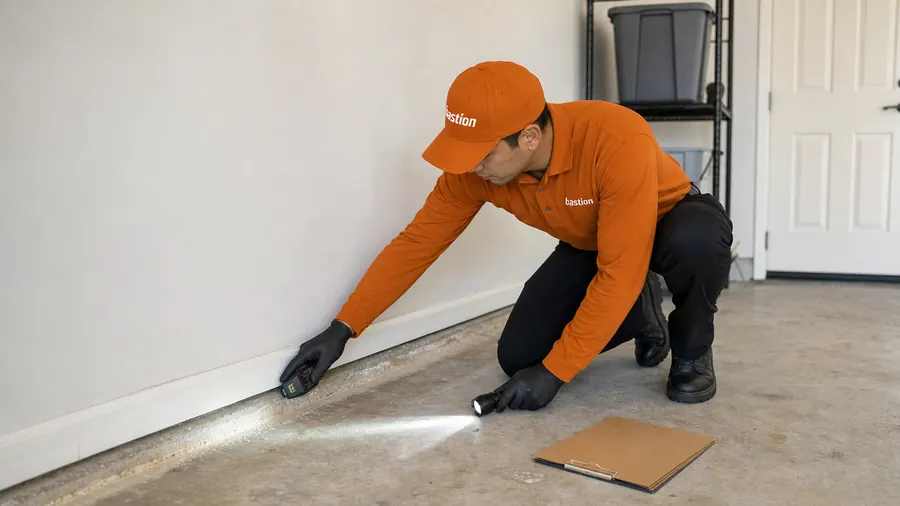
Inspect
A flashlight, a probe and a moisture meter along the slab, the garage joints and every plumbing opening, and the piers on an older pier-and-beam home. We are looking for mud tubes, damp wood and mulch creeping up the wall. The flashlight does the talking. The moisture meter does the gossip.
 2
2
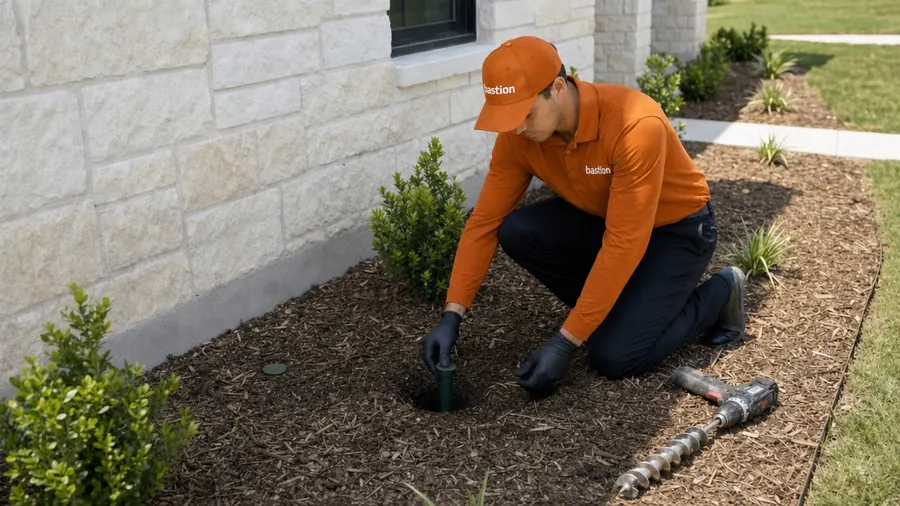
Install stations
Stations go into the soil around the house, in the mulch beds and along the foundation, where workers forage. The workers eat the bait and carry it home to feed the colony. It is slow on purpose, so it spreads before it kills. Patience is the feature here.
 3
3
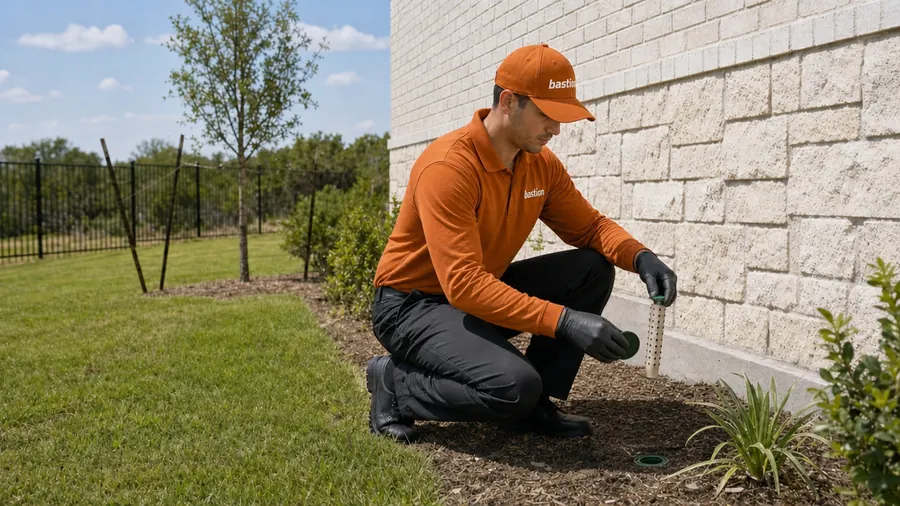
Monitor
We check every station on a schedule and add bait wherever termites are feeding. Texas A&M AgriLife says complete control can take several weeks. The stations stay in after the colony is gone, because a new one can move into the yard later.
Recognize any of these in your Austin home?
Free inspection quote, same-day service most days, and the price before any work begins.

Why termites keep turning up in Austin.
Austin is two cities wearing one name tag, and termites are comfortable in both. East of MoPac you have blackland clay, which holds water like a sponge that never learned to let go, then shrinks and swells with the seasons and opens gaps at the foundation. Damp soil and a fresh gap are about all a subterranean colony asks for. West of MoPac it is limestone: thin soil, cracks and seams that stay cool and humid right up against the slab. In the central neighborhoods it is older pier-and-beam homes, where the wood sits on piers over shaded, damp soil and a mud tube can climb a pier where nobody looks.
The Balcones fault splits this town into two completely different kinds of ground, and termites work both. West of MoPac: thin soil over fractured limestone, full of voids and seams that stay cool and humid right up against your foundation. Rent free, great schools. East of it: blackland prairie clay that holds water instead of draining it. Which side you live on changes where the moisture sits and how the tubes reach the wood, and it is genuinely the first thing our technicians look at.
Here is why the can from the hardware store does nothing for termites. The swarmers on your windowsill cannot damage wood and live about a day. Spraying them is like sweeping up the confetti and declaring the party over. The colony is still in the soil, and the workers doing the eating never come out into the open. They travel inside mud tubes and inside the wood itself, which is why most homeowners never see one. A swarm that comes out inside the house means a colony is already feeding on that wall. Real termite control means finding how they get in, putting bait in the soil where the workers forage so they carry it home themselves, then checking the stations on a schedule. If you want an identification with no sales pitch attached, Travis County AgriLife Extension helps identify swarmers at 512-854-9600.
Two soil types
Swelling clay east of MoPac, damp limestone seams west, different routes to the wood.
Older housing stock
1930s-60s pier-and-beam homes put the wood on piers a mud tube can climb.
Mature canopy
Live oaks and pecans mean deep beds of mulch and leaf litter against the slab.
Creeks and greenbelts
Shoal, Waller and Barton Creek corridors keep moisture high, and termites follow moisture.
When termites swarm in Austin.
Termites do not run on one simple curve either. The swarm is the part you see, and Texas A&M puts native swarms from February to May statewide, usually March and April, by day. Formosan swarms come later, at night. The colony underground feeds all year, so a quiet month for swarms is not a quiet month for your baseboards.
Native subterranean swarmers fly by day. If wings turn up on an Austin windowsill in these months, call.
Late May and early June, at night, toward porch lights and windows. Mostly a Gulf Coast pest.
No swarms to see, but the colony keeps feeding. That is when the bait stations do their quiet work.
What we actually find on termite jobs in Austin.
Every photo below came off a real Austin service call. Mud tubes, discarded wings and hollowed wood are the three things that tell you it is termites and not ants.
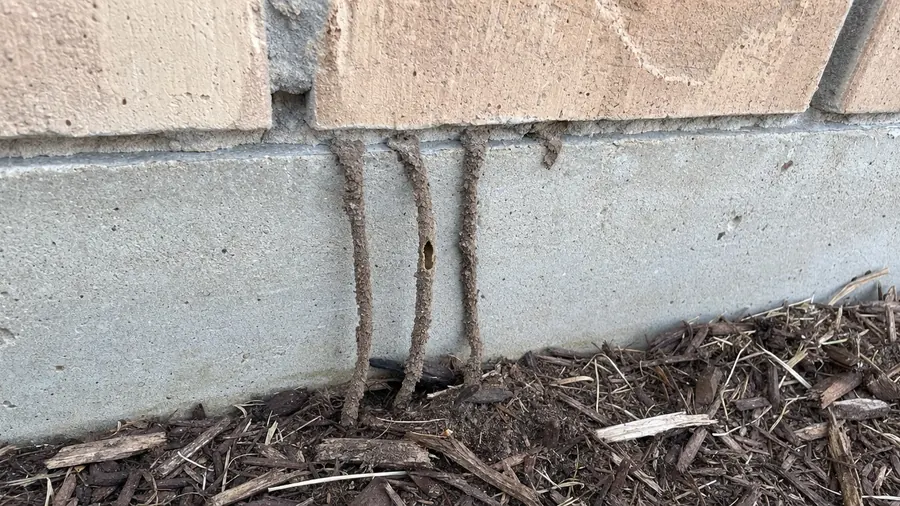
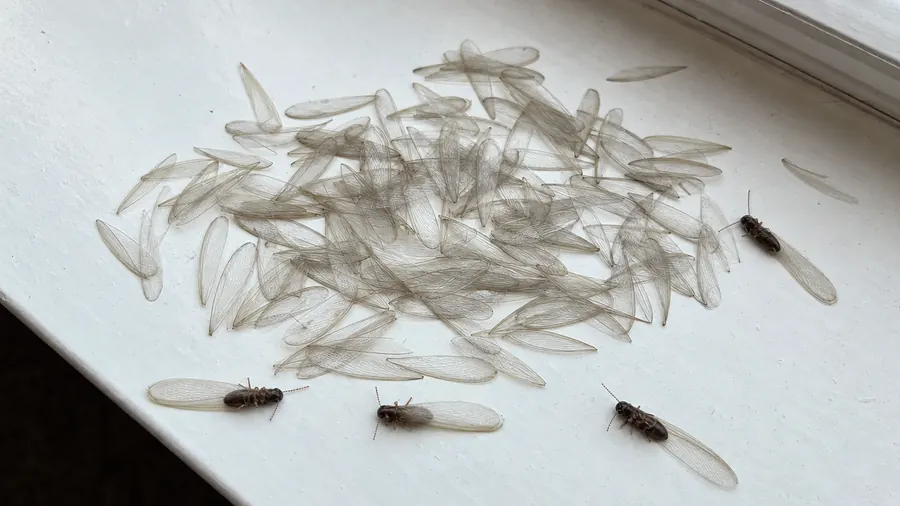
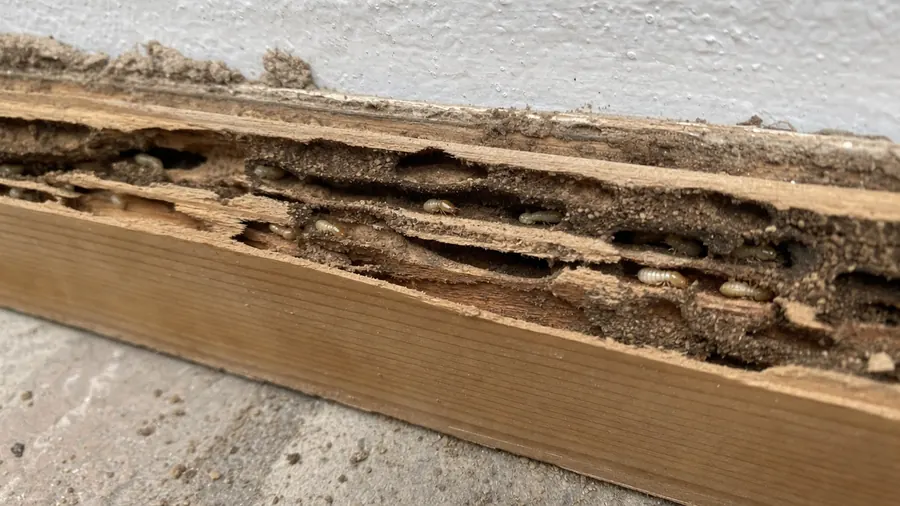
Photographs by our own Austin service team. Text a photo to 843-480-8699 and we will tell you whether it is termites.
The termites we find in Austin.
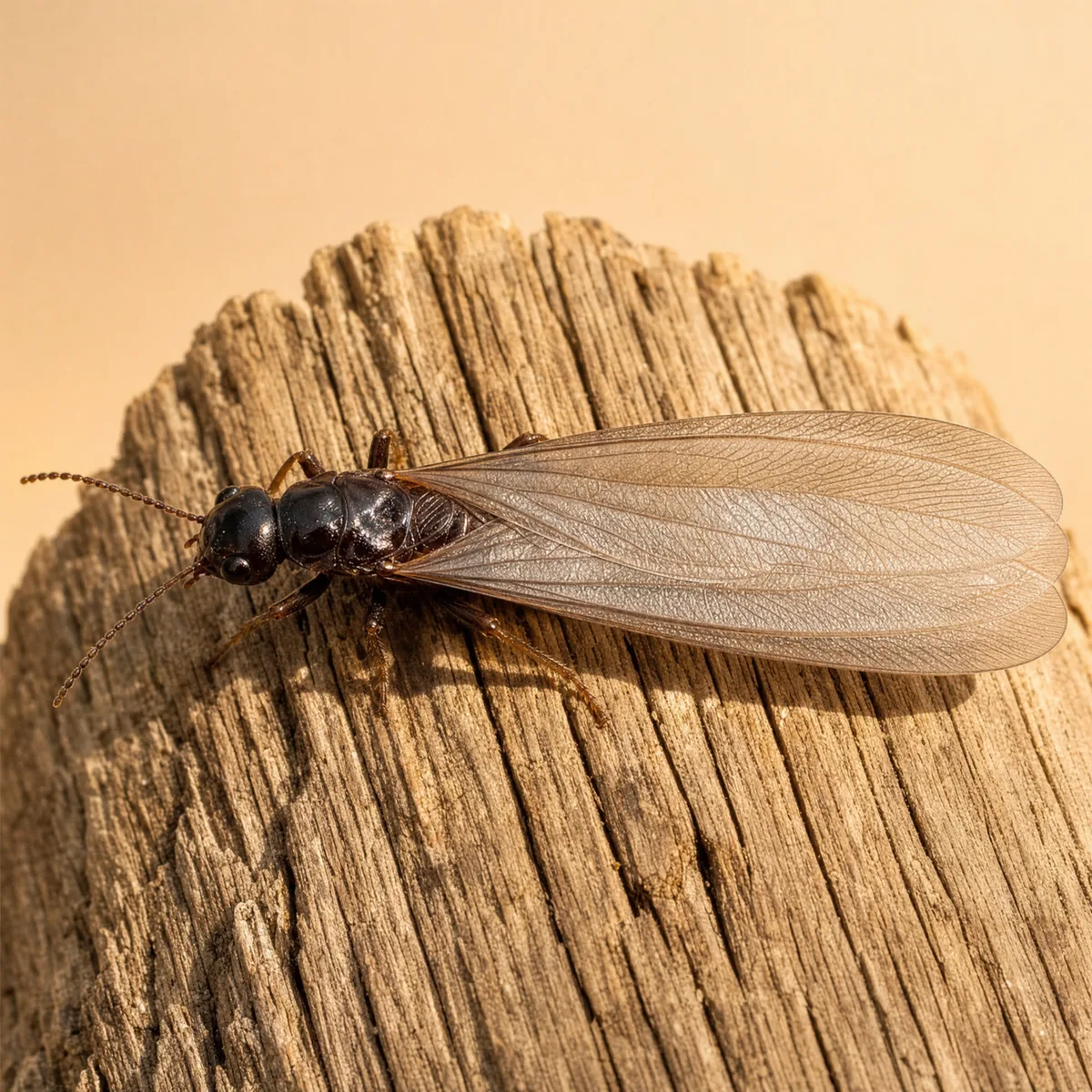
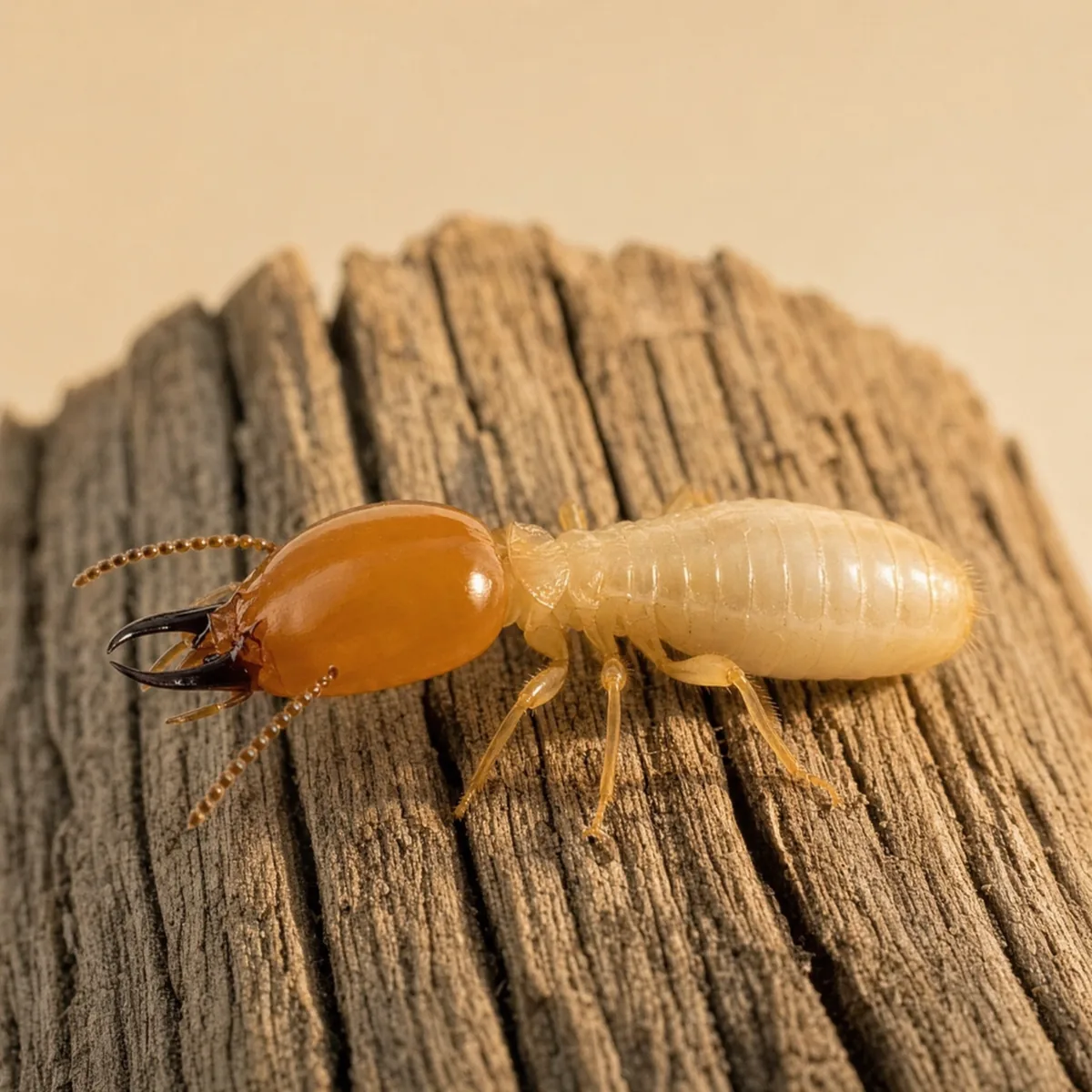
Every termite in an Austin yard lives in the soil and comes up to the wood. These are the four you are most likely to meet, and the swarmer is the one most people actually see. Workers do the damage, soldiers guard the tunnels, and swarmers start new colonies.
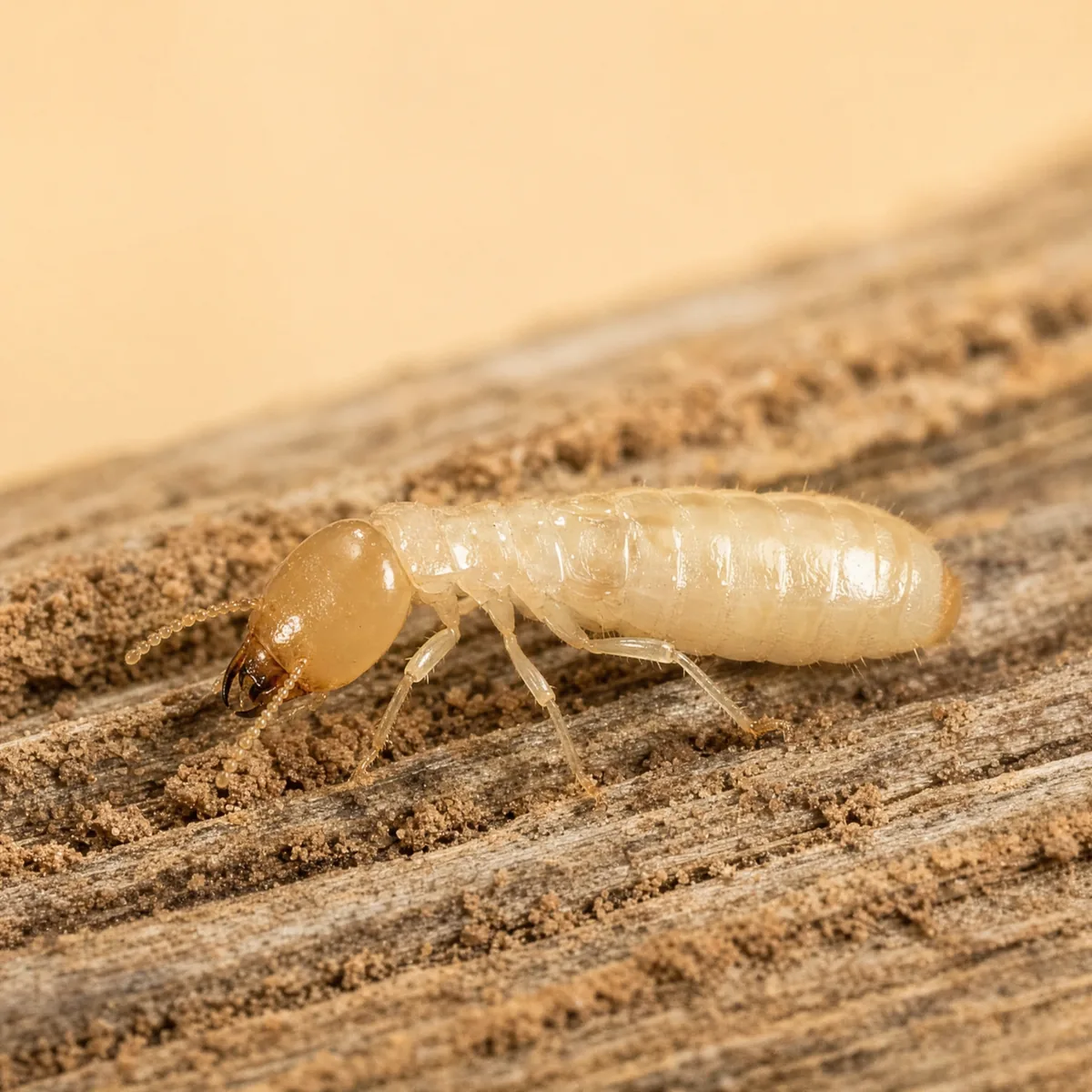
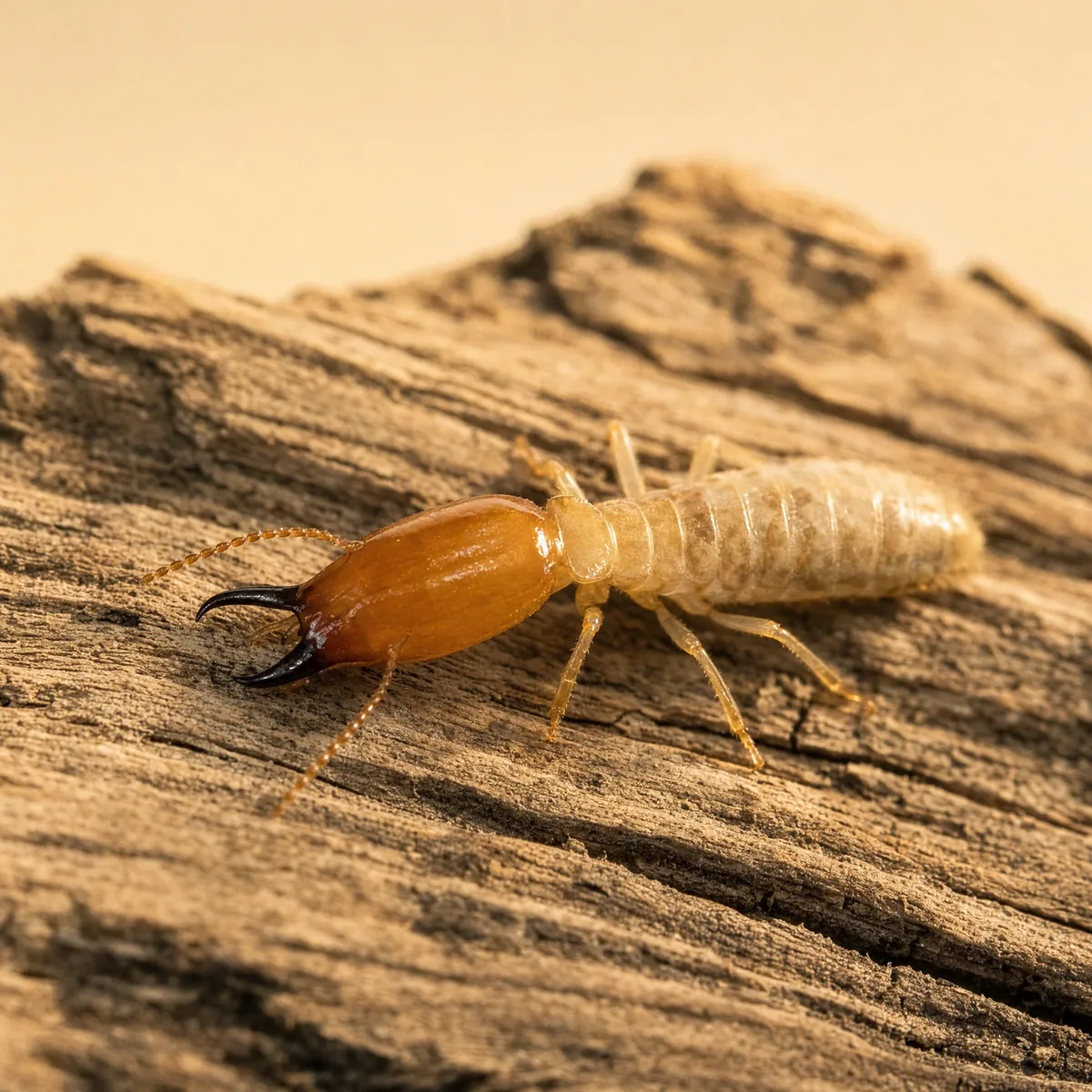
How to tell it is termites, not a one-off.
A swarmer on the windowsill is not the damage. It is the colony sending out mail. The list below is what it looks like when the colony is feeding on your house. Anywhere in Austin, call and describe what you see. A clear photo is often enough to tell termites from flying ants before anyone drives out.
- Swarmers or a pile of equal-size wings by a window or door
- Pencil-width mud tubes climbing the slab edge from the mulch
- Mud tubes on the piers under an older pier-and-beam floor
- Tubes at plumbing openings and utility gaps in the slab
- Wood that sounds hollow or gives under a screwdriver
- Baseboards that look blistered or give under a thumb
- Dried mud packed in cracks or along baseboards
- Swarmers at the porch light on a late May or early June night
Termite control across Austin.
Where the moisture sits depends on the block. On the clay around Mueller, Windsor Park and Wells Branch, the ground shrinks and swells and opens gaps at the slab. On the older pier-and-beam streets of Hyde Park and Travis Heights, the piers and the damp soil under the floor are what we check first. Whether you need bait stations in Austin or a WDI report before closing, it is the same truck and the same crew.
Not listed? We almost certainly cover it, see pest control in Austin or the full service area.
Termite control in Austin, common questions.
How much does termite control cost in Austin, TX?
Termite work is quoted on inspection, so you will not find a number on this page. Slab or pier and beam, how many feet of wall and where the activity is all change the price, so we look first and give you the number before any work begins. The inspection to quote a treatment is free with no obligation. A WDI report for a home sale is quoted when you book. Termites are a separate service and are not part of our monthly general pest plan.
Do I need a WDI report to sell a house in Austin?
If your buyer is using a VA loan, yes, it is required anywhere in Texas, and other lenders and buyers can ask for one too. A WDI report is a visual check for termites, other wood destroying insects and the conditions that invite them, written on the form the Texas Department of Agriculture prescribes. We write them for Austin sales, quoted when you book.
Is it a termite or an ant swarmer?
Check three things. A termite swarmer has straight, beadlike antennae, a thick waist and four wings of equal size. A flying ant has elbowed antennae, a pinched waist and front wings longer than the back pair. A loose wing helps too: termite wings carry a lot of veins, ant wings only a few. Our termite vs ant swarmer guide walks through all of it. If it turns out to be ants, ant control in Austin is the page you want, and if you would rather not squint, send us a photo.
When do termites swarm in Austin?
Texas A&M says termite swarms in Texas are most common from February to May, usually March and April, and native subterranean termites swarm by day. Formosan termites swarm at night in late May and early June and fly toward lights. The colony in the soil feeds all year.
Do you use liquid termite treatment?
No. Our termite treatment is in-ground bait stations. Workers find the bait, eat it and carry it back to feed the colony, and the active ingredient is slow on purpose so it spreads before it kills. We check the stations on a schedule and leave them in after the colony is gone, because a new colony can move into the yard later.
Does a termite swarm mean my Austin house has termites?
If the swarm came out inside, almost certainly. Swarmers leave from a colony already feeding in that wall, though they cannot damage wood themselves and live about a day. If you saw them outside in a woodpile or fence, the colony may not be in the house at all, but walk the foundation and look for mud tubes anyway.
Does living west of MoPac change how you look for termites?
It changes where we look first. On the limestone side the soil is thin and the seams stay cool and humid right against the foundation, so the slab edge, the garage and every plumbing opening get a close look with the light and the moisture meter. On the clay side east of the highway the ground shrinks and swells with the seasons and opens gaps at the slab, so those cracks get the probe. Your technician checks which ground you are on first.
Why does my pier-and-beam home need a closer look?
An older Austin home on piers sits over shaded, damp soil with the wood right above it, and subterranean termites can build mud tubes straight up a pier to reach it. Those tubes stay out of sight unless someone goes looking. We check the piers and the plumbing openings, set bait stations in the soil around the house, and tell you what we found before any work begins.






Termite control in nearby cities
We handle termites in every city we serve. Same crew, same bait stations, wildly different dirt. Find your city below, read the full termite control overview, or check the complete service area.
Answered 24 hours · Austin, TX
Termites found early. Then we keep watching.
Free inspection quote, same-day service most days across Austin, and the number before any termite work begins.