Austin, TX and 25 more cities
Silverfish control
Gone from the tub, the closet shelf and the box of old books. Treated where they hide and dried out where they breed.
Quick answers
Silverfish control in Central Texas: the quick facts
Silverfish need damp air, 75 to 90 percent humidity, and they hide in closets, bathrooms and behind baseboards. They eat paper, glue, starch and flour, can live for years and breed all year indoors. They do not bite. Silverfish are covered on the general pest plan from $66 a month.
- What they need
- Damp air
- Silverfish need 75 to 90 percent humidity.
- What they eat
- Paper and starch
- Books, glue, cardboard, flour and stored clothes.
- Risk
- A nuisance
- Medically harmless, but they damage paper and fabric.
- Included in
- The $66/mo plan
- Silverfish are on the general pest plan.
Written by the Bastion Pest Control service team · Licensed & insured in Texas · Last updated
Silverfish in Central Texas.
Silverfish are wingless, flat, carrot-shaped insects up to 3/4 inch long, covered in fine silvery scales, with two long antennae and three tails. They are fast, active at night and need humid air, 75 to 90 percent, to thrive (Texas A&M AgriLife). A female lays eggs for the rest of her adult life, and a silverfish can live two to eight years.
That is why one silverfish in the tub is rarely the only one. They hide by day in closets, behind baseboards and in stored boxes, and they eat the starch in paper, glue and fabric. Treat the hiding spots and take away the damp, and the population stops growing.

Seasonal pattern
When are silverfish worst in Austin?
Indoors, silverfish breed all year, so there is no true off season. Activity follows humidity, which is why the damp stretches around Austin's two wettest months, May and October, tend to be worst.
- Indoors
- All year
- Females keep laying eggs for the rest of their adult life.
- Humidity
- 75 to 90 percent
- Damp bathrooms, laundry rooms and closets are where they settle.
- Life span
- Two to eight years
- A silverfish you see this year can still be there in five.
Warning signs
Small holes, long life.
Silverfish in the tub or sink first thing in the morning
Ragged holes or scraped spots on paper, books and boxes
Yellow stains and tiny pepper-like specks on stored items
Shed skins along shelves, baseboards and closet floors
Silverfish point to damp. Run the bathroom fan, fix drips and move stored paper off the floor, then call us at 843-480-8699 and tell us which rooms you find them in.
How we get rid of silverfish.
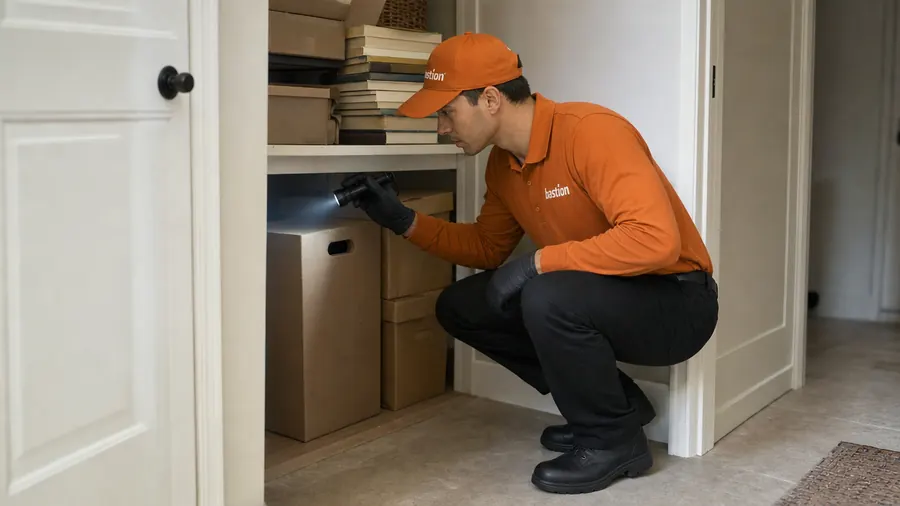
Inspect
We find where they hide: closets, stored boxes, bookshelves, baths and the gaps behind baseboards.
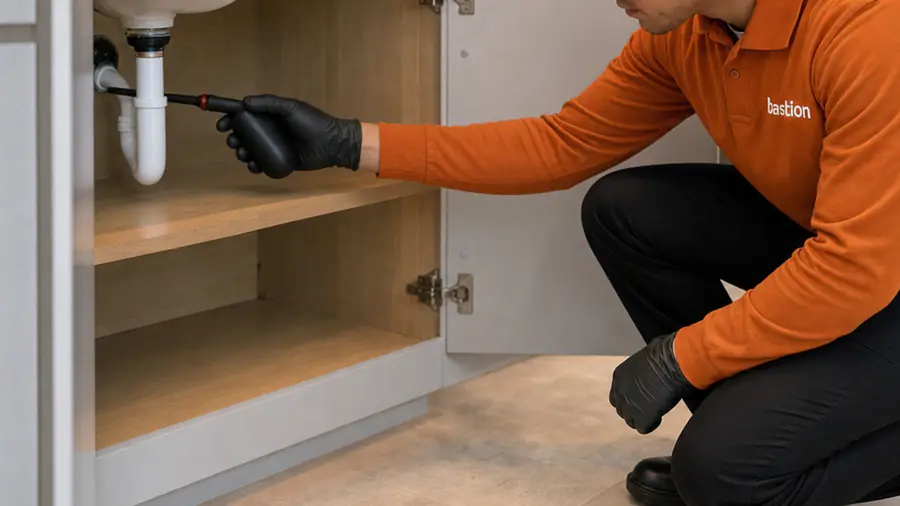
Treat
Dust in the wall gaps and pipe openings, and treatment along the baseboards where they travel.
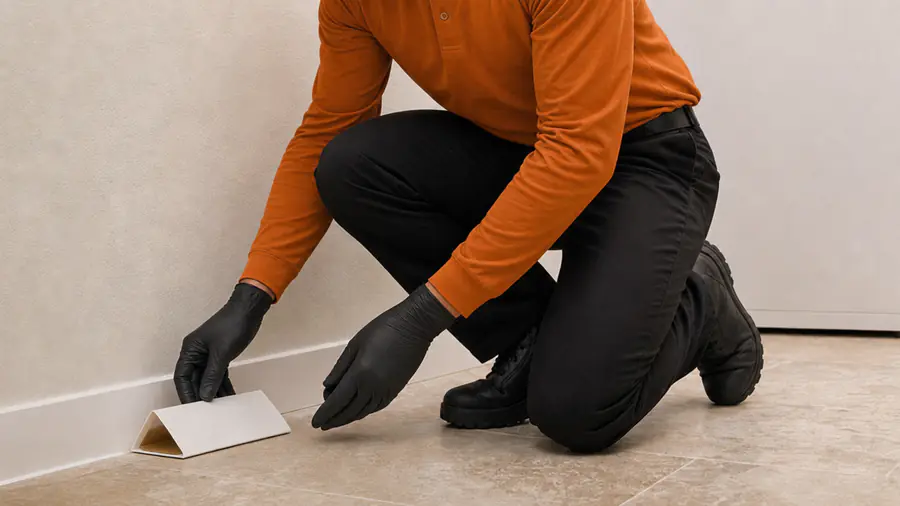
Monitor
Glue monitoring traps along the baseboards show where they still travel and tell us when they are gone.
How to tell it is actually silverfish.
You find silverfish from what they leave and where they turn up, mostly in the damp rooms and the stored paper.
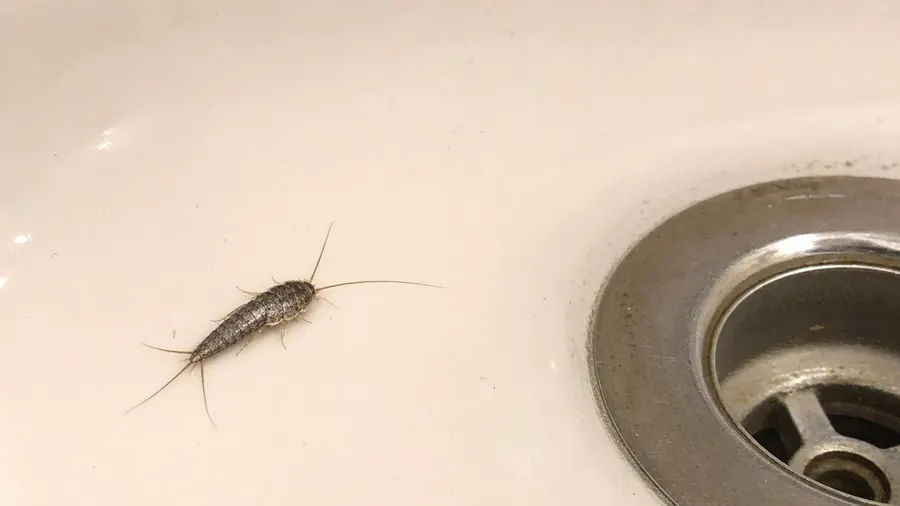
The classic first sighting. Silverfish fall into the tub at night hunting for damp and cannot climb the slick sides back out.
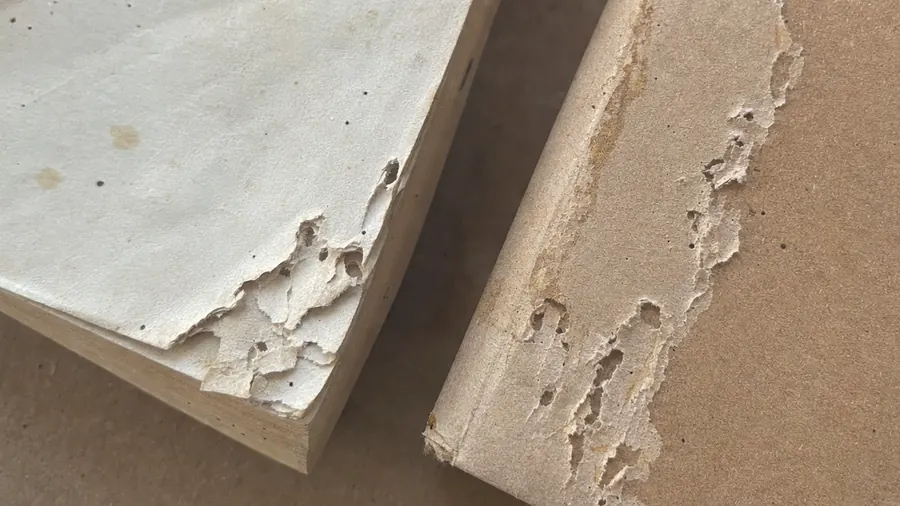
Ragged holes and scraped patches along the edges. Silverfish eat the starch and glue in paper, so old books and boxes go first.
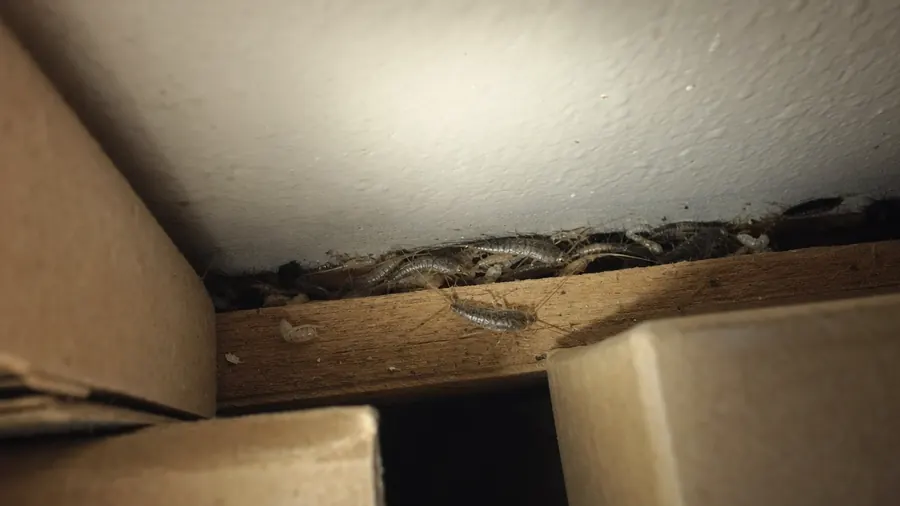
Behind the boxes, in the crack at the back of the shelf. Shed skins mean they have been breeding there a while.
Know your pest
The silverfish you might find in Central Texas.
Two look almost the same and turn up in different rooms. Where you find them tells you which one it is.
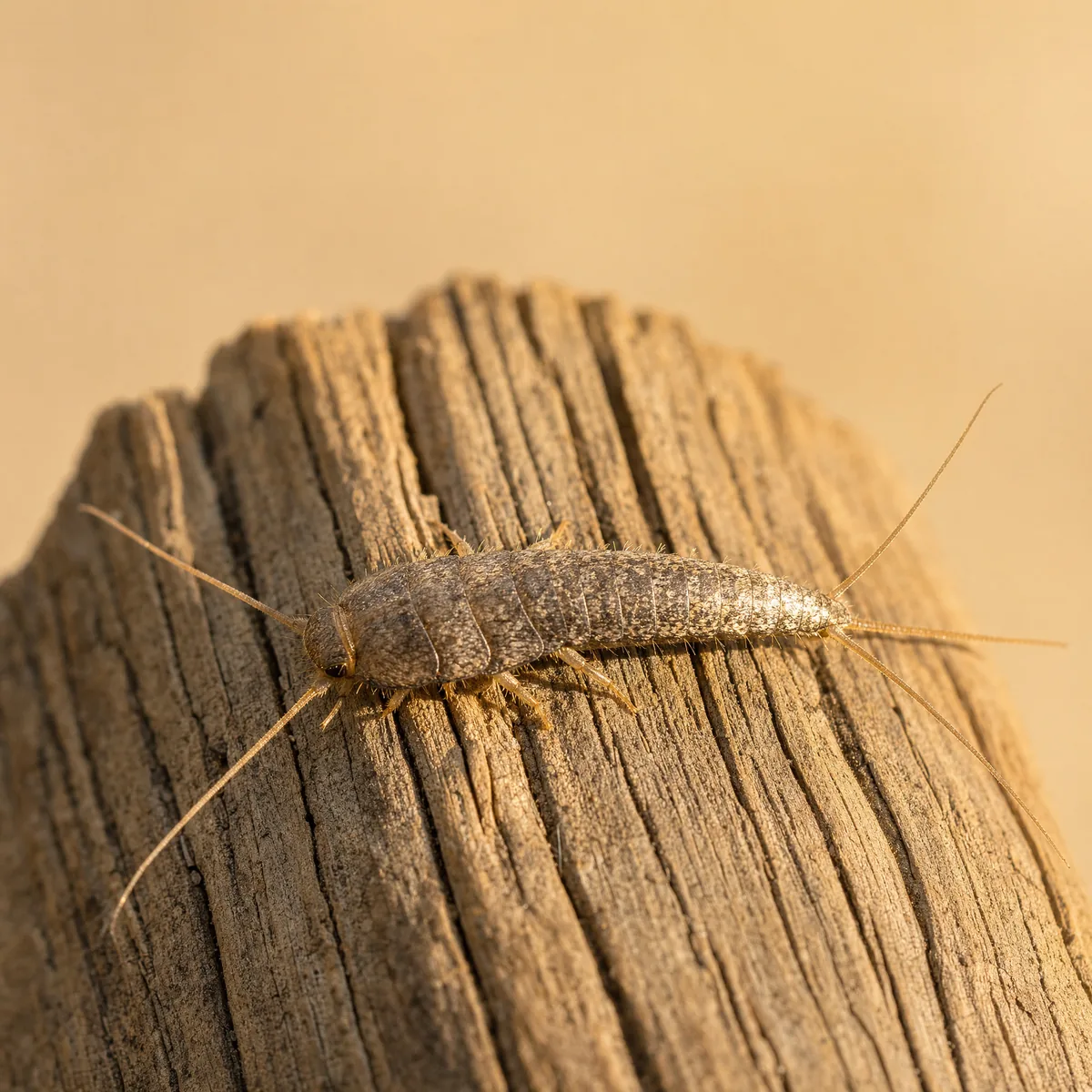
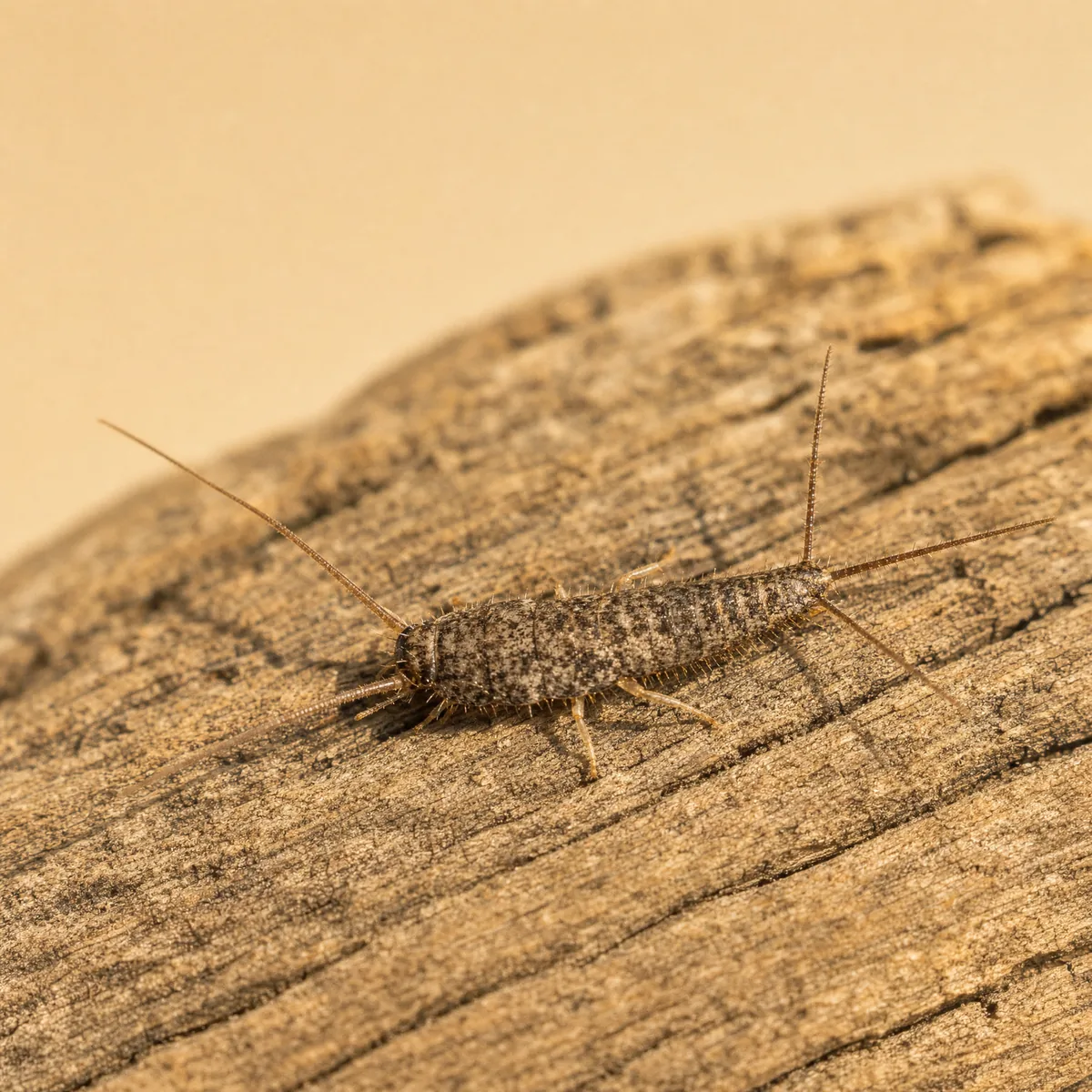
Not sure what you have got? Text a photo to 843-480-8699 and we will tell you.
Pest-Free Guarantee
They come back? So do we, free.
Free re-treatments between scheduled visits on any recurring plan.
What it costs
Silverfish control is included in the general pest plan.
Silverfish ride on the recurring general pest plan at no extra charge. The baths, closets and baseboards get treated, and if they show up between visits, the re-treatment is free.
| General pest planRecurring | One-time treatmentSingle visit | |
|---|---|---|
| What it is for | Keeping silverfish and the other pests down year-round | Clearing one room or one closet |
| Right for you if | You keep finding them in the tub | You want one cleanup before you store papers or move |
| What you get | Full TriBarrier™ every visit, foundation, yard and property line | One full TriBarrier™ treatment |
| If they come back | We re-treat free, with no limit and no trip fee | A return visit is a new charge |
| Other pests covered | Ants, spiders, cockroaches, scorpions, wasps and rodents | Silverfish only |
| Price | From $66 a month* | Quoted per job* |
Silverfish live for years and breed all year indoors, so a single spray rarely ends it. Treating the hiding spots on a schedule while the damp gets fixed is what actually holds.
* Starting price. Your exact number depends on home size, lot size and current pest pressure.
Silverfish Control, answered straight.
Are silverfish harmful?
Not to people. Texas A&M calls them medically harmless: they do not bite, sting or carry disease. The damage is to things. They eat the starch and glue in books, papers, cardboard and wallpaper, stain clothing, and get into flour and dry food.
Why do I keep finding silverfish in my bathtub?
Because bathrooms are damp, and silverfish need 75 to 90 percent humidity. They come out at night, slip into the tub hunting for moisture and cannot climb the slick sides back out. It does not mean they came up the drain. They are living nearby, usually behind the baseboards, under the sink or in a closet next door.
How long do silverfish live?
A long time for an insect. Texas A&M puts it at two to eight years, and a female lays eggs for the rest of her adult life, more than 100 in all. Young silverfish grow up in four to six weeks. That is why a few become a lot, and why one treatment rarely ends it.
What is the difference between a silverfish and a firebrat?
Same shape, different color and different room. Silverfish are silvery and like 70 to 80 degrees with damp air, so they live in bathrooms and closets. Firebrats are mottled gray and brown and like it over 90 degrees, so they turn up near ovens, dryers, water heaters and hot attics.
How do I get rid of silverfish for good?
Take away the damp and the hiding places. Run the bathroom fan, fix leaks, use a dehumidifier in damp rooms, and move books, papers and clothes out of cardboard boxes into sealed plastic bins off the floor. Then treat the gaps where they hide, which is the part we handle.
Does the $66 monthly pest plan cover silverfish?
Yes. Silverfish are on the recurring general pest plan from $66 a month at no extra charge, along with ants, spiders, cockroaches, scorpions, wasps and rodents. If they show up between visits, the re-treatment is free.
More questions? Read the full FAQ or get a free quote.
Other pests we treat
One recurring plan covers the everyday pests, add-ons cover the rest, and termites are their own job.
Every plan includes the full TriBarrier™ treatment. See all services →
Answered 24 hours · Austin, TX
Ready to be done with it?
Quotes are free, there is no inspection fee, and the phone is answered around the clock. Same-day service is usually open across the metro.