Austin, TX and 25 more cities
Moth control
Holes in the wool sweater and webs in the oatmeal. We find the source, treat where the larvae hide and keep watch with traps.
Quick answers
Moth control in Central Texas: the quick facts
Two kinds of moths cause trouble indoors. Clothes moth larvae eat wool, fur, feathers and other animal fibers in dark closets and drawers. Pantry moths, mostly the Indian meal moth, lay eggs in grains, nuts, dried fruit and pet food, and their larvae web it together. The moths you see are a sign; the larvae do the damage. Moths are covered on the general pest plan from $66 a month.
- Damage
- The larvae
- Adults do not do the damage. The caterpillars do.
- Closets
- Wool and fur
- Clothes moth larvae eat animal fibers and avoid light.
- Pantry
- Grain and nuts
- Indian meal moth larvae web the food together.
- Included in
- The $66/mo plan
- Moths are on the general pest plan.
Written by the Bastion Pest Control service team · Licensed & insured in Texas · Last updated
Moths in Central Texas homes.
The moths that cause trouble indoors are small, about 1/4 to 1/2 inch. In the closet it is clothes moths: buff-colored, with wings fringed with hairs, and larvae that eat wool, feathers, fur, hair, upholstery and leather. They avoid light at every stage, so they live in the dark backs of closets, drawers and storage (Texas A&M AgriLife).
In the kitchen it is the Indian meal moth, the most common pantry moth, with two-toned wings that are pale near the body and reddish-bronze at the tips. Its larvae spin silk that webs food together as they feed, in flour, cornmeal, nuts, dried fruit, bird seed and pet food (Texas A&M Urban Entomology). In both cases, the moths you see are a sign that larvae are feeding somewhere nearby.

Seasonal pattern
When are moths worst in Austin?
Indoor moths do not wait for a season. They breed all year inside the house, and in a warm Austin summer they tend to build faster, so more adults show up from late spring to early fall.
- Pantry moths
- 4 weeks to 300 days
- One generation of the Indian meal moth, depending on conditions.
- Clothes moths
- 2 months to years
- Larvae can feed slowly in storage for a long time.
- Indoors
- All year
- Neither one needs the weather outside to keep breeding.
Warning signs
The moth is the messenger.
Small moths fluttering in the closet or pantry, often at night
Irregular holes in wool, cashmere, felt and fur
Silky webbing or clumps in flour, oats, nuts or pet food
Small caterpillars or silken cases on shelves and in seams
Find the source before anything else: the infested bag, the stored wool coat, the pet food bin. Bag it and take it out. Then call us at 843-480-8699 to treat the cracks and corners the larvae crawl into.
How we get rid of moths.
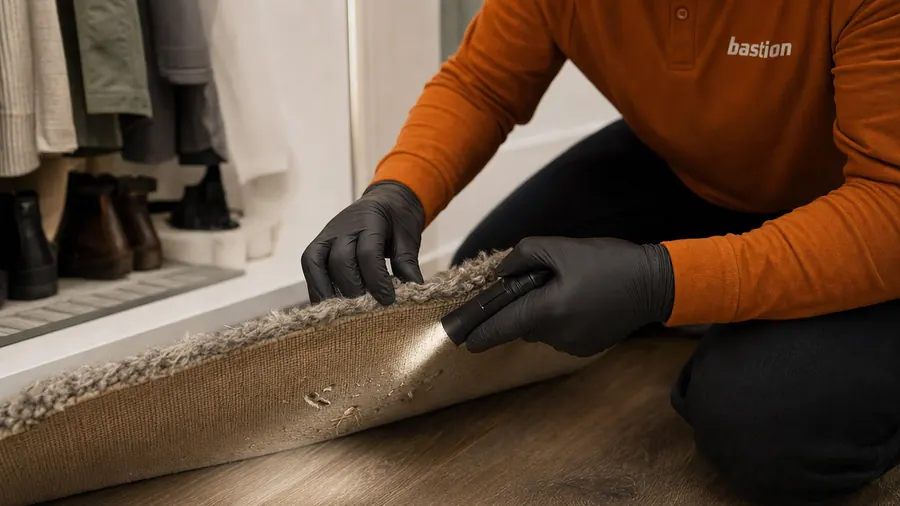
Find the source
We check the wool, rugs, stored fabric and pantry goods for larvae, webbing and cases, because the source has to go first.
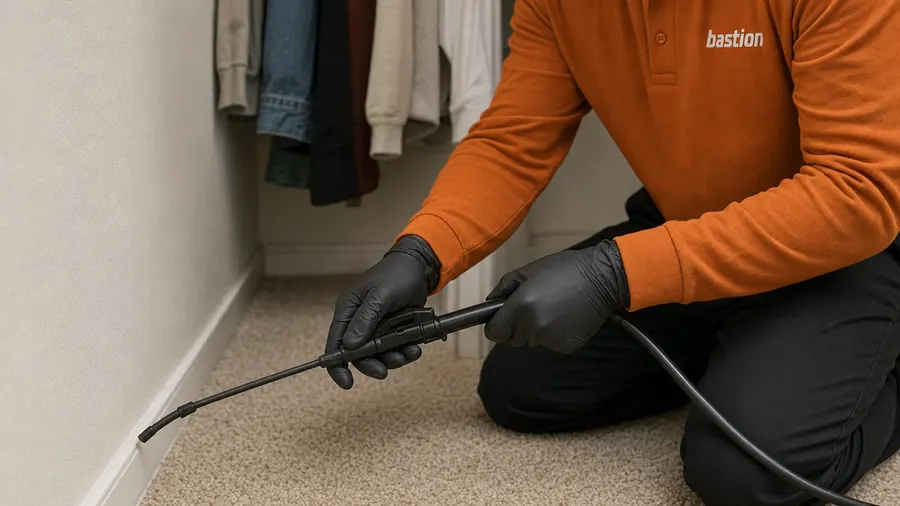
Treat
A light treatment along carpet edges, baseboards and the cracks where larvae crawl to hide.
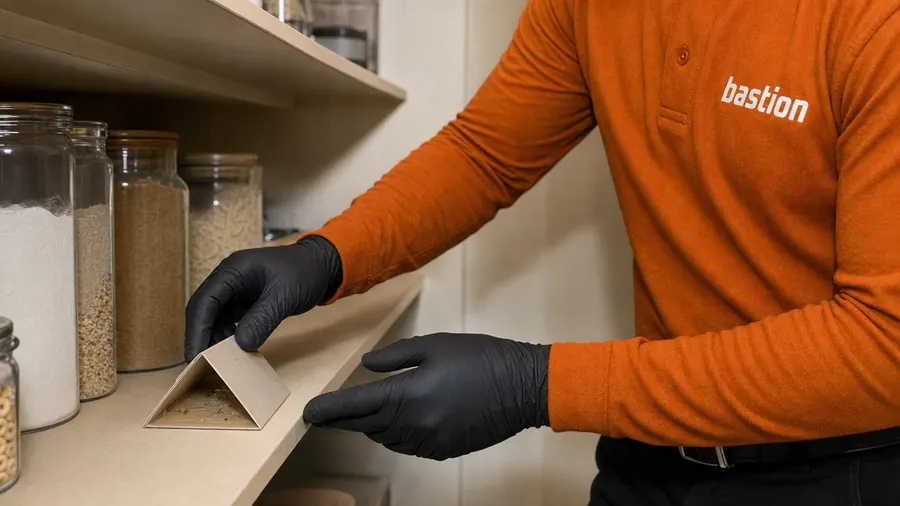
Monitor
Monitoring traps in the closet or pantry tell us when the moths are gone, not just quieter.
How to tell which moth you have.
Where the damage is tells you which moth it is. Fabric means clothes moths. Food means pantry moths.
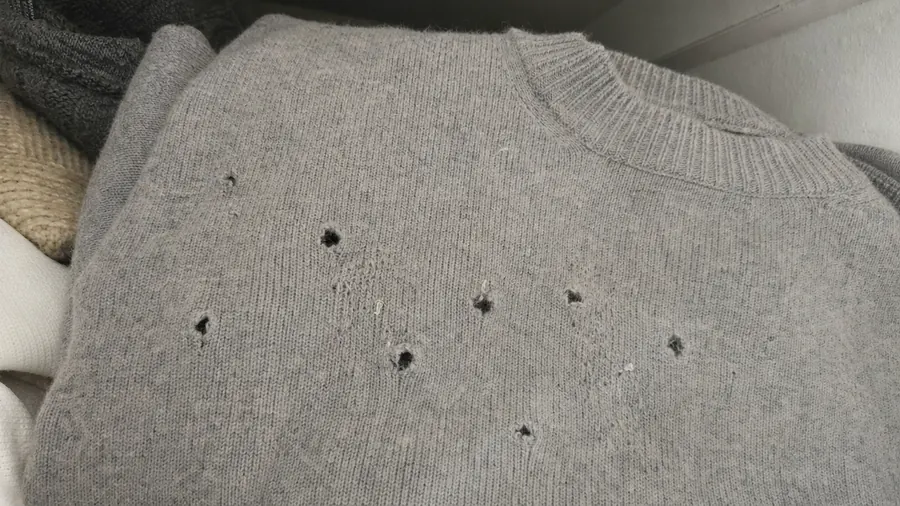
Small, scattered holes and grazed patches in wool, often in places that are folded or out of the light. The silken cases mean casemaking clothes moths.
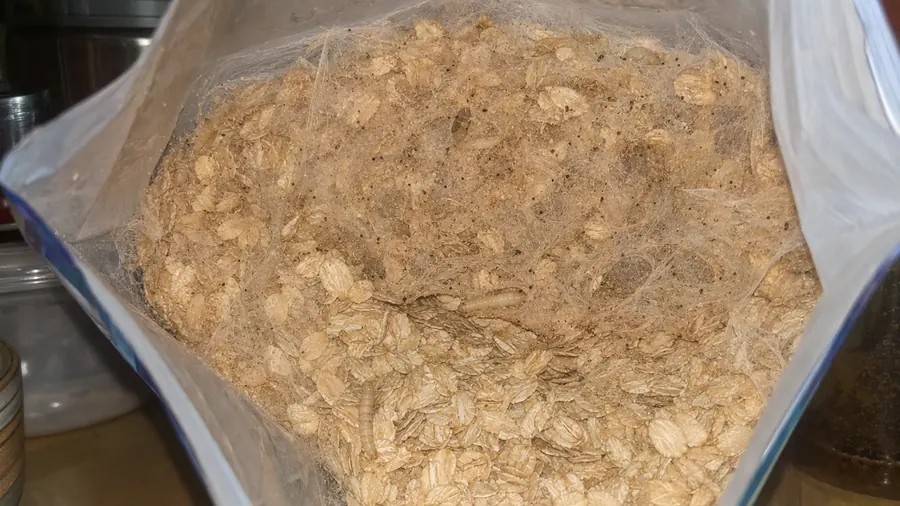
Silky webbing that clumps the food together, with the larvae inside. Texas A&M says this is how Indian meal moth larvae feed.
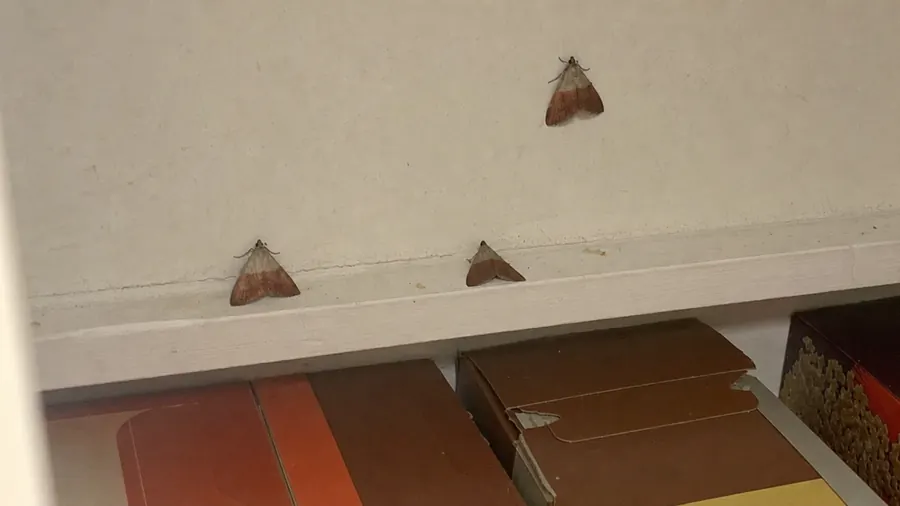
Small moths resting on the pantry walls at night. Adults in the pantry mean an infested package is somewhere close.
Know your pest
The moths you might find in Central Texas homes.
Three small moths cause almost all the indoor damage. Two live in closets and one lives in the pantry.
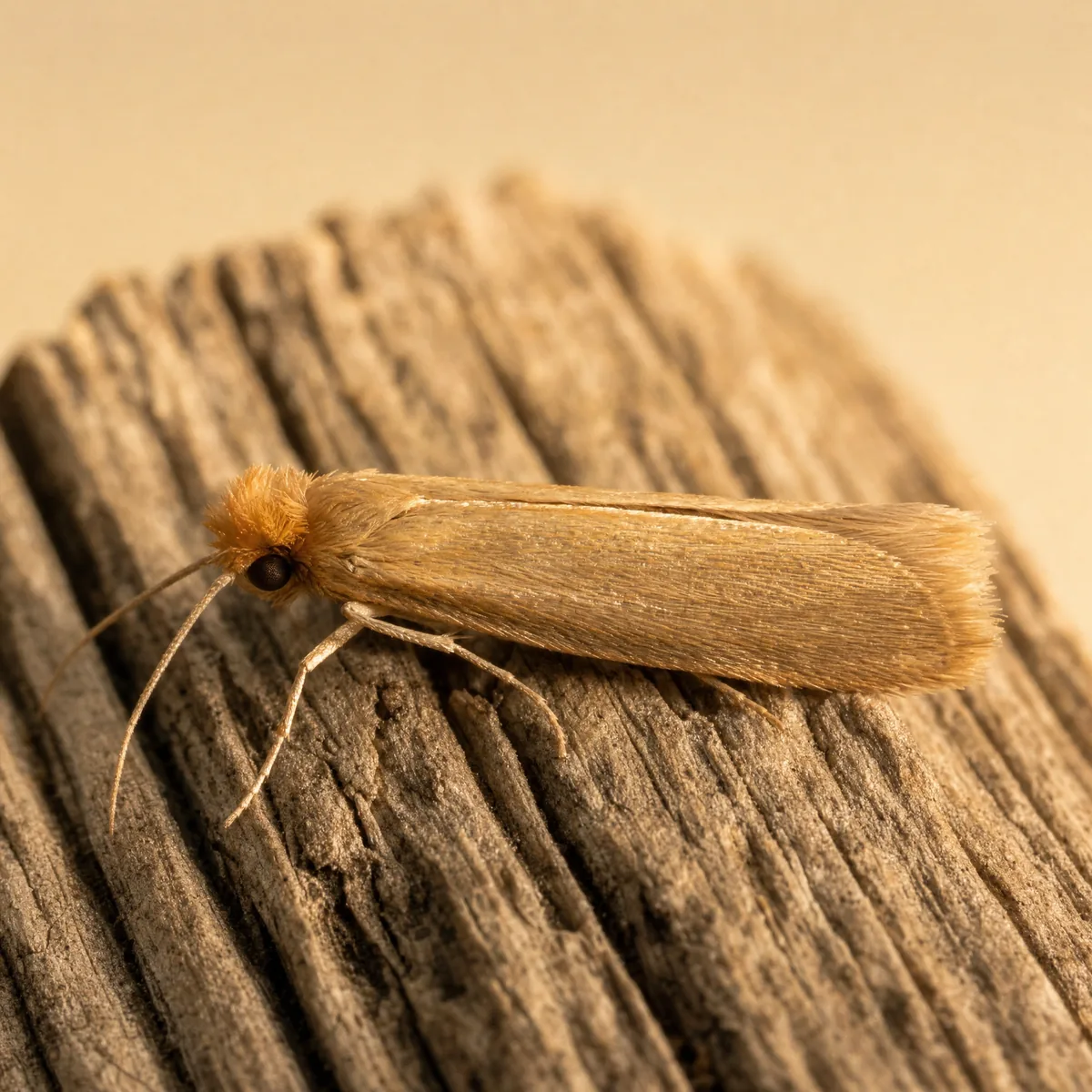
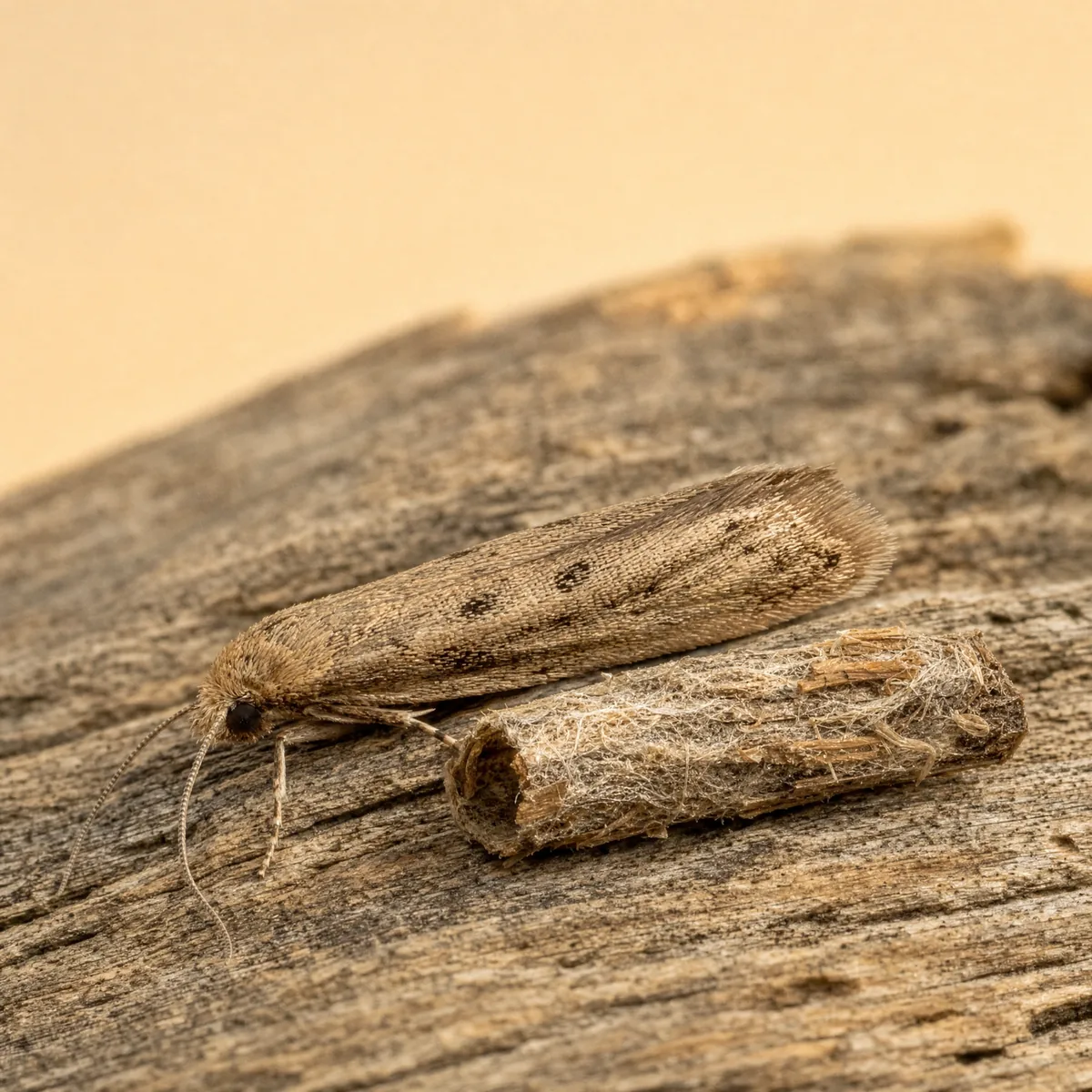
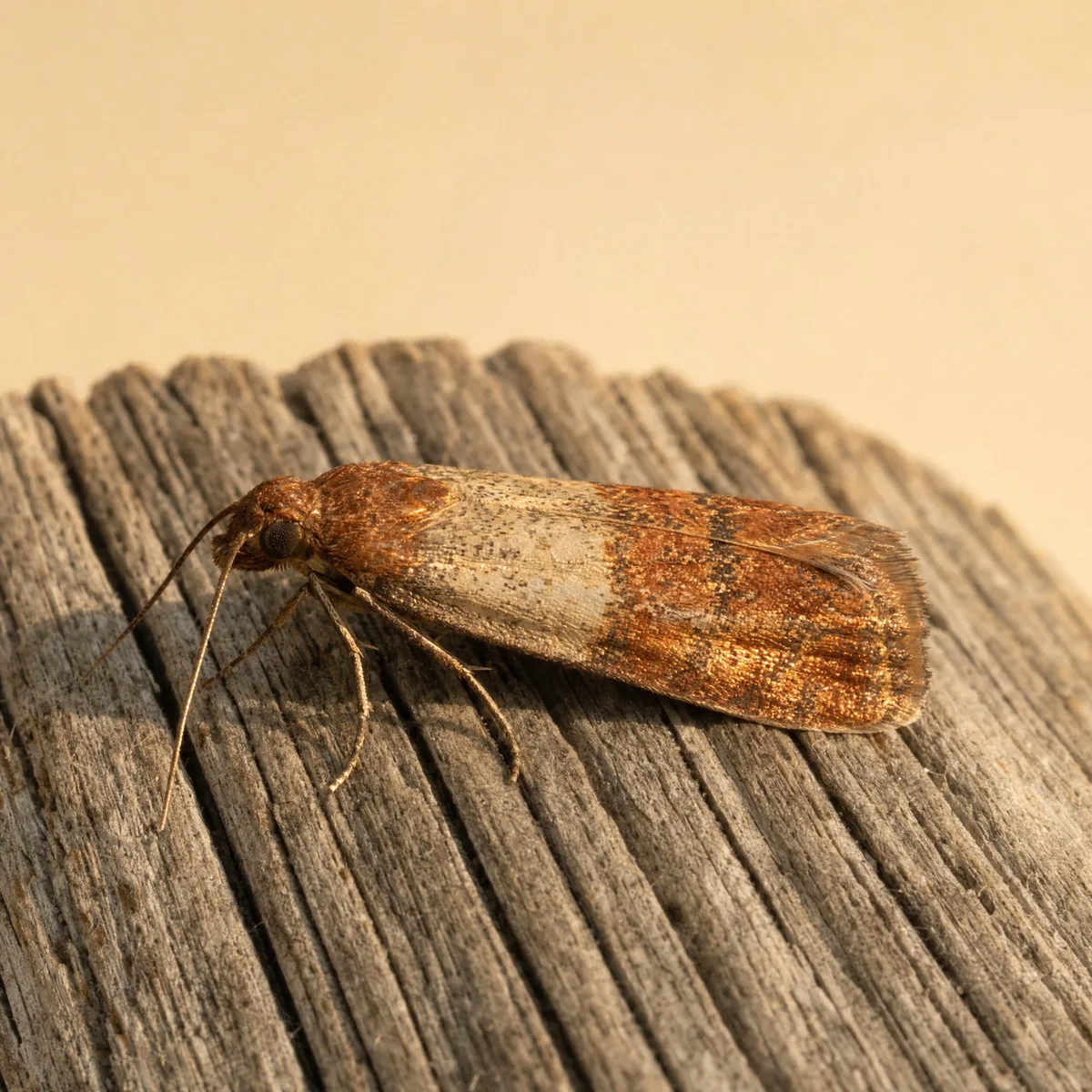
Not sure what you have got? Text a photo to 843-480-8699 and we will tell you.
Pest-Free Guarantee
They come back? So do we, free.
Free re-treatments between scheduled visits on any recurring plan.
What it costs
Moth control is included in the general pest plan.
Moths ride on the recurring general pest plan at no extra charge. We find the source with you, treat the cracks and edges where larvae hide, and keep watch with traps, and if they come back between visits, the re-treatment is free.
| General pest planRecurring | One-time treatmentSingle visit | |
|---|---|---|
| What it is for | Keeping moths and the other pests down year-round | Clearing one closet or one pantry |
| Right for you if | You keep seeing moths after cleaning out | You want one cleanup before storing clothes |
| What you get | Full TriBarrier™ every visit, foundation, yard and property line | One full TriBarrier™ treatment |
| If they come back | We re-treat free, with no limit and no trip fee | A return visit is a new charge |
| Other pests covered | Ants, spiders, cockroaches, scorpions, wasps and rodents | Moths only |
| Price | From $66 a month* | Quoted per job* |
No spray fixes a moth problem while the infested sweater or bag of oats is still in the house. The source comes out first, and the treatment and traps make sure nothing is left behind.
* Starting price. Your exact number depends on home size, lot size and current pest pressure.
Moth Control, answered straight.
Why do I have moths in my house?
Because something is feeding their larvae. Moths in a closet usually mean wool, fur, feathers or other animal fibers stored in the dark. Moths in the kitchen usually mean an infested package of flour, grain, nuts, dried fruit, bird seed or pet food. Pantry moths can also come home already inside a package from the store.
Do adult moths eat clothes?
No. The larvae do the damage. Texas A&M says clothes moth larvae feed on wool, feathers, fur, hair, upholstered furniture and leather, and that they avoid light at every stage. That is why damage shows up in folded, stored and dark places.
How do I know if it is clothes moths or pantry moths?
Look at where they are and what is damaged. Holes in wool or fur and small silken cases in a closet mean clothes moths, which are small, plain and golden or buff. Webbing in food and moths on pantry walls mean the Indian meal moth, which has two-toned wings, pale near the body and coppery bronze at the tips.
How do I get rid of pantry moths?
Find and throw out every infested package, then clean the shelves and cracks. Texas A&M says the larvae web food particles together as they feed, so check flour, cornmeal, nuts, dried fruit, bird seed and pet food. Store new dry goods in sealed containers. Monitoring traps show whether any are left.
How do I protect clothes from moths?
Clean wool and fur before storing it, and store it in sealed bags or bins. Vacuum closet floors, carpet edges and under furniture, where lint and hair collect. Check stored items a few times a year, since clothes moths avoid light and work quietly in the back of the closet.
Does the $66 monthly pest plan cover moths?
Yes. Moths are on the recurring general pest plan from $66 a month at no extra charge, along with ants, spiders, cockroaches, scorpions, wasps and rodents. If they come back between visits, the re-treatment is free.
More questions? Read the full FAQ or get a free quote.
Other pests we treat
One recurring plan covers the everyday pests, add-ons cover the rest, and termites are their own job.
Every plan includes the full TriBarrier™ treatment. See all services →
Answered 24 hours · Austin, TX
Ready to be done with it?
Quotes are free, there is no inspection fee, and the phone is answered around the clock. Same-day service is usually open across the metro.