Austin, TX and 25 more cities
Flea control
Gone from the dog, the carpet and the yard. All three, or none of it sticks.
Quick answers
Flea control in Central Texas: the quick facts
Fleas peak June to September in Central Texas, and without a hard freeze the cycle never fully breaks. Most of a flea population is eggs, larvae and pupae in the carpet, not adults on the pet. Flea control is part of the mosquito, flea and tick package, from $166 a month.
- Peak season
- June to September
- Warm and humid is the whole requirement, and a Texas summer supplies both.
- Where they live
- In the carpet
- Most of the population is eggs, larvae and pupae in flooring and bedding.
- No hard freeze
- The cycle holds
- Numbers drop in winter, then rebuild from whatever survived indoors.
- Included in
- The $166/mo plan
- Fleas ride with mosquitoes and ticks on the add-on package.
Written by the Bastion Pest Control service team · Licensed & insured in Texas · Last updated
Fleas in Central Texas.
Fleas ride in on pets and wildlife, then go off like a firework indoors. One female lays about 50 eggs a day, and roughly 95% of an infestation is eggs, larvae and pupae you cannot see (Colorado State University). The ones you can see are the tip of it.
Treating only the pet never works. The house and the yard have to be done at the same time, otherwise the eggs just hatch a fresh wave and you start over.
Seasonal pattern
When is flea season in Central Texas?
Fleas need warmth and humidity, and Central Texas hands them both for most of the year. Activity peaks in late summer and early fall, but the line never drops to zero, because we do not get a winter cold enough to break the cycle.
- Peak season
- June to September
- Warm and humid is the whole requirement, and a Central Texas summer supplies both for months at a stretch.
- Why winter fails you
- No hard freeze
- Without a real winter the cycle never breaks. Numbers drop, then rebuild from whatever survived indoors.
- Where the problem lives
- In the carpet
- Most of a flea population is eggs, larvae and pupae in flooring and bedding, not adults on the pet.
Warning signs
It starts on the dog.
Pets scratching or biting their fur
Black specks that smear red on a damp towel
Bites around your ankles, not higher
Another wave right after the pet was treated
The adults on the dog are a small fraction of what is in the carpet and the yard, which is why treating the pet alone keeps failing. Describe the pattern to us at 843-480-8699: how many pets, which rooms, how long. Usually that is enough to tell whether it needs same-day attention.
How we get rid of fleas.
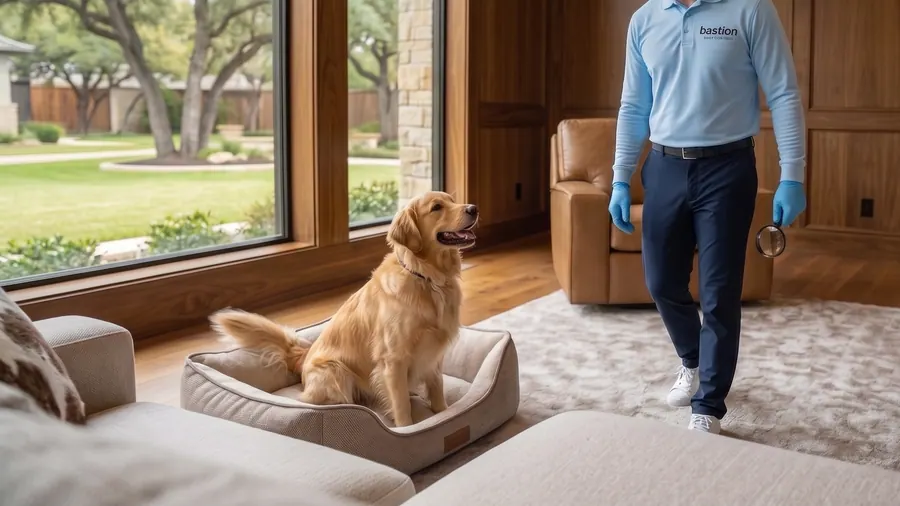
Inspect
We find the hot spots: bedding, carpet, shaded yard areas.
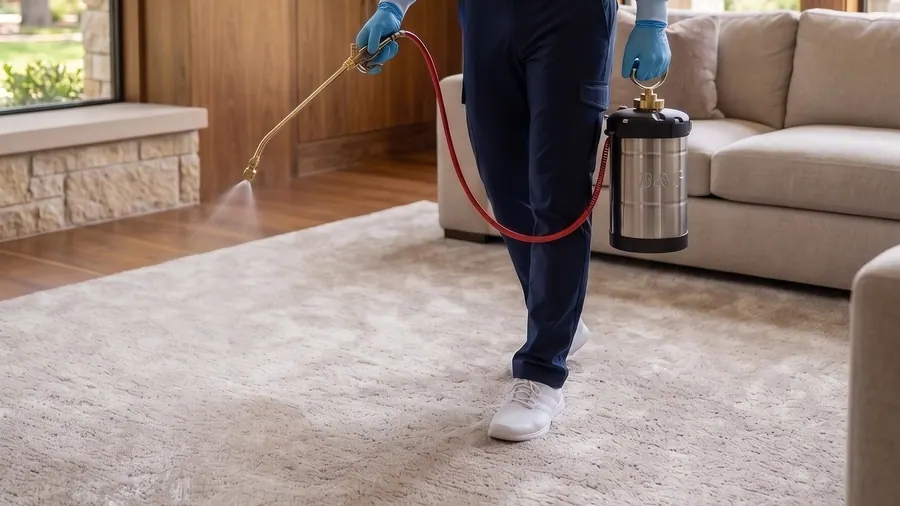
Treat
Indoor + outdoor treatment in one visit, pet and kid friendly.
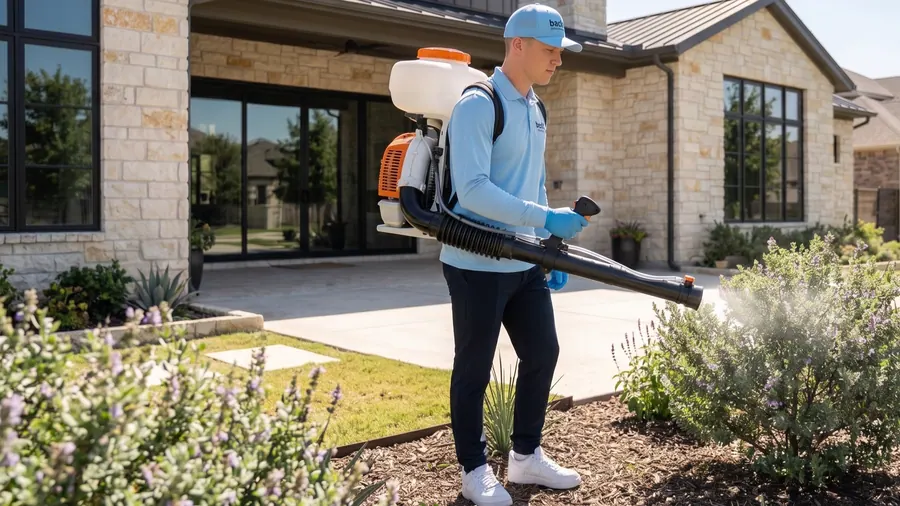
Protect
Follow-up timed to catch the next wave of eggs as they hatch.
How to tell it is actually fleas.
Every photo here came off a real service visit around the Austin metro. Fleas get diagnosed from evidence far more often than from sightings: black specks that smear red, a carpet holding more than you can see, and bites that stop at the knee.
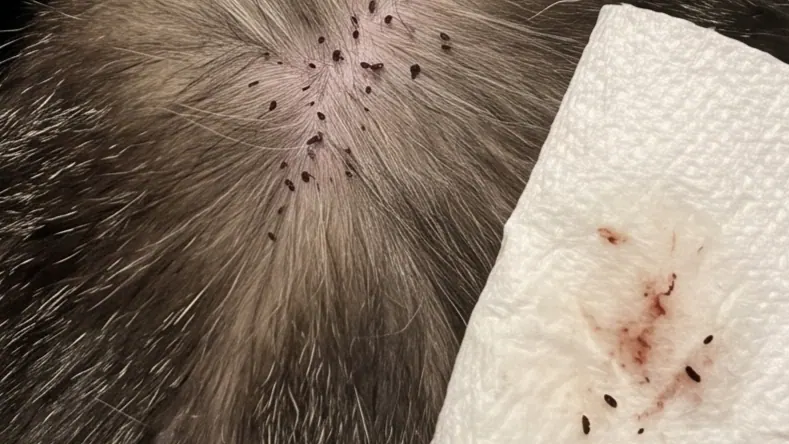
Those black specks are digested blood. Comb them onto a damp paper towel and they smear rust red, which is how you separate flea dirt from ordinary grit.
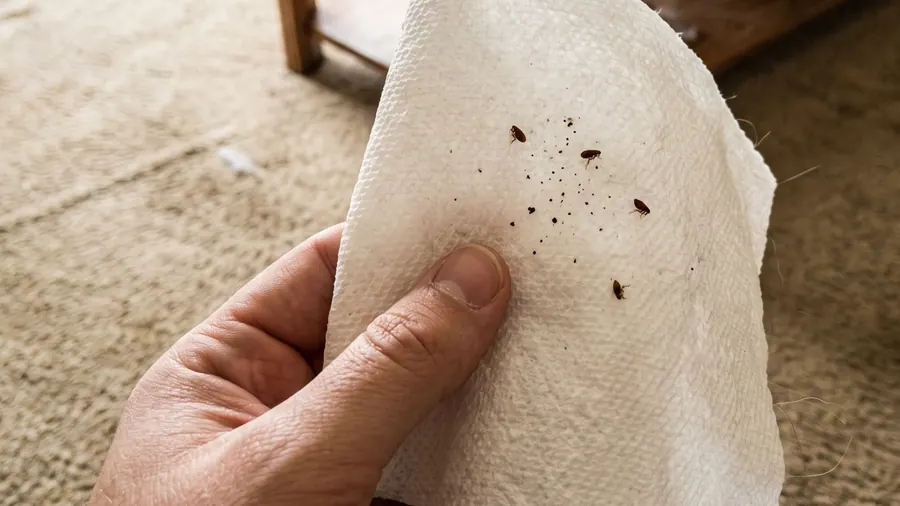
Adults and flea dirt combed straight out of the carpet. Only a small share of a flea population is the adults you can see; the rest is eggs and larvae down in the pile.
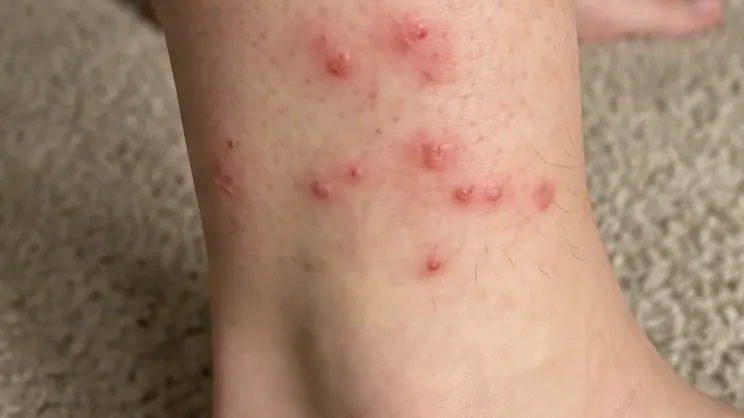
Fleas do not climb far, so bites cluster below the knee in tight little groups. Everyone in the house gets them eventually, but they start on whoever goes barefoot.
Pest-Free Guarantee
They come back? So do we, free.
Free re-treatments between scheduled visits on any recurring plan.
What it costs
Flea control comes with the mosquito plan.
Fleas sit in the same add-on package as mosquitoes and ticks, so the plan that covers one covers all three. The exterior work is ours. The indoor half, which is most of the population, is vacuuming and washing on your side, and neither half works without the other.
| General Pest + RodentNo fleas | General + Rodent + MosquitoFleas included | |
|---|---|---|
| What it covers | Ants, spiders, cockroaches, scorpions, wasps and rodents | Everything in the general plan, plus the mosquito, flea and tick package |
| Fleas | Not included | Included, exterior treatment |
| Where we treat | Foundation band, granular yard moat and property line | The same three layers, plus shaded yard and pet runs |
| The indoor half | Not applicable | Most of the population is in flooring and bedding, so vacuuming and washing has to happen alongside |
| If they come back | Free re-treatments between visits | Free re-treatments between visits |
| Price | From $66 a month* | From $166 a month* |
Treating the pet alone is the most common way this fails. Most of a flea population is eggs, larvae and pupae in the flooring, so the yard, the house and the animal have to be handled together or it rebuilds.
* Starting price. Your exact number depends on home size, lot size and current pest pressure.
Flea Control, answered straight.
Why do I still have fleas after treating my dog?
Because the dog was carrying about five percent of the problem. The rest, roughly 95 percent by Colorado State University's estimate, is eggs, larvae and pupae down in the carpet, the pet bedding and the shaded parts of the yard. A treated pet stops feeding the adults, but the pupae keep hatching and every new adult jumps straight back on. That is why we treat the house and the yard in the same visit, then come back timed to catch the next wave as it hatches.
Is it possible to have fleas in a house with no pets?
Yes, and it happens more than people expect. Fleas ride in on wildlife as well as pets, so a raccoon in the attic, a stray cat under the deck or a possum working the fence line can seed the yard. A previous owner's pet can leave pupae that sit tight in the carpet until footsteps and warmth wake them up, which is why an empty house sometimes erupts right after the boxes arrive. Ankle bites with no dog in sight are still worth a call. The treatment is the same: the flooring and the yard.
When is flea season in Central Texas, and does winter kill them?
June through September is the bad stretch, with the peak in early fall and activity climbing from spring. Winter drops the numbers but does not end them. Fleas need warmth and humidity, and Central Texas rarely gets a freeze hard enough or long enough to break the cycle, so the population rebuilds from whatever survived indoors. Texas AgriLife Extension notes fleas can persist here all year for exactly that reason. If you are waiting for January to solve it, January is not coming. Treat when you see them, and stay on prevention through the cold months.
Short of seeing one, how can I confirm my pet has fleas?
Skip looking for the fleas and look for what they leave. Part the fur at the base of the tail and along the belly and check for black specks. Comb a few onto a damp white paper towel. Ordinary grit stays gray. Flea dirt, which is digested blood, smears rust red. That test settles it in under a minute. Other tells are a pet that suddenly bites at its hindquarters, dark specks in the bedding, and bites on your own ankles. If the towel comes up red, the carpet has more than the pet does.
Do you treat the yard for fleas or just inside the house?
Both, in the same visit. Fleas breed wherever the pet rests, and in Central Texas that includes the shaded spots outside: under the deck, along the fence line, in the bed under the crepe myrtle where the dog lies in August. Treat only the carpet and the dog restocks the house from the yard the next afternoon. Treat only the yard and the pupae in the flooring keep hatching. So the technician does the hot spots indoors, the shaded zones outdoors and the pet bedding on one trip, then schedules the follow-up to catch the next hatch.
Does the $66 monthly pest plan include flea treatment?
Fleas are an add-on. The recurring general pest plan from $66 a month covers ants, roaches, spiders, scorpions, wasps and rodents, and fleas travel with mosquitoes and ticks in a separate exterior package that sits on top of it. We price that for your home, lot and pet situation with a free on-site quote, and there is no inspection fee. Once you are on a recurring plan, anything that shows up between visits is covered by free re-treatments.
More questions? Read the full FAQ or get a free quote.
Other pests we treat
One recurring plan covers all of these. No per-pest pricing and no upcharge when a different one shows up.
Every plan includes the full TriBarrier™ treatment. See all services →
Answered 24 hours · Austin, TX
Ready to be done with it?
Quotes are free, there is no inspection fee, and the phone is answered around the clock. Same-day service is usually open across the metro.