Austin, TX and 25 more cities
Bee control
We identify the colony first. Honey bees get a bee specialist, everything else we treat.
Quick answers
Bee control in Central Texas: the quick facts
Honey bees are pollinators, so we never treat them. We identify the colony and refer you to a beekeeper for live removal, and the referral is free. Carpenter bees we treat ourselves. Swarming here peaks in April and May, and Africanized honey bees are established in Central Texas, which is why identification comes first.
- Swarm season
- April & May
- The Texas Apiary Inspection Service puts state swarming mainly in these two months.
- Honey bees
- Referred, never treated
- We identify the colony and put you on to a beekeeper. The referral costs nothing.
- Carpenter bees
- These we treat
- Finger-width round holes in fascia or deck rails. Treated, then plugged.
- Nest removal
- $299, from $199
- Specials run through the season. Prevention stays in the $66/mo plan.
Written by the Bastion Pest Control service team · Licensed & insured in Texas · Last updated
Bees in Central Texas.
Central Texas has a serious Africanized honey bee population, and they are far more defensive than the honey bees you are picturing. Hives turn up in walls, eaves, sheds, and old trees.
Bees are pollinators, so a live honey bee colony is not a spray job. We identify what you have and bring in a bee specialist, who takes the colony out alive. Carpenter bees are the other half of the call, and those we treat ourselves.

Seasonal pattern
When do bees swarm in Central Texas?
Honey bee swarming is a spring event in Central Texas, concentrated in April and May. A swarm hanging in a tree is a colony in transit rather than a nest, and because bees are pollinators our job is to identify what you have and get a beekeeper to it.
- Swarm season
- April & May
- A cluster the size of a football hanging off a branch is a colony moving house, not an attack.
- Honey bees
- We refer, not treat
- Bees are pollinators. We identify the colony and put you on to a beekeeper for live removal.
- When it is structural
- Inside a wall
- A colony established in a wall void leaves comb and honey behind. That needs removing properly, not just sealing.
Warning signs
Signs a colony has moved in.
Heavy bee traffic in and out of one spot
Buzzing inside a wall or eave
Finger-width round holes in fascia or deck rails
Bees indoors making for the windows
Which bee you have decides who shows up. Carpenter bees drilling the trim are our job. A honey bee colony in a wall gets a bee specialist for live removal, and the referral is free. Call 843-480-8699 and describe the traffic. We can generally tell from your description whether it needs same-day attention.
How we get rid of bees.
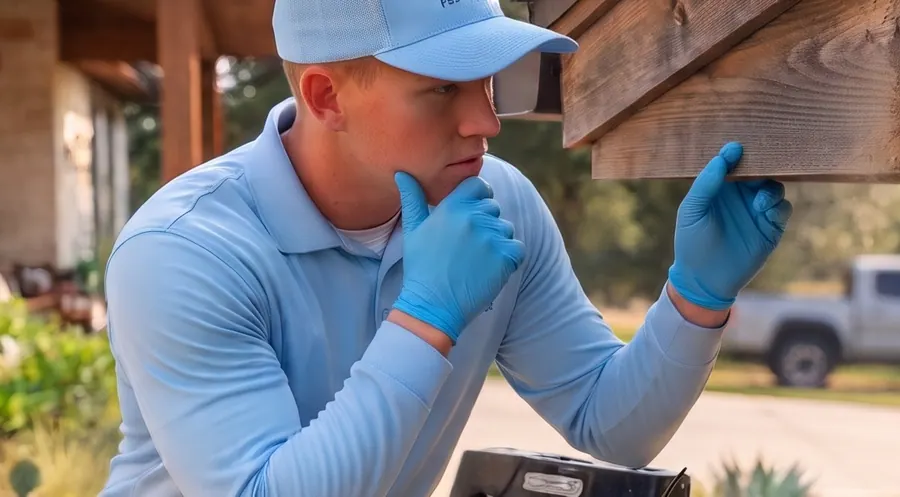
Inspect
We locate the hive and assess the colony size and risk.
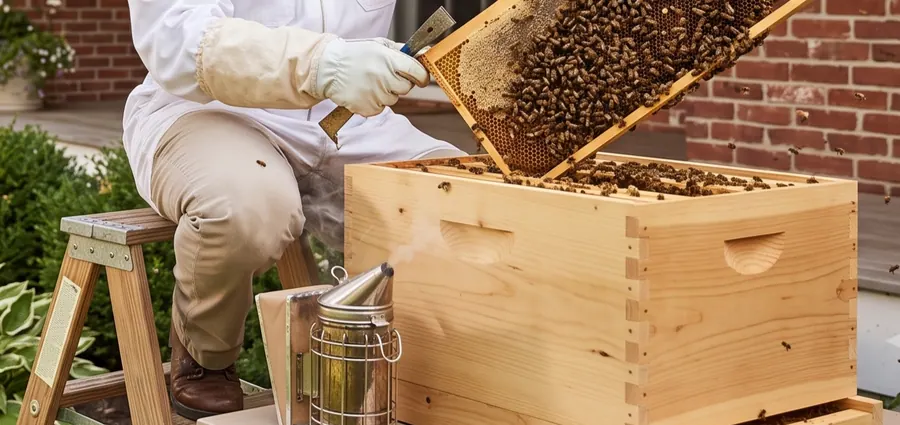
Treat
A honey bee colony goes to a bee specialist for live removal. Carpenter bees we treat and plug.

Protect
Entry points sealed so a new colony can't move in.
Which bee have you actually got?
Every photo here came off a real service visit around the Austin metro. Telling them apart matters more with bees than with anything else we handle: ground nesters can still sting but are solitary and soon gone, carpenter bees are chewing your trim, and a honey bee colony in a wall belongs to a beekeeper rather than a sprayer.
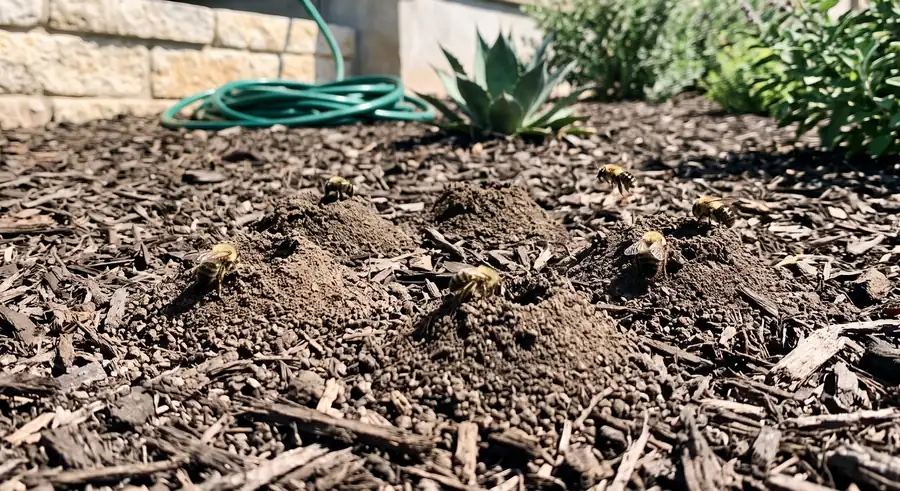
Solitary ground bees, one female to a hole. They do not swarm, they barely defend, and they are finished in a few weeks. Nothing here needs treating.
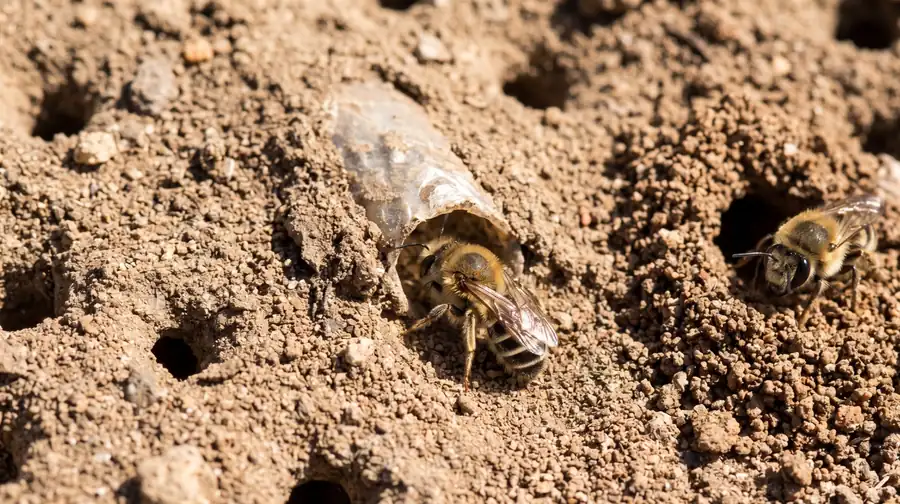
Up close there is no colony to find. Each female digs and stocks her own burrow, which is why a patch of dozens of holes still is not a hive.
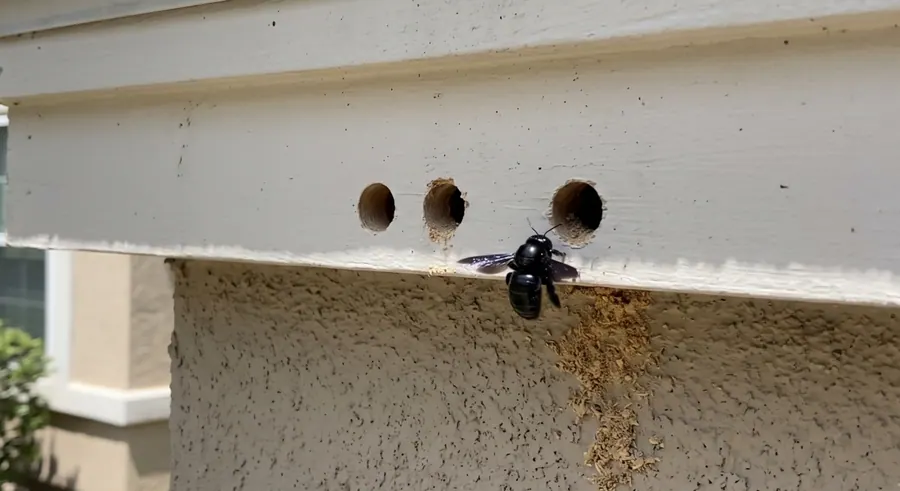
A carpenter bee bores a hole about the width of a finger, then tunnels along the grain. The sawdust streak down the wall is the tell, and this one is worth treating.
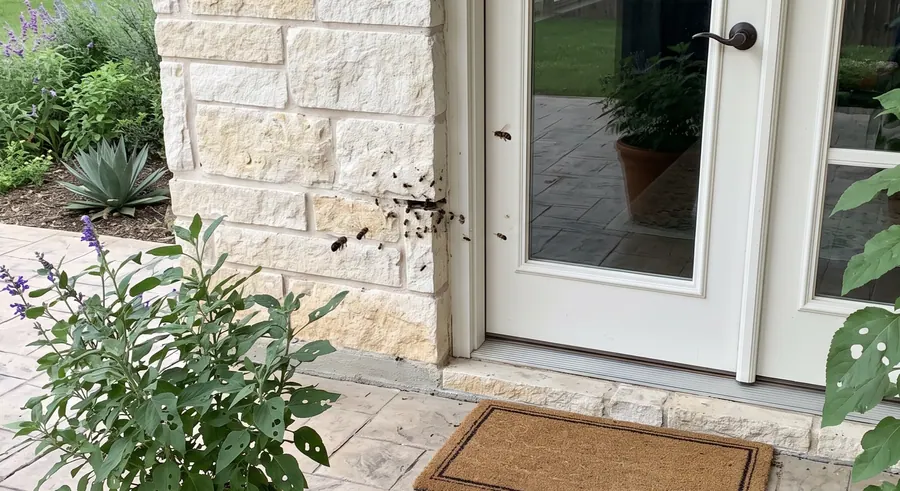
A steady line in and out of one gap means an established colony behind the veneer, not a swarm resting up. This is the moment to stop and call rather than seal it.
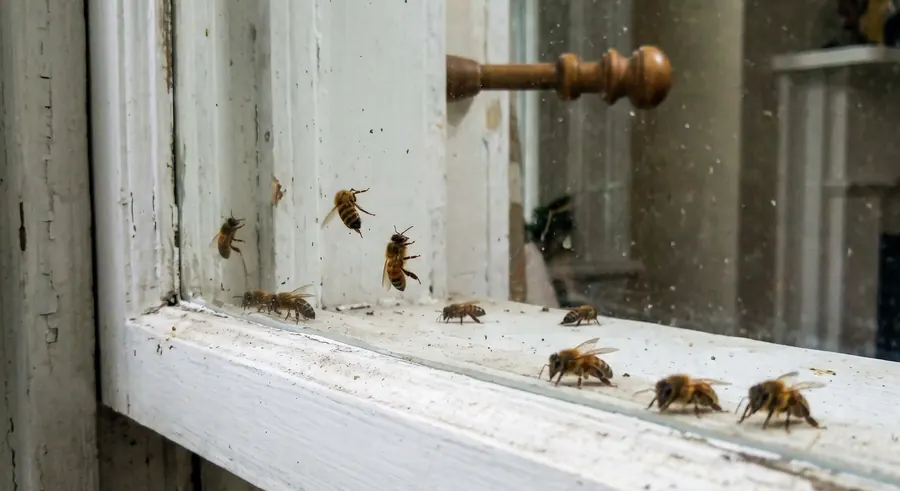
Bees indoors usually mean the colony is in the wall cavity and workers are heading for light instead of the entrance. Sealing the outside hole now traps them in the room.
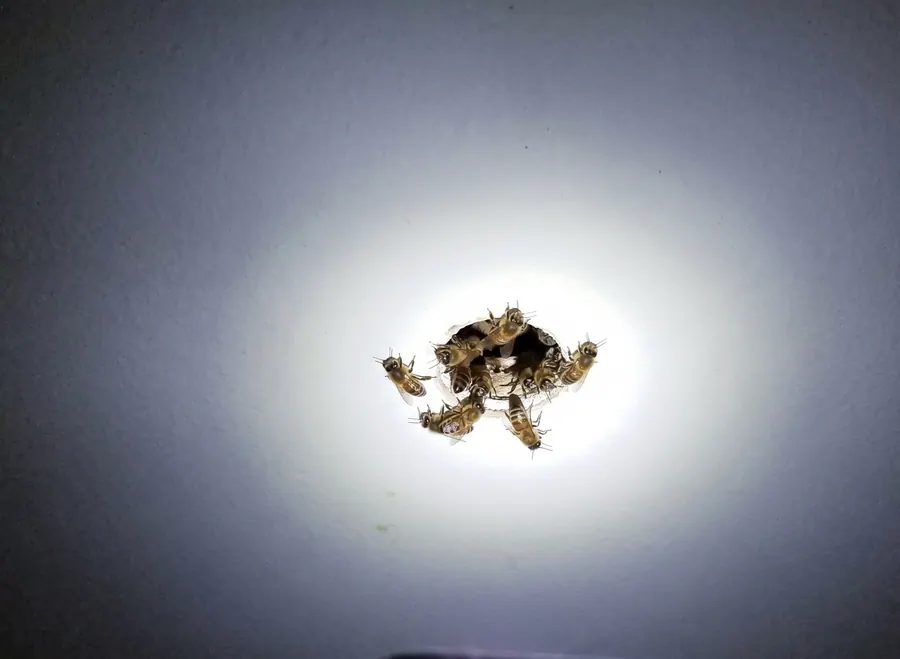
Once they are working a hole in the drywall, the comb is already overhead. Honey bees are pollinators, so this is a beekeeper referral for live removal rather than a treatment.
What it costs
Prevention is in the plan. Nest removal is the add-on.
Bees are covered by the general pest plan like everything else on it, so the exterior work that keeps a colony from moving into an eave or a wall void happens on every visit at no extra charge. Taking down an established nest is the one job priced on its own. A live honey bee colony is a beekeeper referral first, and that referral costs you nothing.
- Prevention
- In the plan
- Eaves, soffits and entry points treated and sealed on every recurring visit, from $66 a month. No per-pest charge and no upcharge when bees turn up.
- Nest removal
- $299*
- The standard rate for a one-time removal. The nest comes down and the entry point is sealed so nothing moves back into the same void.
- On special now
- From $199*
- Current promotional rate. Where it lands depends on where the nest is and how much has to come apart to reach it, and you get the number before we start. Occasional sales can drop it as low as $19.
- Honey bees
- Referred free
- We identify the colony and put you on to a beekeeper for live relocation. There is no charge for the identification or the referral.
Ask about specials before you book. We run promotions on nest removal through the season, and some of them take it down to $19. They are not posted here because they change, so call 843-480-8699 for a free quote and we will tell you what is running that day.
| General pest planPrevention | Nest removalOne nest | |
|---|---|---|
| What it is for | Keeping a colony from moving into an eave or wall void | Taking down a nest that is already established |
| Right for you if | There is no colony yet, or it has already been removed | There is active traffic in and out of one spot now |
| Carpenter bees | Exterior treatment on every visit | Treated, then the holes are plugged |
| Honey bees | Never treated. We identify and refer you to a beekeeper | Never treated. Live removal by a beekeeper, and the referral is free |
| Other pests covered | Ants, spiders, cockroaches, scorpions, wasps and rodents | Bee work only |
| Price | From $66 a month* | $299, currently from $199* |
* Starting price. Your exact number depends on home size, lot size and current pest pressure.
Bee control, answered straight.
Do you kill honey bees?
No. Honey bees are pollinators, so we never treat them. We identify the colony and refer you to a beekeeper who takes it out alive, and that referral is free. Carpenter bees are the other half of the call, and those we do treat: they leave finger-width round holes in fascia, deck rails and untreated timber, and we treat them and plug the holes.
When do bees swarm in Central Texas?
April and May, with the wider swarm season running roughly March through July. The Texas Apiary Inspection Service, the state apiary regulator and part of the Texas A&M system, puts Texas swarming mainly in those two months. A cluster the size of a football hanging off a branch is a colony moving house rather than a nest, and it will often move on by itself within a day or two.
Are the bees in my wall Africanized?
Possibly, and you cannot tell by looking. Central Texas has an established Africanized honey bee population, and they are far more defensive than the honey bees most people picture. That is exactly why identification comes first, and why nobody should open a wall to find out. Treat any colony in a structure as defensive and call before you disturb it.
What does bee nest removal cost?
Nest removal is $299, and the current special starts at $199. Prevention is already in the general pest plan from $66 a month, which treats the eaves and wall voids a colony would move into. If what you have is a honey bee colony, it is a beekeeper referral instead, and both the identification and the referral cost you nothing.
Can I just seal the hole the bees are using?
No, and it usually makes things worse. The colony dies inside and the comb and honey stay in the wall. That draws other pests, and in warm weather the honey can soften and come through the drywall. A colony established in a wall void needs removing properly rather than sealing in.
How do I tell carpenter bees from honey bees?
Carpenter bees are large with a shiny, mostly hairless abdomen, and they leave perfectly round finger-width holes in fascia, deck rails and untreated timber, usually with sawdust below. Honey bees are fuzzier, do not bore wood, and come and go from one gap in heavy traffic. Round holes and sawdust means carpenter bees, and those are ours to treat.
More questions? Read the full FAQ or get a free quote.
Pest-Free Guarantee
They come back? So do we, free.
Free re-treatments between scheduled visits on any recurring plan.
Other pests we treat
One recurring plan covers all of these. No per-pest pricing and no upcharge when a different one shows up.
Every plan includes the full TriBarrier™ treatment. See all services →
Answered 24 hours · Austin, TX
Ready to be done with it?
Quotes are free, there is no inspection fee, and the phone is answered around the clock. Same-day service is usually open across the metro.