Austin, TX and 25 more cities
Rodent control
Rats and mice. Found, removed, and locked out for good.
Quick answers
Rodent control in Central Texas: the quick facts
Roof rats are the biggest rodent problem in Central Texas homes, and indoor pressure peaks November to January after the first real cold snap. A mouse needs a gap the size of a dime and a roof rat a quarter. Trapping without sealing just makes room for the next one.
- Peak season
- November to January
- The first sustained cold snap is the trigger, not the calendar.
- Most common
- Roof rat
- Climbs, nests in attics, and chews wiring on the way past.
- Gap size
- A dime or a quarter
- A mouse needs a dime-sized gap. A roof rat needs a quarter.
- Price
- From $66/month
- Prevention is in the plan. An active infestation is a separate job, from $449.
Written by the Bastion Pest Control service team · Licensed & insured in Texas · Last updated
Rodents in Central Texas.
Roof rats are Austin's biggest rodent problem. They squeeze through a gap the size of a quarter, nest in your attic, and chew the wiring on the way past. Rent free and destructive.
Traps alone never finish it. Exclusion does: find every entry point, seal it properly, and remove whoever already moved in. We wrote up the whole problem, from the tree limb to the attic, in our guide to roof rats in Central Texas.

Seasonal pattern
When do rodents get into Central Texas homes?
Rodents are the one pest on this list that gets worse as the weather gets better for everyone else. Through a Central Texas summer they are outside with plenty to eat. Once it turns cold, your attic becomes the most appealing thing for a hundred yards.
- Peak season
- November to January
- The first sustained cold snap is the trigger. Warm air leaking out of a gap is exactly what a rat is looking for.
- The quiet months
- June to August
- Plenty of food and cover outdoors means no reason to risk your attic. Quiet outside is not the same as sealed up.
- What to do first
- Seal, then trap
- A mouse needs a gap the size of a dime and a roof rat a quarter. Trapping without sealing just makes room for the next one.
Warning signs
Noises after dark, droppings by day.
Scratching in walls or the attic at night
Greasy rub marks along baseboards
Insulation pushed into tunnels across the attic floor
Chewed fruit or a gnawed bag in the pantry
Rats do not wait for business hours, and neither does the phone. Call or text 843-480-8699 and tell us what you heard, where, and what time of night. Roof rats overhead and Norway rats at slab level are different jobs, and a description is often enough to tell whether it needs same-day attention.
How we get rid of rodents.
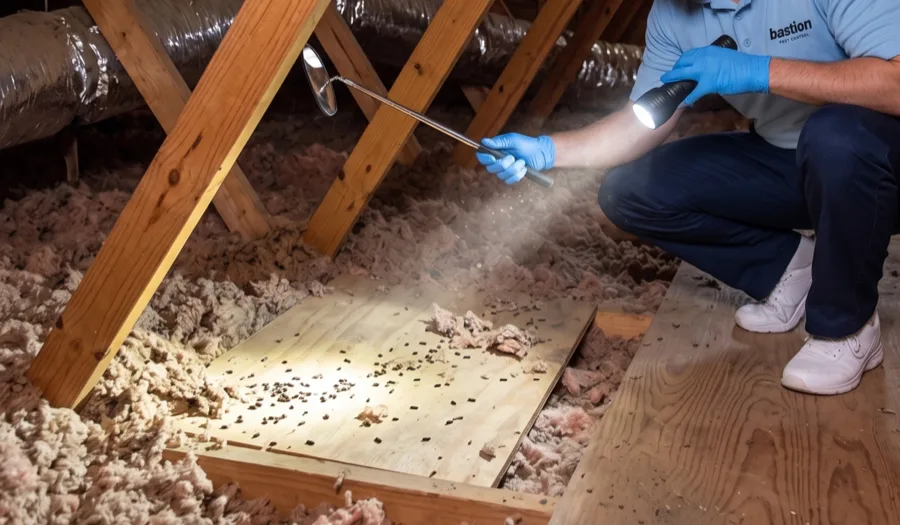
Inspect
Full-home inspection: attic, roofline, foundation, garage.
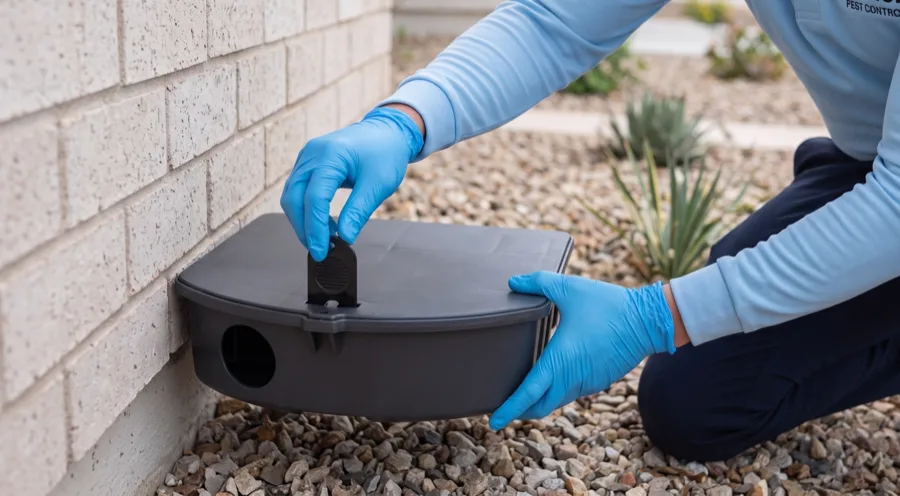
Treat
Removal with sealed, tamper-proof stations. Pet and kid friendly.
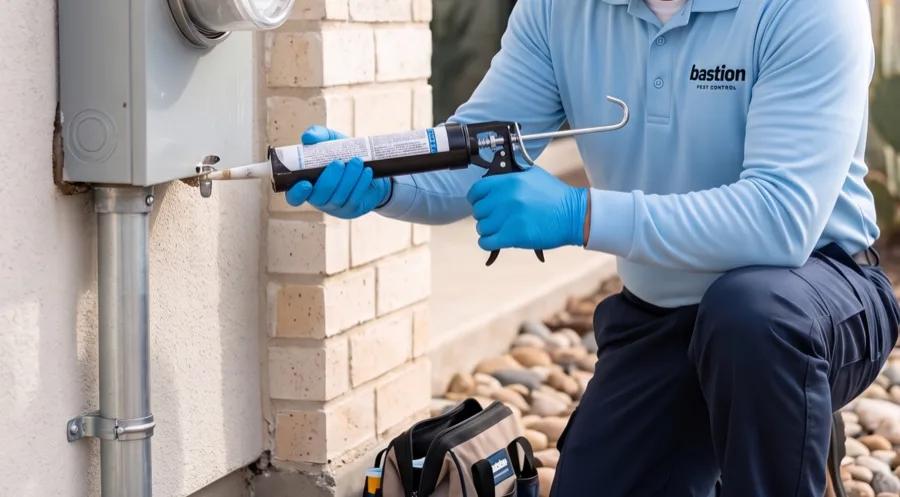
Protect
Every entry point sealed.
Rat or mouse? What we find in Central Texas homes.
Every photo here came off a real service visit around the Austin metro. Rat or mouse is the first thing we establish, because roof rats climb, Norway rats stay low and deer mice squeeze through gaps the other two cannot.
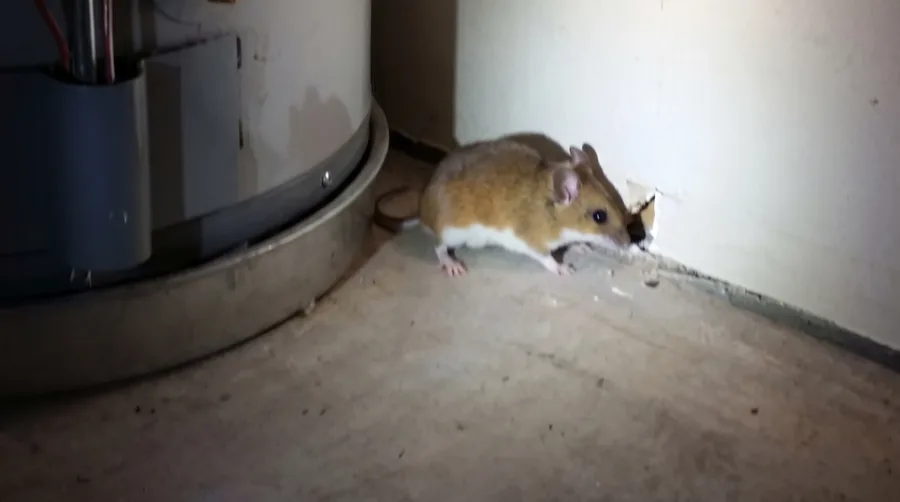
Chewed clean through the drywall beside a water heater. The sharp white belly and large ears make it a deer mouse, and the hole is how it has been getting in.
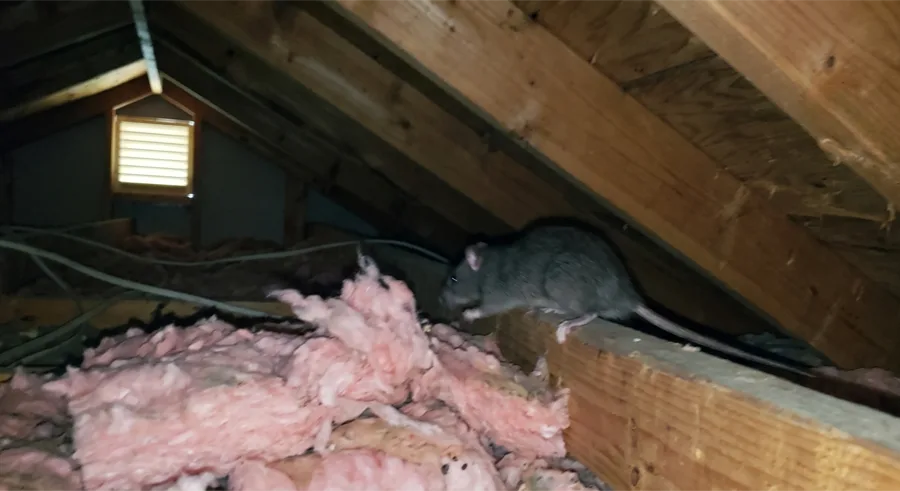
Roof rat on an attic rafter. Dark gray, oversized ears, and a tail longer than the body, which is the quickest way to tell it from a Norway rat.
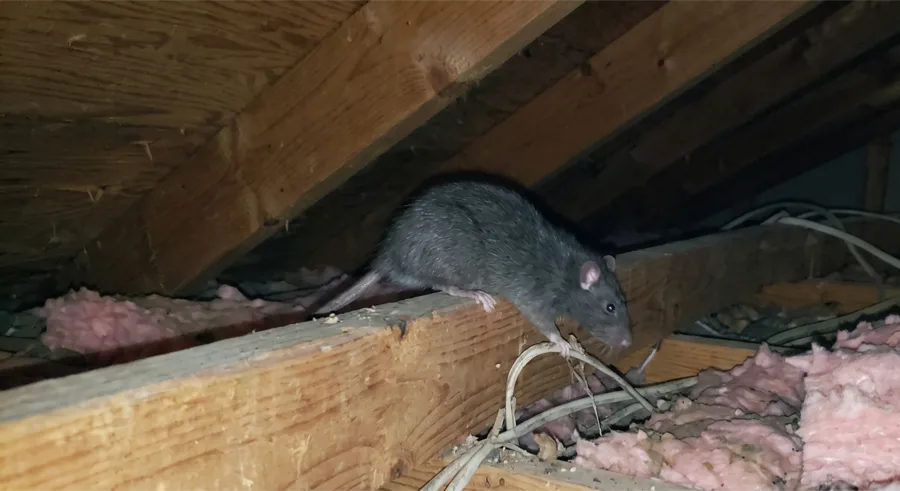
The same species closer in, walking a joist next to the wiring. Gnawed cable is the part of an attic rat problem that turns expensive.
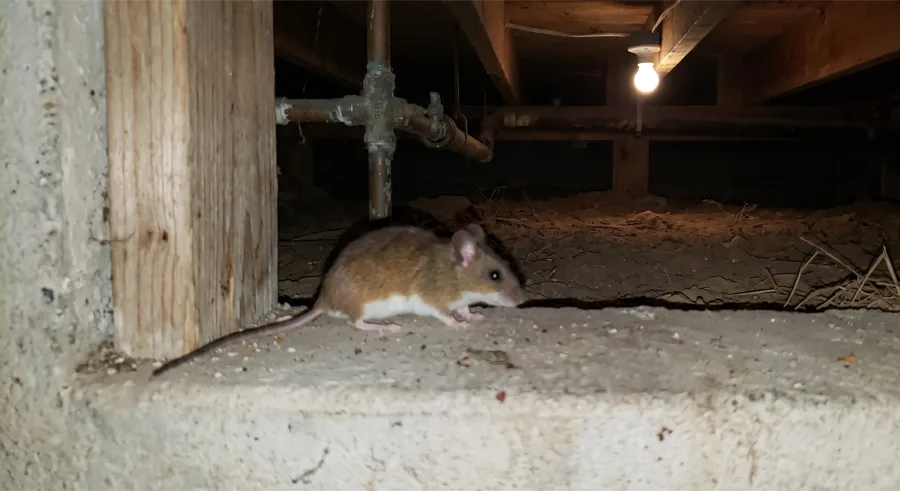
Same species, different room. Crawl spaces give them the damp, dark, undisturbed run they want, and a straight line to the floor above.
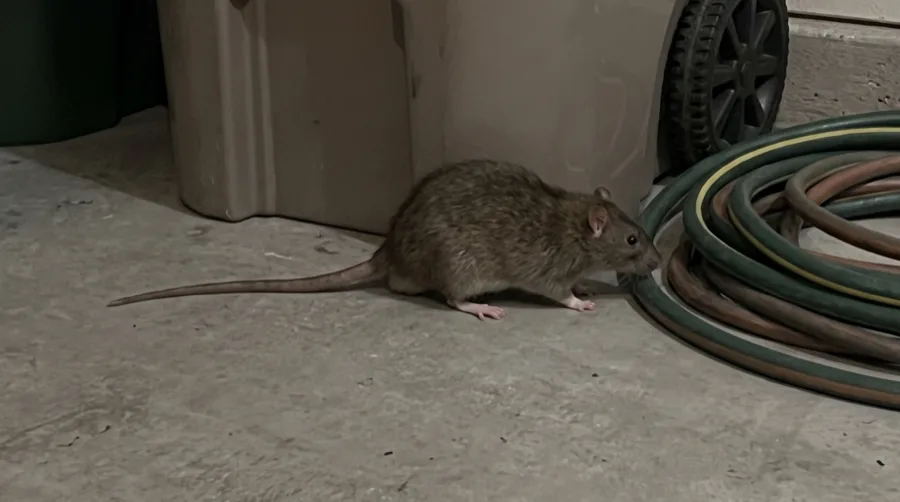
Heavier build, blunter nose, tail shorter than the body. Norway rats work at ground level, which is why the garage and the slab edge are where they show up.
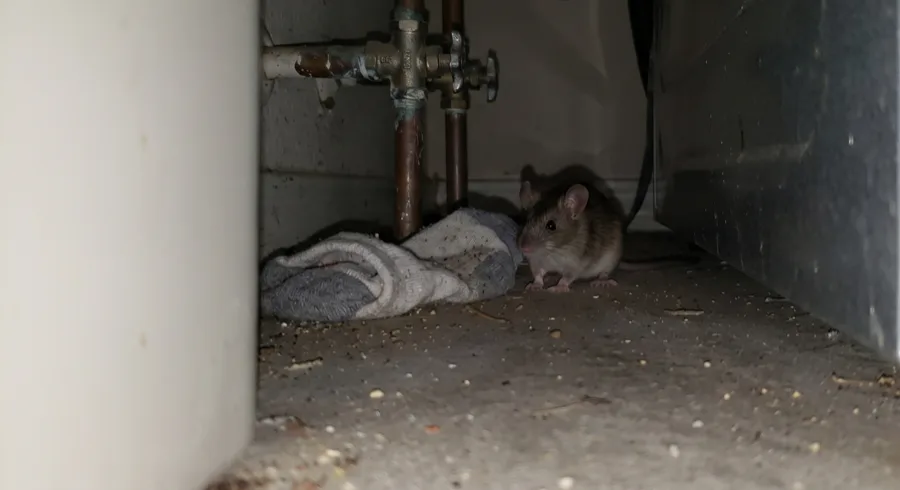
Too dark and too side-on for us to name the species honestly. What is not ambiguous is the droppings scattered across the floor around it.
Photographs by the Bastion Pest Control service team. Do not sweep or vacuum rodent droppings dry. Text a photo to 843-480-8699 and we will tell you which species you have.
Pest-Free Guarantee
They come back? So do we, free.
Free re-treatments between scheduled visits on any recurring plan.
What it costs
Prevention is in the plan. An infestation is its own job.
The recurring plan monitors your house and keeps rodents from settling in. It is not built to clear an attic that already has roof rats in it. If you are hearing scratching at night, start with the infestation work and let the plan hold the line afterwards.
| General Pest + RodentPrevention | Rodent infestationActive problem | |
|---|---|---|
| What it is for | Monitoring and keeping rodents from moving in | Removing rodents that are already in the structure |
| Right for you if | You hear nothing, or the infestation work is done | You hear scratching at night, or you are finding droppings |
| What you get | Sealed, tamper-proof stations checked on every visit | Full inspection, removal, and every entry point found |
| Sealing the gaps | Entry points flagged as we find them | Physical exclusion quoted on top, once we see what the house is doing |
| Other pests covered | Ants, spiders, cockroaches, scorpions and wasps | Rodent work only |
| Price | From $66 a month* | From $449* |
Trapping without sealing just makes room for the next one, so physical exclusion is quoted on top once we can see what your house is doing. Call and describe what you heard and when, and we can usually tell you which job you need.
* Starting price. Your exact number depends on home size, lot size and current pest pressure.
Rodent control, answered straight.
When do rodents get into Central Texas homes?
Indoor pressure peaks November to January. Through a Central Texas summer they are outside with plenty of food and cover, so there is no reason to risk your attic. The first sustained cold snap is the trigger: warm air leaking out of a gap is exactly what a rat is looking for.
Rat or mouse, and does it matter?
It matters a lot. Roof rats climb and nest in attics, Norway rats stay down at slab level, and deer mice squeeze through gaps the other two cannot. Texas A&M AgriLife records roof rats as the rat most often found in Texas homes. Roof rats overhead and Norway rats at ground level are genuinely different jobs.
How small a gap can a rodent get through?
A mouse needs a gap about the size of a dime, and a roof rat one about the size of a quarter. That is why a proper inspection walks the roofline, soffits, foundation and garage rather than just the room you heard the noise in.
Why is trapping on its own not enough?
Because trapping removes the rodents already inside and does nothing about the hole they came through. Sealing without trapping shuts them in. Trapping without sealing just makes room for the next one. Both have to happen, in that order, or the problem comes back.
What does rodent control cost?
Prevention and monitoring are in the general pest plan from $66 a month, which includes sealed, tamper-proof stations checked on every visit. An active infestation is a separate job from $449, and physical exclusion, meaning the sealing itself, is quoted on top once we can see what the house is doing.
What are the first signs of rodents?
Scratching in walls or the attic after dark, greasy rub marks along baseboards, insulation pushed into tunnels across the attic floor, and chewed fruit or a gnawed bag in the pantry. Call and tell us what you heard, where, and what time of night, because that usually tells us which of the two jobs you need.
More questions? Read the full FAQ or get a free quote.
Rodent control where you live.
Roof rats use tree limbs as an on-ramp to the roofline, so the old canopy in Hyde Park and Forest Creek does the recruiting. In Hutto and Georgetown it is field mice in from pasture after the first cold snap. Your city, your rodent.
We service 26 cities and 83 ZIP codes with no travel fee anywhere. The service area page has every city and ZIP, plus a coverage map.
Other pests we treat
One recurring plan covers all of these. No per-pest pricing and no upcharge when a different one shows up.
Every plan includes the full TriBarrier™ treatment. See all services →
Answered 24 hours · Austin, TX
Ready to be done with it?
Quotes are free, there is no inspection fee, and the phone is answered around the clock. Same-day service is usually open across the metro.