Austin, TX and 25 more cities
Wasp control
Nests removed properly, then kept from coming back.
Quick answers
Wasp control in Central Texas: the quick facts
Wasp colonies reach full size in August and September in Central Texas, which is exactly when they are least tolerant of anyone walking past. Prevention is included in the general pest plan from $66 a month. Taking down an active nest is priced separately at $299, currently from $199.
- Peak season
- August & September
- The nest is at maximum size and minimum patience.
- Where it starts
- One spring queen
- Every nest you see in August began as a single queen in March.
- Nest removal
- $299, from $199
- Priced on the job. Specials run through the season.
- Honey bees
- Referred, never treated
- A honey bee colony goes to a beekeeper for live removal instead.
Written by the Bastion Pest Control service team · Licensed & insured in Texas · Last updated
Wasps in Central Texas.
Paper wasps, yellowjackets and mud daubers all love Texas eaves, grills and playscapes. Most stings happen when somebody disturbs a nest they never knew was there.
Knocking a nest down yourself is how people end up sprinting across their own lawn. We remove nests properly, then treat the spot so next spring's queens find it unsuitable.
Seasonal pattern
When are wasps most aggressive in Central Texas?
A wasp colony is an annual project. It begins with one queen who survived the winter, builds all through spring and summer, and reaches full size in late summer. That is also when it is least tolerant of anyone walking past, which is why most stings happen in a two month window.
- Peak season
- August & September
- The nest is at maximum size and minimum patience. Most stings we hear about happen in these two months.
- Where it starts
- One spring queen
- Every nest you see in August began as a single queen in March. Knocking one down in April is a five minute job.
- Worst thing to do
- Mow near a nest
- Ground nesting yellowjackets react to vibration. A mower is the most common way people find them.
Warning signs
Spot the nest before it spots you.
Wasps entering a hole in the wall or ground
More wasps every week, the nest is growing
Steady traffic in and out behind a gutter
Golf-ball starter nests under the eave in April
Nest size sets the urgency. A starter nest in April is a quick trip. An enclosed ball in a live oak in August is a suit and a plan. Call or text 843-480-8699 and describe the nest and the traffic, and we can usually tell you whether it needs same-day attention.
How we get rid of wasps.
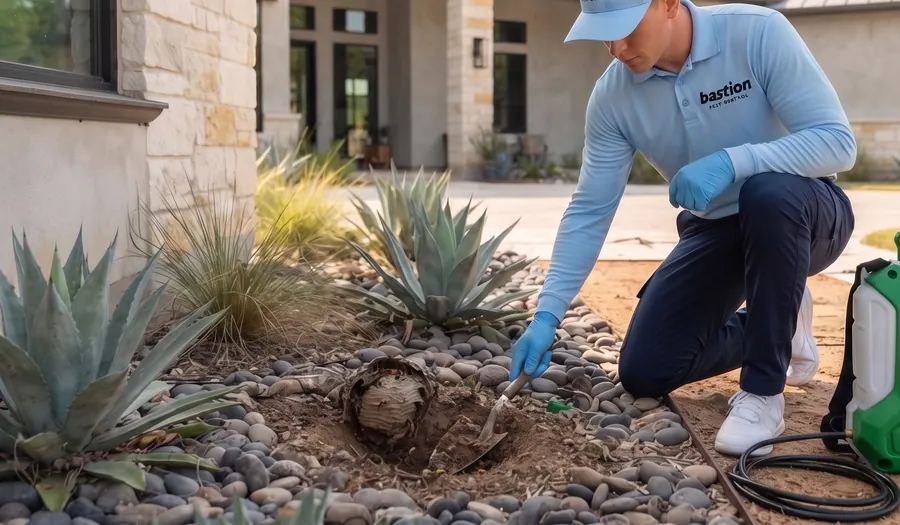
Inspect
We locate every nest, visible and hidden.
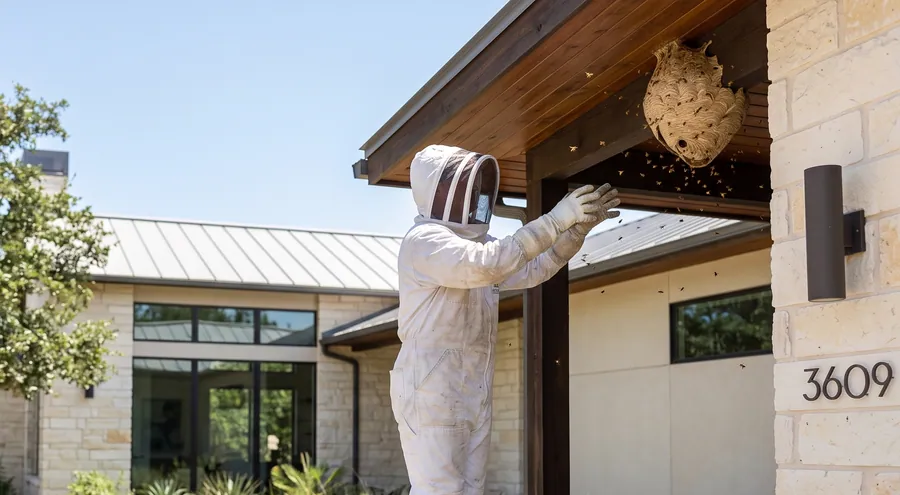
Treat
Careful removal, with protective treatment of the site.
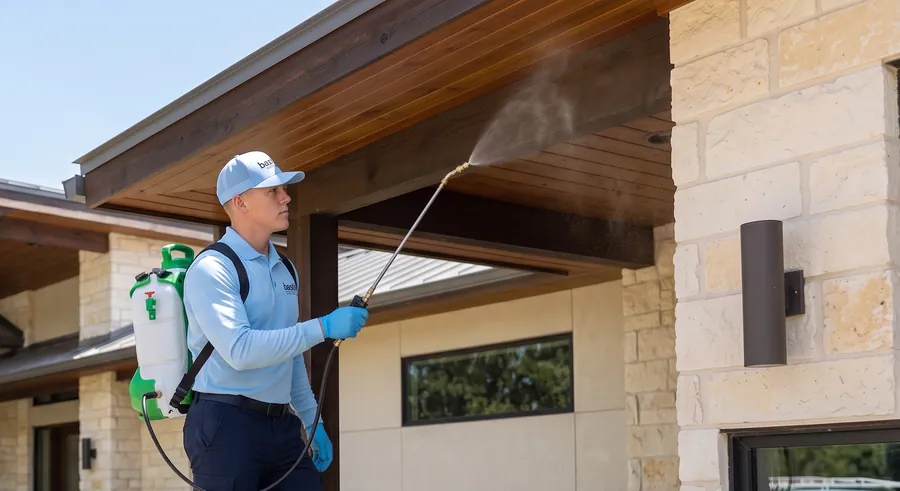
Protect
Eaves and overhangs treated so they do not rebuild.
Where wasps actually build in Central Texas.
Every photo here came off a real service visit around the Austin metro. Four different wasps, four completely different nests: exposed comb under an eave, an enclosed paper ball, mud tubes on stucco, burrows in the lawn. What takes one of them down will not touch another.
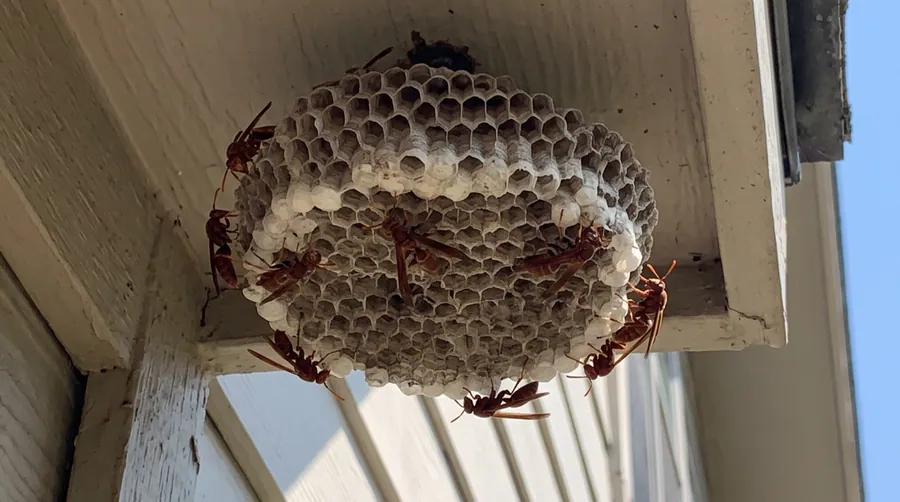
Paper wasps never build a paper shell. The comb hangs open, which is why you can count the capped cells from the ground, and why the colony can see you just as clearly.
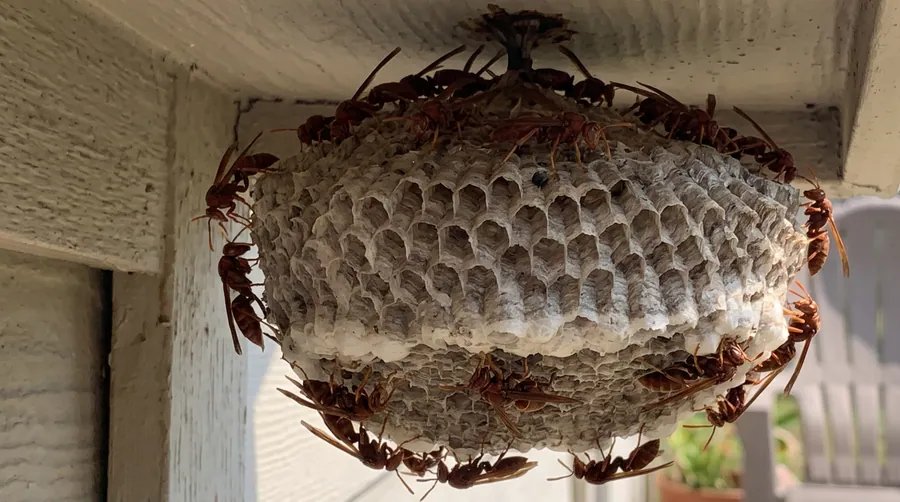
By midsummer there are enough workers to blanket the nest they are defending. At this size a colony reacts to a door slam or footsteps on the porch, not just to contact.
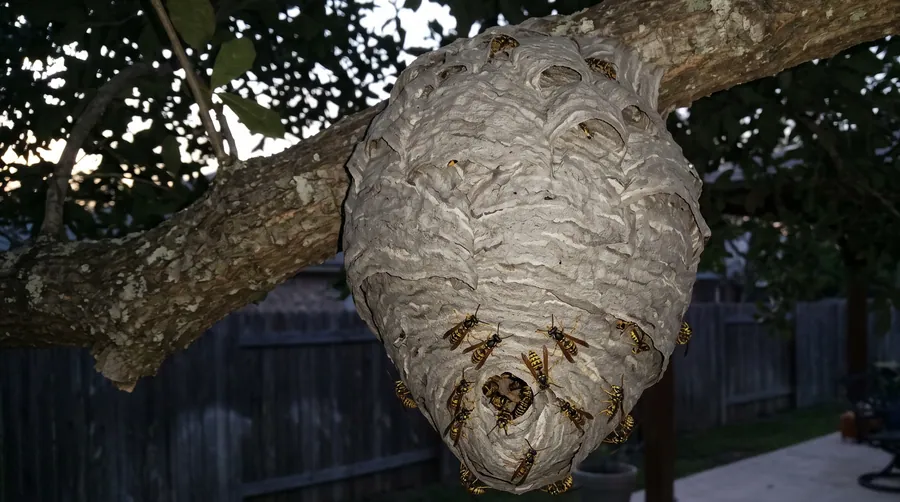
Enclosed aerial nests grow fast and hide their numbers. By the time one reaches this size it holds hundreds of workers behind a single guarded entrance at the bottom.
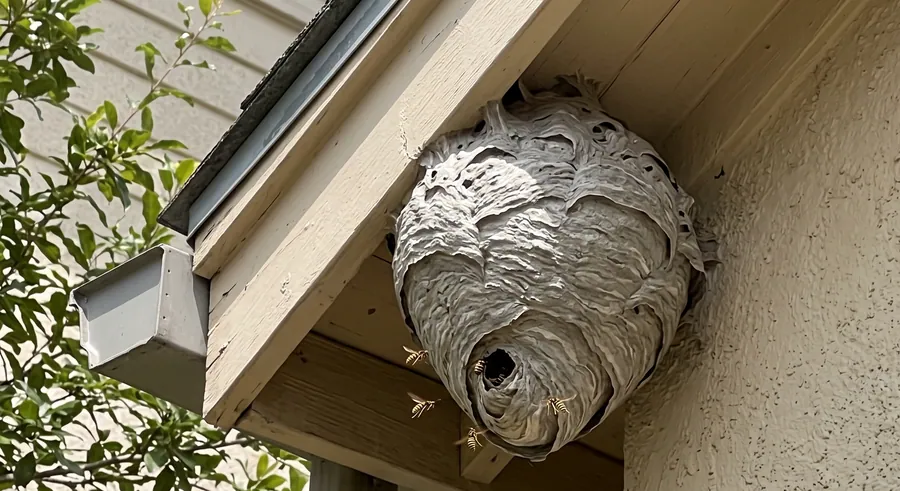
The same enclosed build, pressed against a soffit instead of a limb. Steady traffic in and out of one small hole is usually the first thing anyone notices.
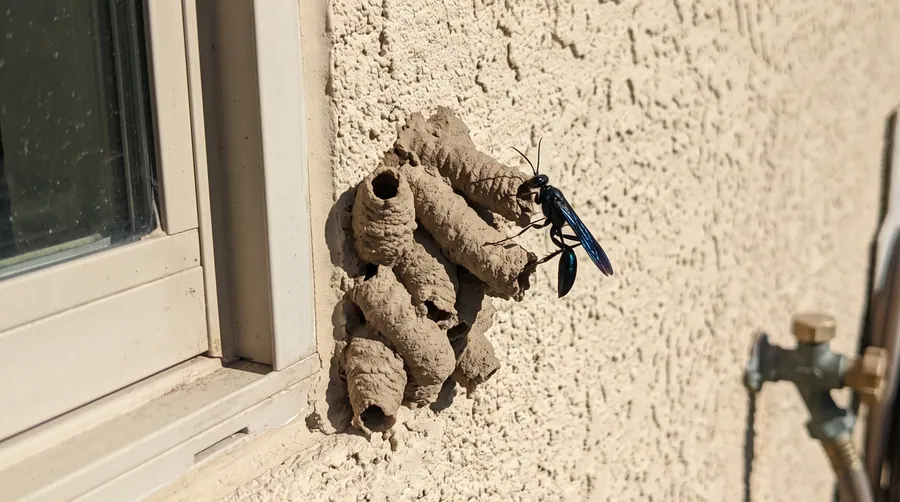
Mud daubers pack tubes against stucco and stock each cell with paralyzed spiders. They rarely sting, but the nests stain the wall and they draw in the wasps that raid them.
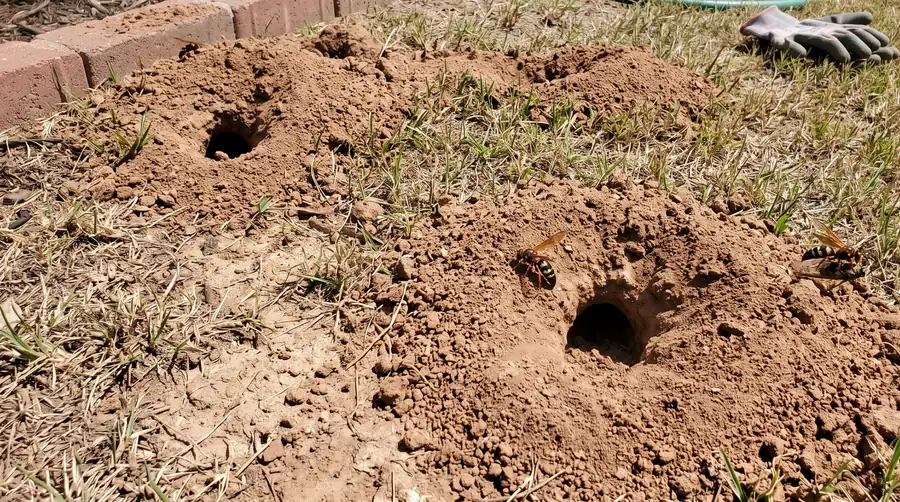
Cicada killers dig instead of building. Every mound is one female tunnelling, and a bare sunny strip beside a bed or a walkway will collect dozens of them by July.
What it costs
Prevention is in the plan. Nest removal is the add-on.
Wasps are covered by the general pest plan like everything else on it, so eaves, soffits and overhangs get treated on every visit at no extra charge. Taking down an active nest is the one wasp job priced on its own, because it is a trip out in a suit rather than part of a round.
- Prevention
- In the plan
- Eaves, soffits and overhangs treated on every recurring visit, from $66 a month. No per-pest charge and no upcharge when wasps turn up.
- Nest removal
- $299*
- The standard rate for a one-time nest removal. The nest comes down and the site is treated so a new queen does not rebuild there.
- On special now
- From $199*
- Current promotional rate. Where it lands depends on how many nests there are and how hard they are to reach, and you get the number before we start. Occasional sales can drop it as low as $19.
- Travel fee
- $0
- No trip charge or fuel surcharge anywhere in the service area, and the quote itself is free.
Ask about specials before you book. We run promotions on nest removal through the season, and some of them take it down to $19. They are not posted here because they change, so call 843-480-8699 for a free quote and we will tell you what is running that day.
| General pest planPrevention | Nest removalOne nest | |
|---|---|---|
| What it is for | Keeping wasps from building on the house in the first place | Taking down a nest that is already built |
| Right for you if | There is no nest yet, or the nest is already gone | There is an active nest on the property right now |
| What you get | Recurring TriBarrier™ with eaves, soffits and overhangs treated | One visit: the nest comes down and the site gets treated |
| If they come back | We re-treat free, with no limit and no trip fee | Prevention is what stops the next one, so most people add the plan |
| Honey bees | Never treated. We refer you to a beekeeper | Never treated. We refer you to a beekeeper |
| Price | From $66 a month* | $299, currently from $199* |
* Starting price. Your exact number depends on home size, lot size and current pest pressure.
Wasp control, answered straight.
When are wasps most aggressive in Central Texas?
August and September. A wasp colony is an annual project: one queen who survived the winter founds the nest in spring, workers build it through summer, and it reaches full size in late summer. Texas A&M AgriLife describes that cycle, and a yellowjacket colony can reach several thousand workers. Peak size and peak defensiveness arrive together.
Should I knock a wasp nest down myself?
Not once it is past the starter stage. A golf-ball nest under the eave in April is a five minute job. An enclosed ball in a live oak in August is a suit and a plan, and knocking one is how people end up sprinting across their own lawn. Call and describe the nest and the traffic first, and we can tell you which one you have.
What does wasp nest removal cost?
Nest removal is $299, with the current special starting at $199. Prevention is already in the general pest plan from $66 a month: eaves, soffits and overhangs get treated on every visit so next spring's queens find them unsuitable.
Why do wasps keep building in the same spot?
Because the site suits them: sheltered, dry and out of the wind. Taking a nest down without treating the site leaves that invitation open, so the next queen builds in the same corner. Treating the spot is what actually ends the pattern.
What is the most common way people get stung?
Mowing. Ground-nesting yellowjackets react to vibration, and a mower is the most common way people find a nest they never knew was there. If you have seen wasps going in and out of a hole in the ground, mark it and stay off it until it is handled.
Do you remove honey bee nests as well?
No. Honey bees are pollinators and we never treat them. If what you have turns out to be a honey bee colony rather than wasps, we identify it and refer you to a beekeeper for live removal, and the referral is free. Paper wasps, yellowjackets and mud daubers are ours.
More questions? Read the full FAQ or get a free quote.
Pest-Free Guarantee
They come back? So do we, free.
Free re-treatments between scheduled visits on any recurring plan.
Wasp control where you live.
Deep eaves on Georgetown's big lots, brand-new soffits and porch ceilings in Hutto, and the Hill Country eaves of Leander and Cedar Park all get paper wasps for the same reason: shelter. Mud daubers ride along on the stucco. Your city is below.
We service 26 cities and 83 ZIP codes with no travel fee anywhere. The service area page has every city and ZIP, plus a coverage map.
Other pests we treat
One recurring plan covers all of these. No per-pest pricing and no upcharge when a different one shows up.
Every plan includes the full TriBarrier™ treatment. See all services →
Answered 24 hours · Austin, TX
Ready to be done with it?
Quotes are free, there is no inspection fee, and the phone is answered around the clock. Same-day service is usually open across the metro.