Wasp control in Georgetown, TX.
Georgetown gives wasps a century of options, from bracketed wraparound porches downtown to soffits that have not seen a first summer in the new subdivisions. We remove the nest and treat the wood so the same corner does not get re-leased next spring. Eave treatment comes with the recurring plan from $66 a month, and re-treatments between visits cost nothing.
Written by the Bastion Pest Control service team · Licensed & insured in Texas · Last updated
Georgetown wasp control at a glance
Old porches with a hundred years of gaps on one side of town, fresh soffits on the other, and two river forks feeding both. That is the Georgetown wasp situation in a sentence.
- Most common
- Paper wasps
- Wraparound porches downtown and fresh eaves in the new subdivisions both suit them.
- Nest removal
- From $199*
- Quoted per job, since it means a suit and a ladder. Specials change often.
- Peak season
- April - October
- Colonies peak late summer and get defensive.
- Urgent cases
- Same-day
- Nest by a door or a sting allergy at home.
- Prevention
- Eave treatment
- In the plan on every visit. Treating surfaces is what stops the rebuild.
- Honey bees
- Referred, not killed
- We send you to a beekeeper for live removal.
Prevention is in the plan. Nest removal is the add-on.
Two numbers matter for wasps in Georgetown, and one of them is zero. Zero is the upcharge for wasp prevention on the recurring plan; the eaves, soffits and porch ceilings get treated on every visit, and a colony that starts between visits gets a free re-treatment. The other number is the per-job price for taking down an active nest, which we quote before anyone climbs a ladder.
Ask about specials before you book. We run promotions on nest removal through the season, and some of them take it down to $19. They change too often to post here, so call 843-480-8699 for a free quote and we will tell you what is running that day.
See full pricing details →One-time specialty job, retail $299. The nest comes down and the site is treated so a new queen cannot rebuild there.
A single-family Georgetown home begins here, wasp prevention on every visit, with free returns in between.
| General pest planPrevention | Nest removalOne nest | |
|---|---|---|
| What it is for | Keeping wasps from building on the house in the first place | Taking down a nest that is already built |
| Right for you if | There is no nest yet, or the nest is already gone | There is an active nest on the property right now |
| What you get | Recurring TriBarrier with eaves, soffits and roofline included | One visit: the nest comes down and the site gets treated |
| If they come back | We re-treat free, with no limit and no trip fee | Prevention is what stops the next one, so most people add the plan |
| Honey bees | Never treated. We refer you to a beekeeper who relocates them | Never treated. We refer you to a beekeeper who relocates them |
| Price | From $66 a month* | $299, currently from $199* |
* Plan starting rate. What you pay depends on home size, lot size and the pressure already on site.
How we handle wasps in Georgetown.
Removing a nest without treating the surface simply moves the problem a few feet over. Wasps come back to the same sheltered spots year after year.
 1
1
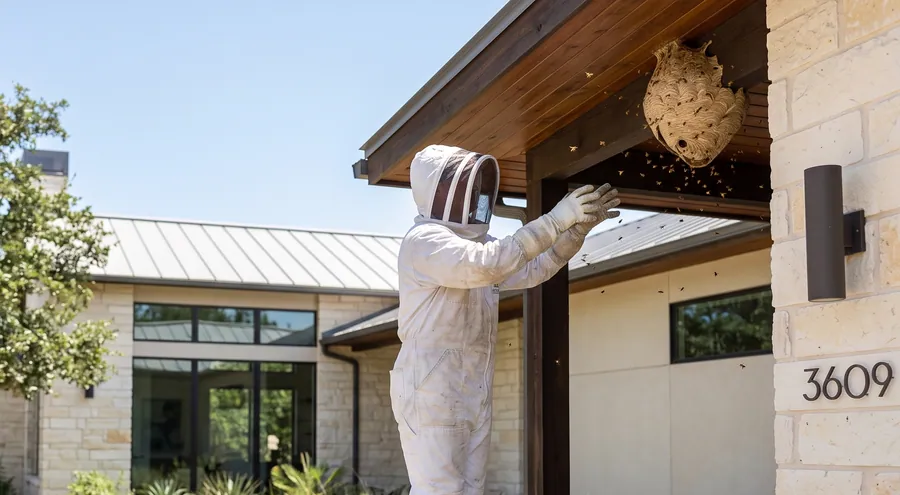
Treat and remove the nest
We treat the colony first so returning foragers are accounted for, then physically remove the nest. Void and ground nests are treated at the entry point, not opened up.
 2
2
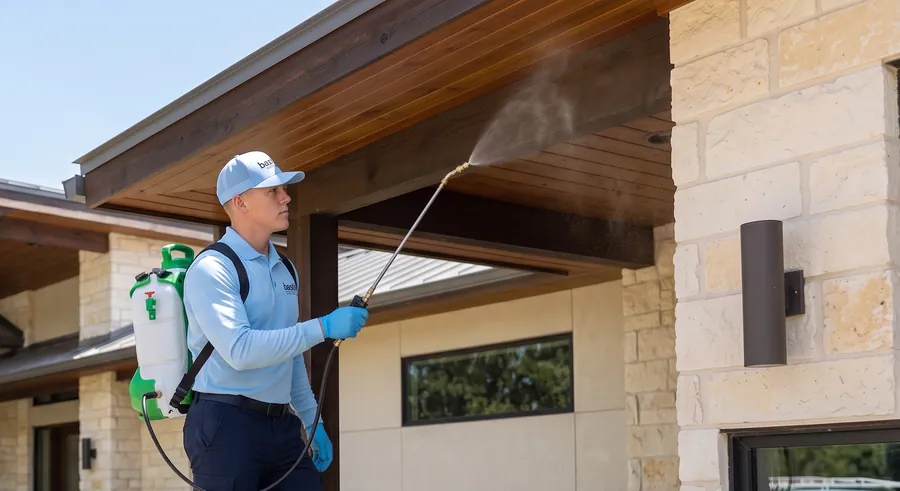
Treat the surfaces
Eaves, soffits, porch ceilings, door frames, shutters and pergolas are treated so new queens cannot settle there. This is the step that stops it repeating.
 3
3
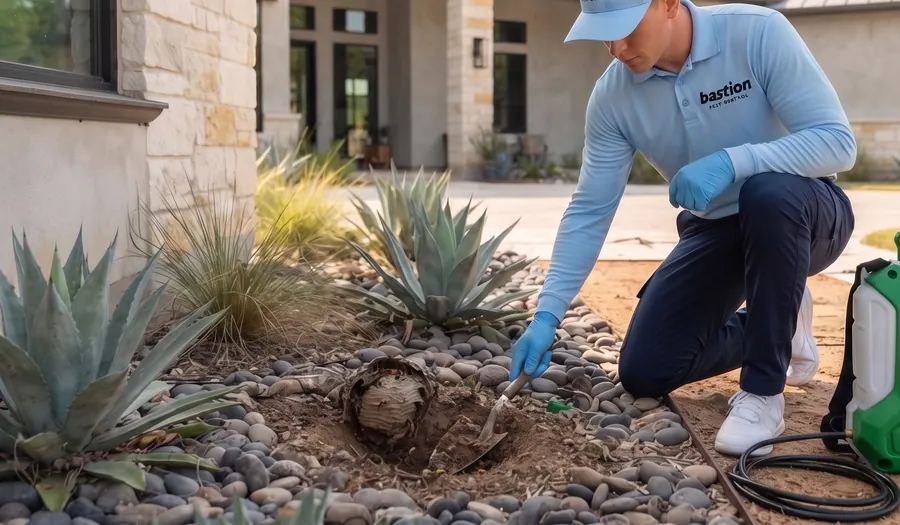
Keep it clear
Recurring service means we clear founding nests in spring before they turn into late-summer colonies, and re-treat the overhangs on every visit at no charge.
Recognize any of these in your Georgetown home?
Free quote, same-day service most days, and free re-treatments if they come back between visits.

Why wasps love houses in Georgetown.
Georgetown's architecture gives wasps an unusual number of options. The historic homes downtown have deep wraparound porches, decorative brackets, wooden fascia, shutters and covered balconies. And a century of settling has opened seams into soffit and wall voids that yellowjackets exploit. The newer neighborhoods contribute pristine, unweathered eaves and porch ceilings that founding queens colonize first. Insect volume off the two San Gabriel River forks feeds the colonies all season.
Georgetown sits on the Edwards limestone where the San Gabriel River cuts through it, and that rock defines local pest pressure. The North and South Forks of the San Gabriel meet in town, the limestone around them is full of voids and seams, Inner Space Cavern just south of town is the obvious evidence. And those voids hold cool, humid shelter that connects to the surface through cracks running up against foundations. Neighborhoods along the river bluffs and out toward Cimarron Hills sit directly on it.
With wasps, timing is everything. A nest in April is a queen and a couple of interns, and it comes down easy. That same nest in August is a fully staffed operation with strong opinions about anyone within six feet of the front door, and yellowjackets in a wall void or a ground nest are a worse conversation still. Knocking a nest down without treating the surface just moves the address, because next spring a new queen reads that same dry corner as prime real estate and signs the lease. Which is the whole case for dealing with nests early, and for service that treats the eaves before anybody moves in.
Edwards limestone
Voids and seams, Inner Space Cavern is the local proof, hold humid, protected harborage.
San Gabriel River forks
Two river corridors meeting in town keep moisture and insect volume high.
Century-old downtown
Homes and buildings over 100 years old have far more entry points and voids.
Sun City irrigation
Heavily watered, meticulously landscaped lots concentrate ants, crickets and moisture pests.
When are wasps most aggressive in Georgetown?
Wasps work up to it. One overwintered queen in spring becomes a full colony by late summer, and August and September are when the nest is biggest and least willing to share the patio.
The nest is at maximum size and minimum patience. Most stings we hear about happen in these two months.
Every nest you see in August began as a single queen in March. Knocking one down in April is a five minute job.
Ground nesting yellowjackets react to vibration. A mower is the most common way people find them.
Where wasps actually build in Georgetown.
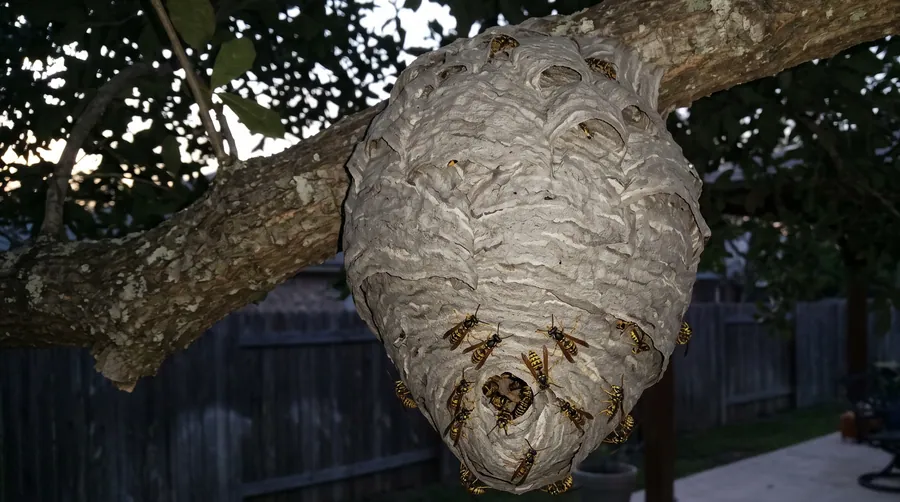
Every photo here came off a real Georgetown service call. Deep shaded eaves and mature oaks give wasps far more to work with than a new subdivision does, and the spread of nest types here shows it.
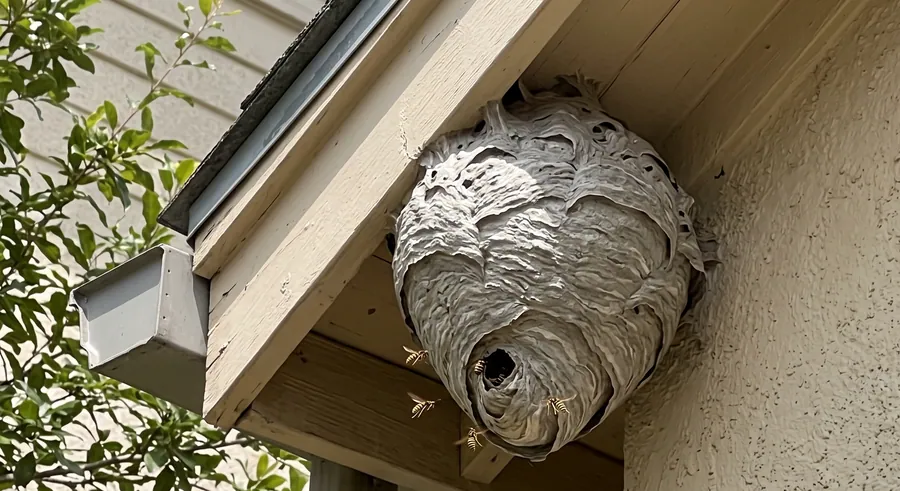
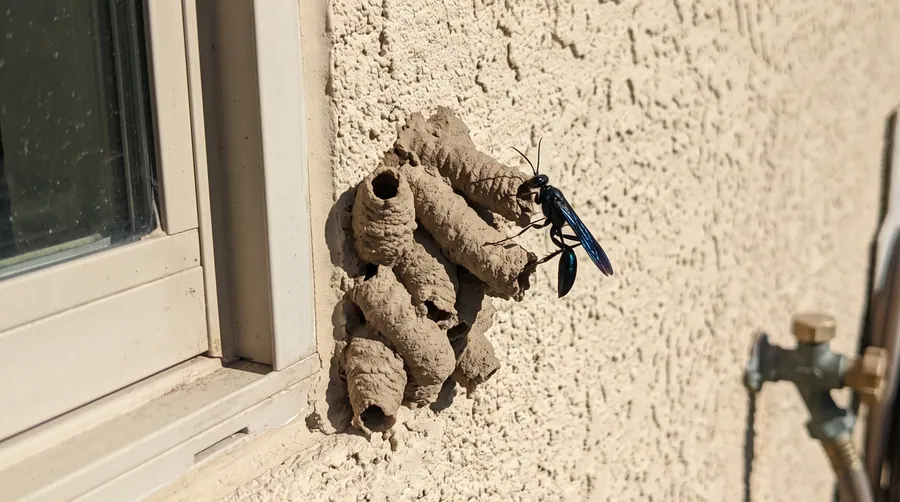
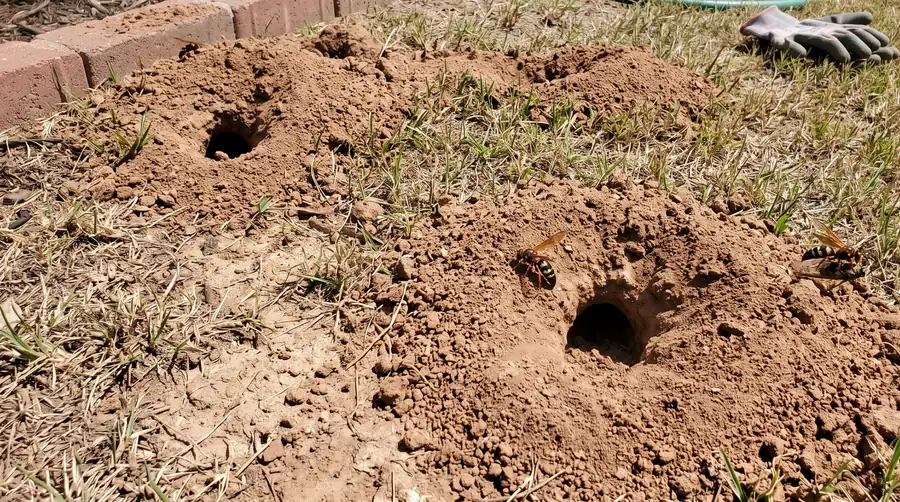
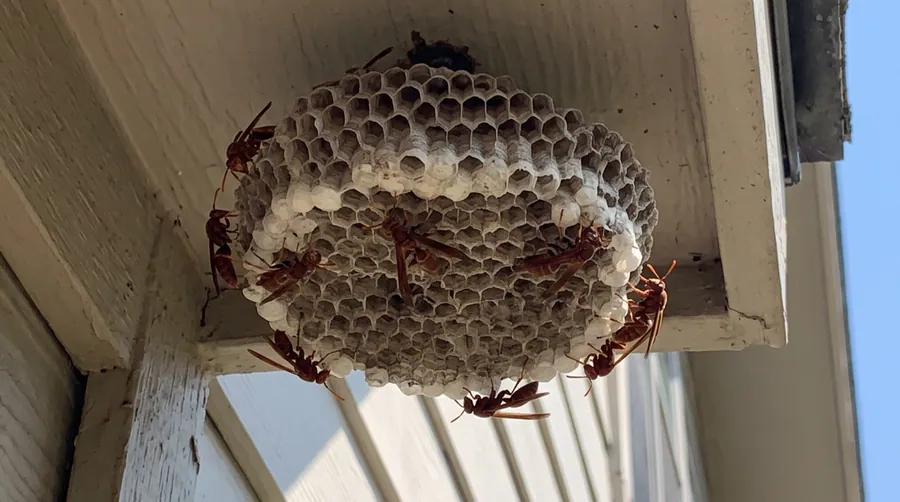
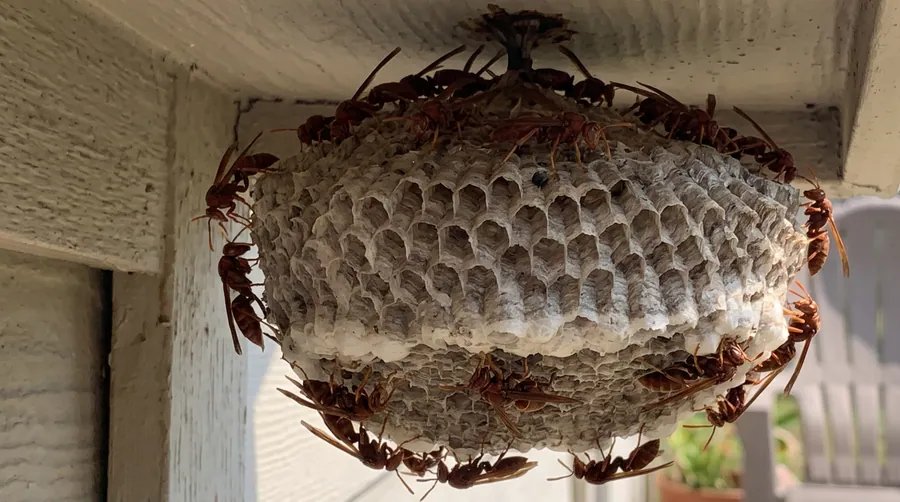
The wasps we find in Georgetown.
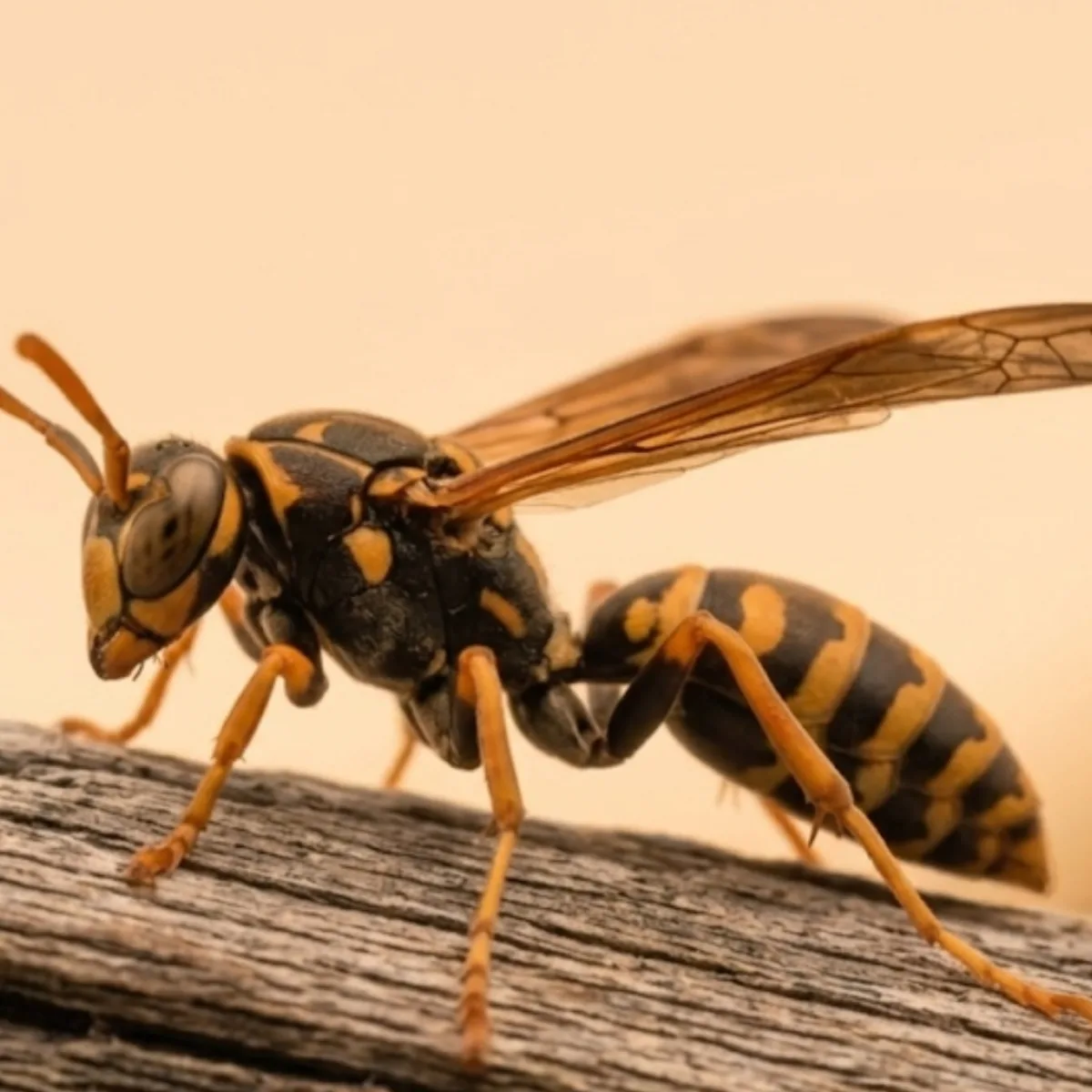
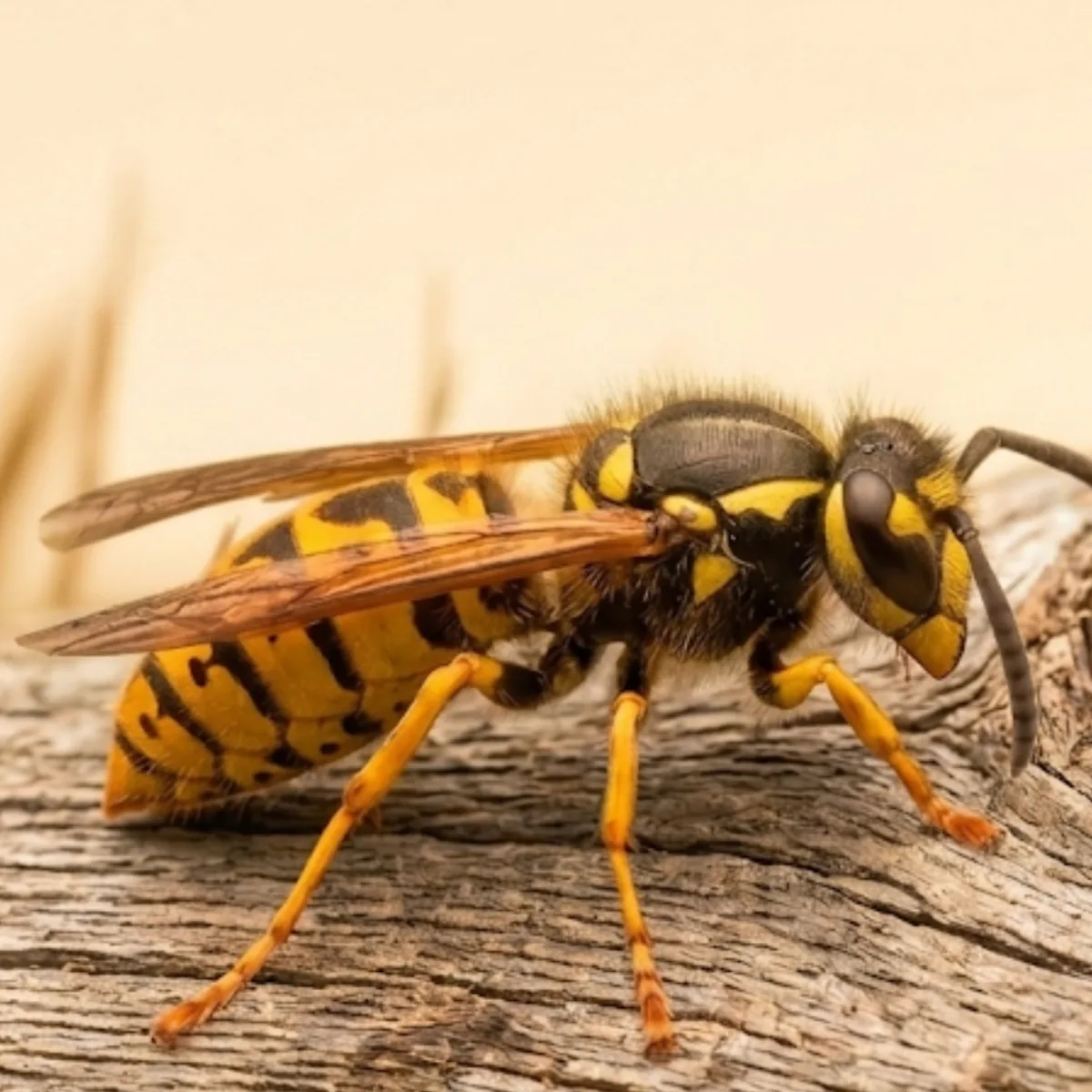
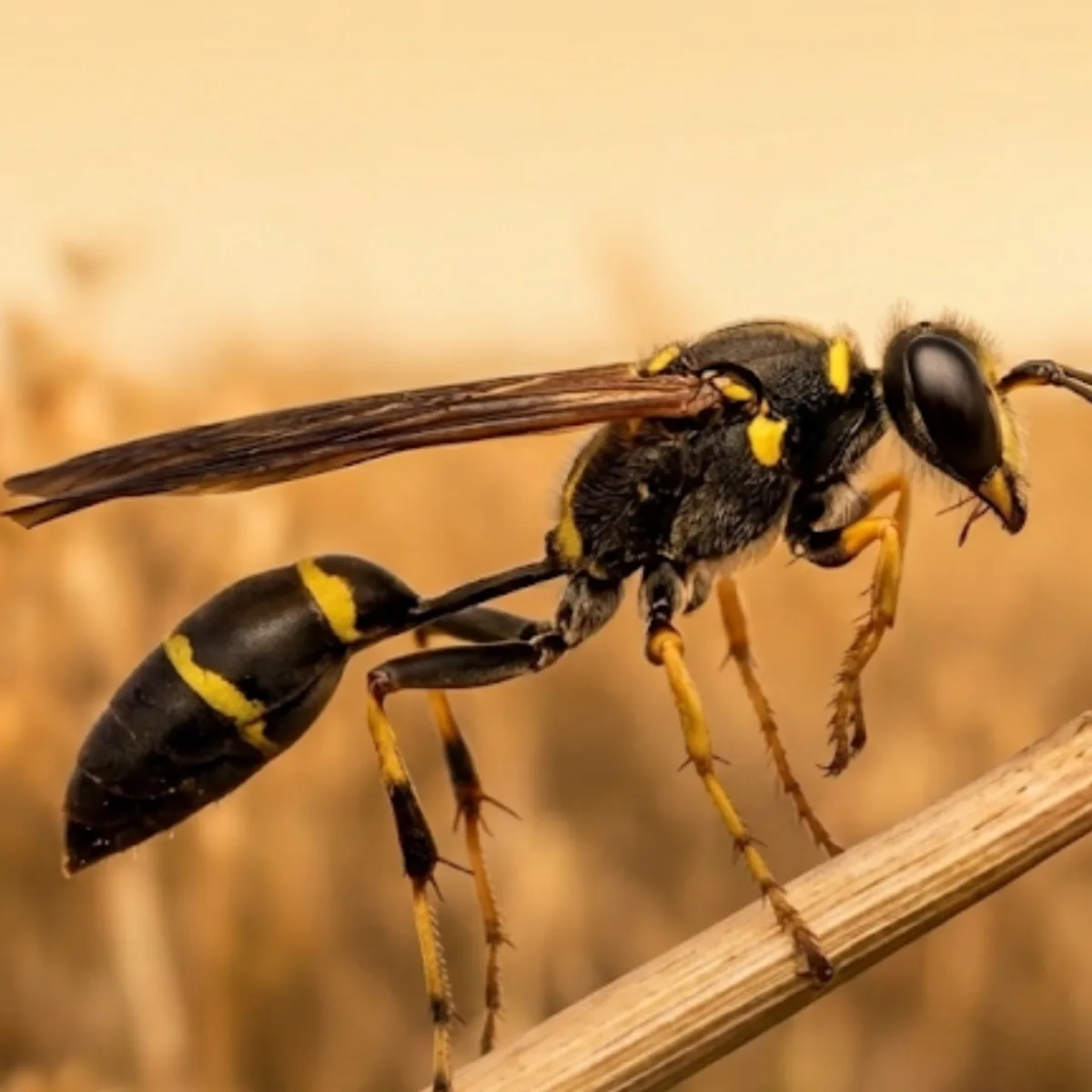
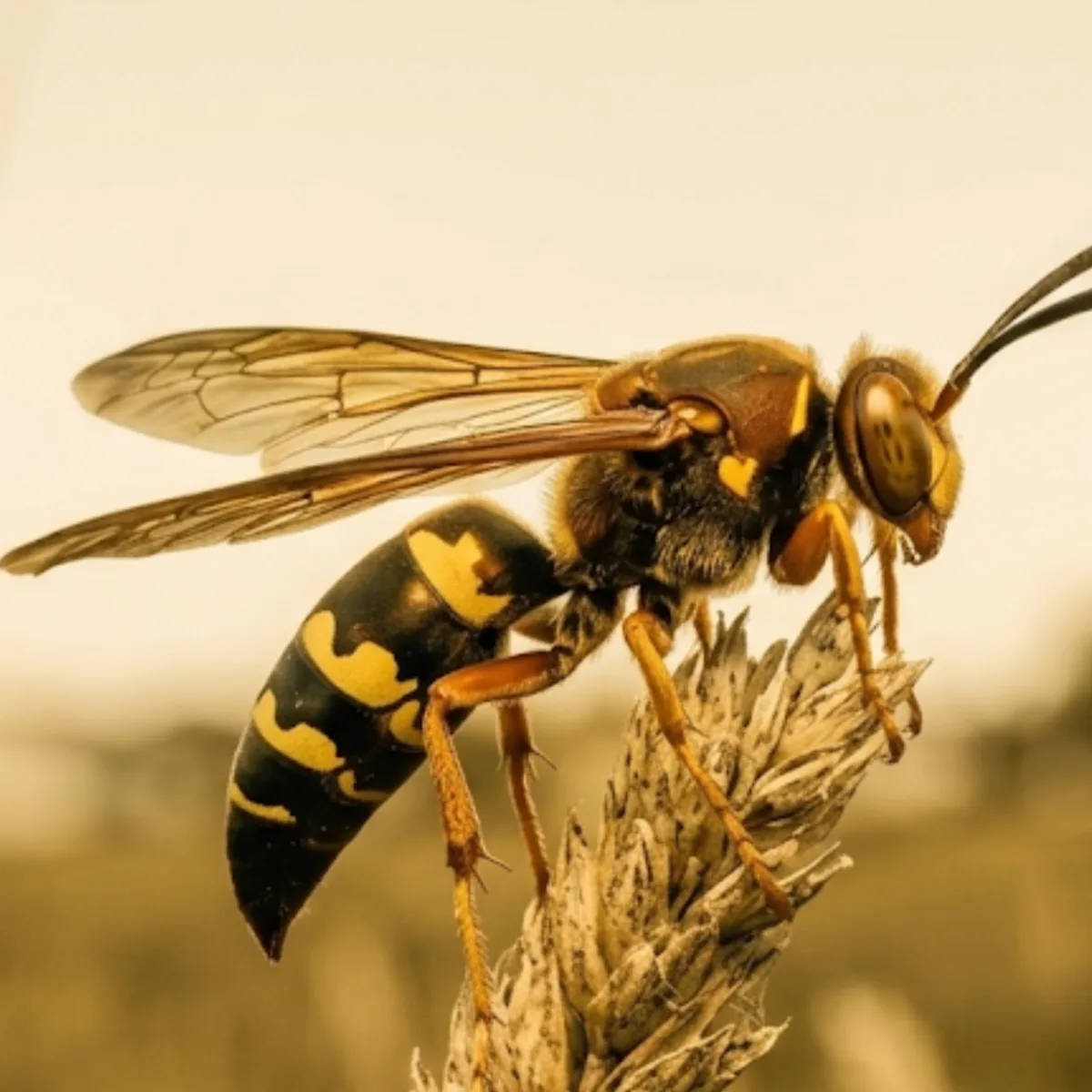
Housing age sets the wasp mix in Georgetown. Yellowjackets do best where a hundred years of settling has opened seams into wall and soffit voids. Paper wasps take the untouched eaves of the newer sections and the bracketed porches downtown alike, and the two forks of the San Gabriel keep both fed. Mud daubers and cicada killers round out the list and mostly deserve to be left alone. Your technician confirms the species on site before deciding which of those it is, and whether it needs treating at all.
A note on bites and stings. Reactions vary from person to person, and any bite or sting can cause a serious reaction in someone sensitive to it. Nothing here is medical advice. If you are bitten or stung and feel unwell, or the reaction spreads or does not settle, contact a doctor or Poison Control. If breathing or swallowing is affected, treat it as an emergency and call 911.
When a wasp problem needs attention.
On a century-old Georgetown porch, the nest is rarely the first thing you find. Decorative brackets and deep ceilings keep it out of sight, and what you notice instead is wasps using the same seam over and over, or a guard posted at the porch swing. Phone us and walk through it. We can generally say whether it is a same-day trip or one for the regular schedule.
- An umbrella nest under an eave or porch ceiling
- Wasps repeatedly entering the same soffit or wall gap
- Mud tubes on exterior walls or garage ceilings
- Wasps guarding a doorway, mailbox or grill
- A ground hole with steady wasp traffic
- Wasps inside the house on upstairs windows
- Wasps slipping behind the decorative brackets on a downtown porch
- Ground traffic at a limestone seam along the San Gabriel bluffs
Georgetown neighborhoods on our wasp routes.
The wasp map of Georgetown splits by decade. Downtown and the older blocks nearby bring us yellowjackets in the voids of settled houses; Wolf Ranch and Parkside on the River bring paper wasps on soffits too new to have anything else living on them. The big irrigated lots in Sun City and Berry Creek grow the insects that feed every colony in between. One wasp exterminator in Georgetown covers all of it.
Not listed? We almost certainly cover it, see pest control in Georgetown or the full service area.
Wasps in Georgetown, answered straight.
How much does wasp nest removal cost in Georgetown, TX?
Nest removal retails at $299 and is on special right now, starting at $199 for a one-time visit in Georgetown. It is the only wasp job we price separately, because it is a dedicated trip in protective gear. The eave and soffit treatment that stops new queens from rebuilding is part of the general pest plan from $66 per month, with no per-pest charge. We also run specials that can bring nest removal down to $19, so call 843-480-8699 for a free quote and ask what is running.
Can you come out today for a wasp nest?
Usually yes, and we treat it as a priority. A nest over a front door, on a playscape, or near someone with a sting allergy is urgent. Technicians run 8am to 8pm, seven days a week. Call or text for the earliest window.
Why do wasps keep building in the same spot?
Your porch corner keeps passing the same test. A founding queen wants overhead shelter, morning warmth and somewhere nobody brushes past, and last year's site still offers all three. Out on the bigger lots here there is a fourth factor, which is the pasture or greenbelt edge along the fence line supplying prey within easy flying distance of the house. Scent and old comb material left behind mark the address as proven, too. Taking the nest down solves this week; treating the surface it was attached to is what stops the rebuild.
Should I spray a nest myself?
We would rather you did not, especially later in the season. Store-bought sprays often stir up a mature colony without eliminating it, which helps nobody. Paper wasps defend close in. Yellowjackets chase. Nests up high, on ladders, or inside wall voids are where people get stung badly.
Do you kill honey bees?
No. If we find a honey bee colony we identify it as such and refer you to a beekeeper for live removal, because bees are pollinators worth saving (Texas A&M on honey bees) and a hive in a wall also leaves comb and honey that must be removed properly. Wasps, yellowjackets and mud daubers are a different matter. Those we treat.
When are wasps worst in Georgetown?
August through October, when colonies reach full size and the mood turns. Workers that spent the summer hunting protein start going after sugar, and they defend the nest far more readily as the season winds down, so a comb you ignored in June becomes a problem in September. Yards that border pasture or greenbelt tend to notice it first. Spring is when this is cheap and easy: a single queen and a starter comb take minutes, and the same nest in autumn needs a suit and a ladder.
Do historic porches in downtown Georgetown need a different wasp treatment?
A different approach, yes. Painted wood, decorative brackets and a hundred years of seams mean we treat more surface and more gaps than on a modern slab house, and we are careful about what goes on old finishes. The nest itself comes down the same way. What changes most is the follow-up: on a settled house the yellowjacket risk is in the voids, so your technician checks the fascia line and porch ceiling for traffic before calling the job done.
Why does my Sun City lot get more wasps than my neighbor's?
Usually it comes down to water and food. Heavily irrigated, densely planted lots in Sun City hold more crickets, caterpillars and soft-bodied insects than a dry one, and paper wasps hunt where the hunting is good, then build within a short flight of it. A covered patio or pergola on a Georgetown lot closes the deal. The fix is not less landscaping. It is having the overhangs treated so the queens who show up in spring keep moving.





Not in Georgetown? We are close.
We treat wasps in every city we serve. Same crew, same guarantee, different porches to check. Choose your city below, read the full wasp control overview, or check the complete service area.
Answered 24 hours · Georgetown, TX
Nests down. Eaves treated. Done.
Free quote, same-day service across Georgetown, and free re-treatments if a new nest appears between visits.