Wasp control in Cedar Park, TX.
A Cedar Park porch is a wasp's idea of good architecture: stone columns, a pergola, deep eaves, all dry after a Hill Country storm. We knock the nest down and treat the surface so the corner stops taking applications. Prevention rides along on the recurring plan from $66 a month, and re-treatments between visits are free.
Written by the Bastion Pest Control service team · Licensed & insured in Texas · Last updated
The 60-second version for Cedar Park
Between the greenbelt pantry and a pergola on what feels like every third house, Cedar Park keeps paper wasps busy from April on. The essentials, before you read the long version.
- Most common
- Paper wasps
- Pergolas, stone columns and covered porches give them hundreds of dry corners.
- Nest removal
- From $199*
- One dedicated trip in a suit, priced per job. Specials run through the season.
- Peak season
- April - October
- Colonies peak late summer and get defensive.
- Urgent cases
- Same-day
- Nest by a door or a sting allergy at home.
- Prevention
- Eave treatment
- In the plan on every visit. Treating surfaces is what stops the rebuild.
- Honey bees
- Referred, not killed
- We send you to a beekeeper for live removal.
Prevention is in the plan. Nest removal is the add-on.
Here is how the money works in Cedar Park. The recurring plan already treats your eaves, soffits and porch ceilings on every visit, wasps included at no extra charge, and if a colony gets started between visits we come back and treat it for free. An active nest that needs to come down is a separate line, priced per job, because it is a protective-gear trip.
Ask about specials before you book. We run promotions on nest removal through the season, and some of them take it down to $19. They change too often to post here, so call 843-480-8699 for a free quote and we will tell you what is running that day.
See full pricing details →One-time specialty job, retail $299. The nest comes down and the site is treated so a new queen cannot rebuild there.
Starting rate for a single-family Cedar Park home. Wasp prevention runs every visit and returns are free.
| General pest planPrevention | Nest removalOne nest | |
|---|---|---|
| What it is for | Keeping wasps from building on the house in the first place | Taking down a nest that is already built |
| Right for you if | There is no nest yet, or the nest is already gone | There is an active nest on the property right now |
| What you get | Recurring TriBarrier with eaves, soffits and roofline included | One visit: the nest comes down and the site gets treated |
| If they come back | We re-treat free, with no limit and no trip fee | Prevention is what stops the next one, so most people add the plan |
| Honey bees | Never treated. We refer you to a beekeeper who relocates them | Never treated. We refer you to a beekeeper who relocates them |
| Price | From $66 a month* | $299, currently from $199* |
* Opening rate on the recurring plan. Home size, lot size and current pressure set your final number.
How we handle wasps in Cedar Park.
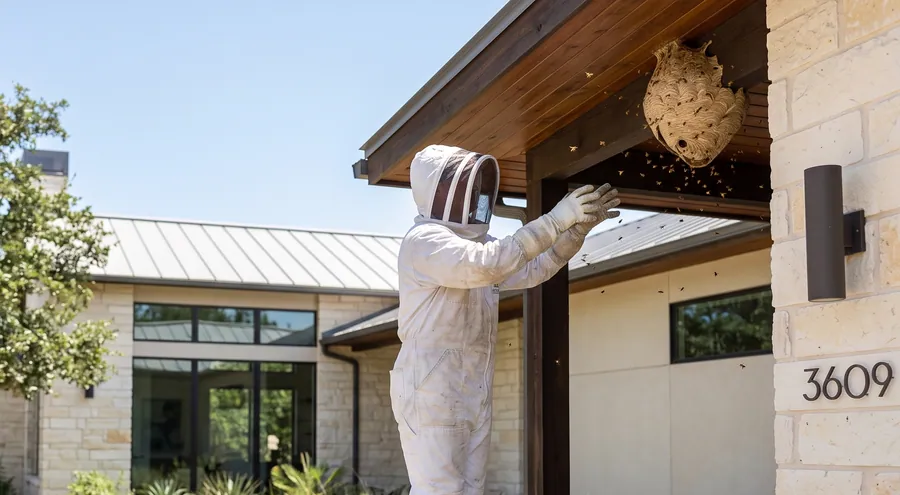
Removing a nest without treating the surface just shifts the problem a few feet sideways. Wasps return to the same sheltered spots season after season.
 1
1
Treat and remove the nest
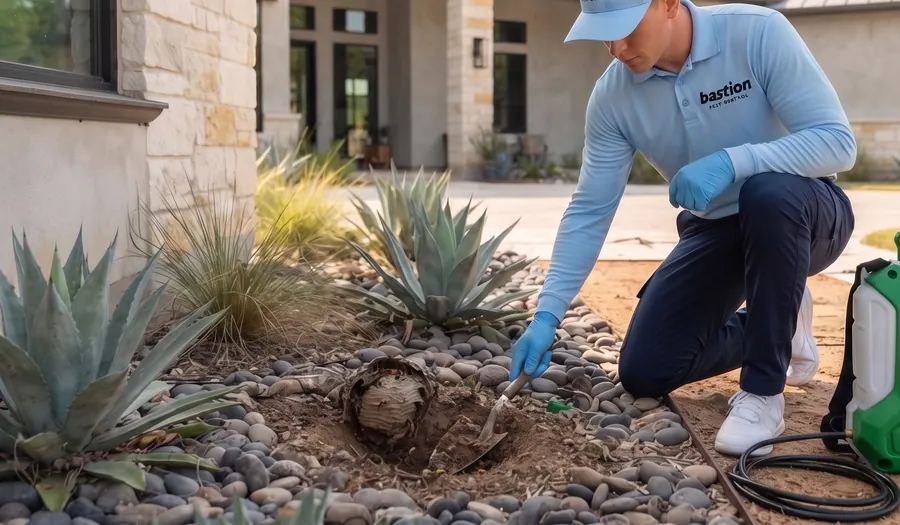
We treat the colony first so returning foragers are handled, then remove the nest physically. Void and ground nests are treated at the entrance rather than opened.
 2
2
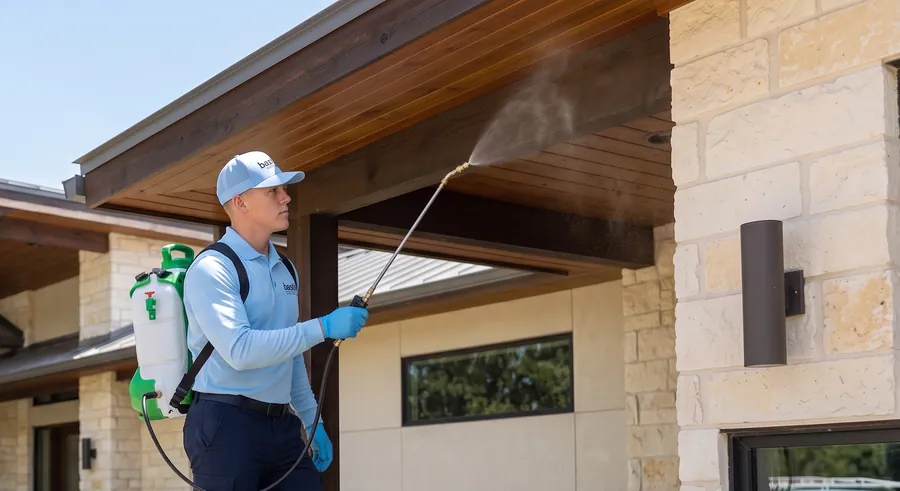
Treat the surfaces
Eaves, soffits, porch ceilings, door frames, shutters and pergolas get treated so new queens cannot establish there. That is the part that prevents the rebuild.
 3
3
Keep it clear
Recurring service means founding nests come down in spring before they become August problems, and the overhangs get re-treated every visit at no extra cost.
Recognize any of these in your Cedar Park home?
Free quote, same-day service most days, and free re-treatments if they come back between visits.

Why wasps love houses in Cedar Park.
Cedar Park gives paper wasps ideal building conditions. Homes here favor deep eaves, covered porches, stone columns and pergolas, and there are hundreds of protected corners on a typical house that stay dry through a Hill Country storm. The cedar and oak cover and the greenbelt system then supply the insect volume paper wasps need. They are predators that feed caterpillars and soft-bodied insects to their larvae, so a yard backing onto preserve land sits next to an all-season pantry.
Cedar Park sits on some of the most cave-riddled ground in Central Texas. The Buttercup Creek karst system underneath the city includes documented caves and an extensive network of voids, fissures and solution cavities in the Edwards limestone. For pest control that geology matters enormously: karst voids hold cool, humid air year-round, which makes them ideal harborage, and they connect to the surface through cracks that run right up to and under foundations.
With wasps, timing is everything. A nest in April is a queen and a couple of interns, and it comes down easy. That same nest in August is a fully staffed operation with strong opinions about anyone within six feet of the front door, and yellowjackets in a wall void or a ground nest are a worse conversation still. Knocking a nest down without treating the surface just moves the address, because next spring a new queen reads that same dry corner as prime real estate and signs the lease. Which is the whole case for dealing with nests early, and for service that treats the eaves before anybody moves in.
Buttercup Creek karst
Documented caves and limestone voids under the city hold humid, protected harborage.
Cedar and oak cover
Ashe juniper holds ground-level humidity, critical for ticks and prey insects.
Heavy deer traffic
Deer moving between preserve land and yards are how ticks arrive on a property.
Rock landscaping
Shallow topsoil means boulder walls and flagstone, prime widow and scorpion sites.
When are wasps most aggressive in Cedar Park?
Wasp colonies build all season and peak late. A nest that was a golf ball in April is at full size by August, and a full size nest is a far less tolerant one.
The nest is at maximum size and minimum patience. Most stings we hear about happen in these two months.
Every nest you see in August began as a single queen in March. Knocking one down in April is a five minute job.
Ground nesting yellowjackets react to vibration. A mower is the most common way people find them.
Where wasps actually build in Cedar Park.
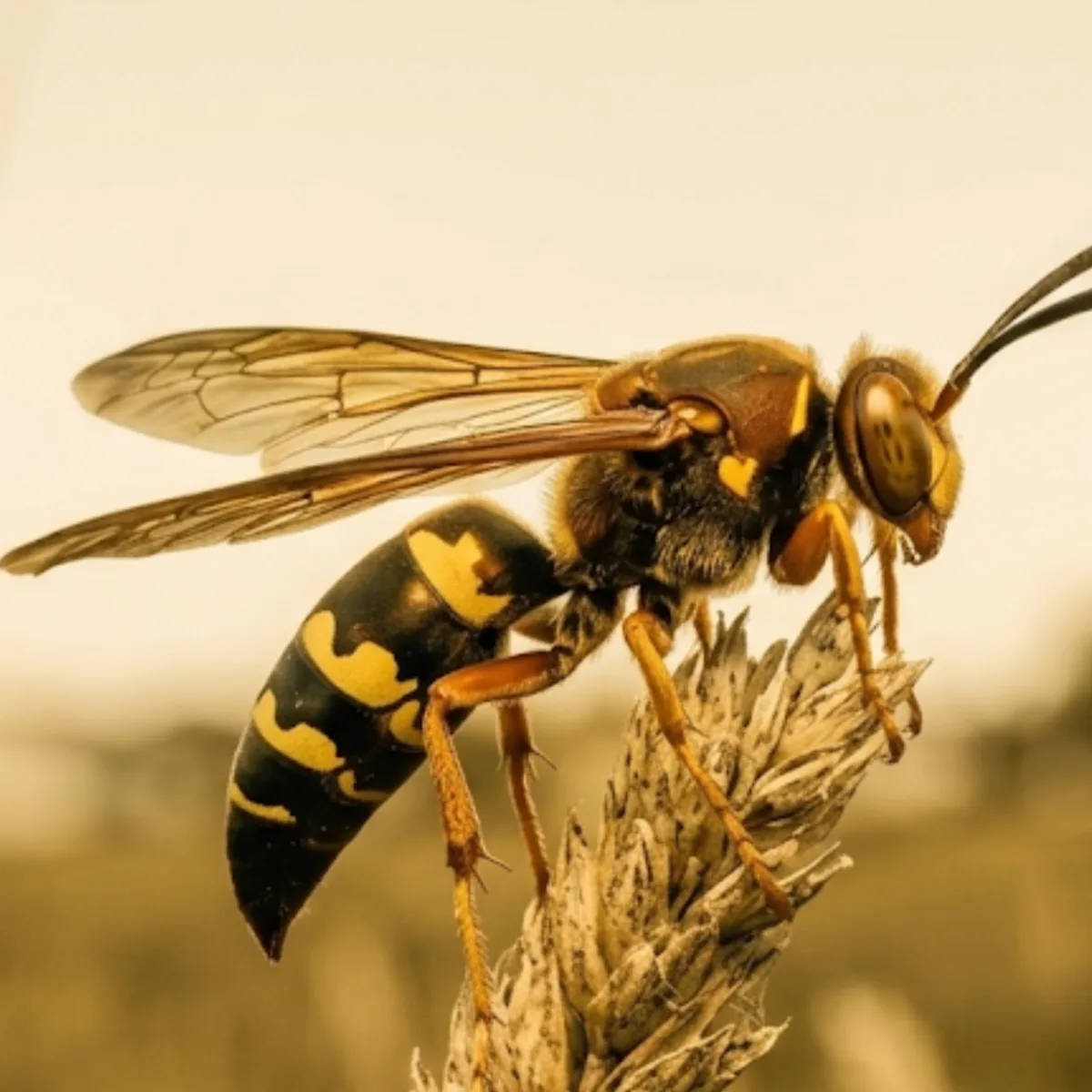
Every photo here came off a real Cedar Park service call. These are the four wasps we run into on almost every route out here, and not one of them builds the same way: exposed comb, enclosed paper, mud tubes, bare ground.
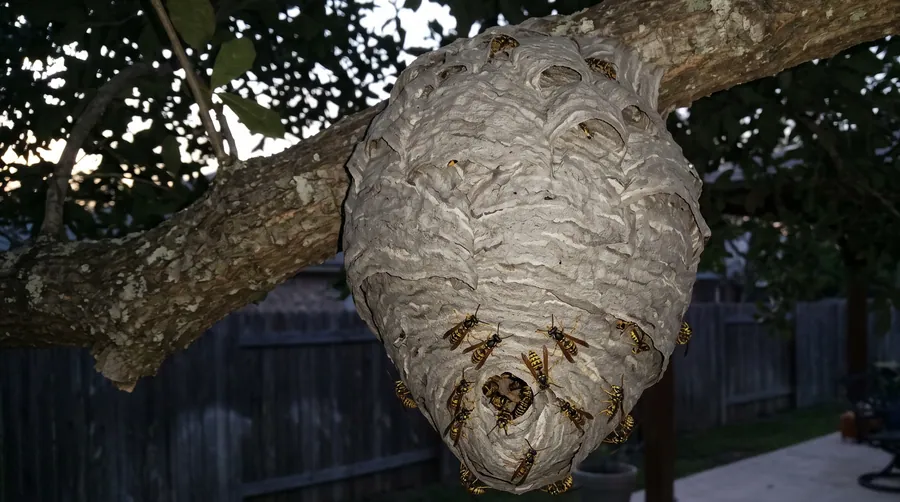
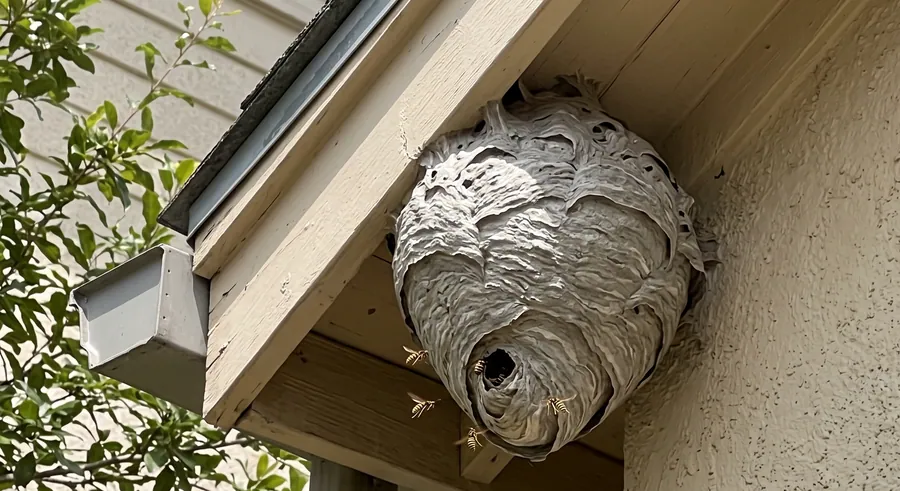
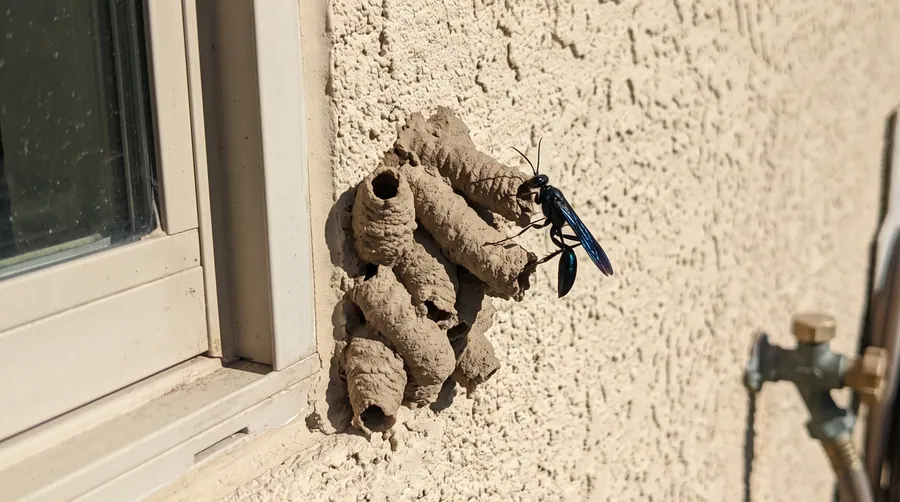
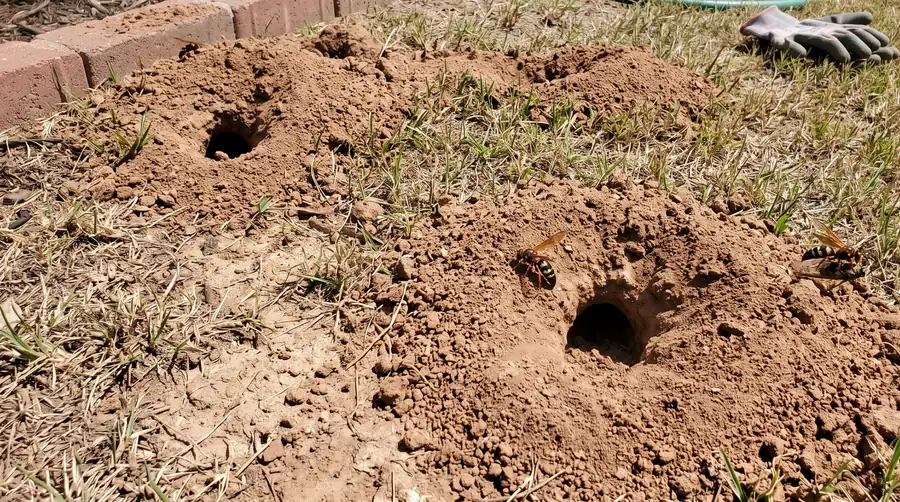
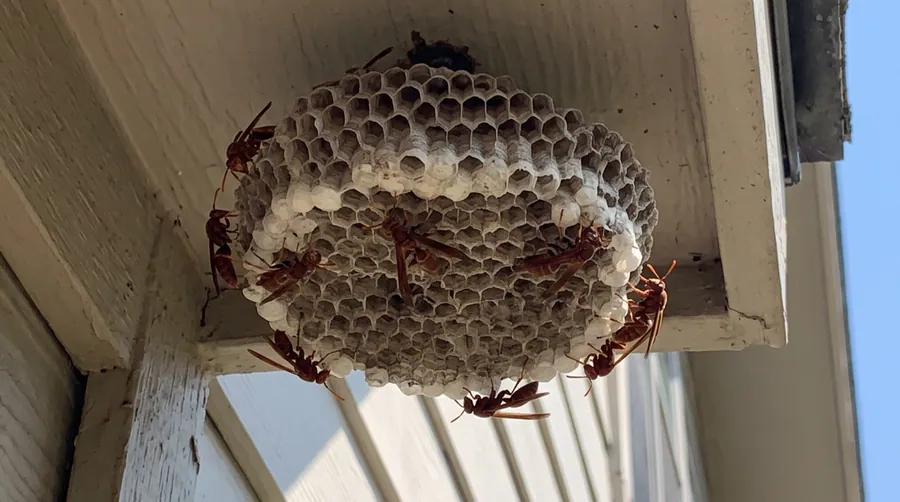
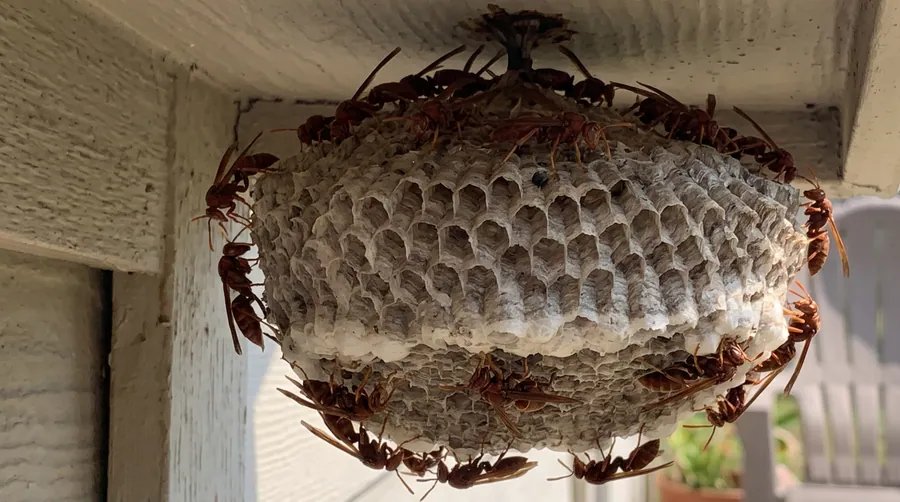
The wasps we find in Cedar Park.
Four wasps show up on Cedar Park properties, and two of them barely count as a problem. Paper wasps take the pergolas and porch ceilings. Yellowjackets like the voids, and on karst limestone that can mean a fissure under a boulder wall as easily as a soffit. Mud daubers and cicada killers are big, loud and mostly harmless. Because the treatment differs completely, your technician confirms the species on site before anything gets sprayed, and tells you if the answer is to leave it alone.
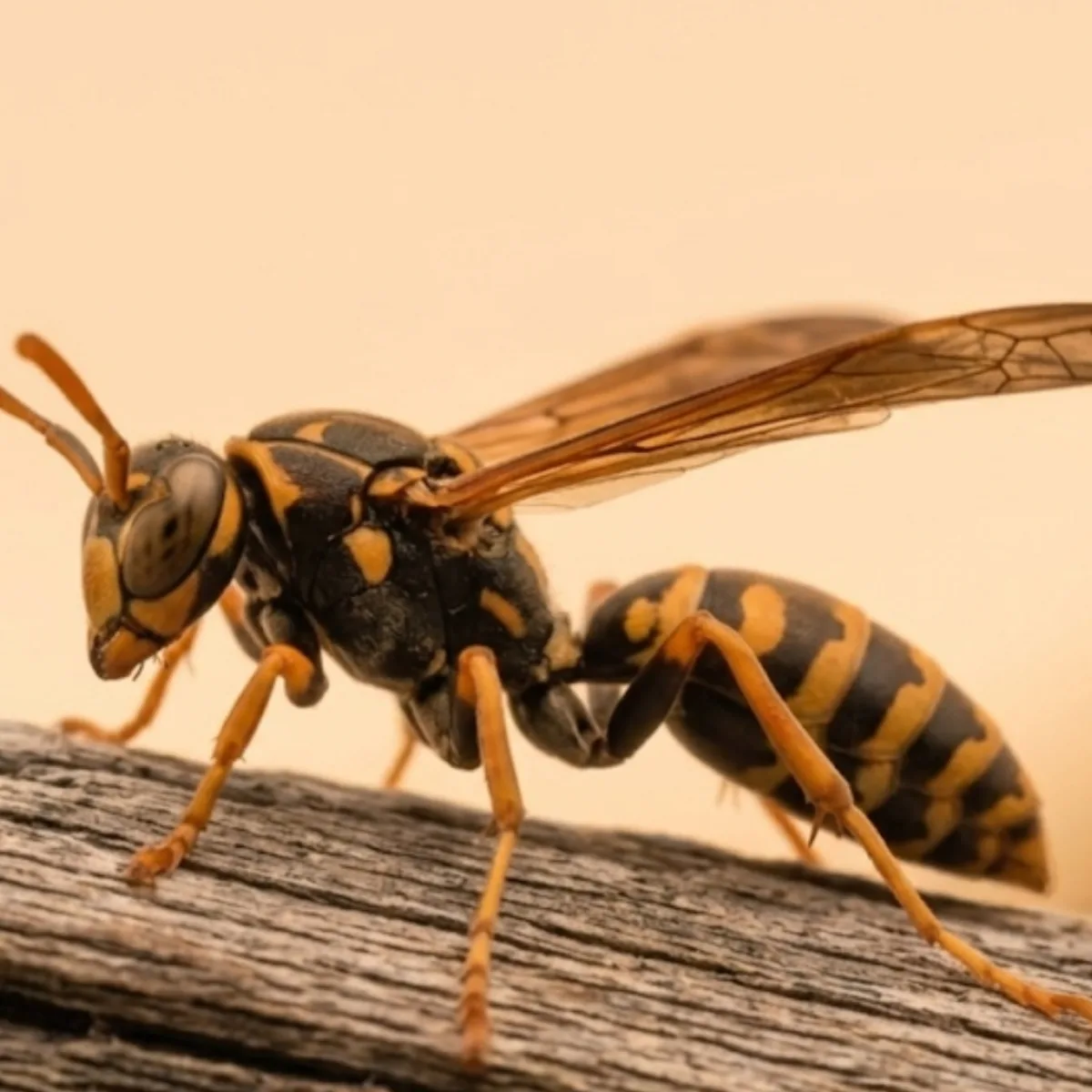
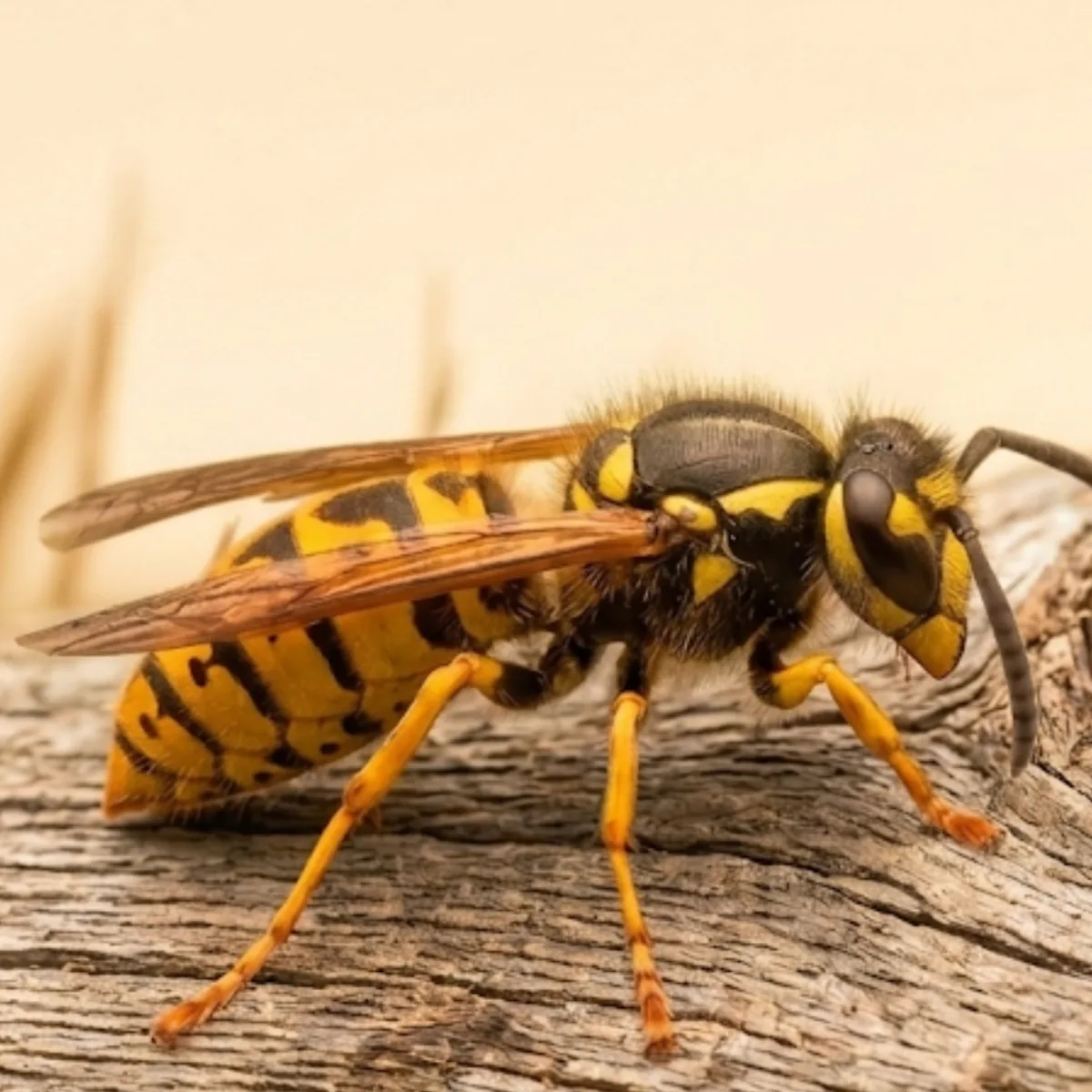
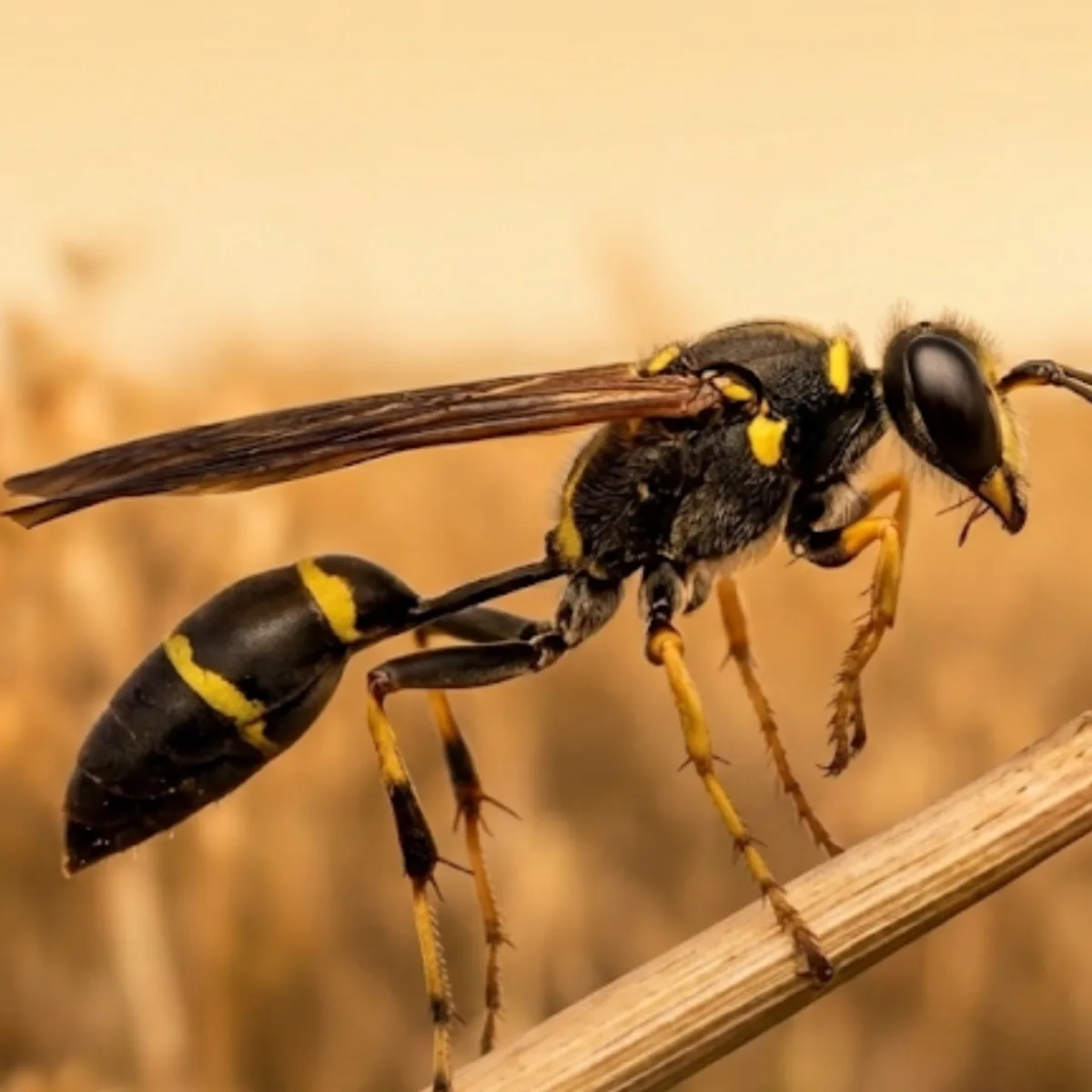
A note on bites and stings. Reactions vary from person to person, and any bite or sting can cause a serious reaction in someone sensitive to it. Nothing here is medical advice. If you are bitten or stung and feel unwell, or the reaction spreads or does not settle, contact a doctor or Poison Control. If breathing or swallowing is affected, treat it as an emergency and call 911.
When a wasp problem needs attention.
Cedar Park houses hide nests well. A pergola beam or the underside of a stone column cap is invisible from the driveway, so the first sign is usually a wasp that objects to you watering the beds. Describe what you are seeing when you call. In most cases we can tell you by phone whether it needs a truck today or can wait for the regular visit.
- An umbrella nest under an eave or porch ceiling
- Wasps repeatedly entering the same soffit or wall gap
- Mud tubes on exterior walls or garage ceilings
- Wasps guarding a doorway, mailbox or grill
- A ground hole with steady wasp traffic
- Wasps inside the house on upstairs windows
- Nests tucked under a pergola beam or stone column cap
- Yellowjacket traffic into a boulder wall or flagstone gap
Where we treat wasps in Cedar Park.
Most of the wasp removal in Cedar Park is greenbelt-edge business. Twin Creeks and the Ranch at Brushy Creek back onto cedar and oak cover, which is where paper wasps find the caterpillars they raise their young on, and the deep porches on those lots give them somewhere to build within a short flight of dinner. Over in Buttercup Creek the karst adds a second problem: yellowjackets nesting in the voids under rock beds. Same crew for both.
Not listed? We almost certainly cover it, see pest control in Cedar Park or the full service area.
Questions Cedar Park homeowners ask about wasps.
How much does wasp nest removal cost in Cedar Park, TX?
Nest removal retails at $299 and is on special right now, starting at $199 for a one-time visit in Cedar Park. It is the only wasp job we price separately, because it is a dedicated trip in protective gear. The eave and soffit treatment that stops new queens from rebuilding is part of the general pest plan from $66 per month, with no per-pest charge. We also run specials that can bring nest removal down to $19, so call 843-480-8699 for a free quote and ask what is running.
Can you come out today for a wasp nest?
Usually yes, and it gets treated first. A nest over a front door, on a playscape, or near anyone with a sting allergy counts as urgent. We work 8am to 8pm, seven days a week. Call or text for the soonest slot.
Why do wasps keep building in the same spot?
Because the spot is genuinely good, and knocking the nest down does not change that. A founding queen is looking for shelter from rain, warmth in the morning sun and no foot traffic, and a porch ceiling or soffit corner that met the brief last year still meets it this year. In west Cedar Park the scrub against the back fence adds the last ingredient, a supply of insect prey a few feet away. Old nest material and scent left on the surface also advertise the address. That is why removal includes treating the site, so the next queen reads it as taken.
Should I spray a nest myself?
We would rather you left it, particularly after midsummer. Store-bought sprays usually irritate a mature colony without ending it, and that is the worst of both outcomes. Paper wasps defend the area right around the nest. Yellowjackets pursue. Nests above head height or in a wall void are where the injuries happen.
Do you kill honey bees?
No. If we find a honey bee colony we identify it as such and refer you to a beekeeper for live removal, because bees are pollinators worth saving (Texas A&M on honey bees) and a hive in a wall also leaves comb and honey that must be removed properly. Wasps, yellowjackets and mud daubers are a different matter. Those we treat.
When are wasps worst in Cedar Park?
Late summer into early fall, and it is a change in behavior rather than a population spike. Colonies founded in spring peak in size by August and September, the workers switch from hunting protein to seeking sugar, and they get noticeably more defensive about the nest as the season closes. That is when a nest you walked past all summer suddenly reacts. Spring is the cheap moment to deal with it: one queen starting a comb is a two-minute job, and the same nest in September is a full-suit afternoon.
Do yellowjackets nest in the karst voids under Cedar Park yards?
They can, and Buttercup Creek is where we see it most. Southern yellowjackets nest in ground cavities, and the limestone under Cedar Park is full of ready-made ones that open to the surface through cracks, often right under a boulder wall or a rock bed. The clue is a stream of wasps disappearing into one hole with no comb in sight. Treat it as a leave-it-alone situation until we arrive; ground nests are the ones that follow you.
Will treating my pergola and stone columns hurt the plants around them?
The eave treatment goes on the structure, not the landscaping. Your technician works the underside of beams, column caps and porch ceilings, the surfaces a queen would actually pick, and keeps the product off the beds and the lawn. On a Cedar Park lot with a greenbelt behind it there is no point treating the trees anyway; the wasps are hunting there, not nesting. Tell us about vegetable beds or a pool before the visit and we plan around them.





Wasp control around Cedar Park
We treat wasps in every city we serve. Same crew, same guarantee, different overhangs entirely. Pick your city below, read the full wasp control overview, or check the complete service area.
Answered 24 hours · Cedar Park, TX
Nests down. Eaves treated. Done.
Free quote, same-day service across Cedar Park, and free re-treatments if a new nest appears between visits.