Wasp control in Leander, TX.
Leander wasps have it easy: second-floor balconies, covered porches, pergolas and a whole subdivision of fresh soffits. We take the nest down and treat the surface so it stops reading as a vacancy. Eave treatment is included on the recurring plan from $66 a month, and if a colony returns between visits the re-treatment is free.
Written by the Bastion Pest Control service team · Licensed & insured in Texas · Last updated
Wasps in Leander: the quick facts
Much of Leander was framed recently and the rest backs onto cedar canyon. Paper wasps approve of both. Here is the short version of what that means.
- Most common
- Paper wasps
- Balconies, pergolas and brand-new soffits in Bryson and Larkspur get colonized first.
- Nest removal
- From $199*
- Its own protective-gear trip, quoted per job. Seasonal specials apply.
- Peak season
- April - October
- Colonies peak in late summer and get defensive.
- Urgent cases
- Same-day
- Nest by a door or a sting allergy in the home.
- Prevention
- Eave treatment
- In the plan on every visit. Treating surfaces is what stops the rebuild.
- Guarantee
- Free re-treatments
- New nest between visits? We come back.
Prevention is in the plan. Nest removal is the add-on.
Think of it as two jobs with two prices. Prevention is the recurring plan: every visit treats the eaves, balcony ceilings and porch overhangs on a Leander house, wasps carry no surcharge, and a colony that starts between visits gets a free return trip. Taking down a live nest is the other job, priced on its own because it means protective gear and a ladder.
Ask about specials before you book. We run promotions on nest removal through the season, and some of them take it down to $19. They change too often to post here, so call 843-480-8699 for a free quote and we will tell you what is running that day.
See full pricing details →One-time specialty job, retail $299. The nest comes down and the site is treated so a new queen cannot rebuild there.
Starting rate for a single-family home in Leander. Includes wasp prevention plus free re-treatments between visits.
| General pest planPrevention | Nest removalOne nest | |
|---|---|---|
| What it is for | Keeping wasps from building on the house in the first place | Taking down a nest that is already built |
| Right for you if | There is no nest yet, or the nest is already gone | There is an active nest on the property right now |
| What you get | Recurring TriBarrier with eaves, soffits and roofline included | One visit: the nest comes down and the site gets treated |
| If they come back | We re-treat free, with no limit and no trip fee | Prevention is what stops the next one, so most people add the plan |
| Honey bees | Never treated. We refer you to a beekeeper who relocates them | Never treated. We refer you to a beekeeper who relocates them |
| Price | From $66 a month* | $299, currently from $199* |
* Starting price. Your exact number depends on home size, lot size and current pest pressure.
How we handle wasps in Leander.
Knocking a nest down without treating the surface just relocates the problem a few feet over. Wasps return to the same sheltered spots season after season.
 1
1
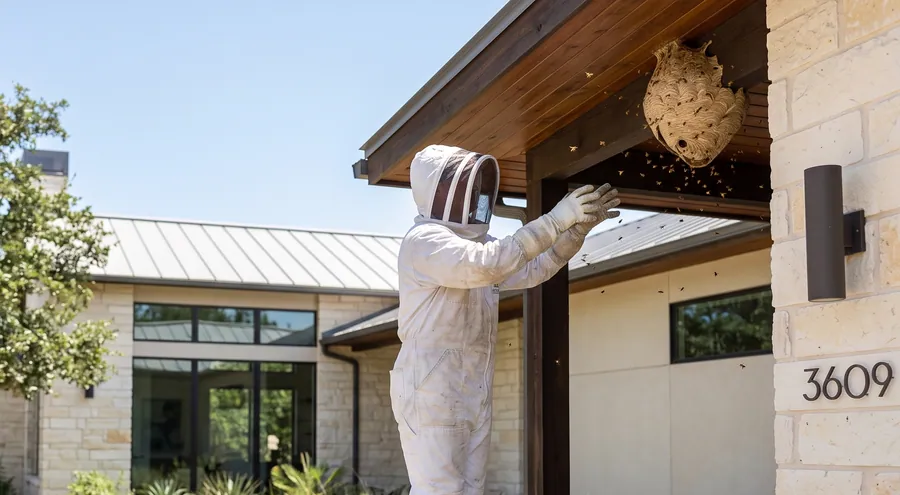
Treat and remove the nest
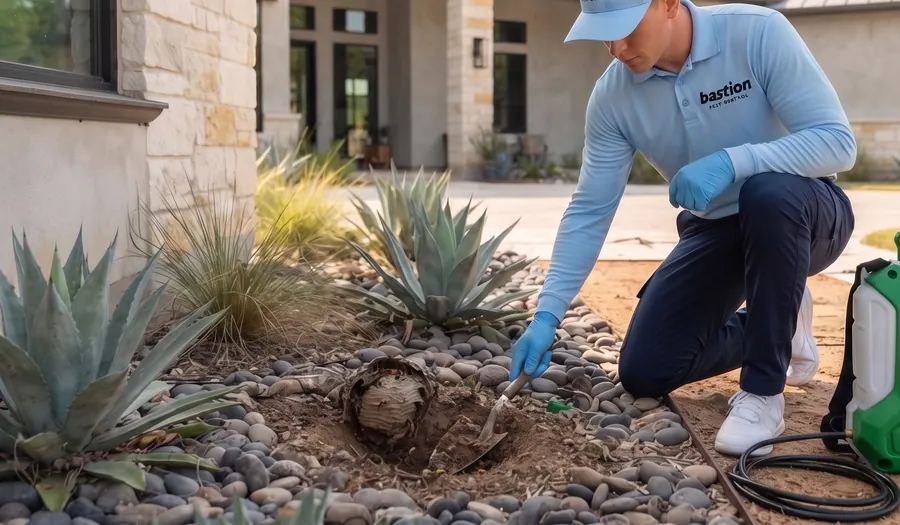
We treat the colony first so returning foragers are dealt with, then remove the nest by hand. Void and ground nests are treated at the entry point rather than opened.
 2
2
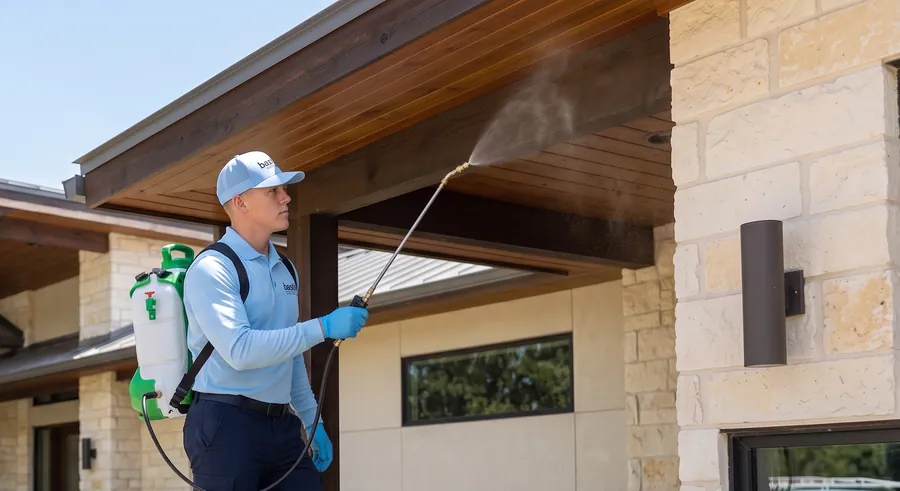
Treat the surfaces
Eaves, soffits, porch ceilings, door frames, shutters and pergolas get treated so new queens cannot establish there. This is the part that actually prevents the rebuild.
 3
3
Keep it clear
Recurring service means we take founding nests down in spring before they become August colonies, and re-treat the overhangs every visit at no extra charge.
Recognize any of these in your Leander home?
Free quote, same-day service most days, and free re-treatments if they come back between visits.

Why wasps love Leander houses.
Wasps want two things from a structure: a sheltered overhang to build under and a food supply nearby. Leander gives them both in abundance. The building style here: deep eaves, covered front porches, second-floor balconies, stone columns, shutters and pergolas, creates hundreds of protected corners that stay dry through a Central Texas storm. Paper wasps read every one of those as a nest site.
The Hill Country setting supplies the rest. Cedar and oak cover, greenbelts and the South Fork San Gabriel corridor sustain heavy insect activity, and paper wasps are predators that feed caterpillars and other soft-bodied insects to their larvae. A Leander yard backing onto open space is sitting next to an all-season pantry. Later in the year, when the colony shifts from raising brood to seeking sugars, that same landscape provides fallen fruit and flowering plants, which is when wasps start crashing patios and grills.
New construction plays a role too. Freshly framed and newly finished houses in Bryson, Palmera Ridge, Larkspur and Deerbrooke offer pristine, unweathered soffits and porch ceilings with nothing built on them yet, and queens colonize those first. It is common for us to find three or four founding nests on a house that was completed the previous spring.
The timing matters for safety. A nest in April holds a queen and a handful of workers and is genuinely easy to remove. By August that same nest can hold dozens of workers and defends itself aggressively within several feet, and yellowjackets in a wall void or ground nest are worse still. That is the argument for handling nests early and for recurring service that treats eaves before anything gets established.
Deep eaves and porches
Covered overhangs, balconies and pergolas give paper wasps hundreds of sheltered nest sites.
Greenbelt insect supply
Cedar and oak cover sustain the caterpillars and insects paper wasps feed their larvae.
New construction
Unweathered soffits and porch ceilings on new homes get colonized by founding queens first.
Late-summer sugar hunt
Once brood-rearing slows, wasps go after fruit, drinks and grills. And get bold about it.
When are wasps most aggressive in Leander?
A wasp nest is a season long project. It starts with a single queen in spring and finishes as a full colony in August, at which point it defends itself a great deal more enthusiastically.
The nest is at maximum size and minimum patience. Most stings we hear about happen in these two months.
Every nest you see in August began as a single queen in March. Knocking one down in April is a five minute job.
Ground nesting yellowjackets react to vibration. A mower is the most common way people find them.
Where wasps actually build in Leander.
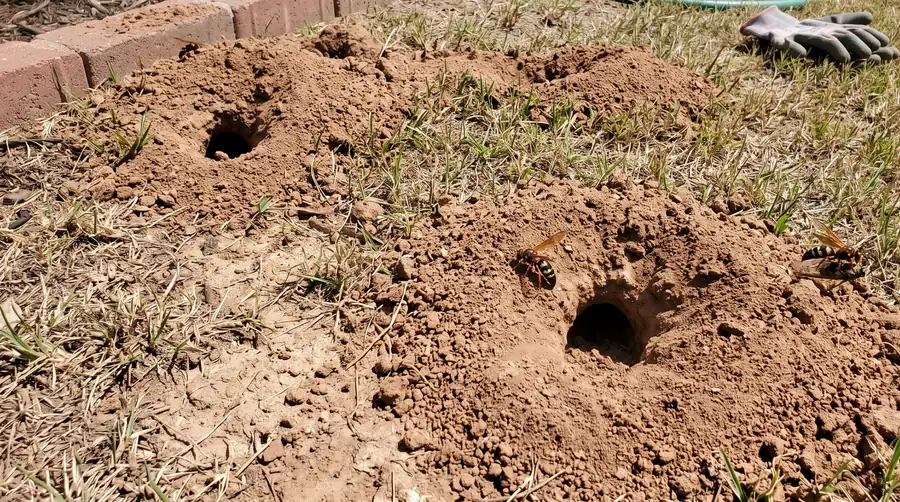
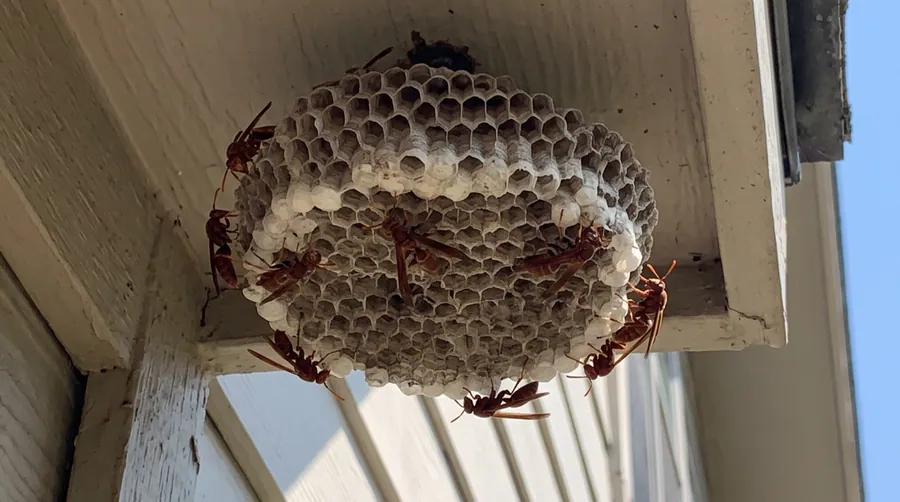
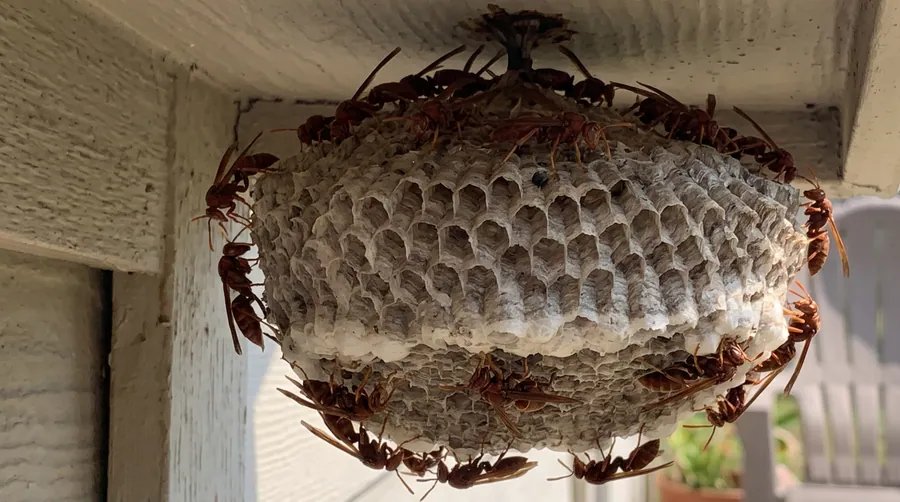
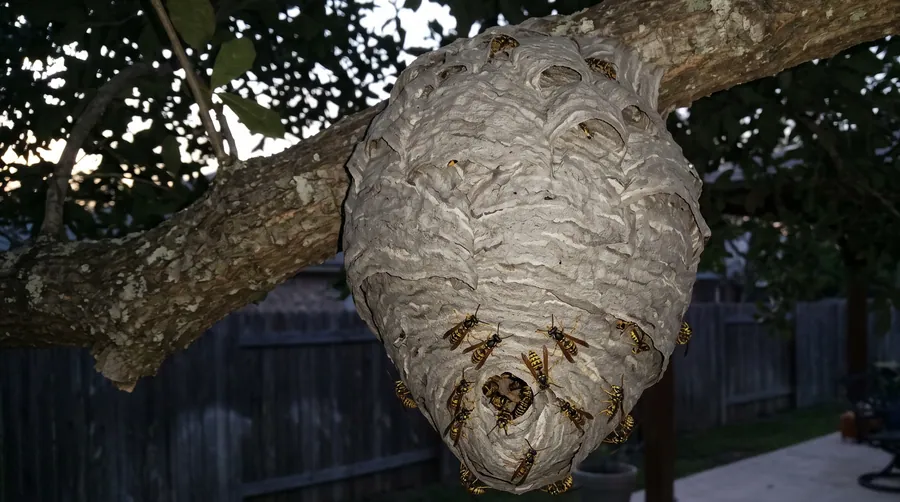
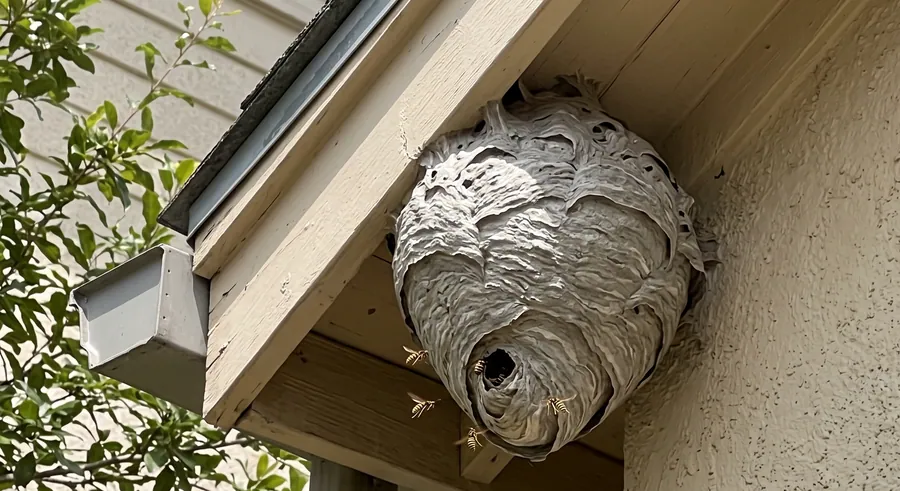
Every photo here came off a real Leander service call. Between the greenbelt edges and the newer builds we see the full range: exposed comb, enclosed nests, mud tubes and ground burrows.
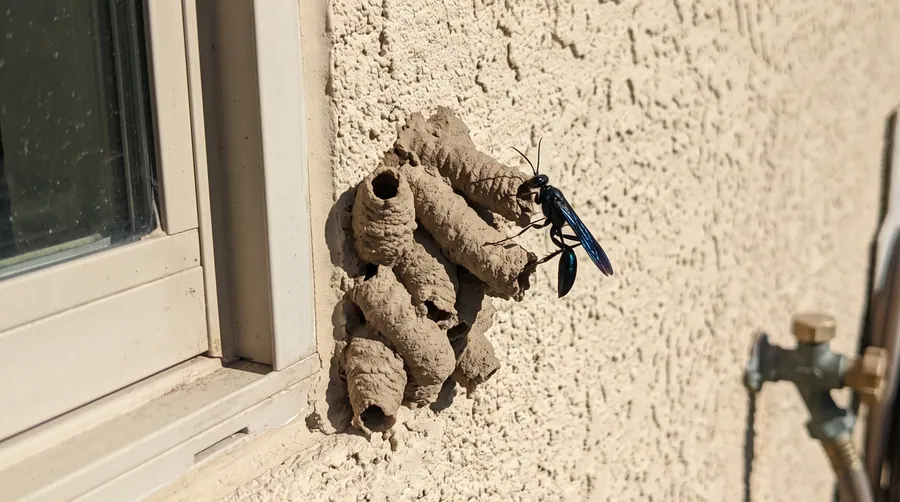
The wasps we find in Leander.
Which wasp you have in Leander often comes down to what is behind your house. Yards backing onto cedar canyon in Crystal Falls and Travisso carry heavy paper wasp pressure, because the greenbelt is where the caterpillars are. Freshly graded limestone subdivisions turn up yellowjackets in ground cavities and cicada killers in the bare strips the sod has not covered yet. Your technician confirms the species on site before treating, since the right move for one of these is to do nothing at all.
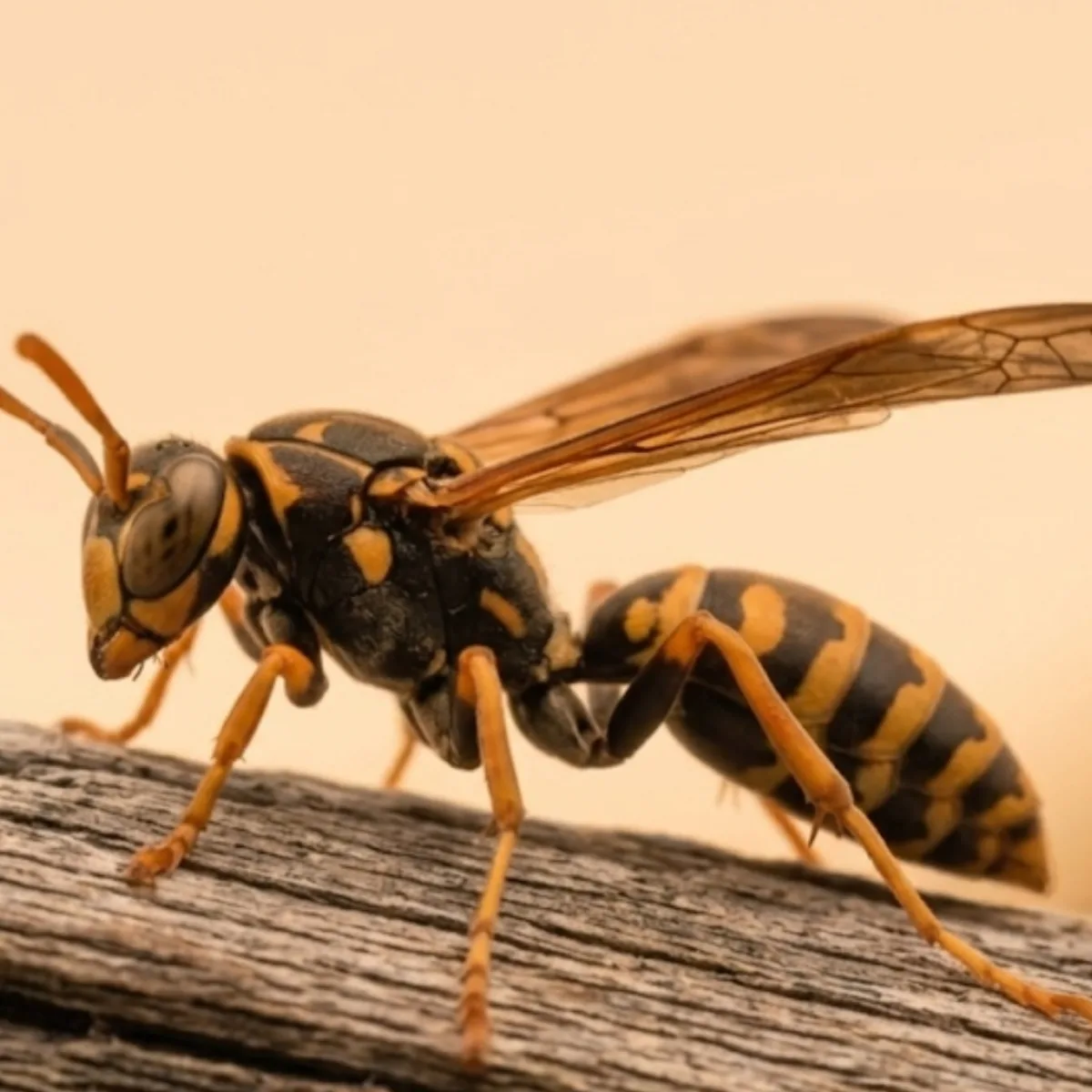
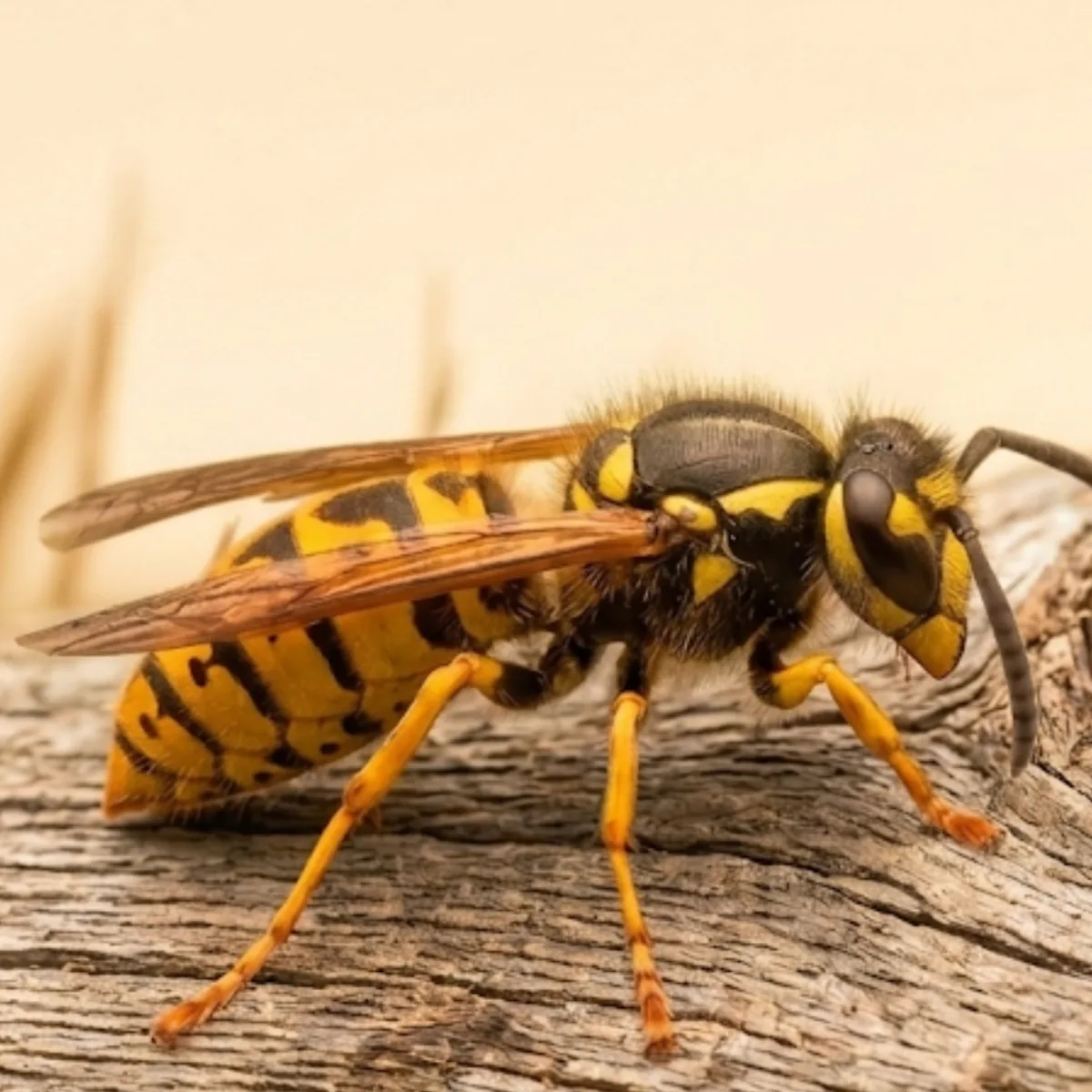
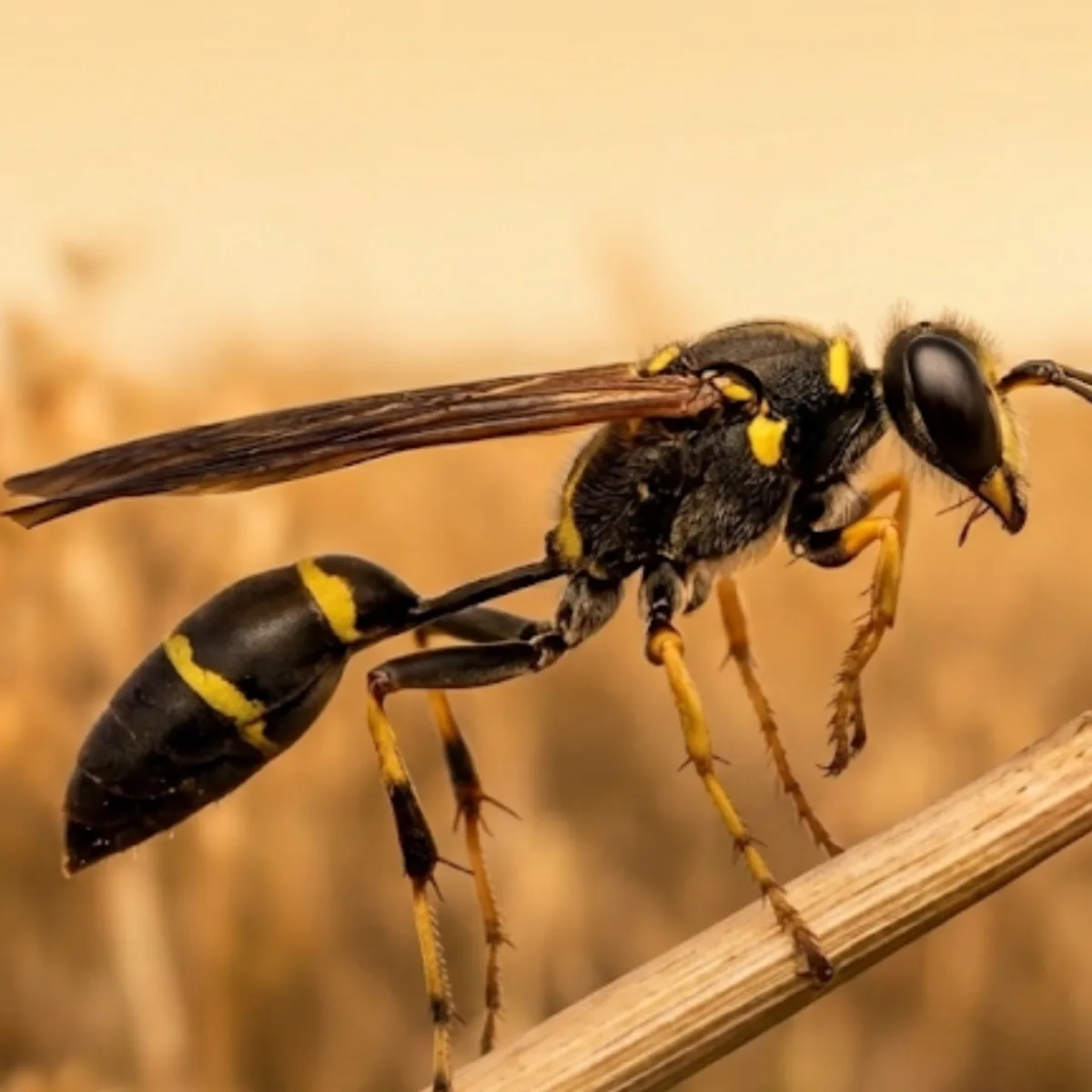
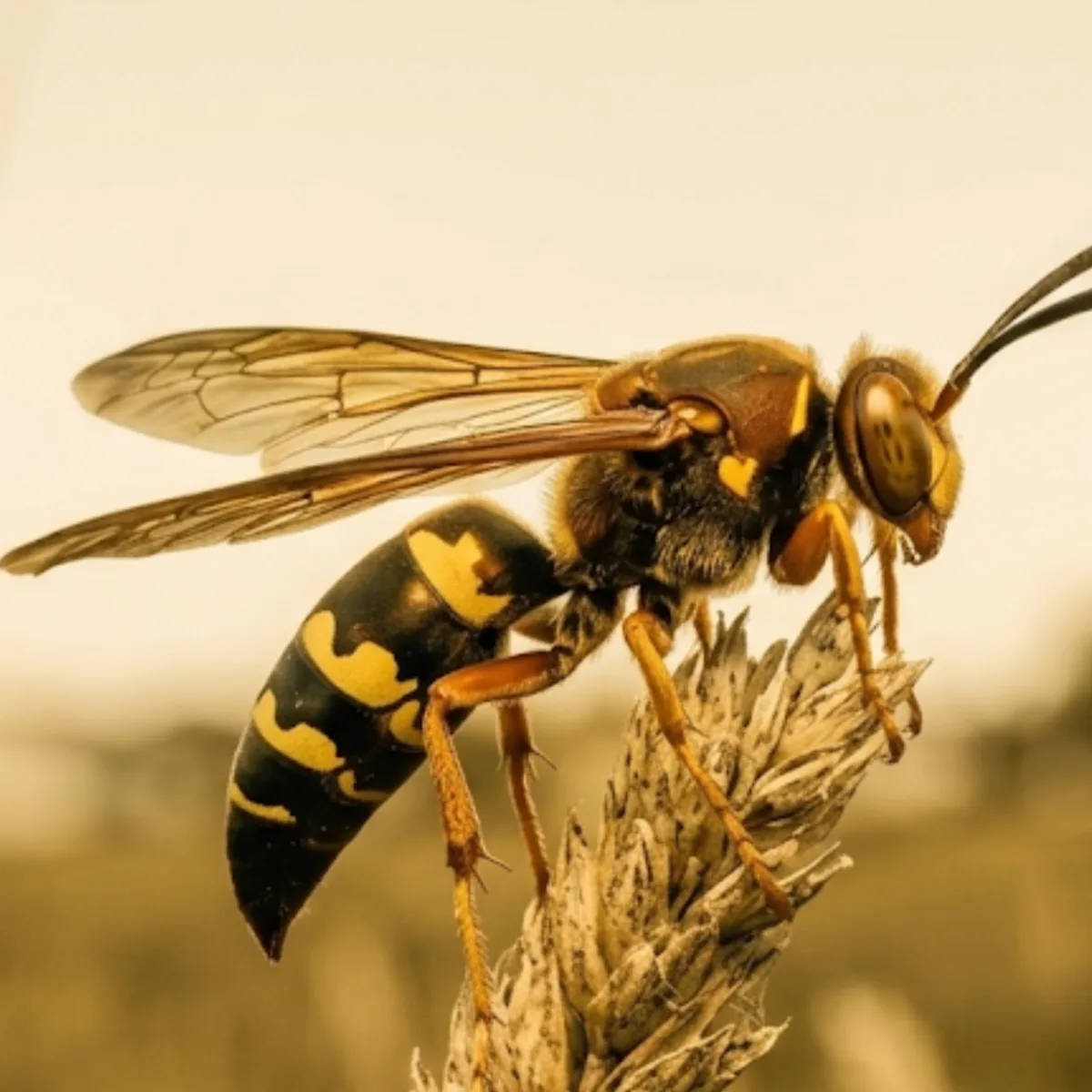
A note on bites and stings. Reactions vary from person to person, and any bite or sting can cause a serious reaction in someone sensitive to it. Nothing here is medical advice. If you are bitten or stung and feel unwell, or the reaction spreads or does not settle, contact a doctor or Poison Control. If breathing or swallowing is affected, treat it as an emergency and call 911.
When a wasp problem needs attention.
Two-story houses in Leander put the nests where you cannot see them, under a balcony ceiling or a second-floor eave. So the first clue tends to be behavior: wasps patrolling the front door, or a cluster on the upstairs window screens. Call and tell us what they are doing. We can often judge over the phone whether it is a same-day trip or something for the regular route.
- An umbrella nest under an eave or porch ceiling
- Wasps repeatedly entering the same soffit or wall gap
- Mud tubes on exterior walls or garage ceilings
- Wasps guarding a doorway, mailbox or grill
- A ground hole with steady wasp traffic
- Wasps inside the house on upstairs windows
- Wasps patrolling a second-floor balcony ceiling
- Traffic into a weep hole or slab joint on a new build
Wasp removal, street by street in Leander.
Pressure from wasps in Leander comes from two directions and meets in the middle. On the canyon side, Crystal Falls and Travisso back onto cedar and oak, an all-season food supply for paper wasps with deep porches a few yards away. On the growth side, Bryson and Larkspur have soffits so new the queens beat the mailbox. Whether you want a wasp exterminator in Leander for one nest or the whole eave line, the truck is the same.
Not listed? We almost certainly cover it, see pest control in Leander or the full service area.
What people in Leander want to know about wasps.
How much does wasp nest removal cost in Leander, TX?
Nest removal retails at $299 and is on special right now, starting at $199 for a one-time visit in Leander. It is the only wasp job we price separately, because it is a dedicated trip in protective gear. The eave and soffit treatment that stops new queens from rebuilding is part of the general pest plan from $66 per month, with no per-pest charge. We also run specials that can bring nest removal down to $19, so call 843-480-8699 for a free quote and ask what is running.
Can you come out today for a wasp nest?
Usually yes, and it gets prioritized. A nest over a front door, on a playscape, or anywhere near someone with a sting allergy is urgent. We work 8am to 8pm, seven days a week. Call or text and we will find the soonest window.
Why do wasps keep building in the same spot?
Because the location suits them and nothing has changed it. Sheltered overhangs stay dry and protected, and next spring's queens work from the same shortlist. Knocking the nest down does not alter that. Treating the surface does.
Should I spray a nest myself?
We would rather you did not, especially after midsummer. Store-bought sprays tend to agitate a mature colony without finishing it off, and that is the worst possible middle ground. Paper wasps defend within a few feet. Yellowjackets pursue. Nests above head height or in wall voids are where people get hurt.
Do you kill honey bees?
No. If we find a honey bee colony we identify it as such and refer you to a beekeeper for live removal, because bees are pollinators worth saving (Texas A&M on honey bees) and a hive in a wall also leaves comb and honey that must be removed properly. Wasps, yellowjackets and mud daubers are a different matter. Those we treat.
When are wasps worst in Leander?
Nest building starts in spring and colonies peak in late summer, roughly August into September, which is when they are largest and most defensive. Late season also shifts them toward sugars, so they start showing up around patios, grills and drinks. The EPA's integrated pest management principles cover the prevention-first approach. Spring treatment is the cheapest, safest time to deal with them, a founding nest is one queen and a few workers.
Do wasps nest under second-floor balconies, and how do you reach them?
They do, and in Leander it is one of the most common spots we treat. A balcony underside is a porch ceiling that is also out of reach, which suits a paper wasp perfectly. We work from an extension ladder or pole with the technician in protective gear, take the comb down, then treat the whole underside so the next queen keeps looking. Please do not go at it from the balcony above with a can; you will be standing over the colony's exit.
Does a yard backing onto the canyon in Crystal Falls mean more wasps?
More paper wasps, generally, and bigger colonies by August. Cedar and oak cover in Crystal Falls and Travisso is full of the caterpillars and soft-bodied insects a colony feeds its larvae, so a nest on a porch there grows faster than one facing a Leander cul-de-sac. The greenbelt itself is not something we treat; the wasps are only hunting there. The eaves, pergola and balcony are, and keeping those treated through the season is what keeps the canyon's pantry from becoming your porch's problem.
One plan, every pest in Leander





Wasp control across the metro
We treat wasps in every city we serve. Same crew, same guarantee, different new-build overhangs. Find your city below, read the full wasp control overview, or check the complete service area.
Answered 24 hours · Leander, TX
Nests down. Eaves treated. Done.
Free quote, same-day service across Leander, and free re-treatments if a new nest appears between visits.