Spider control in Leander, TX.
Leander builds its yards out of limestone, and black widows move in the week the wall goes up. Rock seams, meter boxes, garage tracks and porch eaves all get cleared by hand and treated, and we thin the moths and crickets feeding them, on a plan from $66 a month that includes free re-treatments any time they rebuild between visits.
Written by the Bastion Pest Control service team · Licensed & insured in Texas · Last updated
Leander spider control at a glance
Thin soil over fractured limestone, greenbelts on most sides and the South Fork San Gabriel: Leander is built for spiders. The short version, before the details.
- Peak season
- August through October
- Wandering males show up first in Crystal Falls garages and rock beds.
- Biggest risk
- Black widows
- Boulder walls and rock-mulched beds across Travisso and Crystal Falls lots.
- Included in
- $66/mo plan*
- De-webbing on every visit, no upcharge.
- Every visit
- Hand de-webbing
- Egg sacs removed, spray cannot reach inside them.
- Root cause
- Their food
- Fewer moths and crickets means fewer spiders.
- After rain
- Wolf spiders
- They come inside when the ground floods.
Spider control is included in the general pest plan.
Widows in a Leander rock wall are not a premium service, they are a Tuesday. Spider control, hand de-webbing and egg sac removal come standard on the recurring general pest plan, no upcharge, alongside ants, roaches, scorpions and wasps. When they rebuild between visits, the callback is free. A single-family home starts at $66 a month, confirmed with a free on-site quote and no inspection fee.
See full pricing details →Starting rate for a single-family home in Leander. Includes de-webbing and spider control plus free re-treatments.
| General pest planRecurring | One-time treatmentSingle visit | |
|---|---|---|
| What it is for | Keeping spiders and their food supply down year-round | Clearing webs and treating one active problem |
| Right for you if | You want the webs to stop coming back | You are hosting, selling, or want to try us once |
| What you get | Full TriBarrier every visit, eaves and corners included | One full TriBarrier treatment |
| If they come back | We re-treat free, with no limit and no trip fee | A return visit is a new charge |
| Other pests covered | Ants, cockroaches, scorpions, wasps and rodents | Spiders only |
| Price | From $66 a month* | Quoted per job* |
* Starting price. Your exact number depends on home size, lot size and current pest pressure.
How we control spiders in Leander.
Spider work is mechanical as much as chemical. Removing webs and egg sacs by hand does more than any product, and reducing the prey base is what keeps them from coming back.
 1
1
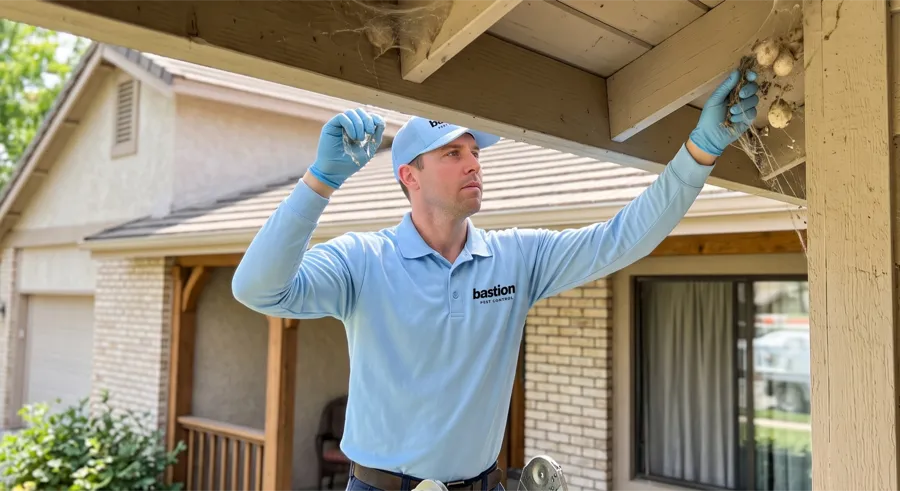
De-web by hand
We physically remove webs and egg sacs from eaves, soffits, porches, corners and patio structures, ending the next generation before it hatches.
 2
2
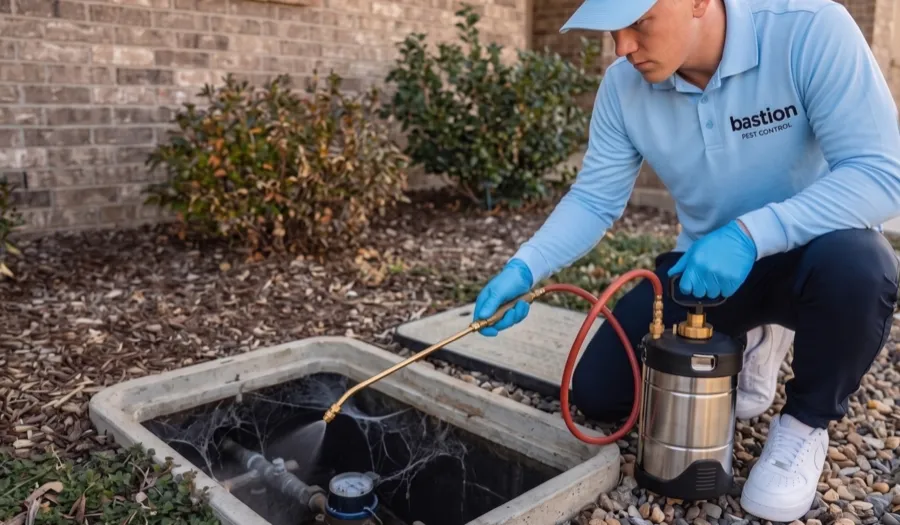
Treat the harborage
Direct treatment into rock and retaining walls, meter and valve boxes, garage door tracks, under decks and behind stored items, the voids where widows actually live.
 3
3
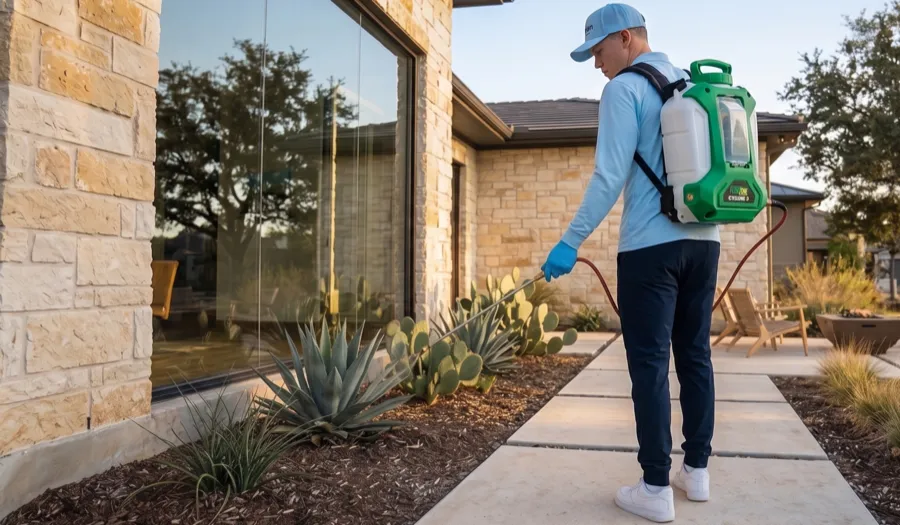
Remove the food supply
The full TriBarrier treatment suppresses the insects spiders hunt. Fewer moths, crickets and ants at the foundation, fewer spiders in residence.
Recognize any of these in your Leander home?
Free quote, same-day service most days, and free re-treatments if they come back between visits.

Why Leander homes collect spiders.
Spiders are the guests, not the party. They set up wherever dinner is being served, so a house crawling with spiders is really a house crawling with the bugs spiders eat. In Leander the buffet never closes: moths and midges drawn to porch and landscape lighting, crickets in the rock beds, mosquitoes off the greenbelts and the South Fork San Gabriel, and the general insect volume that comes with cedar and oak cover. Treat only the spiders and they return. Cut the prey base and they leave on their own.
The way Leander yards are built gives widows ideal housing. Because topsoil over the limestone is shallow, landscaping here relies on boulder walls, limestone retaining walls, flagstone, dry creek beds and rock-mulched beds. Black widows want exactly that: a dark, dry, undisturbed void close to the ground. Add water meter boxes, irrigation valve boxes, the corners of garage door tracks, stacked pots and the underside of patio furniture, and a typical Crystal Falls or Block House Creek lot has dozens of widow sites. Most of which only get disturbed when someone reaches into one bare-handed.
Wolf spiders are the ones that alarm people most, and in Leander they are usually a rain response. These are large, fast, ground-hunting spiders that build no web. When heavy Central Texas rain saturates thin soil and floods the rock crevices they hunt from, they move to the driest high ground available: your garage, your slab, your living room floor. Homeowners see one sprint across the tile and assume infestation when the house is simply the driest thing nearby.
Orb weavers handle the rest of the visible nuisance, spinning large webs across porches, eaves and between patio columns overnight. They are not medically significant and genuinely useful, but nobody wants to walk into one at 6am. Consistent hand de-webbing plus treating the eaves and soffits they anchor to is what keeps them from rebuilding in the same place week after week.
Rock walls and stone
Boulder and limestone retaining walls give black widows the dry, undisturbed voids they prefer.
A rich prey base
Moths, midges and crickets from greenbelts and landscape lighting feed the spider population.
Thin soil that floods
Heavy rain drives ground-hunting wolf spiders out of rock crevices and into houses.
Meter and valve boxes
Dark, low and undisturbed, the single most common place we find widows on a Leander lot.
When spider activity peaks in Leander.
Spiders never really go anywhere. Winters here are too mild to move them on. But every fall there is an obvious switch where they go from being outdoors to being in the garage, and it happens on schedule.
Males mature, head off in search of a mate, and stroll into the garage.
Still about, just slow, and generally somewhere you will not spot them.
Building the barrier in spring is much easier than trying to catch up at the peak.
What we actually find on spider jobs.
These come off our own service visits around the metro. If you are trying to identify whatever has moved into the garage corner, start here.
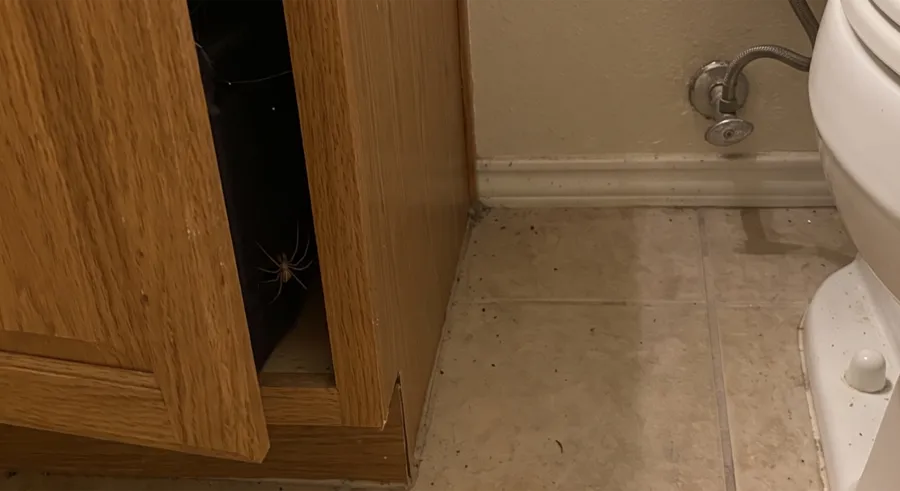
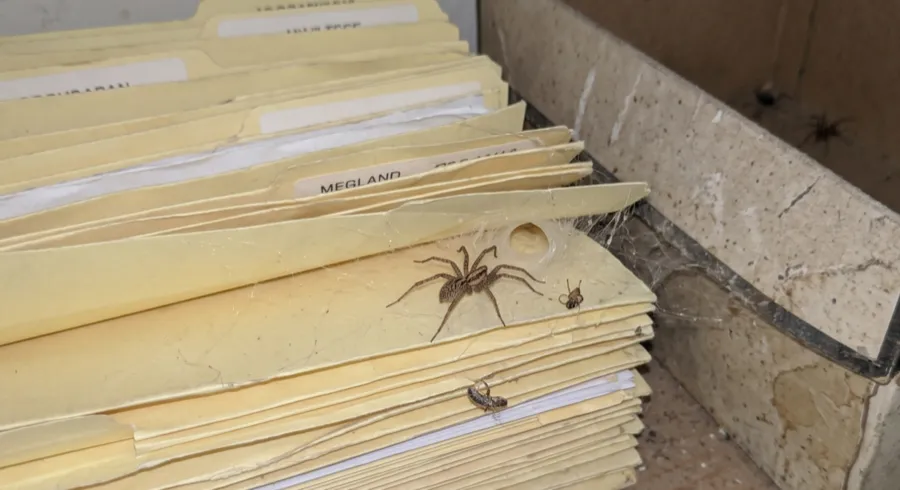
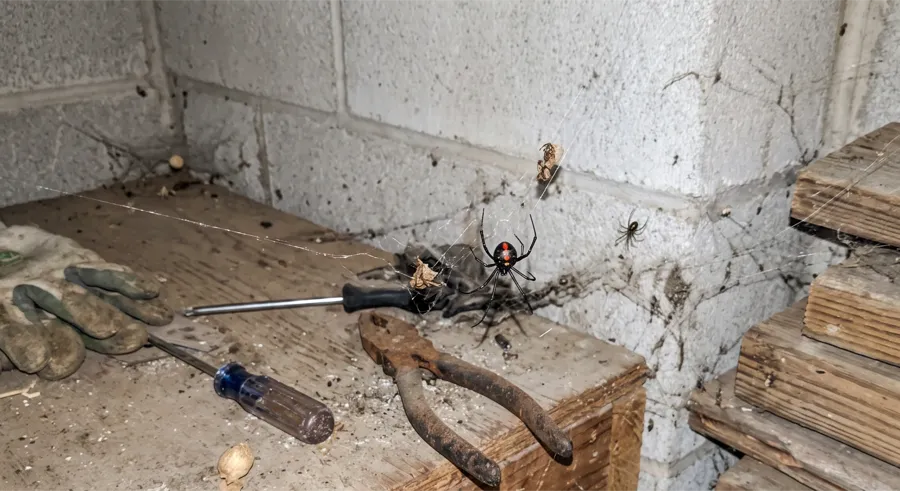
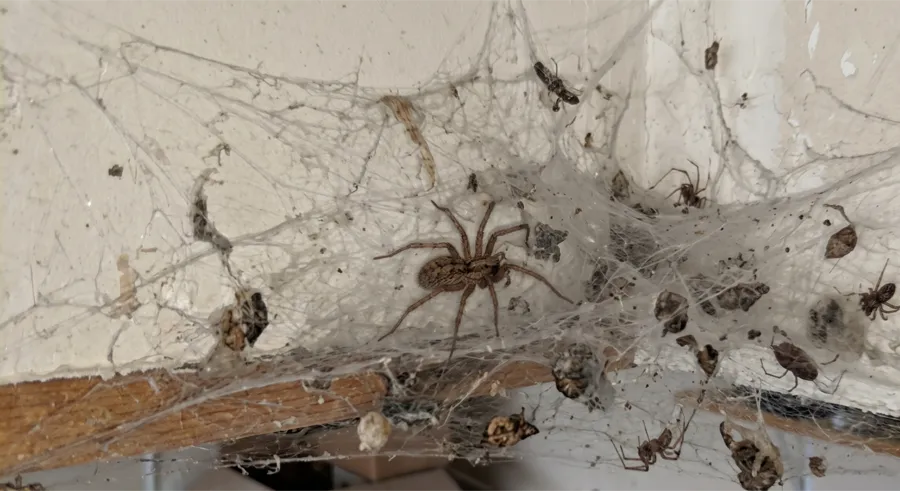
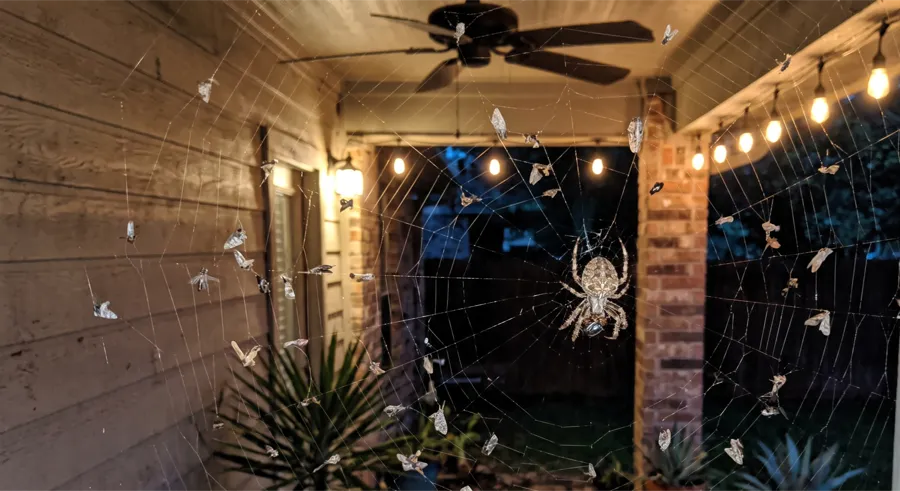
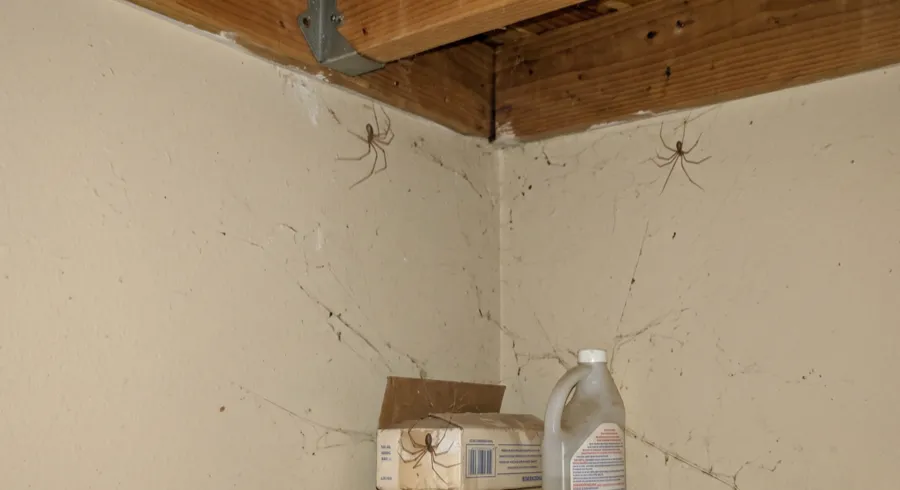
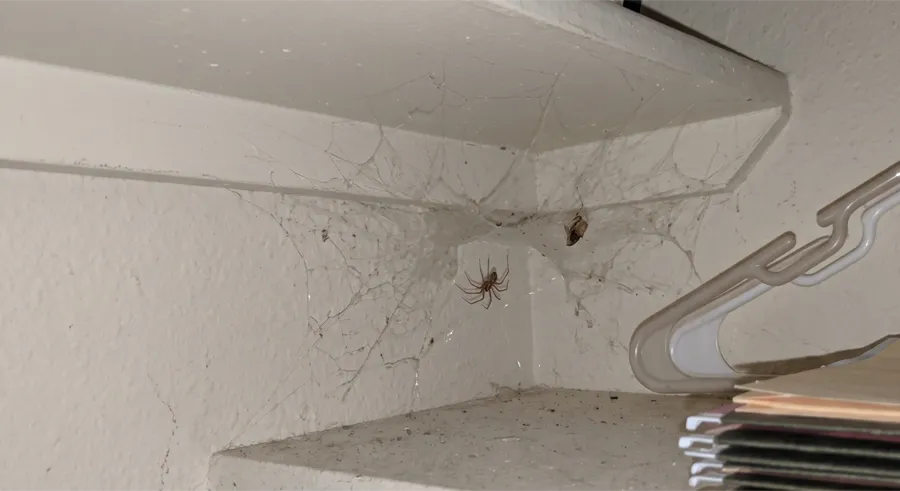
All shot by our service team on real jobs. These species are common across Central Texas. If you cannot place what you have found, text a photo to 843-480-8699 and we will tell you.
The spiders we find in Leander.
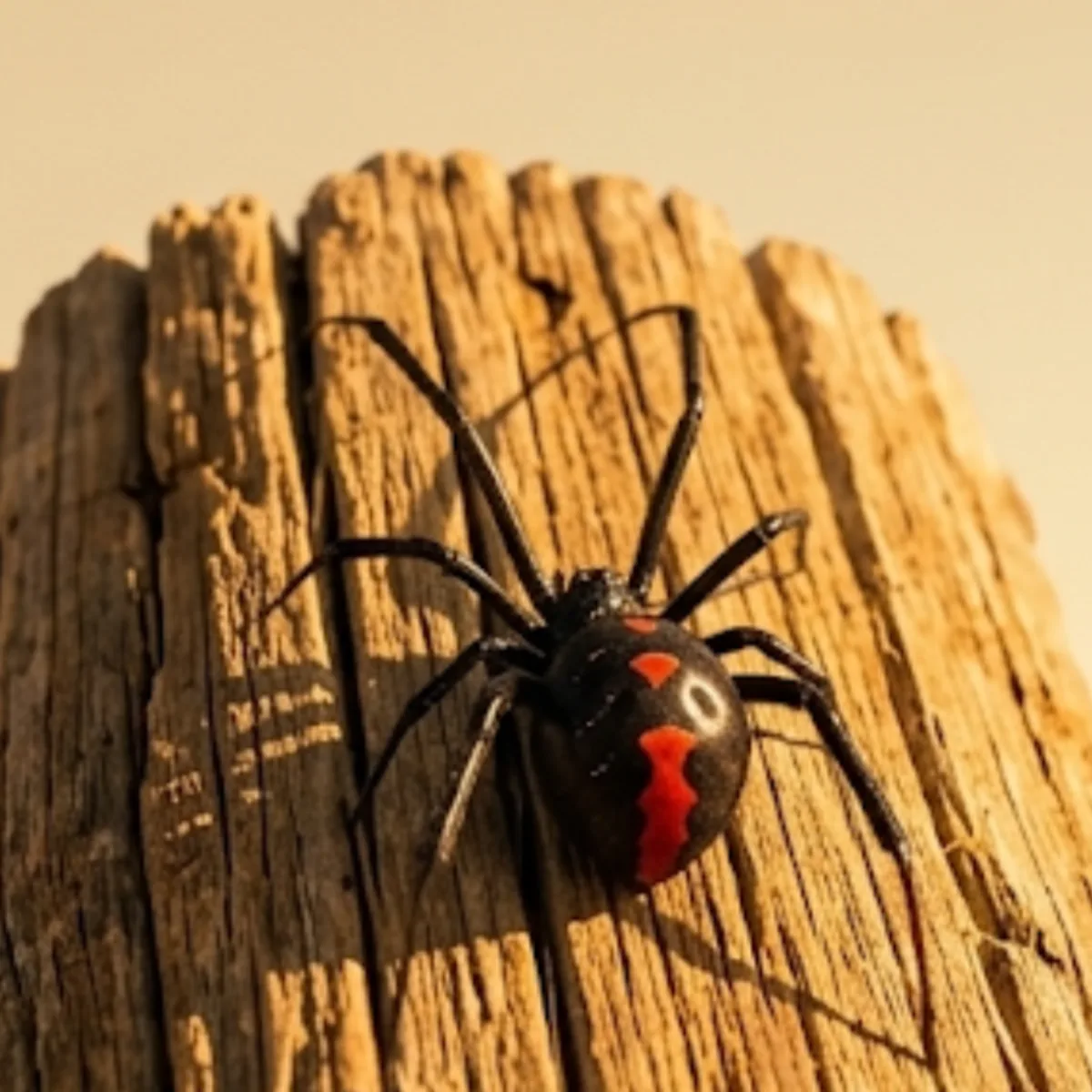
Sitting on thin soil over fractured limestone at the Balcones Canyonlands edge, Leander's spider list reflects the rock. Widows own it: boulder walls, flagstone, dry creek beds and every valve box in Crystal Falls and Travisso. Orb weavers work the greenbelt-facing porches, fed by moths and midges off the cedar and oak cover. Wolf spiders arrive on the slab when rain floods the rock crevices. Your technician confirms the species on site first, because rock-wall widows and porch orb weavers call for different tools.






A note on bites and stings. Reactions vary from person to person, and any bite or sting can cause a serious reaction in someone sensitive to it. Nothing here is medical advice. If you are bitten or stung and feel unwell, or the reaction spreads or does not settle, contact a doctor or Poison Control. If breathing or swallowing is affected, treat it as an emergency and call 911.
What we look for on the first visit.
Where a web sits tells us who built it and what it is eating. In Leander that usually means a rock wall seam, a boulder bed against the slab or the eave above a greenbelt-facing porch light. Ring us and describe it. We can usually tell over the phone whether it needs same-day attention, and most days we can get a technician out.
- Tangled webbing in garage corners or under eaves
- Webs inside the water meter or valve box
- Egg sacs (smooth white spheres) in sheltered corners
- Fast ground spiders indoors after heavy rain
- Fresh orb webs across the porch each morning
- Webbing under grills, furniture or stacked pots
- Tangled widow webbing in rock-mulched beds against the slab
- Fresh orb webs on greenbelt-facing eaves and patio columns
Leander neighborhoods on our spider routes.
Rock and greenbelt decide where Leander spiders concentrate. Crystal Falls, Highlands at Crystal Falls and Travisso combine boulder retaining walls with preserve edges, so widows have housing and orb weavers have a buffet. Block House Creek sits on thin soil that floods fast, which puts wolf spiders on the garage floor after storms. Anyone searching for a spider exterminator in Leander is usually describing one of those two problems, and both are on our weekly route.
Not listed? We almost certainly cover it, see pest control in Leander or the full service area.
Spiders in Leander, answered straight.
How much does spider control cost in Leander, TX?
Spider control and de-webbing are included in our general pest plan starting at $66 per month for a single-family home in Leander. That covers spiders along with ants, roaches, scorpions, wasps and rodents, and there is no surcharge for treating black widows. Your exact price depends on home and lot size, confirmed with a free on-site quote.
Are there black widows in Leander?
Yes, and they are common, more so here than in flatter parts of the metro, because Leander landscaping relies so heavily on limestone rock and retaining walls. We find them regularly in rock wall seams, water meter and irrigation valve boxes, garage door track corners, under patio furniture and grills, and in stacked pots. They generally avoid people and will retreat if given the chance, but a bite is medically significant, so we treat those voids on every visit and recommend gloves whenever you reach into one.
Why do I get big spiders inside after it rains?
Those are almost always wolf spiders reacting to flooding. Leander's soil is thin over limestone, so heavy rain saturates it fast and floods the rock crevices they hunt from. They move to the driest high ground available, which is your slab and garage. It is not an infestation and it says nothing about how clean the house is, a treated perimeter is what stops them at the foundation.
Do you actually remove the webs, or just spray?
We take them down by hand on every visit: eaves, soffits, porches, patio columns, corners and door frames, egg sacs included. The egg sacs are what count. Leave one behind and the problem simply reschedules itself.
Is spider treatment kid and pet friendly?
Our treatments are pet and kid friendly, and they go into the voids and harborage where spiders shelter: rock walls, meter boxes, under decks, garage corners, rather than across open floors or play areas. Keep kids and pets off treated exterior surfaces until dry, roughly 30 minutes, and we will show you every area we treated before we leave. Your technician will tell you if any area needs longer.
How do I keep spiders out between visits?
Three things help most in Leander. Switch exterior bulbs to warm or yellow LED so you attract fewer moths and midges, which is what draws spiders to your porch. Keep rock mulch and landscape stone pulled back a few inches from the foundation, and store firewood off the ground away from the house. And wear gloves when reaching into meter boxes, rock wall crevices or under patio furniture, that is where widows are.
Does living against a Leander greenbelt mean more spiders on my porch?
Yes, mostly orb weavers and mostly because of your lights. Greenbelt cedar and oak cover holds moths, midges and crickets, and a bright white porch light on a Travisso or Crystal Falls lot is the brightest thing for a hundred yards. The spiders build where the food arrives. Switching to warm or yellow LED cuts the draw, and we clear and treat the eaves and columns every visit so the same web does not come back in the same place.
Can you treat the boulder retaining wall in my Leander backyard for widows?
We can, and we do it on every visit. A boulder or limestone wall is a long run of dry, dark, undisturbed voids, which is a widow's entire wish list. We treat the seams and the base where the wall meets the bed, clear any webbing and egg sacs we can reach, and check the valve boxes nearby. You do not need to rebuild the wall. Just wear gloves if you reach into it between visits.





Not in Leander? We are close.
We treat spiders in every city we serve. Same crew, same guarantee, different stonework everywhere. Find your city below, read the full spider control overview, or check the complete service area.
Answered 24 hours · Leander, TX
Clear webs. No widows. Every visit.
Free quote, same-day service across Leander, and free re-treatments if spiders come back between visits.