Spider control in Austin, TX.
Austin spiders come with the canopy and the creeks: widows in the meter box, orb webs strung across the porch by sunrise, a wolf spider on the tile after a storm. Our plan runs from $66 a month, covers spiders and hand de-webbing on every visit, and includes free re-treatments if they rebuild before we are due back.
Written by the Bastion Pest Control service team · Licensed & insured in Texas · Last updated
Before you read the rest, Austin
Limestone west of MoPac, clay east, creeks and live oaks everywhere: Austin feeds spiders well and houses them better. The essentials, before the long version below.
- Peak season
- August through October
- Late-summer males on the move, most visible under Hyde Park porch lights.
- Biggest risk
- Black widows
- Meter boxes, valve boxes and the flagstone walls west of MoPac.
- Included in
- $66/mo plan*
- De-webbing on every visit, no upcharge.
- Every visit
- Hand de-webbing
- Egg sacs removed, spray cannot reach inside.
- Root cause
- Their food
- Fewer moths and crickets means fewer spiders.
- After rain
- Wolf spiders
- Flooded ground drives them indoors.
Spider control is included in the general pest plan.
There is no spider line item in Austin. The recurring general pest plan covers spiders, hand de-webbing and egg sac removal on every visit at no upcharge, the same visit that handles ants, roaches, scorpions and wasps. If webs return between visits, the re-treatment costs you nothing. The plan starts at $66 a month for a single-family home, confirmed with a free on-site quote.
See full pricing details →Starting rate on a single-family Austin home. Spider work and de-webbing every visit, free returns between them.
| General pest planRecurring | One-time treatmentSingle visit | |
|---|---|---|
| What it is for | Keeping spiders and their food supply down year-round | Clearing webs and treating one active problem |
| Right for you if | You want the webs to stop coming back | You are hosting, selling, or want to try us once |
| What you get | Full TriBarrier every visit, eaves and corners included | One full TriBarrier treatment |
| If they come back | We re-treat free, with no limit and no trip fee | A return visit is a new charge |
| Other pests covered | Ants, cockroaches, scorpions, wasps and rodents | Spiders only |
| Price | From $66 a month* | Quoted per job* |
* Opening figure. Home size, lot size and the pressure already on site decide what you actually pay.
How we control spiders in Austin.
Spider work is mechanical as much as chemical. Removing webs and egg sacs by hand does more than any product, and reducing the prey base keeps them from returning.
 1
1
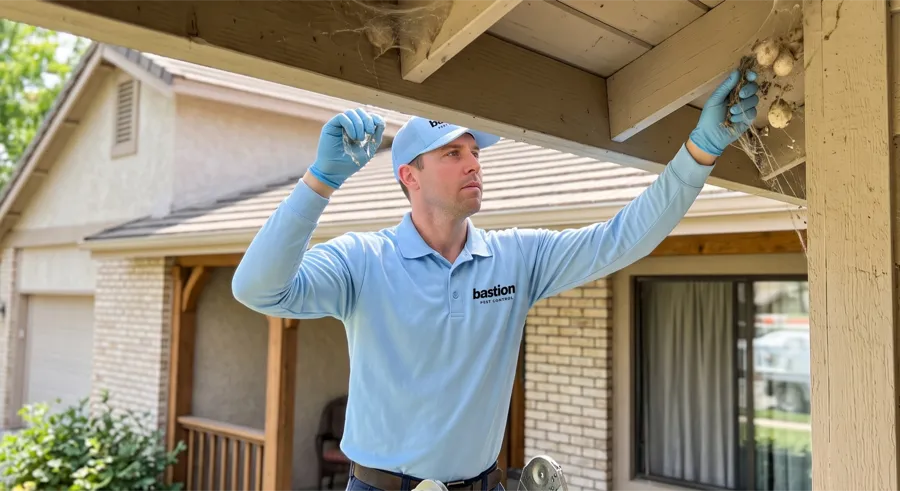
De-web by hand
We physically pull down webs and egg sacs from eaves, soffits, porches, corners and patio structures. That removes the next generation before it ever hatches.
 2
2
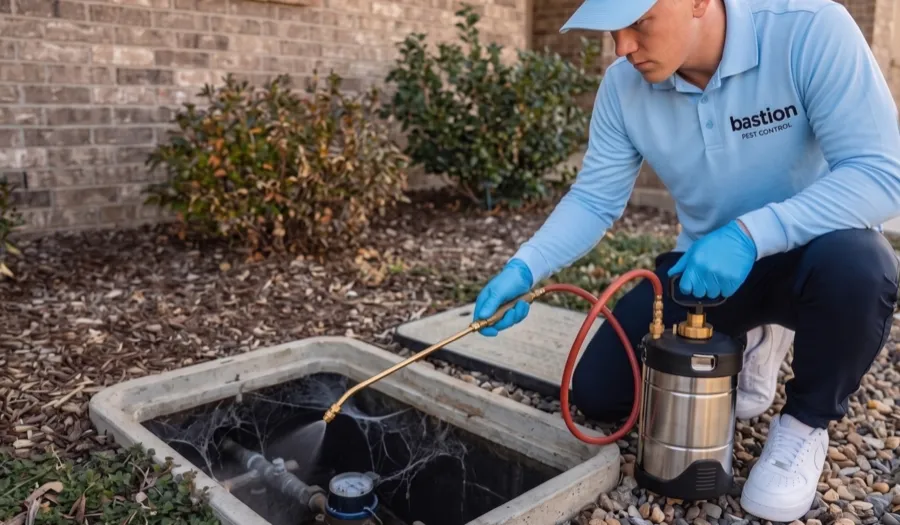
Treat the harborage
Direct treatment into meter and valve boxes, garage door tracks, stone walls, under decks and behind stored items, which is exactly where widows like to set up.
 3
3
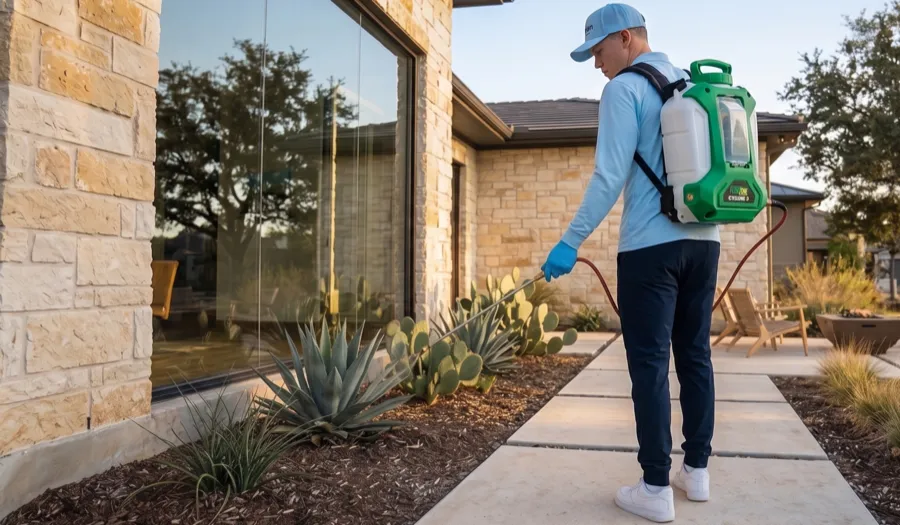
Remove the food supply
The full TriBarrier treatment knocks back the insects spiders are eating. Fewer moths, crickets and ants near the foundation means fewer spiders bothering to stay.
Recognize any of these in your Austin home?
Free quote, same-day service most days, and free re-treatments if they come back between visits.

Why homes collect spiders in Austin.
Austin's spider population tracks its insect population, and the city produces a lot of insects. Creek corridors and greenbelts hatch midges and mosquitoes, mature canopy and leaf litter support crickets, and porch lighting on older homes draws moths all night. West of MoPac, limestone rock walls and flagstone give black widows the dry, undisturbed voids they prefer. In the central neighborhoods, pier-and-beam crawl spaces, detached garages and stacked storage do the same job.
The other thing that defines Austin is age and canopy. Central neighborhoods like Hyde Park, Travis Heights, Crestview and Rosedale have housing stock from the 1930s through the 1960s, with pier-and-beam foundations, original windows, unsealed penetrations and enormous live oaks and pecans overhead. Older homes have more ways in and more harborage around them, and the mature canopy provides elevated routes and constant leaf litter. Newer far-north and far-south subdivisions have the opposite problem: tight envelopes with builder gaps and freshly disturbed ground.
Spiders are the guests, not the party. They set up wherever dinner is being served, so a house crawling with spiders is really a house crawling with the bugs spiders eat. Treat only the spiders and they will be back by Thursday. Take away the buffet and they move out on their own. It is also why this job is as much broom as it is bottle. Pulling webs and egg sacs down by hand beats any product in a can, because one egg sac holds hundreds of spiderlings and no spray gets through the wrapper. Leave it up and you have not removed a spider, you have preordered three hundred.
Two soil types
Limestone west of MoPac, blackland clay east, different pests, different entry routes.
Older housing stock
1930s-60s homes in the central neighborhoods have far more gaps and harborage.
Mature canopy
Live oaks and pecans give climbing pests elevated routes and drop constant leaf litter.
Creeks and greenbelts
Shoal, Waller and Barton Creek corridors keep moisture and insect volume high year-round.
When spider activity peaks in Austin.
Spiders never actually clock off. Central Texas winters are far too mild for that. But there is a very obvious point where they stop being an outside problem and start being a garage problem, and it lands in early fall every year.
Males hit adulthood, go looking for a date, and blunder straight into the garage.
Still present, just slower, and mostly keeping out of sight.
Putting the barrier up before the climb starts beats trying to fix it at the peak.
What we actually find on spider jobs.
These are our own photos from service calls around the Austin metro. If you are trying to work out what has set up in your garage corner, odds are one of these is it.
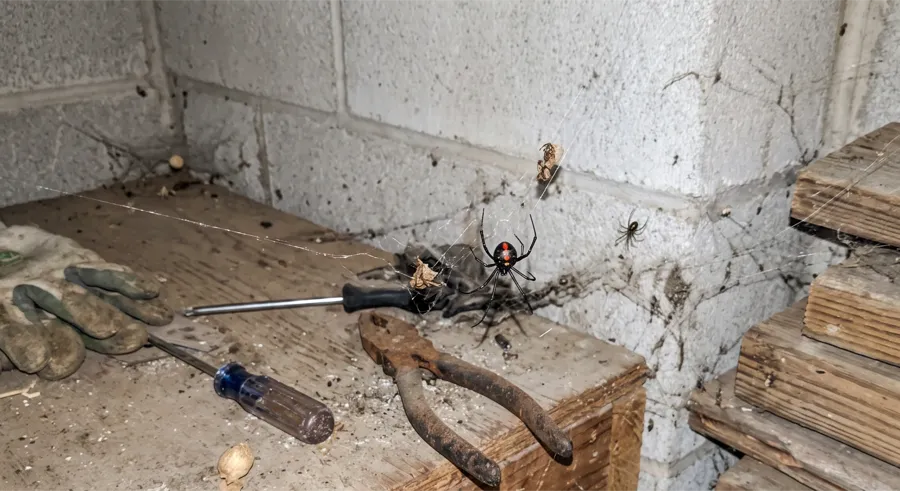
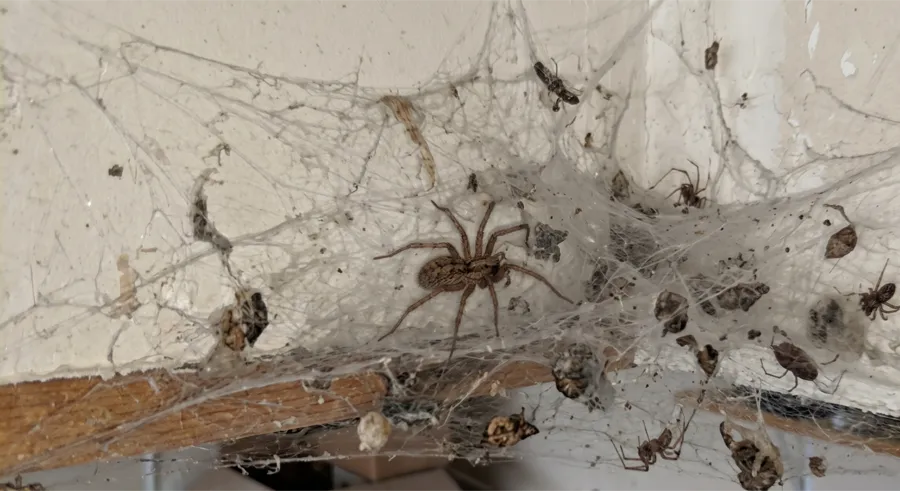
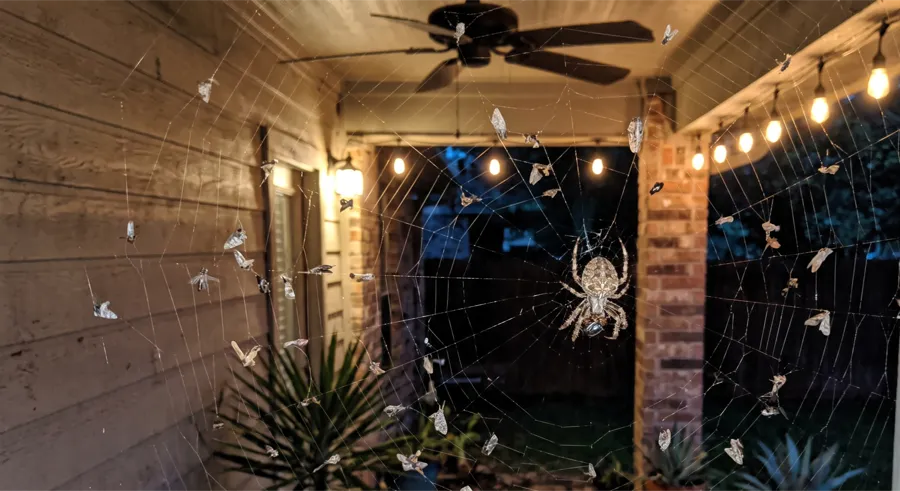
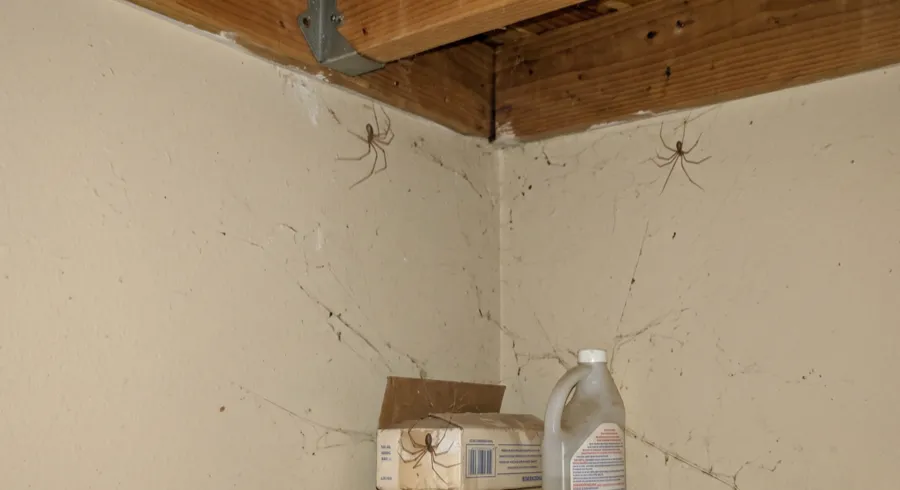
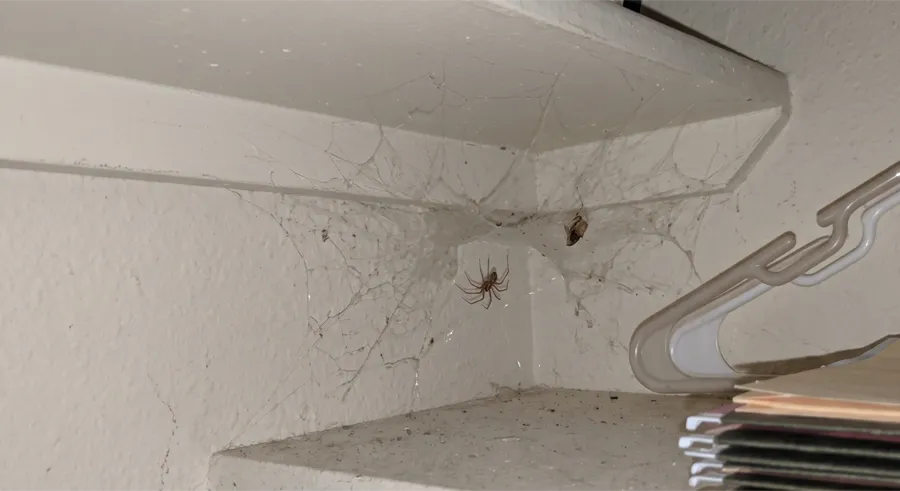
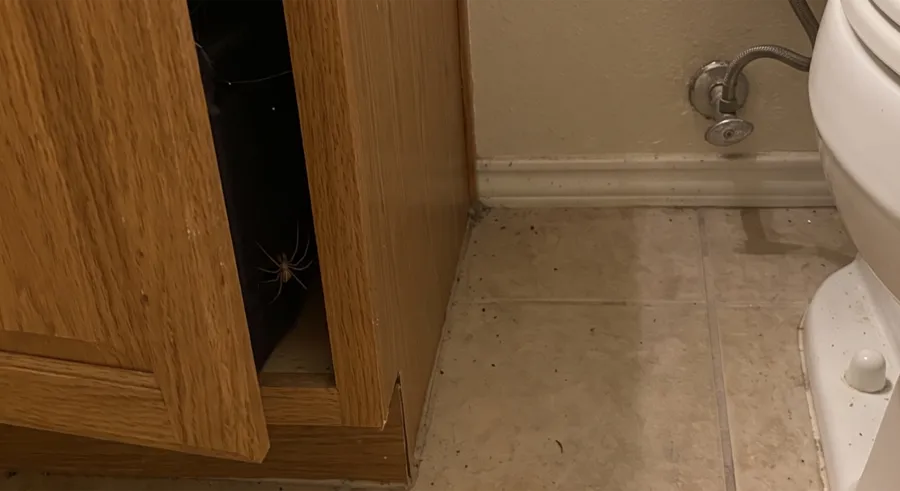
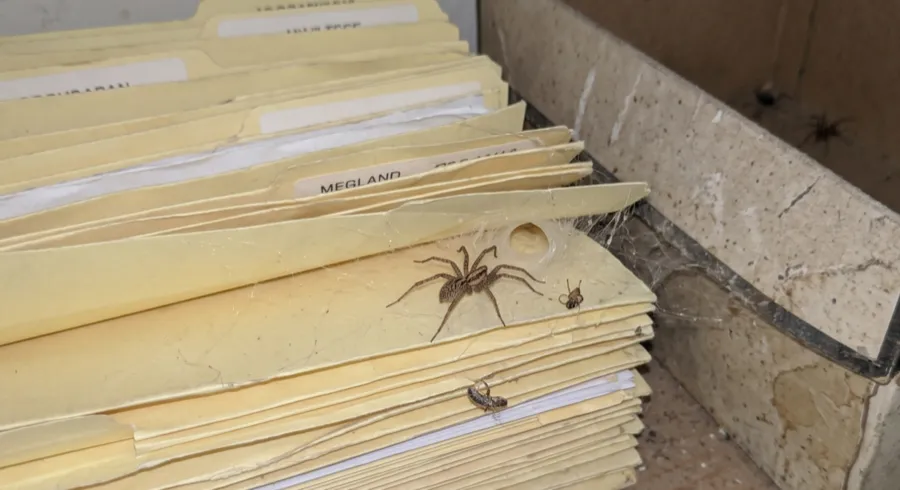
Photos taken by our own service team on real visits. These species turn up right across Central Texas. Not sure what you have got? Text a photo to 843-480-8699 and we will tell you.
The spiders we find in Austin.
The spider list in Austin is the same seven you will see anywhere in Central Texas, but the mix shifts block by block. Pier-and-beam homes in Hyde Park and Travis Heights hold recluses and cellar spiders in crawl spaces and stacked storage. Rock walls in Westlake hold widows. Creek corridors like Shoal and Waller feed orb weavers all summer. Your technician confirms the species on site before anything gets treated, because a tan spider in a closet and a tan spider in a rock wall are not the same job.
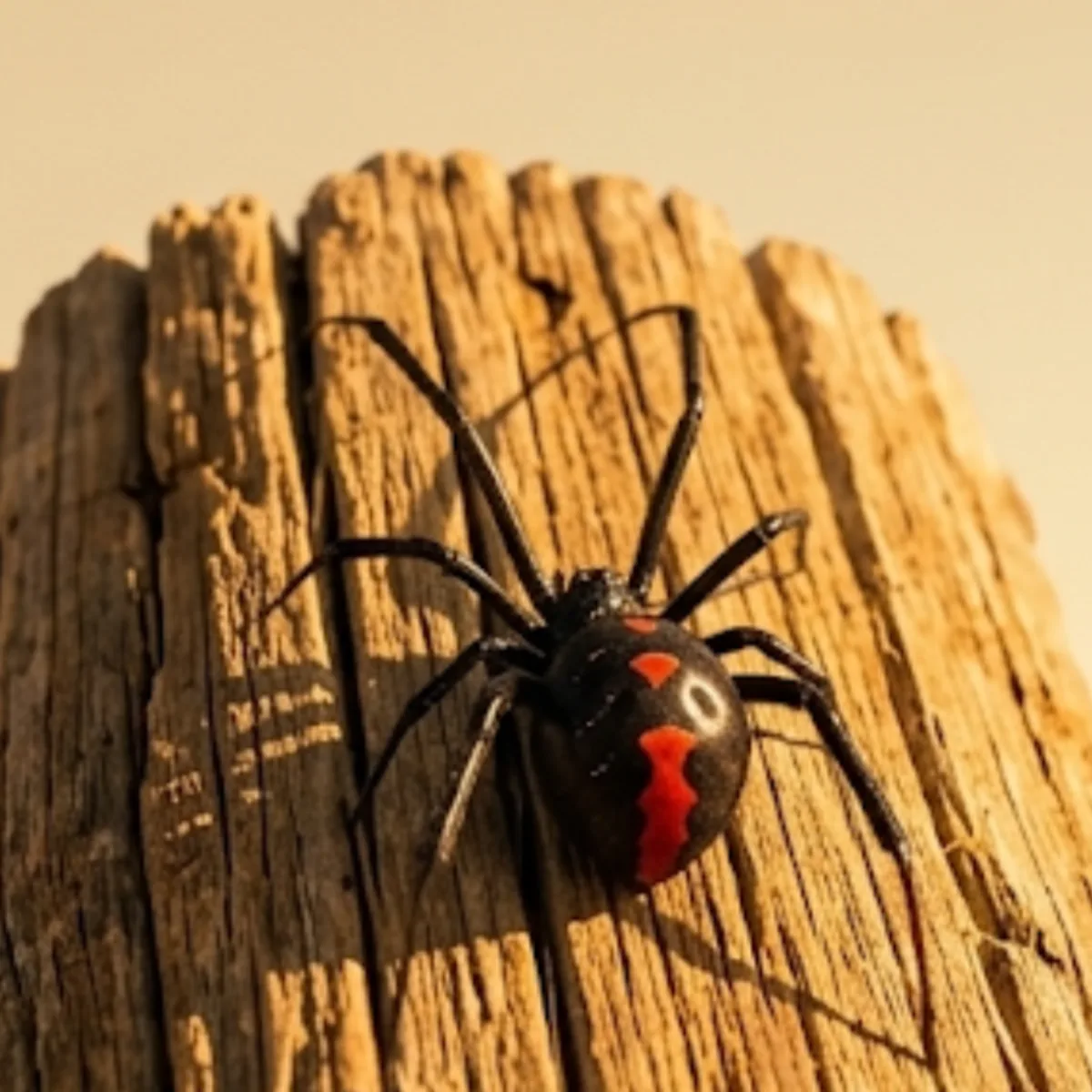
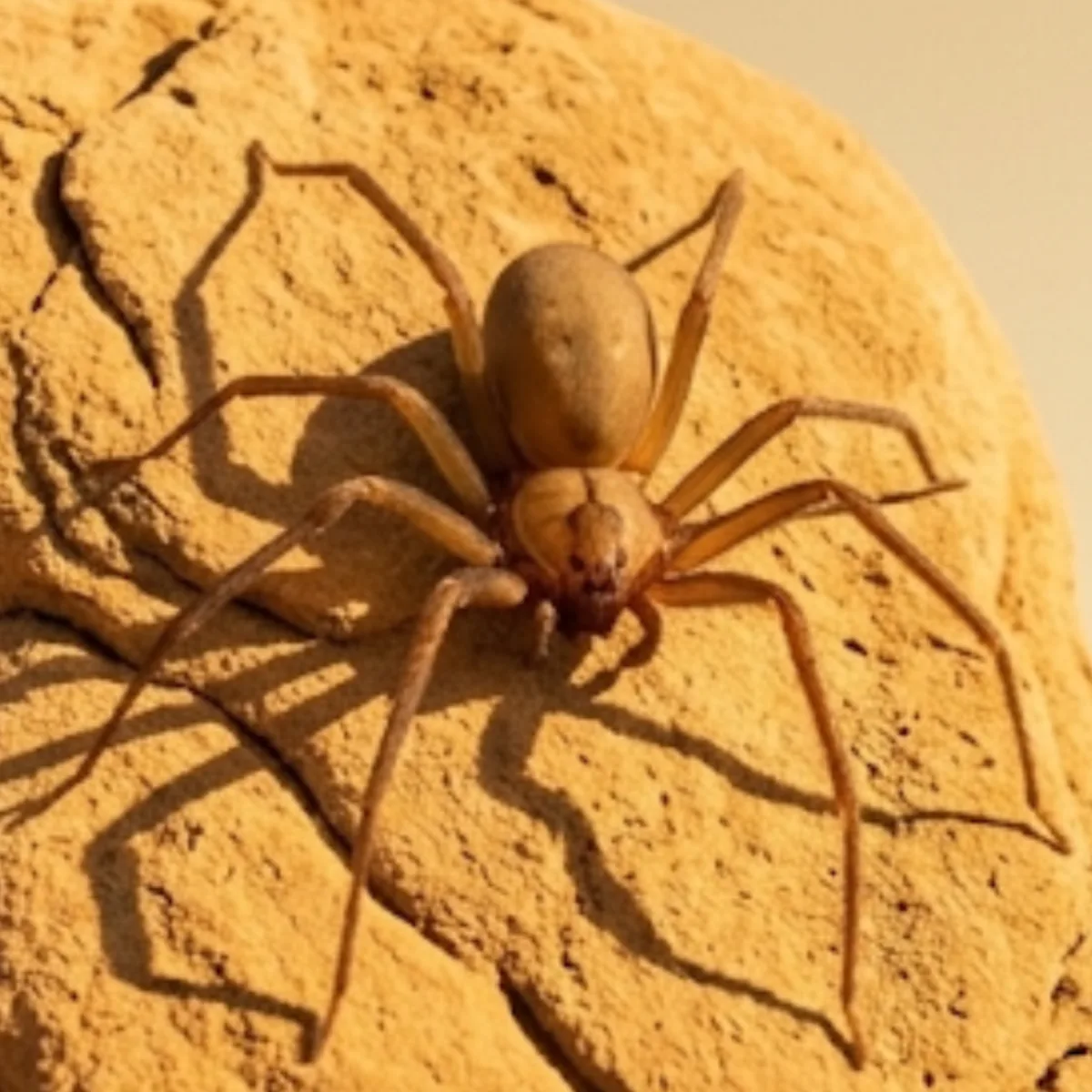


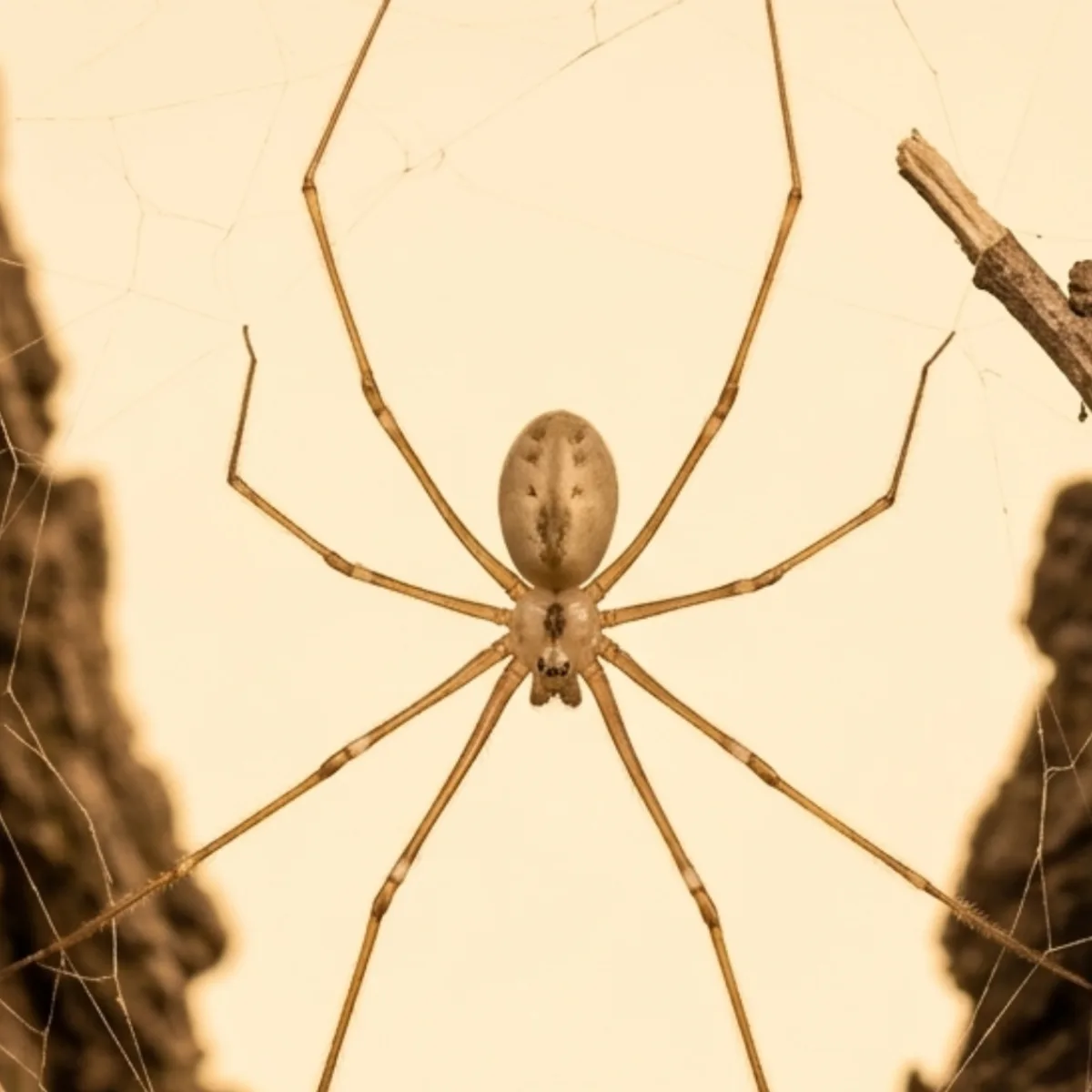
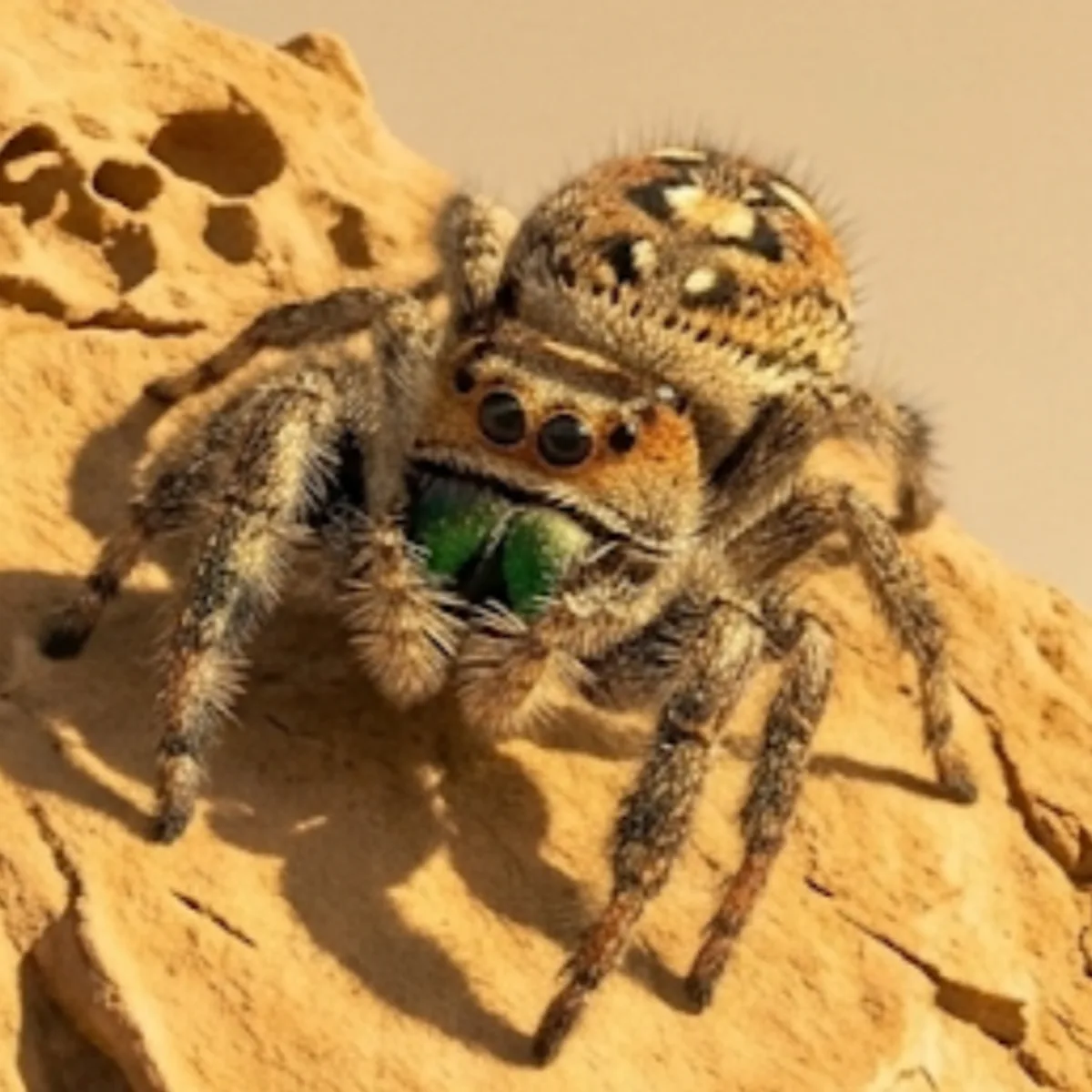
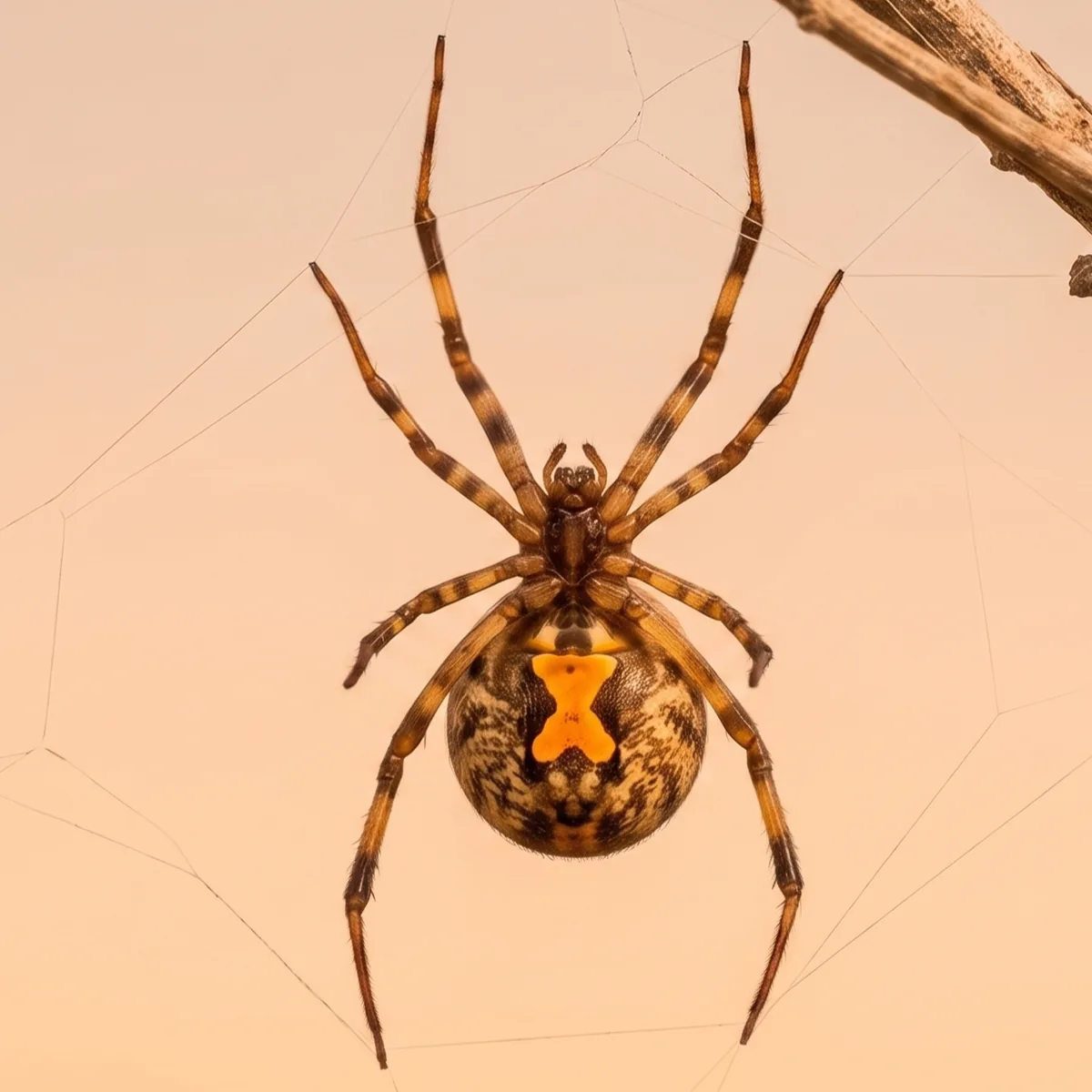
A note on bites and stings. Reactions vary from person to person, and any bite or sting can cause a serious reaction in someone sensitive to it. Nothing here is medical advice. If you are bitten or stung and feel unwell, or the reaction spreads or does not settle, contact a doctor or Poison Control. If breathing or swallowing is affected, treat it as an emergency and call 911.
What we look for on the first visit.
Spiders leave a paper trail, and in Austin the trail usually runs from an older pier-and-beam crawl space or a limestone wall out to whatever the porch light is feeding. Call and walk us through what you found. More often than not we can tell you on the phone whether it needs a same-day visit, and most days we can make that happen.
- Tangled webbing in garage corners or under eaves
- Webs inside the water meter or valve box
- Egg sacs (smooth white spheres) in sheltered corners
- Fast ground spiders indoors after heavy rain
- Fresh orb webs across the porch each morning
- Webbing under grills, furniture or stacked pots
- Webbing along pier-and-beam skirting on a central Austin bungalow
- Widow webs in flagstone or limestone walls west of MoPac
Your Austin neighborhood is on the route.
Where spiders pile up in Austin depends on what is feeding them. Creek-side sections like Barton Hills and Zilker run heavy on orb weavers and cellar spiders because the midges never stop. Older Hyde Park bungalows give recluses quiet storage. Rock-walled lots in Westlake are widow country. Whether you need a spider exterminator in Austin for all of that or for one web-covered porch, it is the same route and the same crew.
Not listed? We almost certainly cover it, see pest control in Austin or the full service area.
Ask us about spiders in Austin.
How much does spider control cost in Austin, TX?
Spider control and de-webbing are included in our general pest plan starting at $66 per month for a single-family home in Austin. That covers spiders along with ants, roaches, scorpions, wasps and rodents, and there is no surcharge for treating black widows. Your exact price depends on home and lot size, confirmed with a free on-site quote.
Are there black widows in Austin?
Yes, and in numbers. The Balcones Escarpment runs through town and the west side of it is shallow limestone, which means rock retaining walls, flagstone paths and stone landscape borders on a great many properties. That is close to purpose-built widow harborage. We pull them regularly out of water meter boxes, irrigation valve boxes, garage door track corners, stacked pots and from under patio furniture and grills. They are not aggressive and will retreat if you give them the option, but a bite is medically significant, so those voids get treated on every visit and gloves are not optional when you reach into one.
Why do I get big spiders inside after it rains?
Those are almost always wolf spiders reacting to flooding. Heavy rain saturates the ground and floods the burrows and crevices they hunt from, so they move to the driest high ground available. Your slab and garage. It is not an infestation and it says nothing about how clean the house is. A treated perimeter is what stops them at the foundation.
Do you actually remove the webs, or just spray?
We take them down by hand on every visit: eaves, soffits, porches, patio columns, corners and door frames, egg sacs included. The egg sacs matter most. Leave one behind and you have not solved anything, you have just scheduled it for later.
Is spider treatment kid and pet friendly?
Our treatments are pet and kid friendly, and they go into the voids and harborage where spiders shelter: meter boxes, wall voids, under decks, garage corners, rather than across open floors or play areas. Keep kids and pets off treated exterior surfaces until dry, roughly 30 minutes, and we will show you every area we treated before we leave. Your technician will tell you if any area needs longer.
How do I keep spiders out between visits?
Start with the porch light, because it is upstream of everything else. Warm or yellow LED bulbs pull in far fewer moths and midges, and the spiders are only there for the moths. After that, pull mulch and landscape stone back a few inches off the foundation, get firewood up off the ground and away from the wall, and on the west side of town treat every rock wall and flagstone border as somewhere to look before you reach. Gloves for meter boxes, valve boxes, stacked pots and under the grill.
Do older pier-and-beam homes in central Austin get more spiders?
Usually, yes. A 1940s Hyde Park or Travis Heights house has a crawl space, original windows and decades of unsealed penetrations, and every one of those is a sheltered, undisturbed void. Cellar spiders and the occasional recluse like the crawl space; widows like the skirting and the detached garage. Most of it is fixable with sealing and a treated perimeter, and the de-webbing catches the rest. New far-north subdivisions have the opposite problem: fewer voids, but builder gaps and freshly disturbed ground.
Why are there widows in every rock wall west of MoPac?
Because a limestone wall is a widow apartment complex. Dry, dark, undisturbed voids at ground level are exactly what Latrodectus wants, and west Austin landscaping is built out of them: flagstone, boulder beds, stacked stone borders. Add the meter and valve boxes on every lot and a Westlake or Tarrytown yard can hold dozens of sites. We treat the seams and boxes on every visit, and gloves are non-negotiable when you reach into one.






Nearby cities we treat for spiders
We treat spiders in every city we serve. Same crew, same guarantee, wildly different porches. Find your city below, read the full spider control overview, or check the complete service area.
Answered 24 hours · Austin, TX
Clear webs. No widows. Every visit.
Free quote, same-day service across Austin, and free re-treatments if spiders come back between visits.