Mosquito control in Austin, TX.
Austin's creeks never take a month off, so neither do the mosquitoes along Shoal, Waller and Barton. Your yard gets a barrier on the shaded foliage where adults rest and a hunt for the containers breeding the next batch, with free re-treatments between visits if they come back before we do.
Written by the Bastion Pest Control service team · Licensed & insured in Texas · Last updated
Austin mosquito control at a glance
Central Austin has 80-year-old gutters, live oak shade and three creeks within flying distance, which is a full mosquito resume. Here is what matters before you call.
- Peak season
- March through November
- Older shaded yards in Hyde Park and Rosedale hold the season a little longer.
- Included in
- $166/mo plan*
- The same visit covers rodents, wasps and the rest, no separate mosquito fee.
- Lasts
- 2 - 4 weeks
- Shorter in heavy rain. Re-treatments free.
- Two jobs
- Adults + water
- Spraying alone is half a treatment.
- Breeding site
- A bottle cap
- That is all the water Aedes needs.
Mosquito control comes with the full plan.
Mosquitoes are not a separate line item in Austin. They ride on the General Pest + Rodent + Mosquito plan, starting at $166 a month for a single-family home, alongside ants, spiders, roaches, scorpions, wasps and rodents. If a Barton Creek breeze brings a fresh wave between visits, the re-treatment is free. You pay the plan, not per bite.
See full pricing details →Starting rate for a single-family home in Austin. Includes mosquito control plus free re-treatments between visits.
| General Pest + RodentNo mosquitoes | General + Rodent + MosquitoMost complete | |
|---|---|---|
| What it covers | Ants, spiders, cockroaches, scorpions, wasps and rodents | Everything in the general plan, plus a yard you can sit in after dark |
| Mosquitoes, fleas and ticks | Not included | Included, exterior treatment |
| Where we treat | Foundation band, granular yard moat and property line | The same three layers, plus shaded harborage and standing-water sites |
| Heaviest season | Year-round | March through November, when mosquitoes are active |
| If they come back | Free re-treatments between visits | Free re-treatments between visits |
| Price | From $66 a month* | From $166 a month* |
* Starting price. Your exact number depends on home size, lot size and current pest pressure.
How we treat mosquitoes in Austin.
Mosquito control is two jobs at once: knock down the adults where they rest, and get rid of the water building the next batch.
 1
1
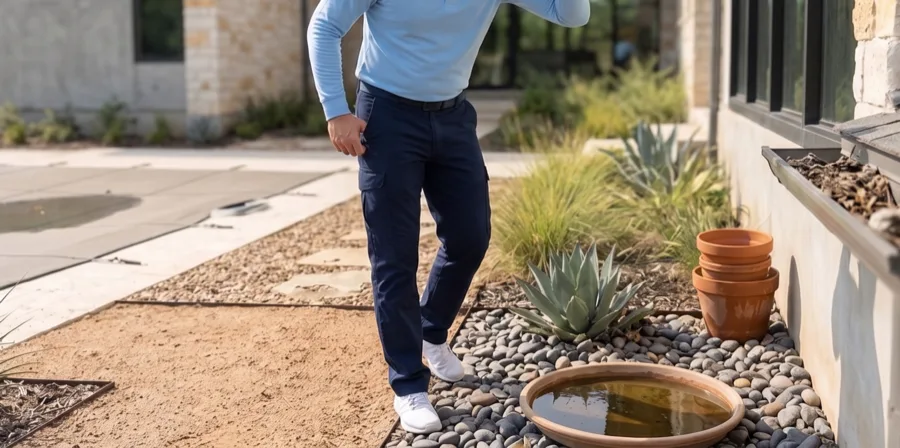
Find and remove the water
We walk the property and find every breeding site: saucers, gutters, tarps, ruts, low spots. Whatever can be emptied, we empty.
 2
2
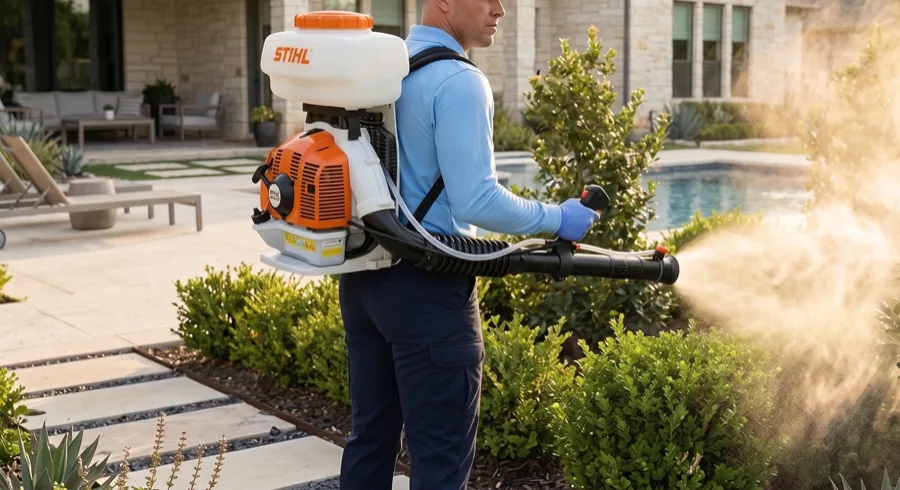
Treat the resting sites
A targeted application to the undersides of foliage, dense shrubs, fence lines, under decks and the shaded harborage where adults hide out during daylight.
 3
3
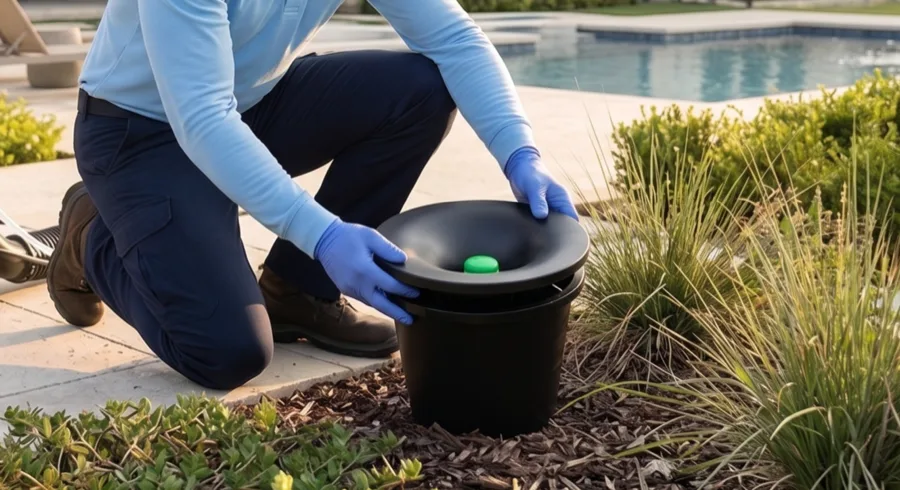
Hold the barrier
We come back on a schedule right through mosquito season, because a treated yard sitting next to untreated green space needs the barrier kept up rather than set once.
Recognize any of these in your Austin home?
Free quote, same-day service most days, and free re-treatments if they come back between visits.

Why mosquito pressure is so high in Austin.
Austin's creeks are the reason mosquito pressure never really stops. Shoal Creek, Waller Creek, Barton Creek and the greenbelt system thread straight through the middle of the city, holding shaded, slow-moving water within easy flight range of central neighborhoods. Mature landscaping then supplies the resting habitat: dense shrubs, ivy, deep shade under old oaks, where adults wait out the day. And in older neighborhoods the container breeding sites are everywhere: clogged gutters on 80-year-old houses, plant saucers, birdbaths, tarps and rain barrels.
The other thing that defines Austin is age and canopy. Central neighborhoods like Hyde Park, Travis Heights, Crestview and Rosedale have housing stock from the 1930s through the 1960s, with pier-and-beam foundations, original windows, unsealed penetrations and enormous live oaks and pecans overhead. Older homes have more ways in and more harborage around them, and the mature canopy provides elevated routes and constant leaf litter. Newer far-north and far-south subdivisions have the opposite problem: tight envelopes with builder gaps and freshly disturbed ground.
This is where the hose-end sprayer from the garage runs out of talent. Adult mosquitoes spend the whole day clocked out on the undersides of leaves, deep in the shrubs, under the deck and along the fence line, which is nowhere near the open lawn most people spray. Real control means treating the shady spots where they nap and dumping the standing water raising the next batch. A mosquito needs about a bottle cap of water to start a family, which is why the EPA leads its pest management guidance with source reduction, so that clogged gutter is not a gutter, it is a maternity ward. Do only one of those two jobs and you get the same result as mowing half a lawn.
Two soil types
Limestone west of MoPac, blackland clay east, different pests, different entry routes.
Older housing stock
1930s-60s homes in the central neighborhoods have far more gaps and harborage.
Mature canopy
Live oaks and pecans give climbing pests elevated routes and drop constant leaf litter.
Creeks and greenbelts
Shoal, Waller and Barton Creek corridors keep moisture and insect volume high year-round.
When is mosquito season in Austin?
Mosquito season in Austin is long rather than sharp. It starts in April, runs hard from June, and does not properly quit until November. Austin Public Health traps and tests across almost exactly that window.
Hottest water, shortest breeding cycle, most mosquitoes. This is also when West Nile detections usually climb.
Austin Public Health traps and tests across these months. If the city is watching, so should you be.
A bottle cap of water is enough. Treatment works far better once the breeding sites on your property are gone.
Where mosquitoes actually breed in Austin.
Every photo here came off a real Austin service call. Notice what is missing: a pond, a creek, a drainage ditch. Almost every mosquito breeding site we find is a container someone forgot about.
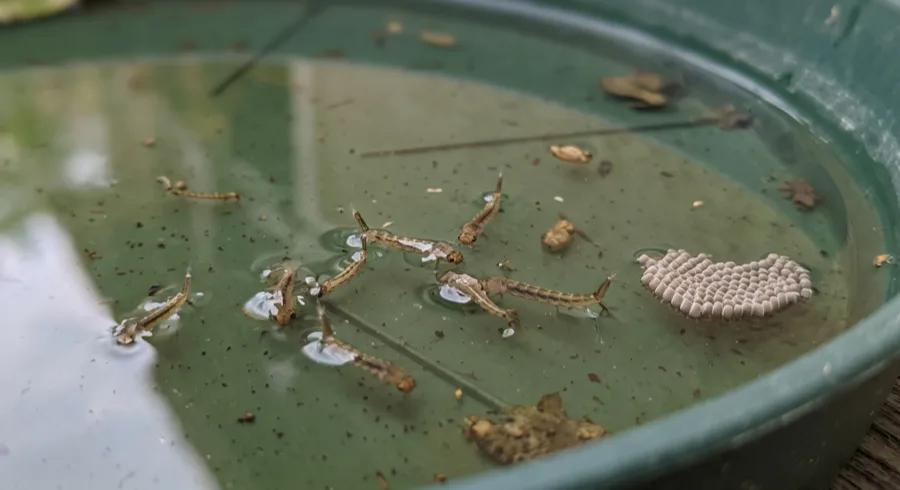
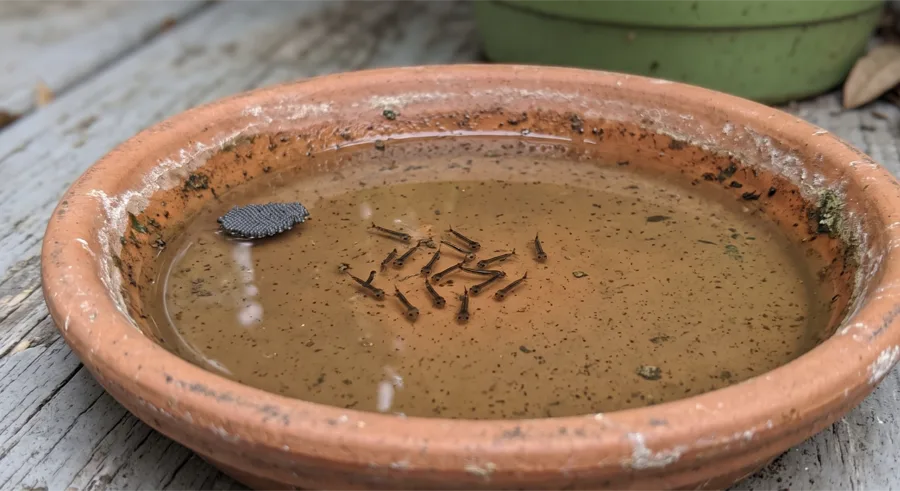
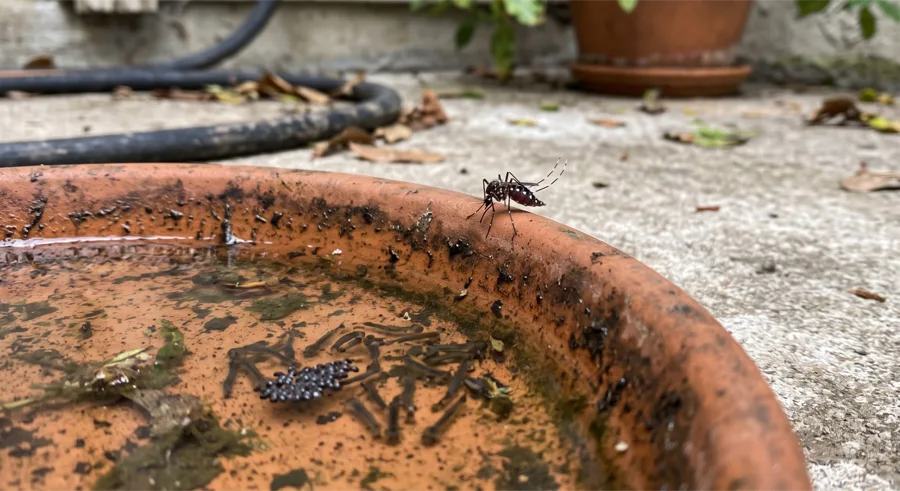
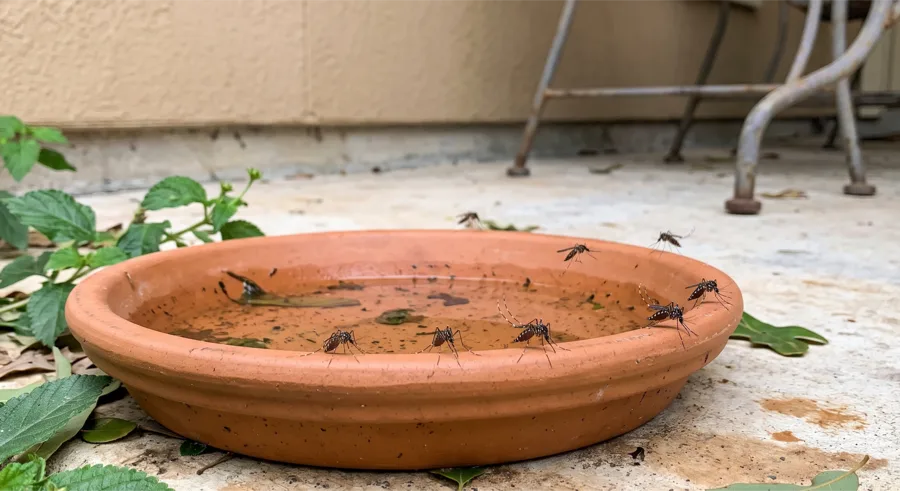
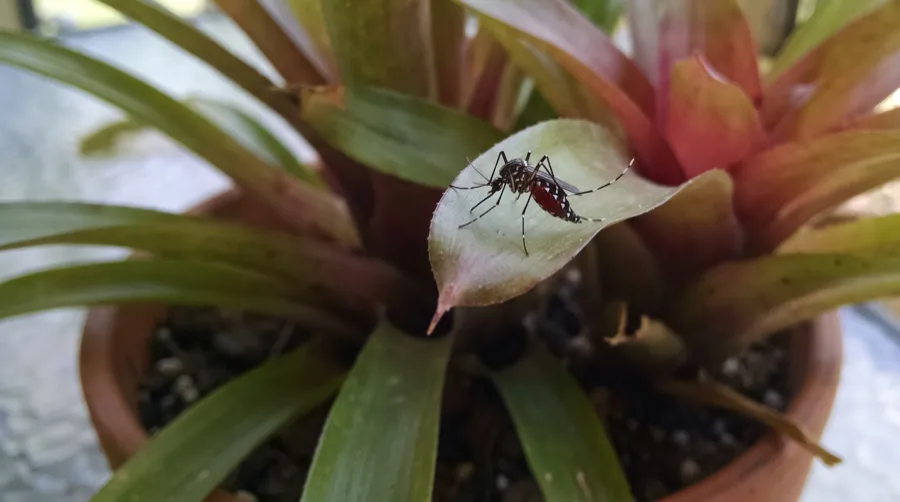
Photographs by our own Austin service team. If you tip out every container on the property once a week, you have done more than any spray can. Questions? Call 843-480-8699.
The mosquitoes biting you in Austin.
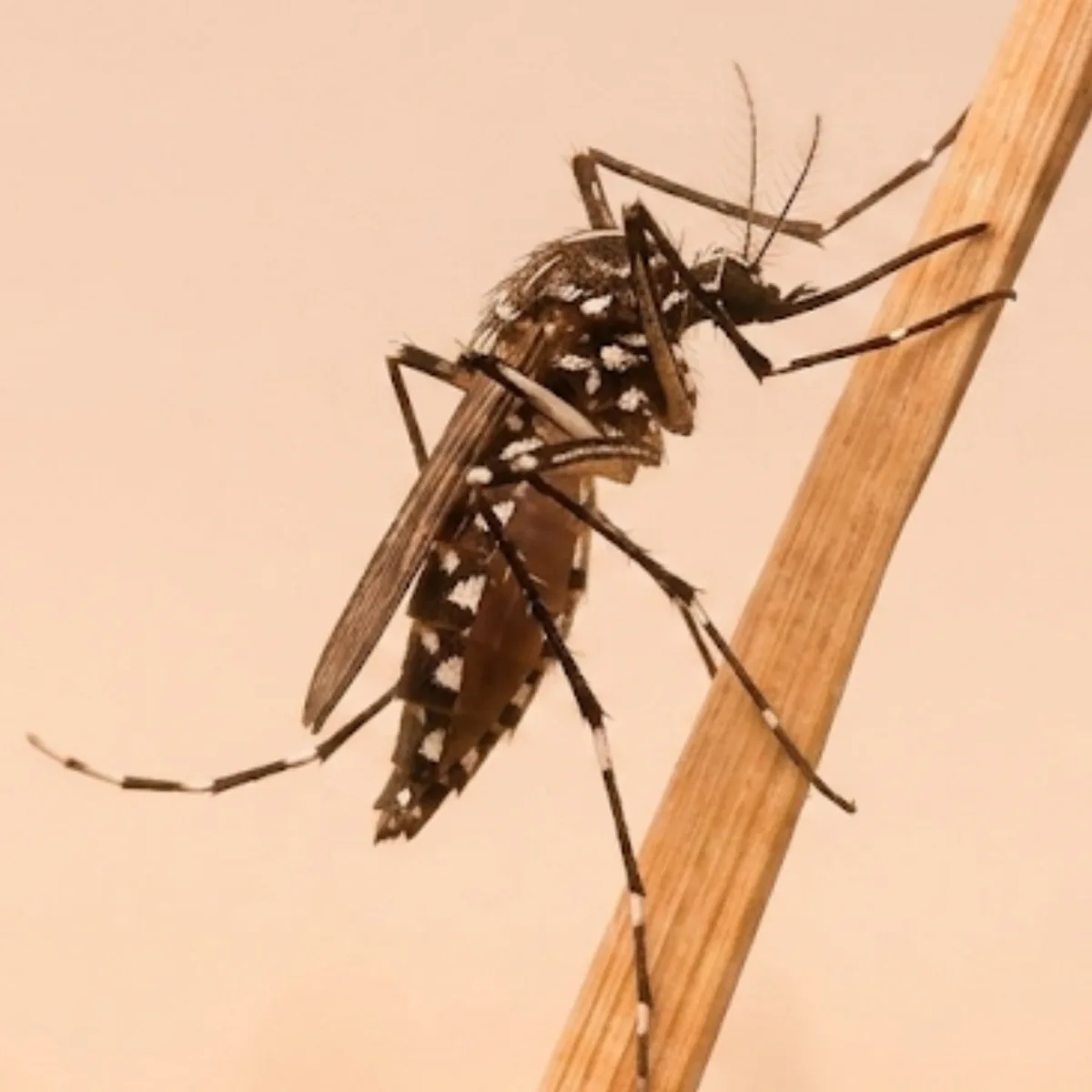
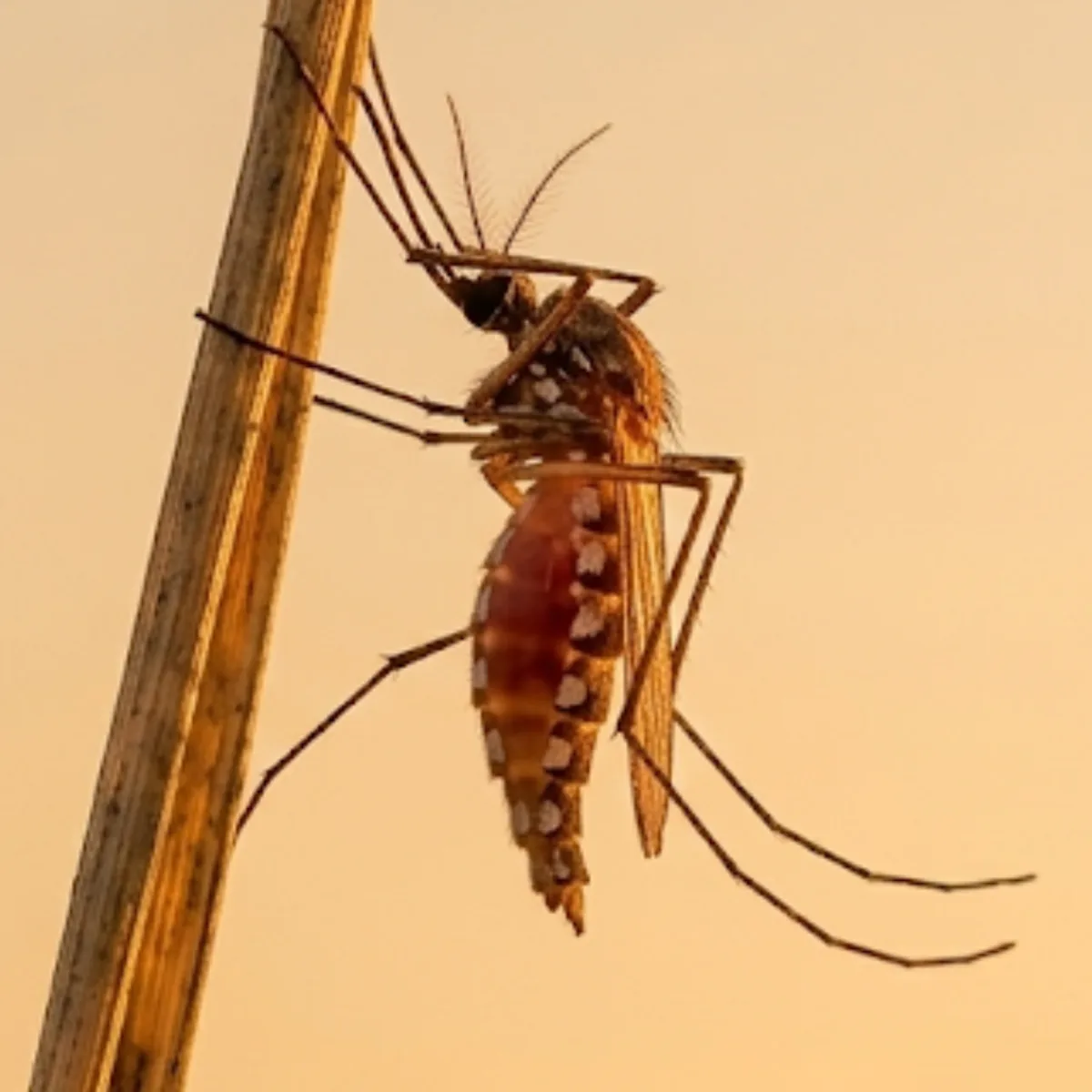
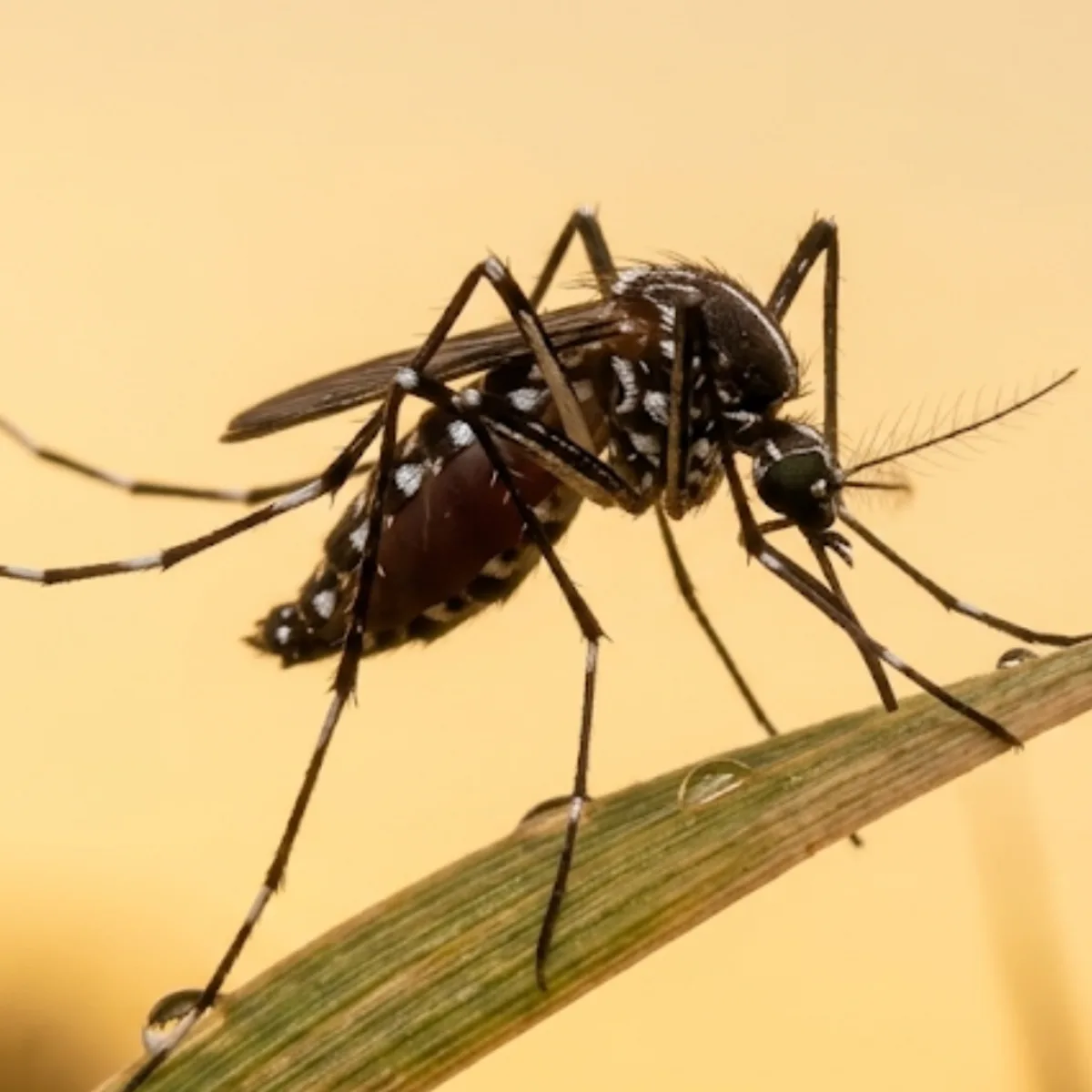
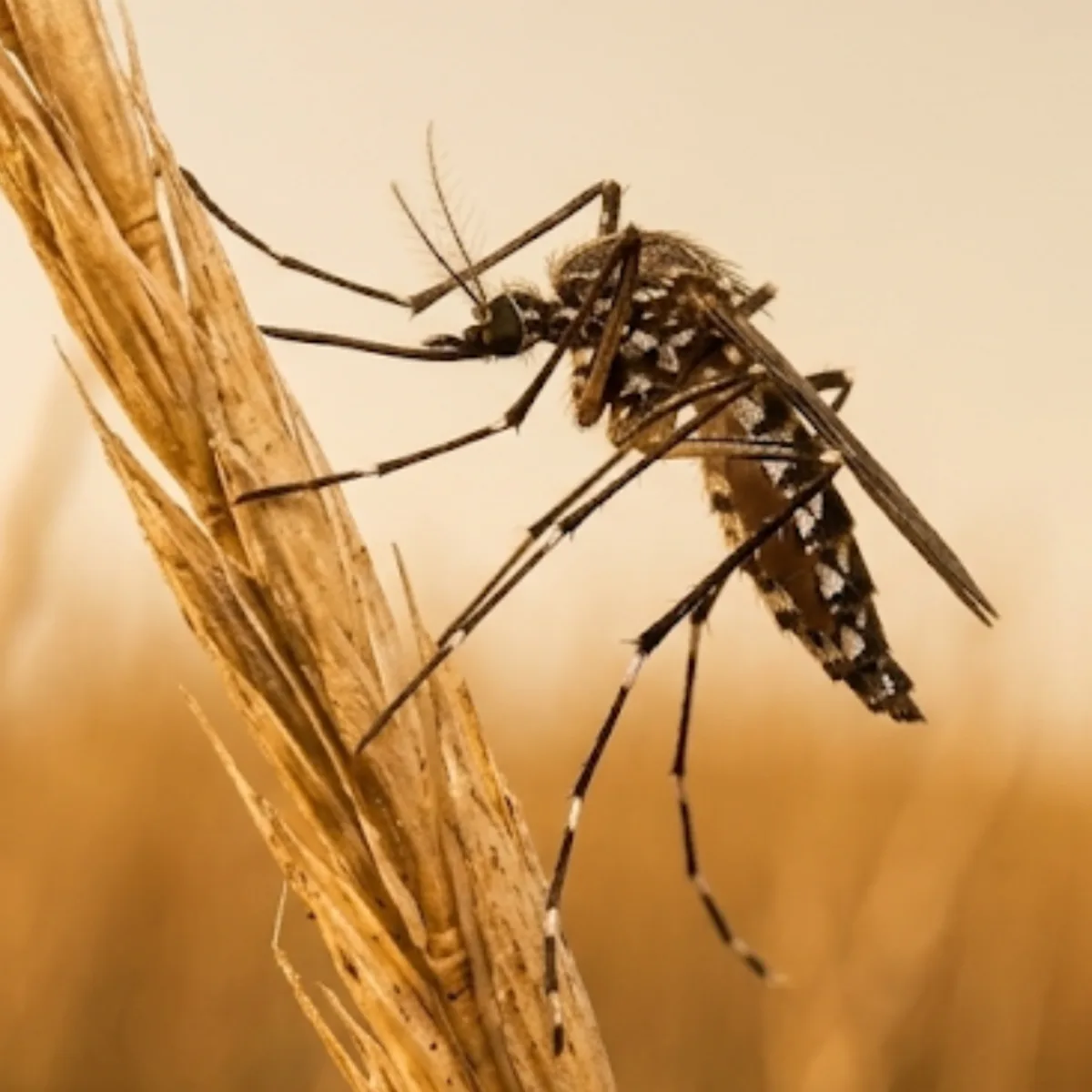
Four mosquitoes do most of the biting in Austin, and they do not keep the same hours or breed in the same water. Daytime container breeders thrive in the old shaded yards of Hyde Park and Rosedale. The dusk biter that carries West Nile prefers storm drains and slow creek water along Shoal and Waller. West of MoPac the limestone drains fast and the problem is containers, east of it the clay holds puddles for days. Your technician confirms the species on site before choosing a treatment.
A note on bites and stings. Reactions vary from person to person, and any bite or sting can cause a serious reaction in someone sensitive to it. Nothing here is medical advice. If you are bitten or stung and feel unwell, or the reaction spreads or does not settle, contact a doctor or Poison Control. If breathing or swallowing is affected, treat it as an emergency and call 911.
You do not need a diagnosis. You need a plan.
Nobody in Austin needs convincing that they have mosquitoes. The useful question is where they are coming from, and on a Crestview or Travis Heights lot the answer is usually a gutter, a saucer or the shade under an old pecan. Describe what you are seeing when you call. We can usually say over the phone whether it waits for the next route or needs someone today.
- Bites while doing yard work in the middle of the day
- Standing water in plant saucers, toys or tarps
- Water sitting in gutters or downspout extensions
- A low spot or rut that stays wet for days
- Mosquitoes rising when you brush past shrubs
- Heavy biting pressure at dusk on the patio
- Clogged gutters on a pier-and-beam house under live oaks
- Birdbaths and rain barrels in a shaded central Austin yard
Austin neighborhoods on our mosquito routes.
Shade and water decide who calls us. Zilker and Barton Hills sit against Barton Creek and the greenbelt, so adults drift in from the corridor every evening. Hyde Park and Crestview have the opposite problem: the mosquitoes were born on the property, in a gutter under an old oak. Anyone searching for a mosquito exterminator in Austin gets the same crew either way, and the same two jobs, foliage first, then every container we can find.
Not listed? We almost certainly cover it, see pest control in Austin or the full service area.
Mosquitoes in Austin, answered straight.
How much does mosquito control cost in Austin, TX?
Mosquito service is included in our General Pest + Rodent + Mosquito plan, starting at $166 per month for a single-family home in Austin. That covers the mosquito barrier plus general pest and rodent control on the same visit. Larger lots are priced higher, and we confirm your number with a free on-site quote.
How long does a mosquito treatment last?
Two to four weeks, depending on rain and heat. A proper Central Texas downpour washes product off the foliage and refills every container in your yard at the same time, which is a rough combination. That is exactly why this runs on a schedule instead of as a one-off heroic effort.
Is mosquito treatment kid, pet and pollinator friendly?
Our treatments are pet and kid friendly when applied correctly. We treat foliage undersides and shaded harborage, not open blooms, and we avoid flowering plants where pollinators forage. Keep kids and pets off treated areas until dry, roughly 30 minutes. Your technician will tell you if any area needs longer. If you keep bees or grow vegetables, tell us and we will flag those as no-treat zones.
Do you treat standing water, or just spray?
Both, because spraying on its own is half a job. We look for breeding sites first, empty whatever can be emptied, then apply a barrier treatment to the shaded harborage where the adults actually spend their day.
Can you get rid of mosquitoes if I back onto a creek or greenbelt?
We can make your yard usable, and that is the honest answer. Anyone promising zero mosquitoes on a property backing onto a creek or greenbelt is selling you something. Constant re-invasion is real. What we can do is take it from unbearable to genuinely fine.
When should I start mosquito service in Austin?
February or March, before the first generation grows up. Starting early keeps the population down before it ever builds, which is far easier than clawing it back in July when everything is already airborne.
Do pier-and-beam crawl spaces in Hyde Park or Travis Heights breed mosquitoes?
Rarely breed, often shelter. A crawl space stays dark, damp and still, which is a fine place for adults to wait out a July afternoon, but it usually lacks the standing water they need for eggs. The breeding is above ground: the gutter that has not drained since the pecans dropped, the saucer under the porch fern, the wheelbarrow behind the shed. We treat the crawl space vents and skirting as resting habitat and go find the water separately.
Can you treat under the live oak canopy, or only the shrubs?
Both, within reason. Adults rest low, on the undersides of leaves within a few feet of the ground, under decks and along fence lines, so that is where the barrier goes. A big live oak in Tarrytown does not need misting to the crown, and we would not do it anyway. What the canopy does is drop leaves into gutters all year, and a clogged gutter is where the eggs are. Clearing those matters more than reaching the top branches.






Not in Austin? We are close.
We treat mosquitoes in every city we serve. Same crew, same guarantee, wildly different standing water. Find your city below, read the full mosquito control overview, or check the complete service area.
Answered 24 hours · Austin, TX
Take your backyard back.
Free quote, same-day service across Austin, and free re-treatments if mosquito pressure spikes between visits.