Mosquito control in Round Rock, TX.
Brushy Creek runs the width of Round Rock, and its trail corridor is a mosquito highway with exits into every backyard along it. The fix is two jobs: a barrier on the leaf undersides and fence lines where adults hide out, and a search for the standing water making more. Re-treatments between visits are free.
Written by the Bastion Pest Control service team · Licensed & insured in Texas · Last updated
What Round Rock homeowners ask about mosquitoes first
Round Rock has been building since the Dell boom, so an established Forest Creek yard and a brand-new Walsh Ranch lot breed mosquitoes for opposite reasons. The essentials are the same.
- Peak season
- March through November
- Permanent creek habitat means dry spells only slow it down.
- Included in
- $166/mo plan*
- Same visit handles the west-side fire ants and east-side roaches.
- Lasts
- 2 - 4 weeks
- Shorter in heavy rain. Re-treatments free.
- Two jobs
- Adults + water
- Spraying alone is half a treatment.
- Breeding site
- A bottle cap
- That is all the water Aedes needs.
Mosquito control comes with the full plan.
One plan covers it, on either side of Brushy Creek. Round Rock homes get mosquito control through the General Pest + Rodent + Mosquito plan, which starts at $166 a month for a single-family house and also takes care of ants, spiders, roaches, scorpions, wasps and rodents. A wet week that refills the yard before your next visit means a free re-treatment, not a new invoice.
See full pricing details →Starting rate for a single-family home in Round Rock. Includes mosquito control plus free re-treatments between visits.
| General Pest + RodentNo mosquitoes | General + Rodent + MosquitoMost complete | |
|---|---|---|
| What it covers | Ants, spiders, cockroaches, scorpions, wasps and rodents | Everything in the general plan, plus a yard you can sit in after dark |
| Mosquitoes, fleas and ticks | Not included | Included, exterior treatment |
| Where we treat | Foundation band, granular yard moat and property line | The same three layers, plus shaded harborage and standing-water sites |
| Heaviest season | Year-round | March through November, when mosquitoes are active |
| If they come back | Free re-treatments between visits | Free re-treatments between visits |
| Price | From $66 a month* | From $166 a month* |
* Starting price. Your exact number depends on home size, lot size and current pest pressure.
How we treat mosquitoes in Round Rock.
Mosquito control is two jobs done at once: knock down the resting adults, and remove the water breeding replacements.
 1
1
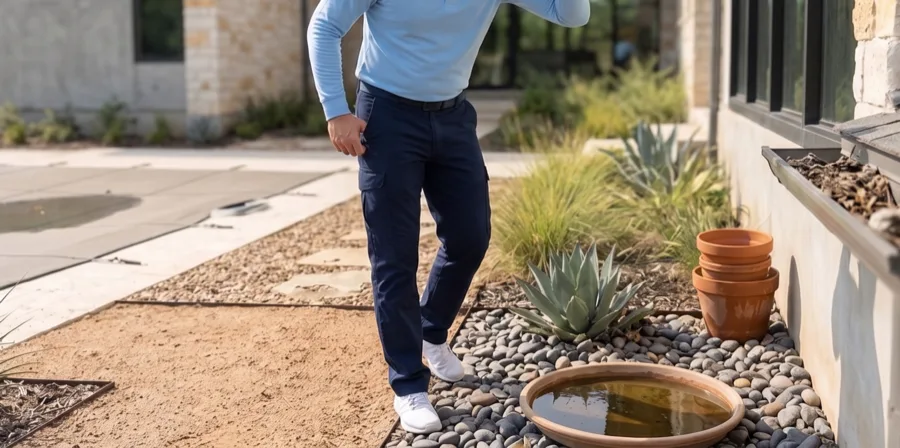
Find and remove the water
We walk the property and identify every breeding site: saucers, gutters, tarps, ruts, low spots. What can be emptied, we empty.
 2
2
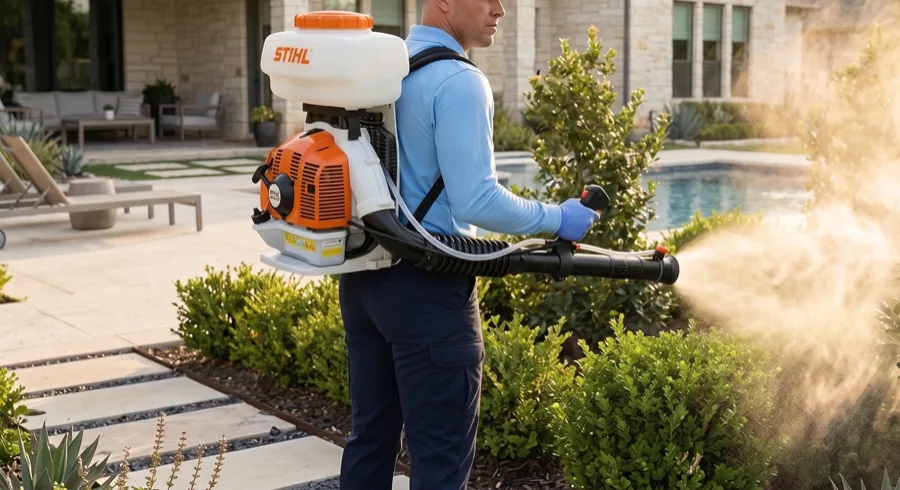
Treat the resting sites
A targeted application to the undersides of foliage, dense shrubs, fence lines, under decks and other shaded harborage used during daylight.
 3
3
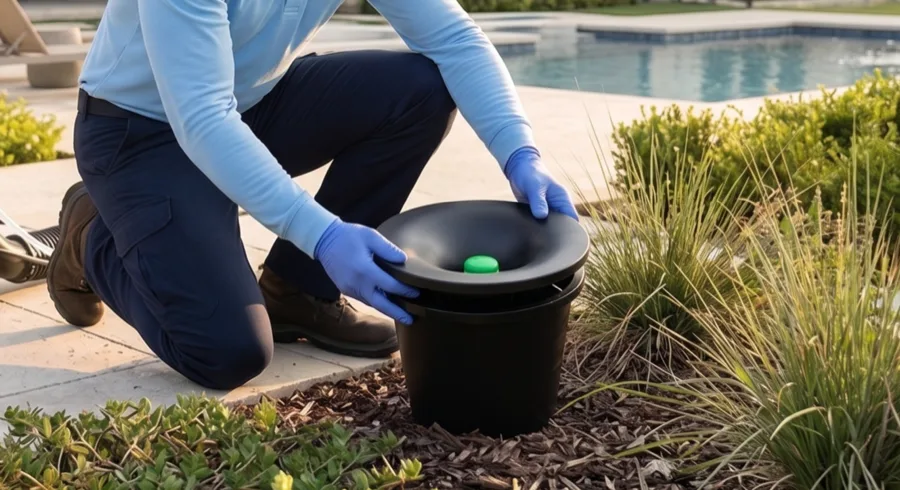
Hold the barrier
We return on a recurring schedule through the season, because a treated yard beside an untreated creek corridor needs its barrier maintained.
Recognize any of these in your Round Rock home?
Free quote, same-day service most days, and free re-treatments if they come back between visits.

Why mosquito pressure is so high in Round Rock.
Brushy Creek is the center of Round Rock's mosquito problem. The creek and its trail corridor run the width of the city holding shaded, slow-moving water, and nearly every newer subdivision adds a detention pond, stagnant and organically rich, exactly what southern house mosquitoes breed in. On the east side, blackland clay compounds it by refusing to drain, so low spots, ruts and downspout extensions stay wet for days after rain, which is all the water container-breeding Aedes mosquitoes need.
The second factor is two decades of continuous growth. Round Rock has been building steadily since the Dell boom, so the housing stock runs from late-1980s sections through subdivisions finished last year. Established neighborhoods like Forest Creek and Cat Hollow now have thirty-year-old landscaping pressed against settled foundations, while new sections in Walsh Ranch and Paloma Lake sit on freshly graded ground with pristine builder gaps. Both attract pests, for opposite reasons.
This is where the hose-end sprayer from the garage runs out of talent. Adult mosquitoes spend the whole day clocked out on the undersides of leaves, deep in the shrubs, under the deck and along the fence line, which is nowhere near the open lawn most people spray. Real control means treating the shady spots where they nap and dumping the standing water raising the next batch. A mosquito needs about a bottle cap of water to start a family, which is why the EPA leads its pest management guidance with source reduction, so that clogged gutter is not a gutter, it is a maternity ward. Do only one of those two jobs and you get the same result as mowing half a lawn.
Limestone west, clay east
Brushy Creek roughly marks the line. And it changes how pests nest and enter.
Brushy Creek corridor
The creek and its trail system carry permanent habitat through the middle of town.
Two decades of building
Late-80s sections and brand-new subdivisions have completely different entry points.
Irrigated turf
Heavily watered lawns on rocky west-side ground concentrate fire ants and crickets.
When is mosquito season in Round Rock?
Mosquito season here runs long. April through November is the active stretch, and August and September are the months when both the biting and the West Nile risk are at their highest.
Hottest water, shortest breeding cycle, most mosquitoes. This is also when West Nile detections usually climb.
Austin Public Health traps and tests across these months. If the city is watching, so should you be.
A bottle cap of water is enough. Treatment works far better once the breeding sites on your property are gone.
Where mosquitoes actually breed in Round Rock.
Our own photos from Round Rock jobs. Every breeding site in this set is a container. That is the whole reason we start with the water rather than the spray.
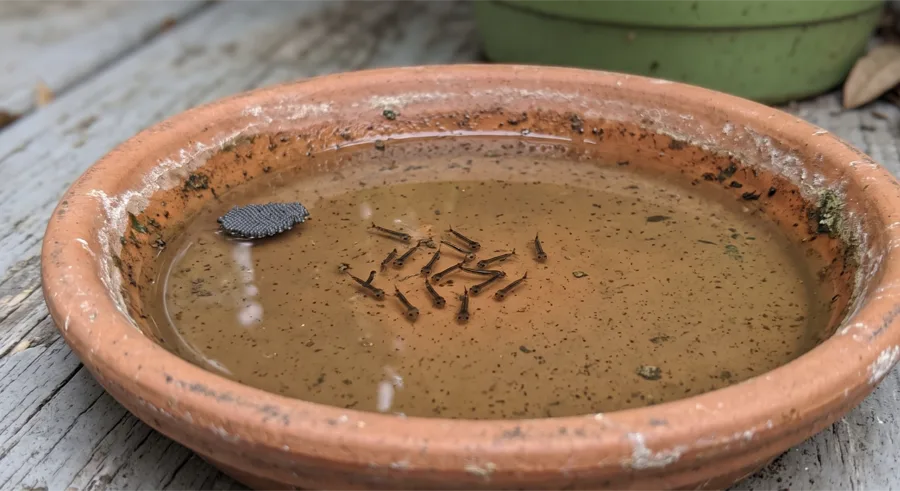
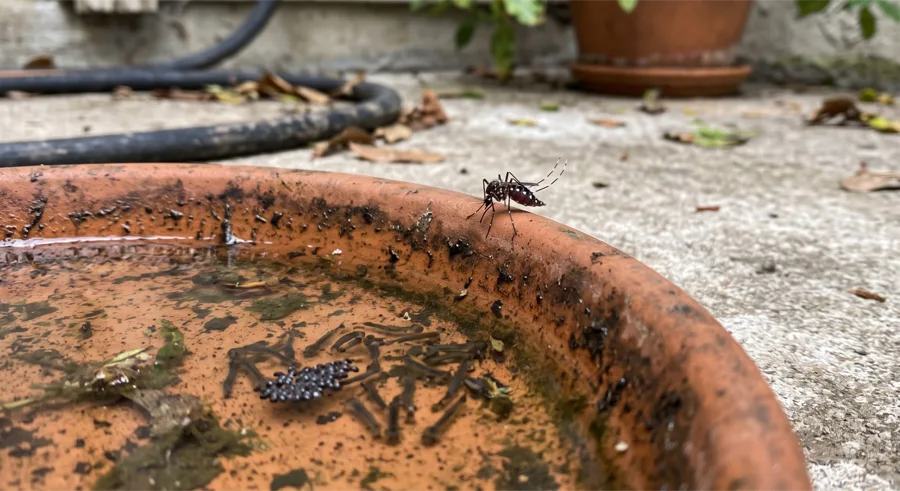
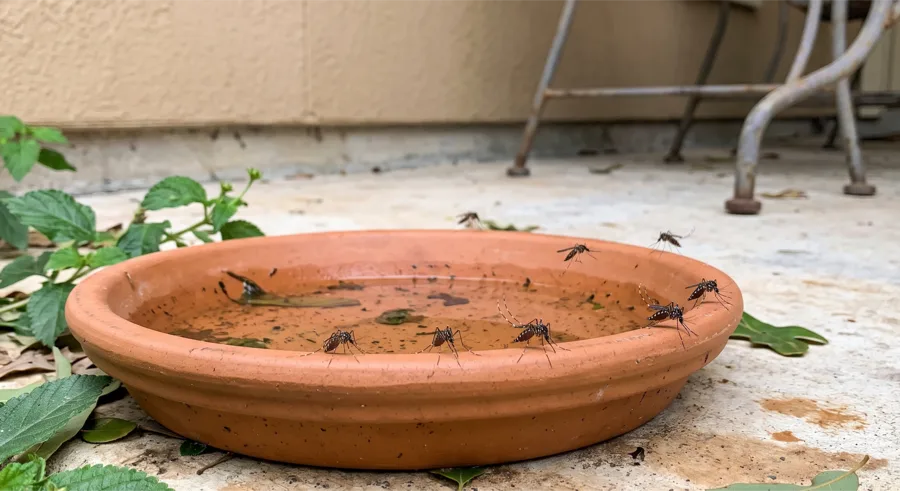
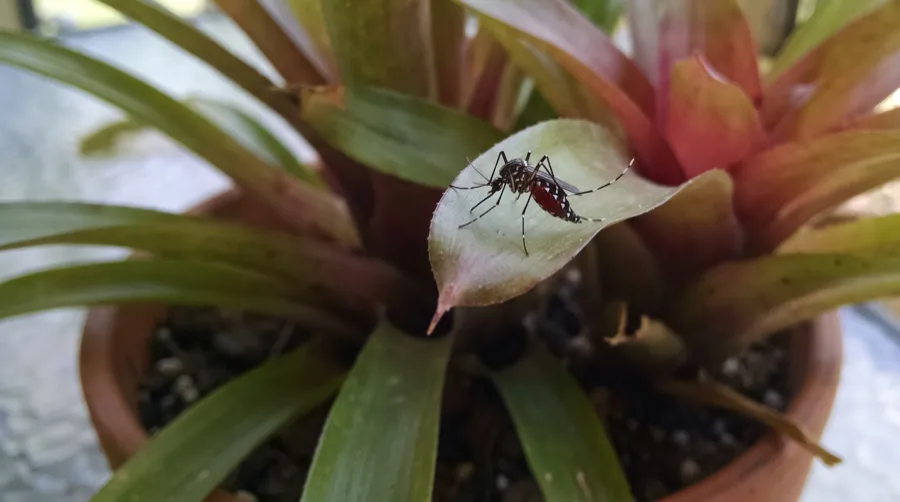
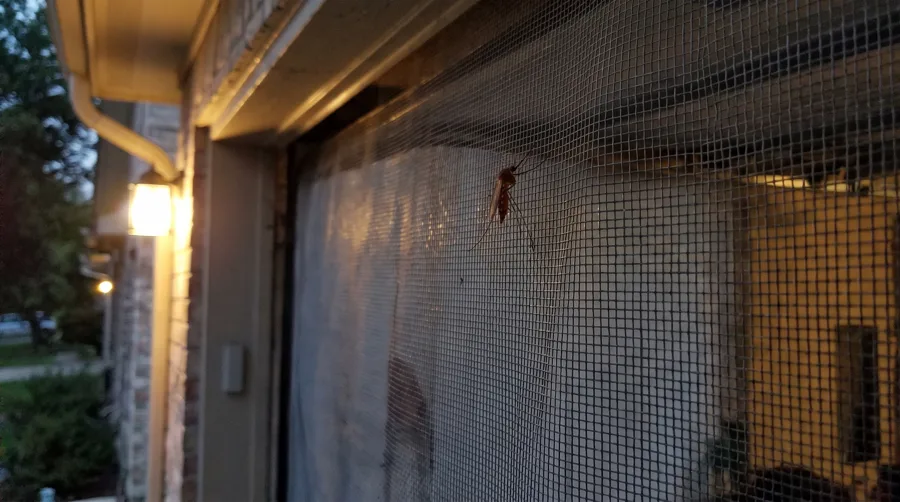
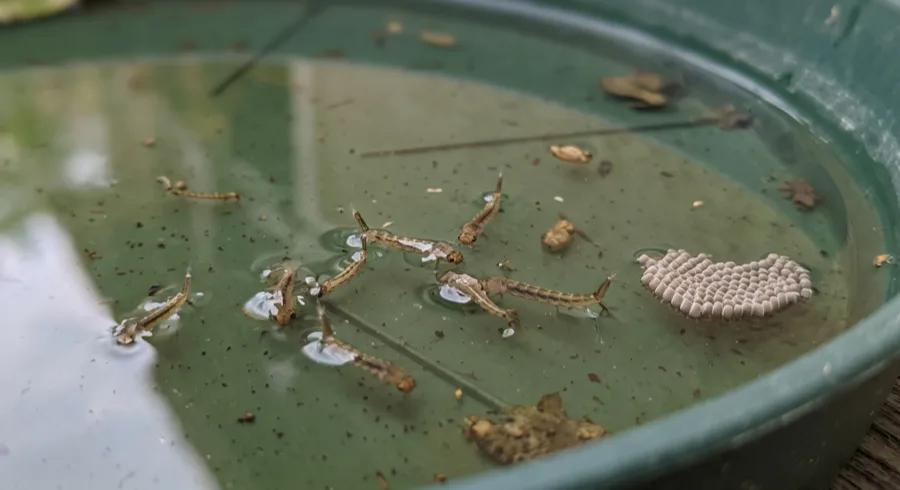
Photographs from real Round Rock visits. Emptying containers weekly beats anything a sprayer can do alone. Questions? Call 843-480-8699.
The mosquitoes biting you in Round Rock.
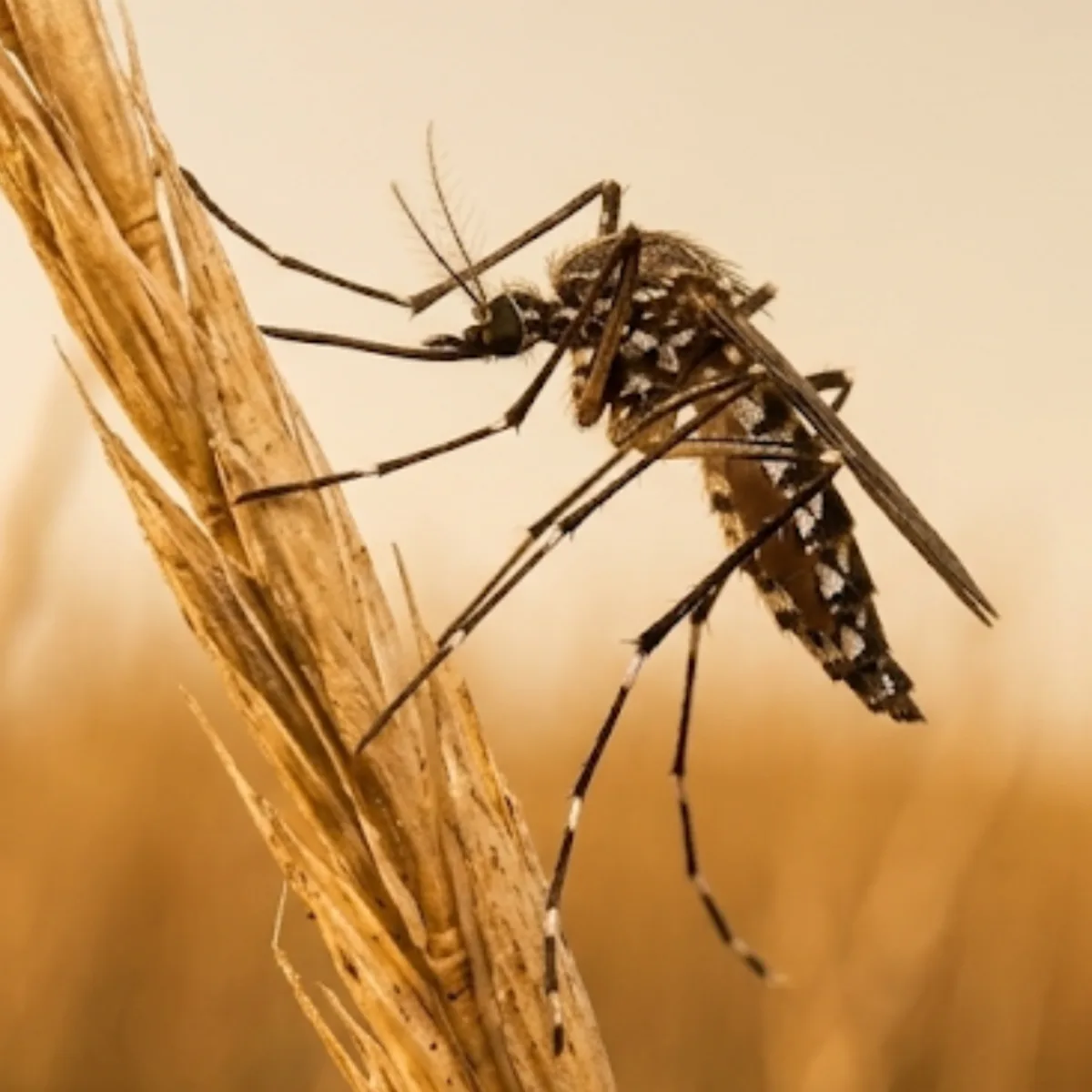
Which mosquito is biting depends on which side of Brushy Creek you live on. East of the creek, blackland clay stays soggy for most of a week, so floodwater species and container breeders both get a run after every storm. West of it the ground is limestone, the water disappears, and the biters are mostly hatching in saucers and gutters close to the house. Culex, the dusk biter, takes the detention ponds on both sides. Your technician confirms the species on site, then picks the treatment to match.
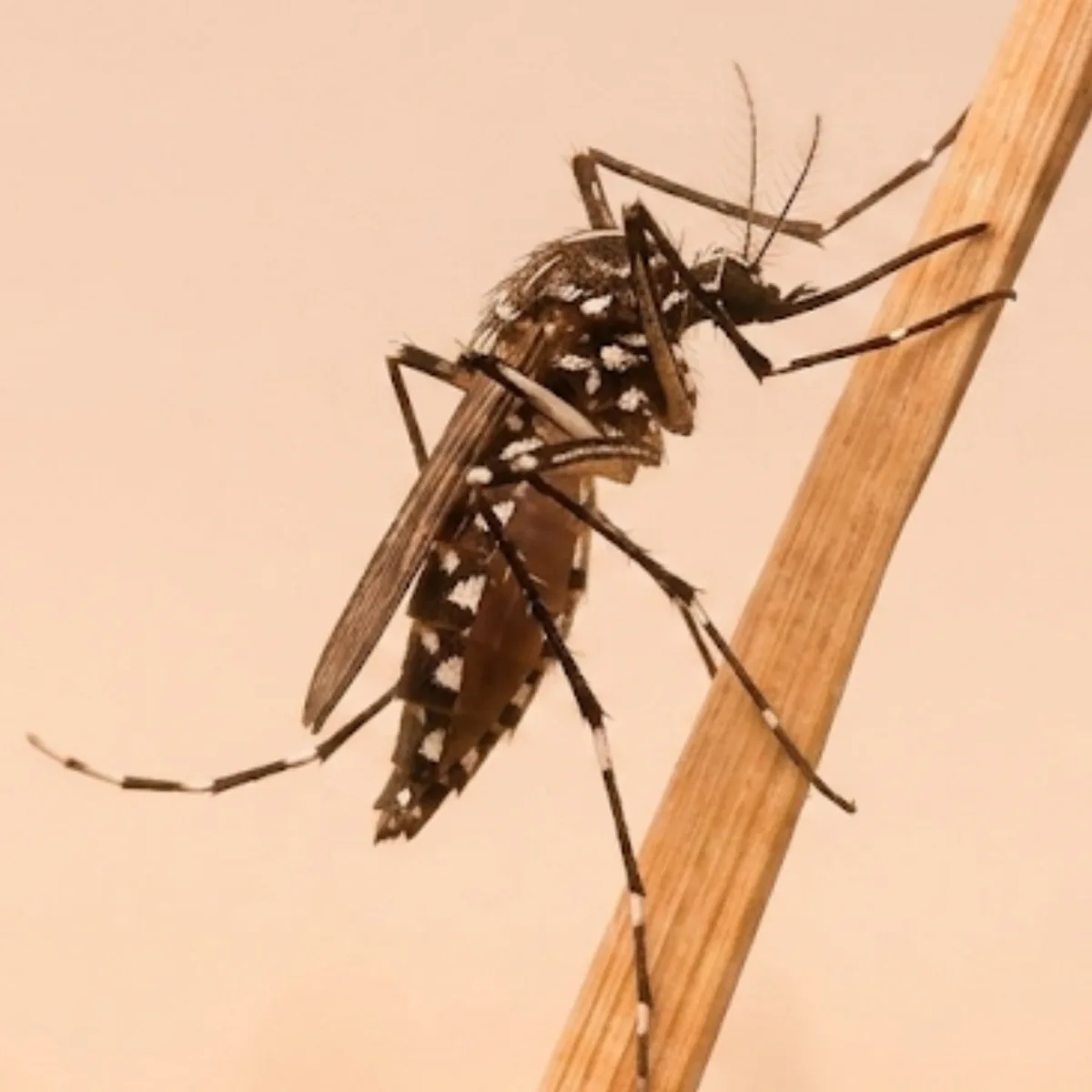
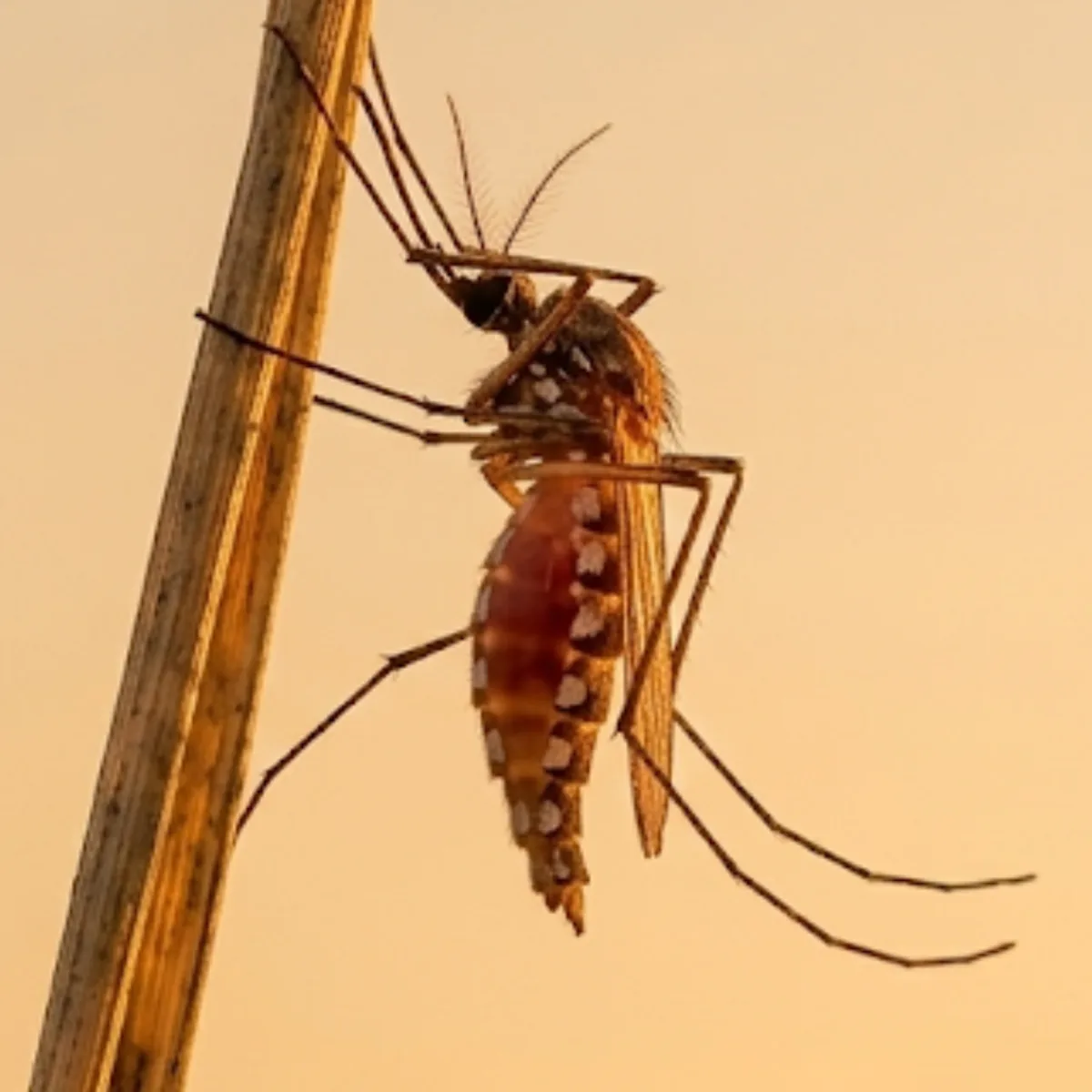
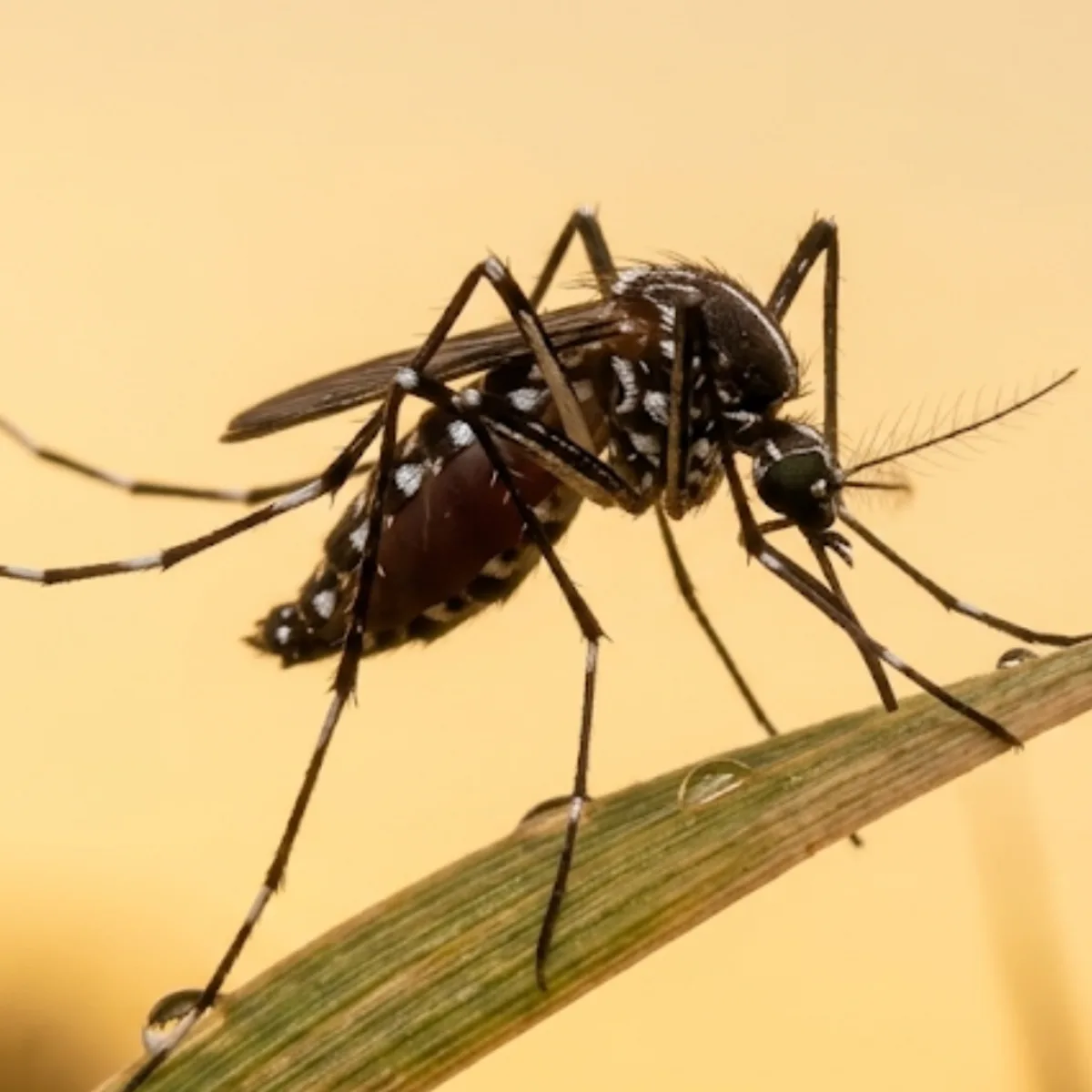
A note on bites and stings. Reactions vary from person to person, and any bite or sting can cause a serious reaction in someone sensitive to it. Nothing here is medical advice. If you are bitten or stung and feel unwell, or the reaction spreads or does not settle, contact a doctor or Poison Control. If breathing or swallowing is affected, treat it as an emergency and call 911.
You do not need a diagnosis. You need a plan.
There is no mosquito mystery in Round Rock, only a location problem. Somewhere between the creek trail, the detention pond and your gutters is the spot producing them, and finding it is the first thing we do. Before that, call and describe what you have got. Odds are we can tell you over the phone whether it needs a same-day visit or can wait for the regular stop.
- Bites while doing yard work in the middle of the day
- Standing water in plant saucers, toys or tarps
- Water sitting in gutters or downspout extensions
- A low spot or rut that stays wet for days
- Mosquitoes rising when you brush past shrubs
- Heavy biting pressure at dusk on the patio
- Thirty-year-old landscaping pressed against the house in Forest Creek or Cat Hollow
- East-side clay low spots still wet a week after rain
Every corner of Round Rock, same guarantee.
Creek first. Forest Creek and Stone Oak sit along the Brushy Creek corridor with thirty years of shade, so adults move off the trail and into the shrubs every evening. Out in Teravista and Paloma Lake the housing is newer, the shade is thinner and the detention pond does the breeding instead. Either way, mosquito removal in Round Rock is the same two-part visit, but where we spend the time on your lot is not.
Not listed? We almost certainly cover it, see pest control in Round Rock or the full service area.
The Round Rock mosquito FAQ.
How much does mosquito control cost in Round Rock, TX?
Mosquito service is included in our General Pest + Rodent + Mosquito plan, starting at $166 per month for a single-family home in Round Rock. That covers the mosquito barrier plus general pest and rodent control on the same visit. Larger lots are priced higher, and we confirm your number with a free on-site quote.
How long does a mosquito treatment last?
Two to four weeks, depending on rain and heat. A serious downpour washes product off the leaves and refills every container in the yard at once, which is why the schedule matters more than any single visit.
Is mosquito treatment kid, pet and pollinator friendly?
Our treatments are pet and kid friendly when applied correctly. We treat foliage undersides and shaded harborage, not open blooms, and we avoid flowering plants where pollinators forage. Keep kids and pets off treated areas until dry, roughly 30 minutes. Your technician will tell you if any area needs longer. If you keep bees or grow vegetables, tell us and we will flag those as no-treat zones.
Do you treat standing water, or just spray?
Both, because spraying on its own is half a treatment. We inspect for breeding sites, empty what can be emptied, then treat the shaded harborage where the adults sit out the day.
Can you get rid of mosquitoes if I back onto a creek or greenbelt?
We can make your yard usable, which is the honest answer. Anything backing onto Brushy Creek gets constant re-invasion, so nobody should promise you zero. Going from unusable to pleasant is entirely doable.
When should I start mosquito service in Round Rock?
February or March, before the first generation matures. Early suppression stops the population building, and that is a far easier fight than midsummer.
Does a west-side irrigated lawn in Cat Hollow make mosquitoes worse?
Less than you would think, and more than you would like. Limestone under the west side drains fast, so a sprinkler-soaked lawn is not itself a breeding site. Where irrigation hurts is the edges: the saucer under the potted plant that gets topped up daily, the low corner where the sprinkler overshoots onto a tarp, the gutter that never dries. Thirty-year-old shrubs against the house then give adults a place to rest in the heat. We treat those, and we ask you to fix the sprinkler head.
Why does east Round Rock get a bigger mosquito wave after rain than the west side?
Clay. East of Brushy Creek the ground is blackland clay, and it holds a storm's worth of water in every rut and low spot for days. That gives floodwater eggs in the soil time to hatch and gives container breeders a second helping. West of the creek the same rain runs through limestone and is gone by morning. So on a Paloma Lake or Teravista lot we spend more of the visit on standing water, and on a Cat Hollow lot more of it on the shade.
Round Rock: everything else we handle





Same mosquito plan, next town over
We treat mosquitoes in every city we serve. Same crew, same guarantee, different creek out back. Choose your city below, read the full mosquito control overview, or check the complete service area.
Answered 24 hours · Round Rock, TX
Take your backyard back.
Free quote, same-day service across Round Rock, and free re-treatments if mosquito pressure spikes between visits.