Scorpion control in Round Rock, TX.
Brushy Creek splits Round Rock into limestone on the west and clay on the east, and striped barks work both sides. Rock walls, slab cracks and voids get treated where they sleep, and weep holes and joints get sealed so it holds. Scorpions are on the plan from $66 a month, with free re-treatments if one shows up between visits.
Written by the Bastion Pest Control service team · Licensed & insured in Texas · Last updated
Before you read the rest, Round Rock
Which side of Brushy Creek you live on decides where your scorpions are coming from, not whether you have them. Here is the two-minute version.
- Most common
- Striped bark
- Comes out of west-side limestone and east-side clay cracks with equal enthusiasm.
- Included in
- $66/mo plan*
- Behrens Ranch or Teravista, either side of the creek, no scorpion surcharge.
- Peak season
- May - September
- Active year-round through mild winters.
- Treatment
- Harborage + sealing
- Spraying alone does not hold on scorpions.
- Guarantee
- Free re-treatments
- See one between visits? We come back.
Scorpion control is included in the general pest plan.
Homeowners on the west side of Round Rock sometimes expect a scorpion add-on because there are so many of them. There is not one. Scorpions are folded into the recurring general pest plan and treated on every visit with everything else, and a return trip for one that turns up between visits is free. Home size, lot size and the pressure we find on the first visit set the rate.
See full pricing details →Starting rate for a single-family home in Round Rock. Includes scorpion control plus free re-treatments between visits.
| General pest planRecurring | One-time treatmentSingle visit | |
|---|---|---|
| What it is for | Keeping scorpions out of the structure year-round | Treating one active problem now |
| Right for you if | You have seen one indoors and do not want to see another | You are selling, or you want to try us once |
| What you get | Full TriBarrier every visit, plus the gaps they use to get in | One full TriBarrier treatment |
| If they come back | We re-treat free, with no limit and no trip fee | A return visit is a new charge |
| Other pests covered | Ants, spiders, cockroaches, wasps and rodents | Scorpions only |
| Price | From $66 a month* | Quoted per job* |
* Starting price. Your exact number depends on home size, lot size and current pest pressure.
How we control scorpions in Round Rock.
Because scorpions pick up so little product from a treated surface, the work is harborage and exclusion rather than volume of spray.
 1
1
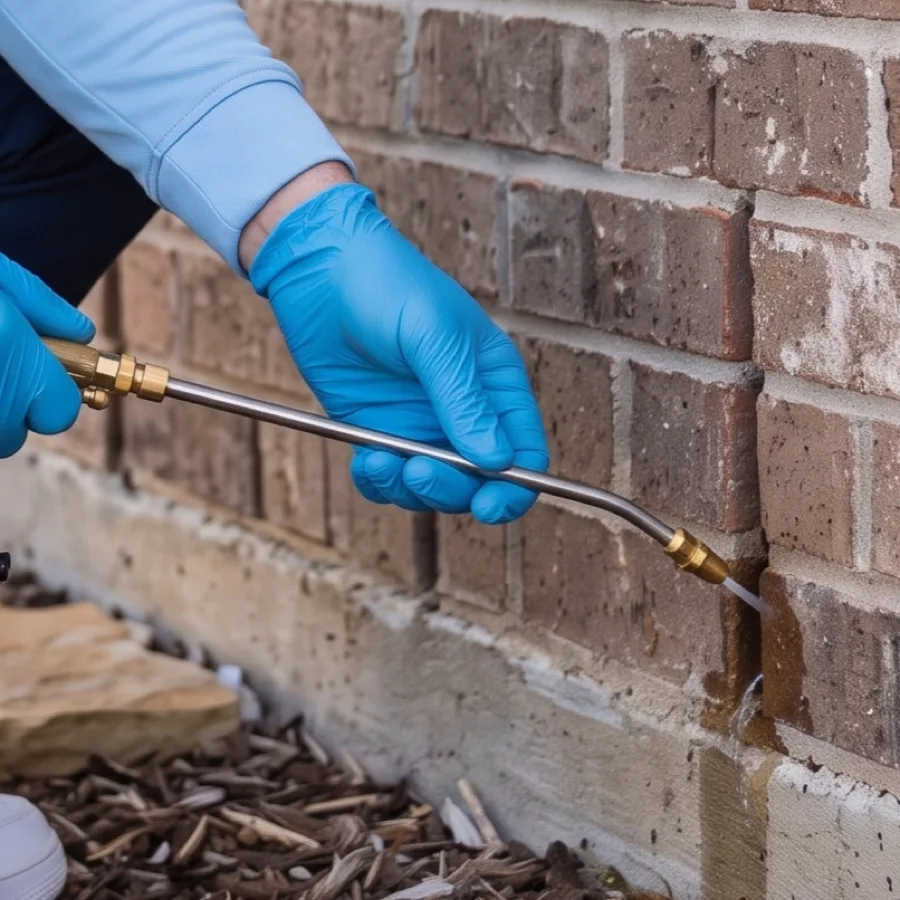
Treat the harborage
We apply directly into where they spend daylight: slab cracks, weep holes, landscape stone, mulch beds, under decks, and garage and storage voids, not just a perimeter band.
 2
2
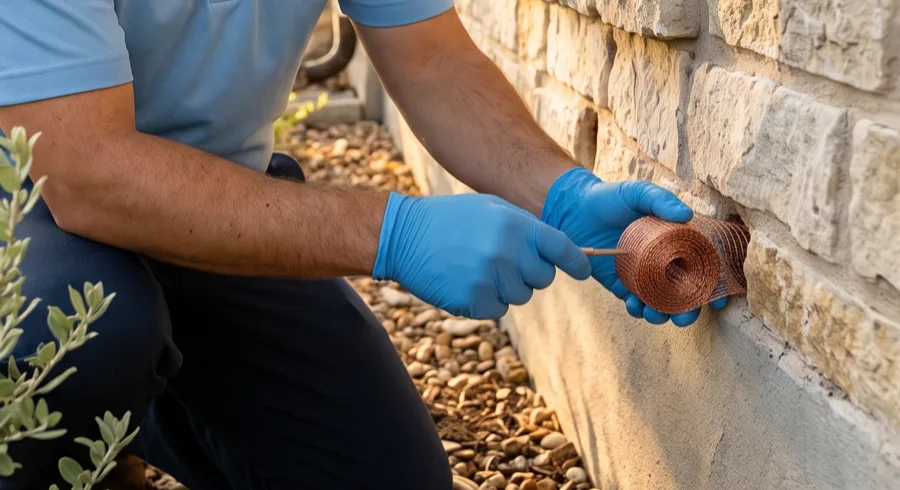
Close the entry routes
We seal and treat weep holes, expansion joints, garage-door corners, line-set penetrations and soffit gaps. Exclusion is what makes it stick.
 3
3
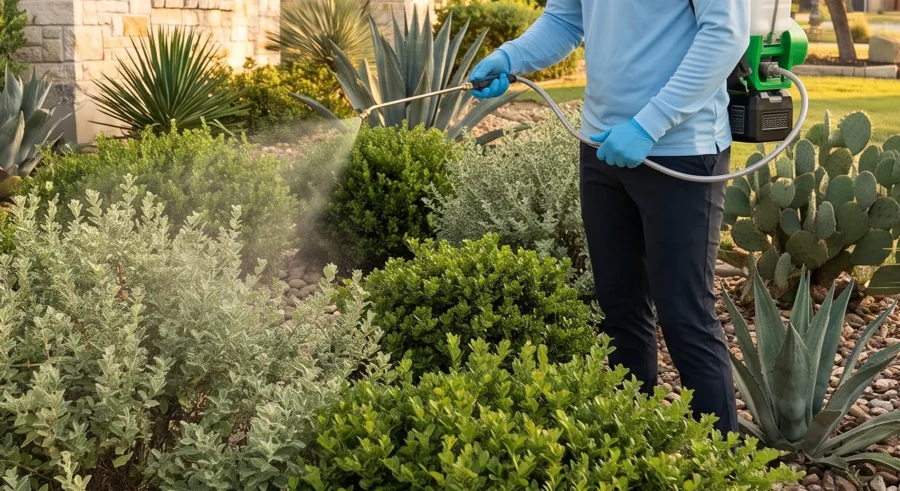
Remove their food
The full TriBarrier treatment suppresses the crickets, roaches and spiders scorpions hunt. Fewer prey insects near the house means far less reason for a scorpion to stay. The EPA's integrated pest management principles make the same case for reducing habitat before reaching for product.
Recognize any of these in your Round Rock home?
Free quote, same-day service most days, and free re-treatments if they come back between visits.

Why scorpions get indoors in Round Rock.
Round Rock's scorpion problem is concentrated on the west side, and the reason is the limestone shelf under it. Behrens Ranch, Mayfield Ranch, Vista Oaks and Cat Hollow sit on thin soil over fractured Edwards limestone: voids, seams and karst fissures that hold the cool, humid dark a striped bark scorpion wants all day. Those same neighborhoods use limestone retaining walls, rock beds and flagstone because topsoil is shallow, stacking harborage against the foundation. East-side clay sections get them too, through summer soil cracks and weep holes.
Round Rock sits right on the geological seam. Brushy Creek runs through the middle of town, and the ground shifts from Edwards limestone on the west side: Behrens Ranch, Mayfield Ranch, Vista Oaks, Cat Hollow, to heavier blackland clay on the east through Teravista, Paloma Lake and Chandler Creek. The city's namesake round rock in Brushy Creek is a literal marker of that limestone shelf. Which side you are on determines whether pests are nesting in rock seams or in soil that holds water.
Scorpions are tougher to treat than most bugs, and it comes down to build quality. They wear a waxy shell and walk on the very tips of their legs, so crossing a treated surface is like tiptoeing over a wet floor in a raincoat. They pick up a fraction of what a roach would. Which is why spraying alone never finishes the job. What actually works is treating the cracks and rock where they hide all day, sealing the doors they let themselves in through, and thinning out the crickets and spiders they came for, so your house stops looking like a restaurant with the lights on.
Limestone west, clay east
Brushy Creek roughly marks the line. And it changes how pests nest and enter.
Brushy Creek corridor
The creek and its trail system carry permanent habitat through the middle of town.
Two decades of building
Late-80s sections and brand-new subdivisions have completely different entry points.
Irrigated turf
Heavily watered lawns on rocky west-side ground concentrate fire ants and crickets.
When scorpions peak in Round Rock.
Scorpions work a narrow season and work it hard. Practically invisible in January, then a steep climb to a July peak. They hunt at night and spend the daylight hours wedged into something you would never think to look inside.
Hot, dry and exclusively after dark. Three months, and they make them count.
Dry conditions turn them into water seekers, which is why the bathroom is where people meet their first one.
Sightings drop while the reason behind them changes. Overwintering is the goal, and a wall void serves perfectly.
Where scorpions actually turn up.
Our own photos from Round Rock service calls. The locations repeat for a reason: door sweeps, thresholds and slab joints are how scorpions get from the yard into the house.
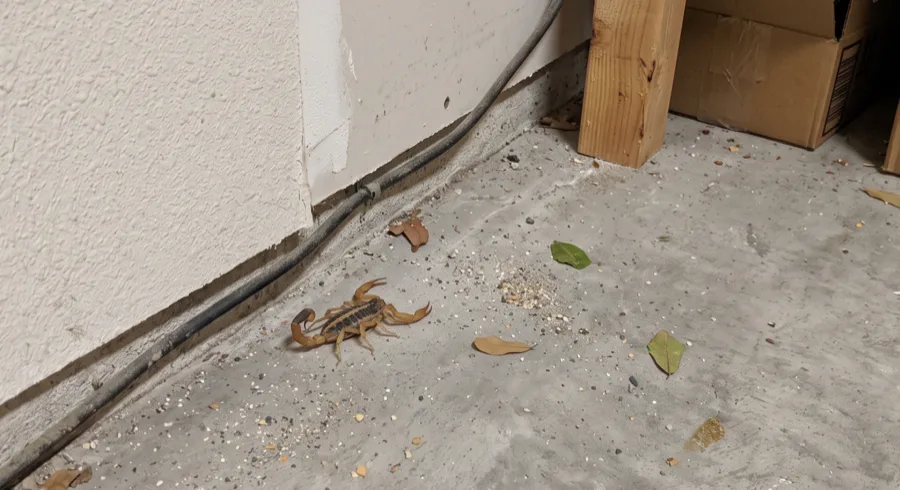
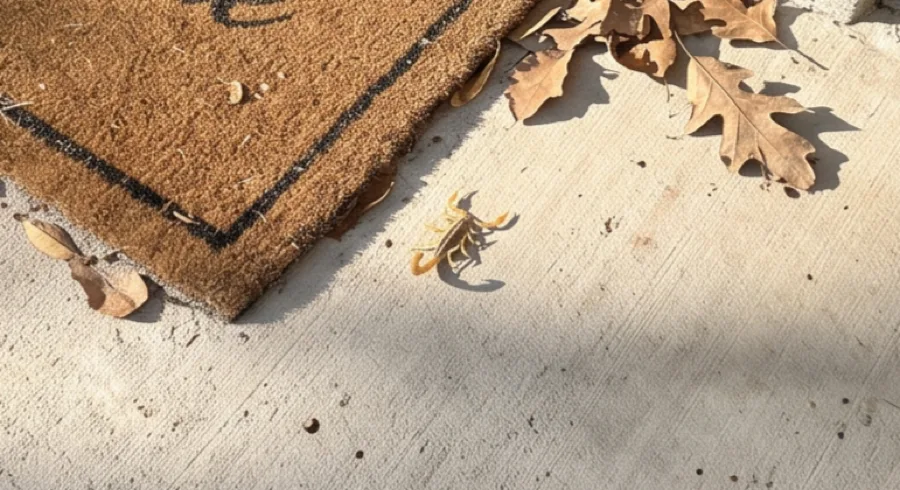
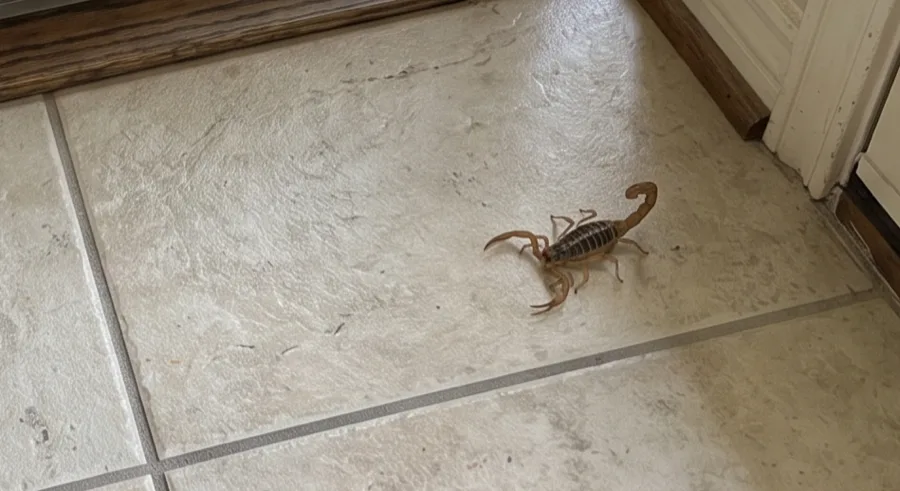
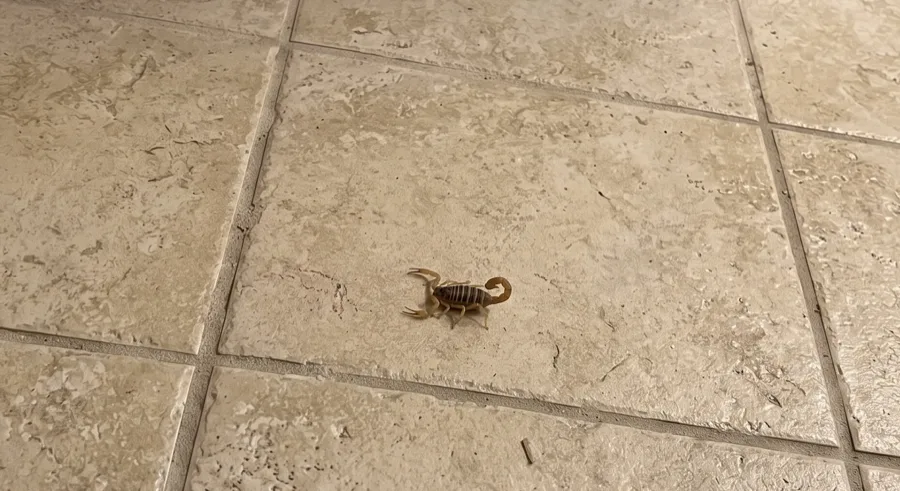
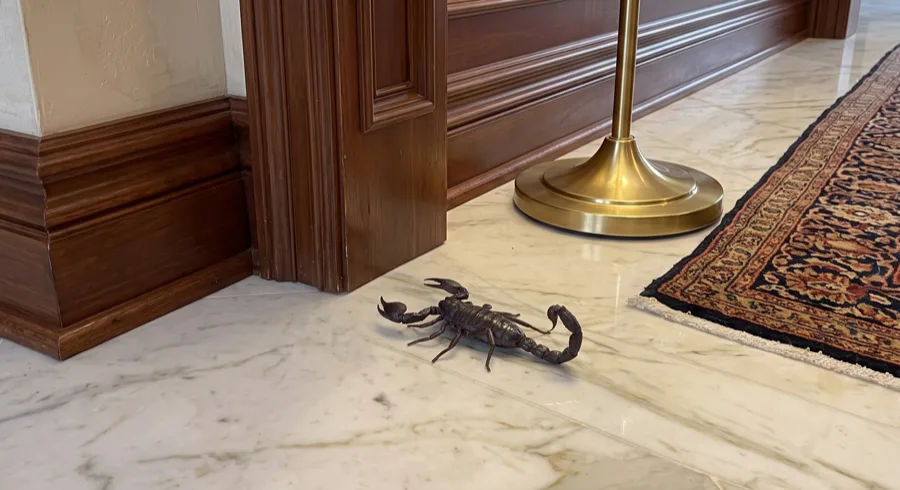
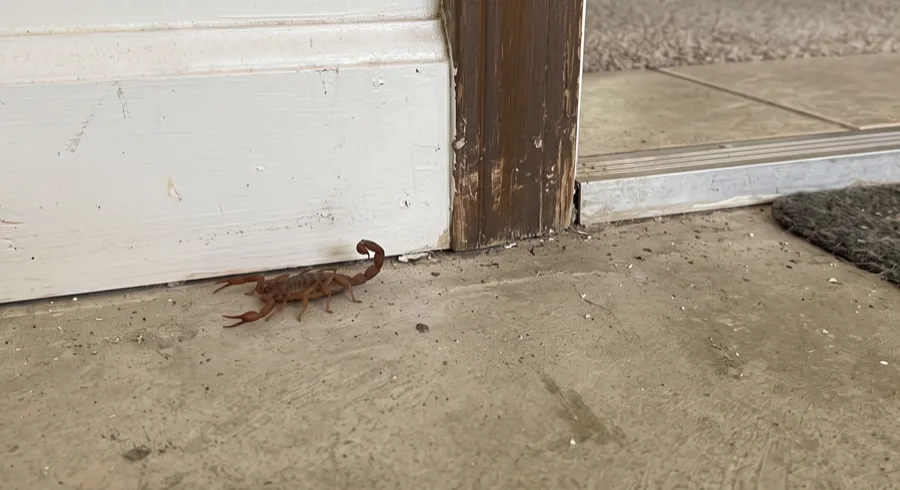
Photographs by the Bastion Pest Control service team. Do not handle one to get a better photo. Take it from a safe distance and text it to 843-480-8699, and we will tell you what you are looking at.
One scorpion gets indoors here. The other stays in the rock.
Round Rock's namesake is a limestone shelf in Brushy Creek, and that rock is the whole story west of the creek: it is where the striped bark spends its days and where the darker, heavier Texas cave scorpion lives and rarely comes indoors. East of the creek, in Teravista and Paloma Lake, the same striped bark shelters in clay cracks instead. Your technician confirms the species on site and checks the rock or the slab cracks before treating.
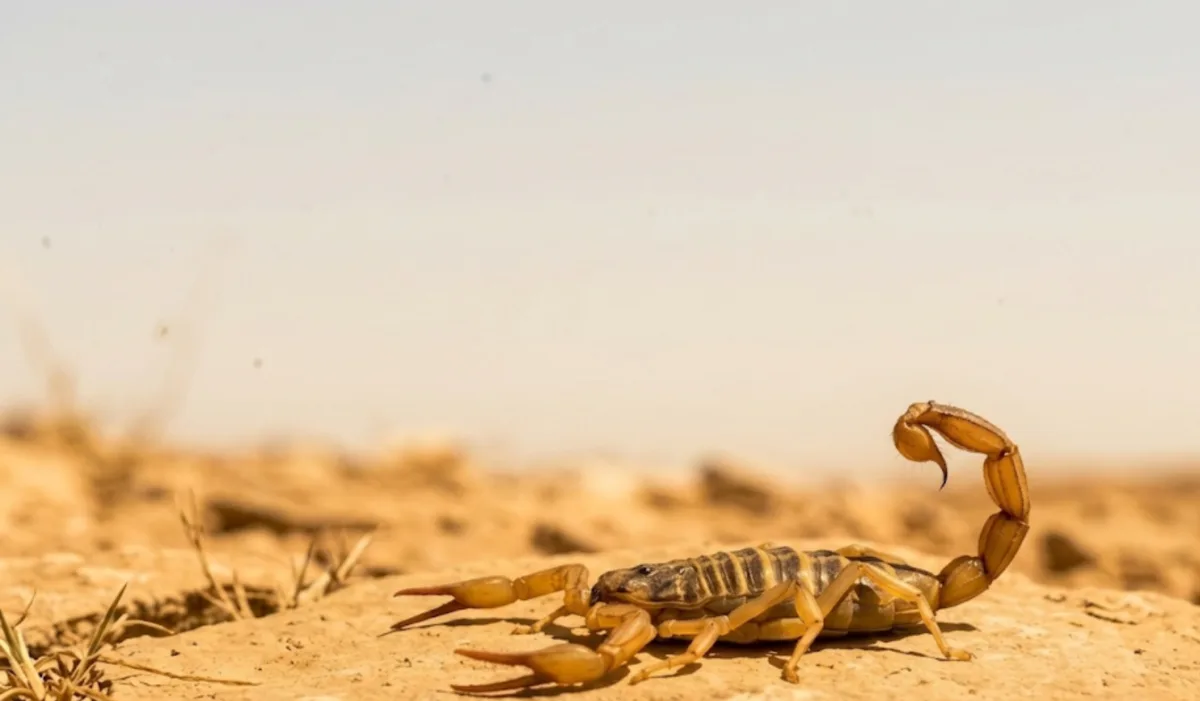
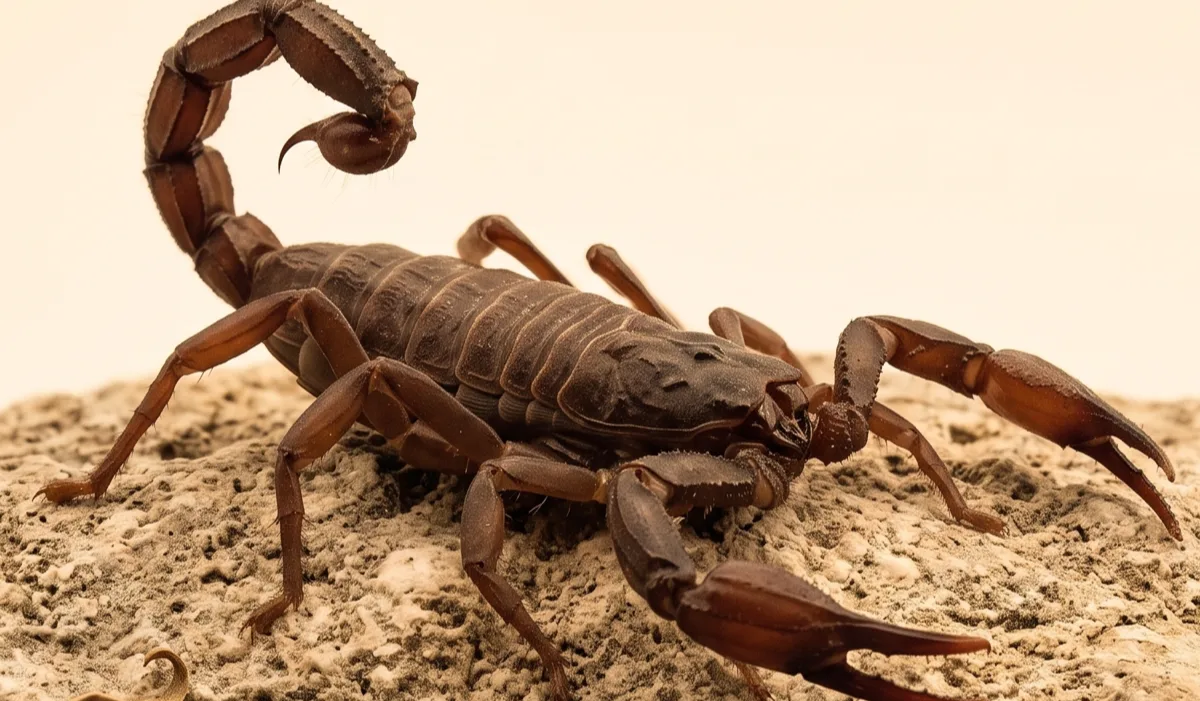
How dangerous is a sting?
Painful (roughly comparable to a wasp) with local swelling and numbness that typically fades within a day or two. Serious reactions are uncommon but real for small children, elderly people and anyone with a sting allergy, and those warrant medical attention. More on Texas scorpions (Texas A&M)
Where it hides during the day
Under landscape stone, in mulch beds, beneath decks and flagstone, inside garage clutter and stored boxes, and in wall voids and attic insulation. Always somewhere dark, tight and cooler than open air.
When it is most active
Late spring through September, peaking in summer heat, and almost entirely after dark. It also presses indoors during drought seeking moisture, and after heavy rain when its ground harborage floods.
A note on bites and stings. Reactions vary from person to person, and any bite or sting can cause a serious reaction in someone sensitive to it. Nothing here is medical advice. If you are bitten or stung and feel unwell, or the reaction spreads or does not settle, contact a doctor or Poison Control. If breathing or swallowing is affected, treat it as an emergency and call 911.
How you know they are in the structure.
West of Brushy Creek a lone scorpion on the patio is Tuesday. It is repetition that tells us something: one room turning up a scorpion every few weeks, or a garage that never quite goes quiet. East of the creek, a run of sightings after the clay cracks in August means the same. Ring us. We can usually judge over the phone whether it needs a same-day visit.
- A scorpion found in a bathtub, sink or shower
- Sightings upstairs or on a ceiling
- Scorpions under landscape stone or in mulch beds
- Activity in the garage near stored boxes
- Repeat sightings in the same room over weeks
- Scorpions in shoes, laundry or bedding
- Scorpions under rock walls on the limestone west of Brushy Creek
- Slab-edge sightings in east-side clay sections like Teravista or Paloma Lake
Your Round Rock neighborhood is on the route.
The west side gets most of Round Rock's scorpion calls. Behrens Ranch, Mayfield Ranch, Cat Hollow and Vista Oaks sit on thin soil over the limestone shelf, with retaining walls and rock beds stacked against the slab, so they see them year-round. The east side gets its share too: clay sections crack open in summer and new construction keeps displacing them. Wherever you are, a scorpion exterminator in Round Rock is one phone call and no travel fee away.
Not listed? We almost certainly cover it, see pest control in Round Rock or the full service area.
Ask us about scorpions in Round Rock.
How much does scorpion control cost in Round Rock, TX?
Scorpion control is included in our general pest plan starting at $66 per month for a single-family home in Round Rock, with no separate charge for scorpion work. The plan also covers ants, spiders, roaches, wasps and rodents. Larger homes and lots are priced higher, and we confirm your number with a free on-site quote.
How are scorpions getting into my house?
Most commonly through weep holes, the small gaps left in brick veneer for drainage, which a flat striped bark scorpion uses like a front door. Then expansion joints, garage-door corners, line-set penetrations and soffit gaps. West of Brushy Creek there is more rock habitat feeding them toward the house.
Can you actually keep scorpions out, or only reduce them?
Most Round Rock homes can get to zero sightings, but it takes harborage treatment and physical exclusion together rather than spraying alone. A scorpion has a waxy cuticle and walks on its leg tips, so it contacts very little product crossing a treated surface. Treating the voids where they sit all day, then sealing the ways into the structure, is what produces a lasting result.
Is scorpion treatment kid and pet friendly?
Yes. Applications go into cracks, voids, weep holes and harborage areas rather than across open floors or play areas, and we use pet and kid friendly products. Keep kids and pets off treated exterior surfaces until dry, roughly 30 minutes. Your technician will tell you if any area needs longer. If your dog digs in mulch or rock beds, tell us and we will adjust how we treat them.
I found one scorpion. Do I need ongoing service?
Usually yes. Scorpions are solitary and nocturnal, so for every one you see there are typically several you do not. More to the point, a single treatment does nothing about next month's arrivals from the surrounding soil or nearby construction. Recurring service keeps the harborage treated and the perimeter sealed so they cannot re-establish.
When are scorpions most active in Round Rock?
They are most active from late spring through September, peaking in the summer heat, and they hunt at night. Two weather patterns push them indoors: drought, when they come looking for moisture, and heavy rain, which floods the ground harborage they shelter in. Sightings often spike a day or two after a big storm.
I am in Teravista on the clay side. Why do I have scorpions?
Clay and construction. Blackland clay shrinks hard in a Central Texas summer and opens vertical cracks along the slab that make a fine daytime shelter, limestone or not. And the east and north side of Round Rock has been under construction for years, which keeps shoving scorpions off cleared ground and toward the nearest foundation. Teravista and Paloma Lake homes see less pressure than Behrens Ranch, but sealing weep holes and treating the slab edge still matters.
Does living along the Brushy Creek trail mean more scorpions in my yard?
Somewhat, and mostly indirectly. The creek corridor is permanent habitat running through the middle of town: rock outcrops, leaf litter, moisture and a heavy insect population, which is the scorpion buffet. Homes in Forest Creek and Stone Oak that back onto the greenbelt get more crickets and spiders at the fence line, and the scorpions follow the food. It does not mean you cannot get to zero indoors, it means the exclusion work and prey reduction along the back of the house carry more of the load.





Nearby cities we treat for scorpions
We treat scorpions in every city we serve. Same crew, same guarantee, different ground on each side of the creek. Choose your city below, read the full scorpion control overview, or check the complete service area.
Answered 24 hours · Round Rock, TX
Sealed out, not just sprayed.
Free quote, same-day service across Round Rock, and free re-treatments if you see one between visits.