Rodent control in Leander, TX.
Leander clears ranchland faster than the field mice and woodrats can read the zoning notice, so they move into the nearest new house. Rodent control and monitoring comes with the recurring plan from $66 a month, with free re-treatments between visits. Inside gets trapped, outside gets sealed.
Written by the Bastion Pest Control service team · Licensed & insured in Texas · Last updated
Rodent control in Leander, the short version
A three-year-old house in Bryson or Palmera Ridge is not a sealed house, and the mice from the pasture it replaced know it. The essentials, quickly.
- Peak season
- October through February
- Cold snaps and new grading both push ranchland mice indoors across Leander.
- Most common
- Roof rats & mice
- Roof rats via the oak canopy, mice and woodrats off cleared pasture.
- Included in
- $66/mo plan*
- Control and monitoring on every visit.
- Sealing
- Quoted separately
- Priced per house. Inspection is free.
- Attics
- Traps, not poison
- Nothing dies inside your walls.
- Timeline
- 1 - 3 weeks
- Mice go faster than rats.
Prevention and a clean-out are two different jobs.
Rodent control and monitoring comes standard on the $66 a month plan, no upcharge, and if they get back in between visits the return trip is free. That plan is prevention. If you are already hearing something over the bedroom, the clean-out from $449 comes first. Exclusion is quoted per house after inspection, and a Larkspur new build usually needs less of it than acreage with a barn.
See full pricing details →Starting rate for a single-family home in Leander. Ongoing prevention that covers rodents alongside ants, spiders, roaches, scorpions and wasps, with free re-treatments between visits.
Most people who call us about rodents need the clean-out first. Once it is done, the monthly plan is what keeps them from coming back, and that is the order we recommend it in. Physical exclusion, the sealing that keeps the next one out, is quoted on top once we have seen what your house is doing. Not sure which one you need? Call and describe what you are hearing, and we will tell you straight.
* Starting price. Your exact number depends on home size, lot size and current pest pressure.
How we solve rodent problems in Leander.
Bait alone is not rodent control. It is a dip in the numbers with the door left open. We do three things, in order.
 1
1
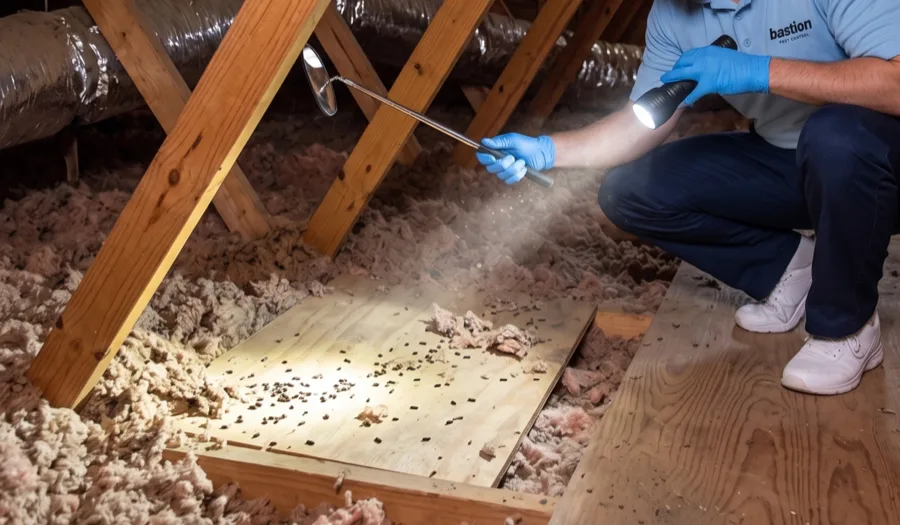
Inspect and identify
A full interior, attic and exterior inspection to confirm species, map travel routes, and find every entry point. What we find decides the plan and the quote.
 2
2
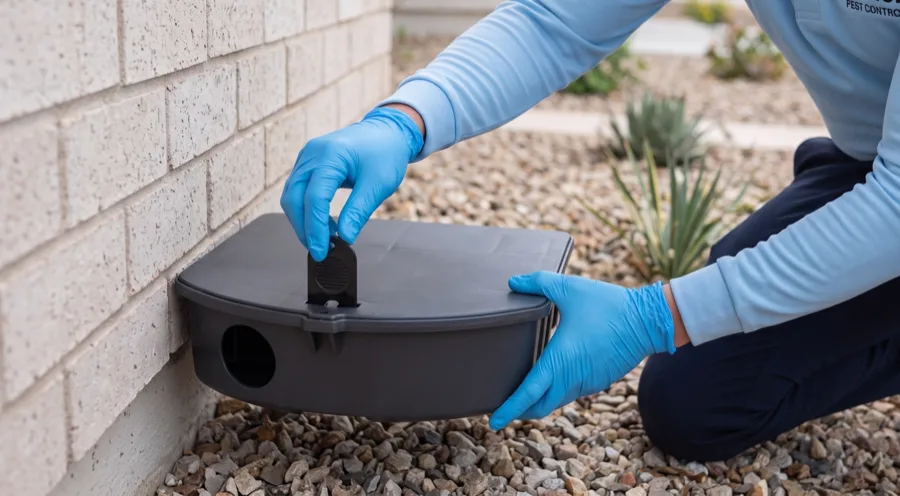
Trap and remove
We trap in living and attic space rather than poisoning there, so nothing dies behind your drywall. Exterior tamper-resistant stations handle the pressure from outside.
 3
3
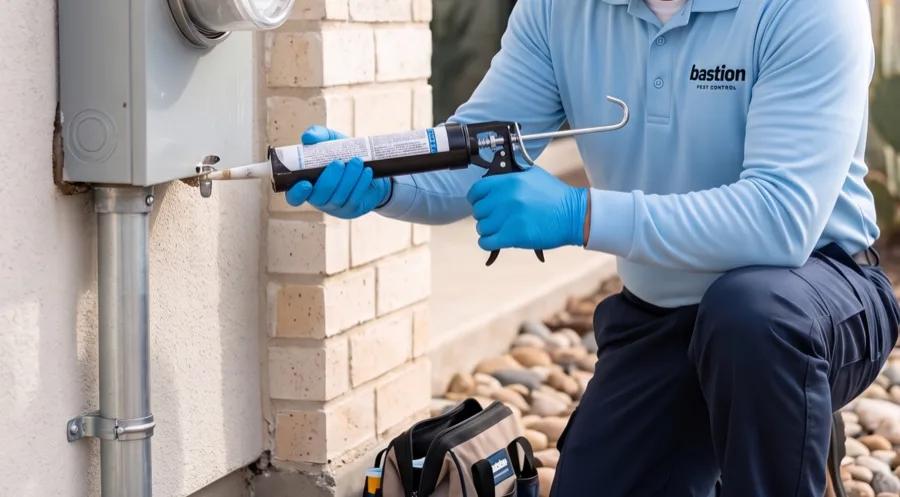
Seal them out
Exclusion is the part that lasts. We seal soffit gaps, weep holes, line-set penetrations, garage-door corners and roof junctions with steel and hardware cloth. We seal soffit gaps, weep holes, line-set penetrations, garage-door corners and roof junctions with steel and hardware cloth rodents cannot chew through. Pest Prevention by Design guidelines (Texas A&M AgriLife, PDF)
Recognize any of these in your Leander home?
Free quote, same-day service most days, and free re-treatments if they come back between visits.

Why rodents get into Leander homes.
Leander has been one of the fastest-growing cities in the country, and that growth is the single biggest driver of rodent calls we get here. When a new section breaks ground in Bryson, Palmera Ridge, Larkspur or Deerbrooke, the field mice and woodrats living on that ranchland do not leave the area. They move into the nearest structures. That is why so many of our Leander rodent jobs are in houses that are only two or three years old, often for owners who assumed a new build would be sealed tight.
It is not. New construction is one of the most common rodent problems we treat, because the gaps are structural rather than the result of neglect. Where brick veneer meets the soffit, where the AC line set and dryer vent penetrate the wall, at the corners of the garage door, and along the roofline where two planes intersect. A house mouse needs a hole the size of a dime, and a young roof rat needs about a quarter. Builders leave plenty of both.
The Hill Country canopy handles the rest. Live oak and cedar throughout Leander, especially in the older sections and along the South Fork San Gabriel and Brushy Creek corridors, give roof rats an elevated highway. They travel by branch and utility line, drop onto the roof, and enter at the soffit or a gable vent. Roof rats are climbers, which is exactly why homeowners hear them overhead at night and find nothing at all at ground level.
Rodents are the one pest where the damage costs more than the creepiness. A rat chewing insulated wire in your attic is a real fire risk. Chewed AC ductwork means you are paying to air condition the space above your ceiling, which your August electric bill will bring up. Flattened insulation stops insulating, and urine and droppings soak the attic directly over your bedrooms. They bring fleas and mites along as houseguests, too. That is why we treat rodent work as a repair job rather than just a trapping job, if the holes stay open, the next family is already on its way.
Cleared ranchland
New sections displace field mice and woodrats directly into the nearest homes.
Builder gaps
Soffit-to-brick seams, line-set penetrations and garage-door corners are the entries we find most.
Oak and cedar canopy
Branches and utility lines let roof rats reach the roofline without touching the ground.
Attic damage
Gnawed wiring, chewed ductwork and contaminated insulation make rodents the costliest pest we treat.
When do rodents get into Leander homes?
Rodents work the calendar backwards. The summer is genuinely quiet, then fall cooling pushes them toward the nearest warm cavity, and in Leander that is usually a soffit gap or a garage door corner.
It starts on the first genuine cold snap. A gap breathing warm air is exactly the beacon they follow.
Food and cover outside means no reason to come in. Do not mistake a quiet summer for a sealed building.
A mouse needs a dime-sized hole, a roof rat a quarter. Trap without sealing and the vacancy fills again.
Rat or mouse? What we find in Leander homes.
Our own photos from Leander jobs. Rat or mouse matters more than people expect, because the two need different traps and different gap sizes closed.
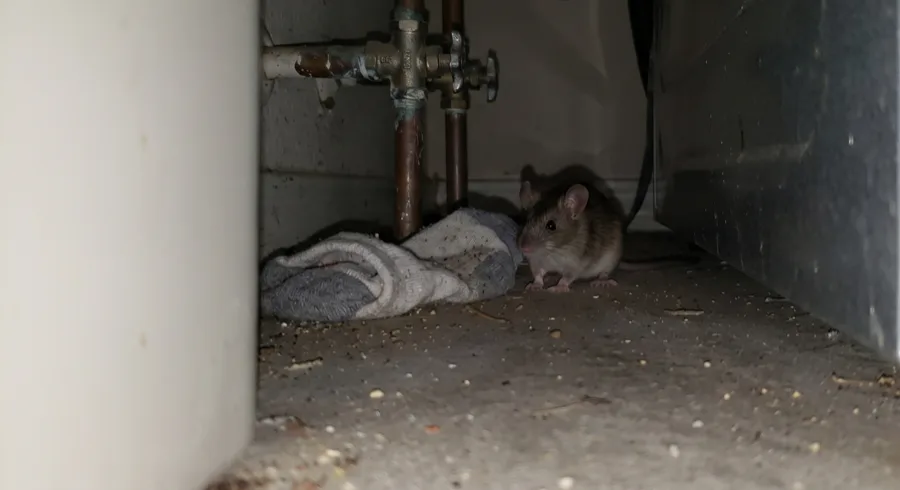
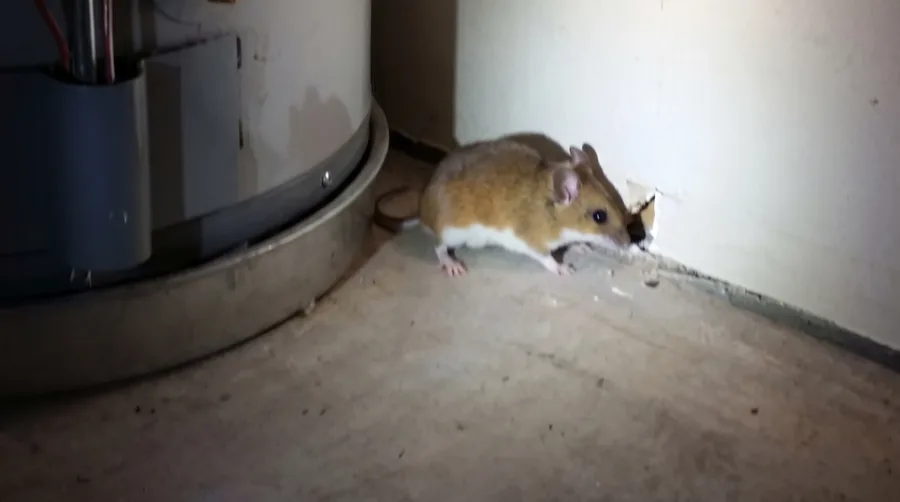
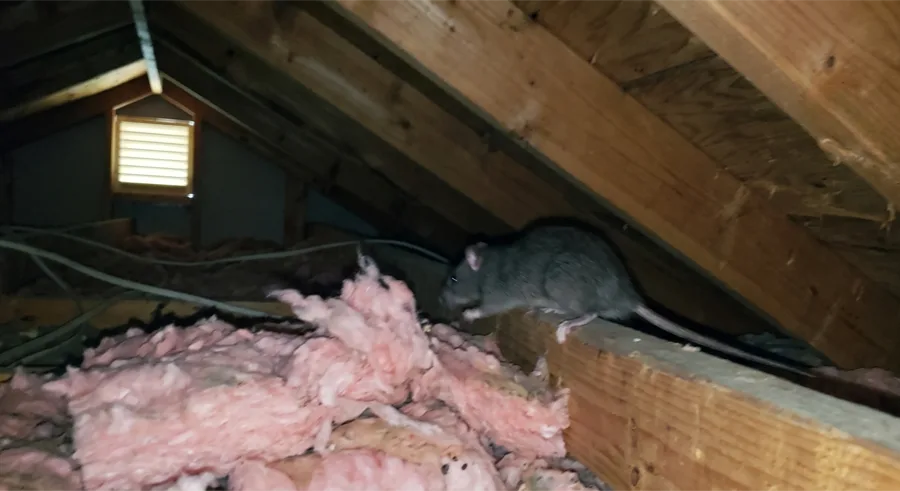
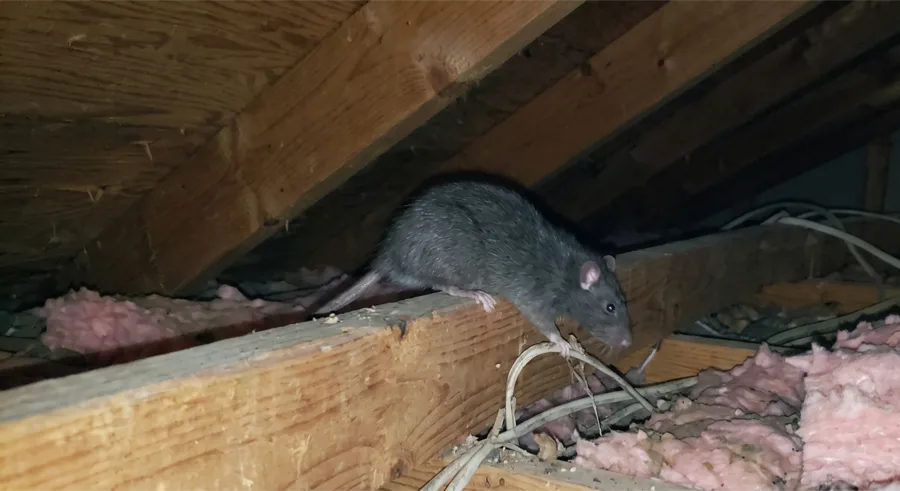
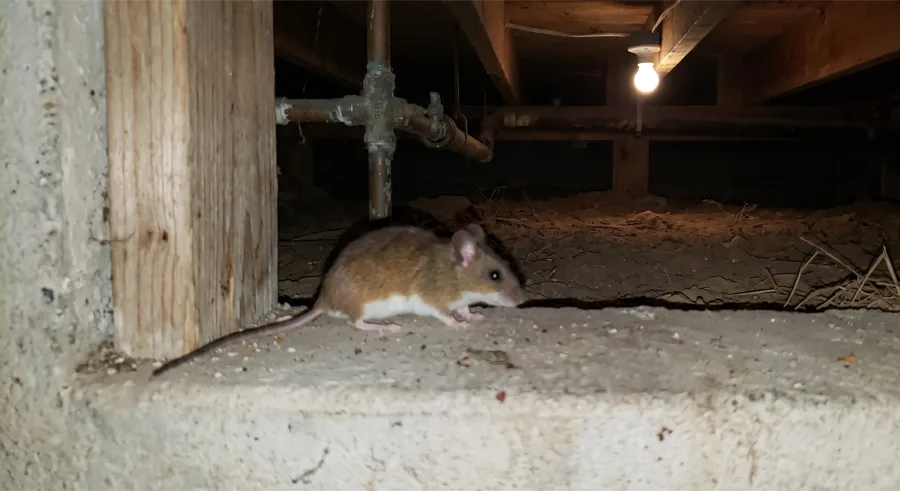
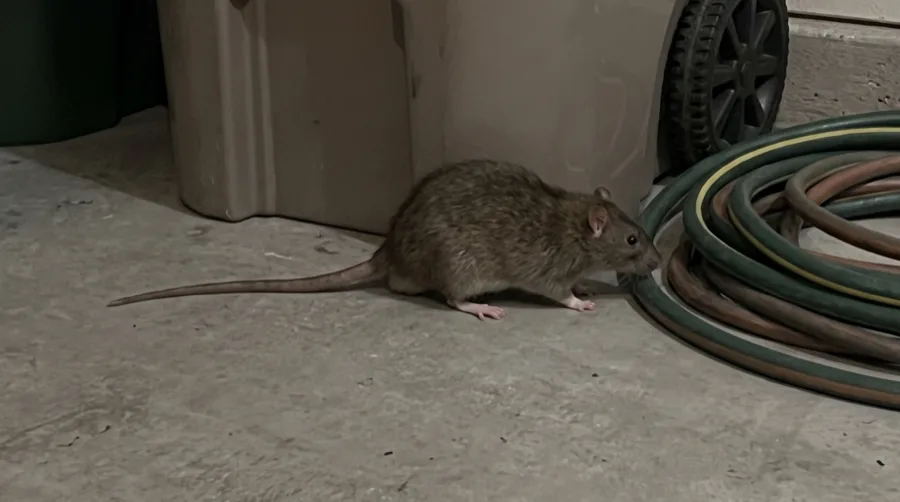
Photographs from our own Leander service calls. Never sweep or vacuum droppings dry. Text a photo to 843-480-8699 and we will name it.
What is actually in your attic.
Thin soil over limestone, cedar brakes and the Balcones Canyonlands edge give Leander a rodent list with a Hill Country twist. Roof rats take the oak canopy into older sections. House mice and deer mice come off cleared ranchland into Bryson and Deerbrooke. Woodrats hold the brushy lots and anything with an engine. Your technician confirms the species on site before setting anything, because the trap that catches a mouse in a Larkspur pantry is not the trap that stops a woodrat under a hood.




A note on bites and stings. Reactions vary from person to person, and any bite or sting can cause a serious reaction in someone sensitive to it. Nothing here is medical advice. If you are bitten or stung and feel unwell, or the reaction spreads or does not settle, contact a doctor or Poison Control. If breathing or swallowing is affected, treat it as an emergency and call 911.
The signs homeowners notice first.
Out on Leander acreage the first clue is often a truck that will not start, and in the subdivisions it is the sound over the ceiling around midnight. Either way, call and walk us through it. We can generally tell you on the phone whether it needs a same-day visit or a regular slot, and which of the two problems you have.
- Scratching or scurrying overhead at night
- Dark, rice-grain droppings along walls or in cabinets
- Gnaw marks on baseboards, wiring or stored boxes
- Shredded insulation, paper or fabric used as nesting
- A persistent musky, ammonia-like smell
- Greasy rub marks along walls and pipe runs
- Stick nests in a shed or engine bay near cedar cover
- Soffit noise in a Bryson home under three years old
Rodent control across Leander.
Which part of Leander you are in predicts the rodent. Bryson, Palmera Ridge, Larkspur and Deerbrooke are new sections on old ranchland, so the calls are mice in garages of houses barely out of warranty. Crystal Falls and Travisso back onto greenbelt and cedar, which means woodrats and the occasional deer mouse. When you search for a rodent exterminator in Leander, you get one crew that has worked both ends of 183 this week.
Not listed? We almost certainly cover it, see pest control in Leander or the full service area.
Rodent control in Leander, common questions.
How much does rodent control cost in Leander, TX?
An active mouse or rat infestation is a separate clean-out job starting at $449. Recurring rodent control and monitoring comes with the general pest plan from $66 a month for a single-family home. Exclusion, the sealing work, is quoted separately. On Leander's newer builds the gaps are usually fewer but sharper: line-sets, garage corners, and roof junctions that were never quite finished.
How did rodents get into a brand new house?
New construction is one of the most common rodent calls we get in Leander, for two reasons. First, new sections displace field mice and woodrats from the ranchland the neighborhood was built on. Second, builders routinely leave gaps where brick meets soffit, around AC line sets and dryer vents, and at garage door corners. A mouse needs a dime-sized hole, so a new home is not a sealed home.
Do you seal the entry points or just set traps?
Both, and the sealing is what truly ends it. Trapping without exclusion buys a quiet month before the next one finds the same opening. Traps solve today. Exclusion solves next winter.
Will you put poison in my attic?
No. We trap in attics and living spaces rather than baiting up there, so nothing dies inside a wall. Exterior bait goes in locked, tamper-resistant stations outside, where the pressure is actually coming from.
Something is chewing the wiring in my truck. What is that?
Almost certainly a woodrat, a pack rat. They are native to Hill Country cedar and brush and they are notorious for nesting in engine bays and chewing wiring harnesses on vehicles, boats, mowers and equipment parked near cover. It is a common problem on Leander acreage and lots backing onto greenbelt. We trap them and treat the surrounding harborage, and we will tell you what to move away from the brush line.
How long does it take to get rid of rats or mice?
Most Leander homes are quiet within one to three weeks. Mice go faster than roof rats because they are less cautious about new objects. Rats are trap-shy and can take an extra week or two to commit. The timeline depends much more on how many entry points there are than on how many rodents are inside.
Does backing onto greenbelt in Crystal Falls mean more rodent pressure?
More, and a wider variety. A greenbelt lot in Crystal Falls or Travisso has cedar, brush and rock right past the fence, which is woodrat and deer mouse habitat, plus the oak canopy roof rats travel. Nothing about that is fixable, and you would not want it fixed, so the plan is a tighter house and exterior monitoring on the greenbelt side. On a recurring plan that side of the lot gets checked every visit.
Will the South Fork San Gabriel corridor near my house bring roof rats?
It is the main roof rat route through Leander. The live oak and cedar along the South Fork and Brushy Creek form a continuous canopy, and roof rats travel it by branch and utility line until they find a roofline worth dropping onto. Homes in the older sections along the corridor see the most of it. The creek is not the fix. The soffit and gable vent are, along with branches trimmed back off the roof.
Other pests we treat in Leander





Rodent control in nearby cities
We treat rodents in every city we serve. Same crew, same guarantee, different gaps to seal. Find your city below, read the full rodent control overview, or check the complete service area.
Answered 24 hours · Leander, TX
Get them out. Keep them out.
Free inspection and quote, same-day service across Leander, and exclusion work that closes the door behind them.