Wasp control in Hutto, TX.
New soffits are the wasp equivalent of an empty lot with utilities run, and Hutto has been building them for fifteen years. When a nest goes up we take it down and treat the surface so the next queen keeps flying. That treatment is in the recurring plan from $66 a month, free re-treatments between visits included.
Written by the Bastion Pest Control service team · Licensed & insured in Texas · Last updated
What Hutto homeowners ask about wasps first
Fresh builds, open prairie and a creek full of bugs give Hutto wasps everything but a reason to leave. The quick facts are below; the long explanation follows.
- Most common
- Paper wasps
- Unweathered porch ceilings in new subdivisions get colonized the first spring.
- Nest removal
- From $199*
- A separate trip in protective gear, priced per job. Ask about the current special.
- Peak season
- April - October
- Colonies peak late summer and get defensive.
- Urgent cases
- Same-day
- Nest by a door or a sting allergy at home.
- Prevention
- Eave treatment
- In the plan on every visit. Treating surfaces is what stops the rebuild.
- Honey bees
- Referred, not killed
- We send you to a beekeeper for live removal.
Prevention is in the plan. Nest removal is the add-on.
Nobody in Hutto pays extra to have wasps covered. The recurring plan treats eaves, soffits and porch ceilings every visit, and when a founding queen sneaks a nest in between visits the return trip is free. Removing an established nest is the exception, quoted per job, because a technician in a full suit on a ladder is a different afternoon than a routine service stop.
Ask about specials before you book. We run promotions on nest removal through the season, and some of them take it down to $19. They change too often to post here, so call 843-480-8699 for a free quote and we will tell you what is running that day.
See full pricing details →One-time specialty job, retail $299. The nest comes down and the site is treated so a new queen cannot rebuild there.
Where a single-family Hutto home starts. Wasp prevention every visit, and a free return if one slips through.
| General pest planPrevention | Nest removalOne nest | |
|---|---|---|
| What it is for | Keeping wasps from building on the house in the first place | Taking down a nest that is already built |
| Right for you if | There is no nest yet, or the nest is already gone | There is an active nest on the property right now |
| What you get | Recurring TriBarrier with eaves, soffits and roofline included | One visit: the nest comes down and the site gets treated |
| If they come back | We re-treat free, with no limit and no trip fee | Prevention is what stops the next one, so most people add the plan |
| Honey bees | Never treated. We refer you to a beekeeper who relocates them | Never treated. We refer you to a beekeeper who relocates them |
| Price | From $66 a month* | $299, currently from $199* |
* Recurring plan starting rate. Square footage, lot size and existing pressure decide your quoted price.
How we handle wasps in Hutto.
Removing a nest without treating the surface just moves the problem a few feet along. Wasps return to the same sheltered spots season after season.
 1
1
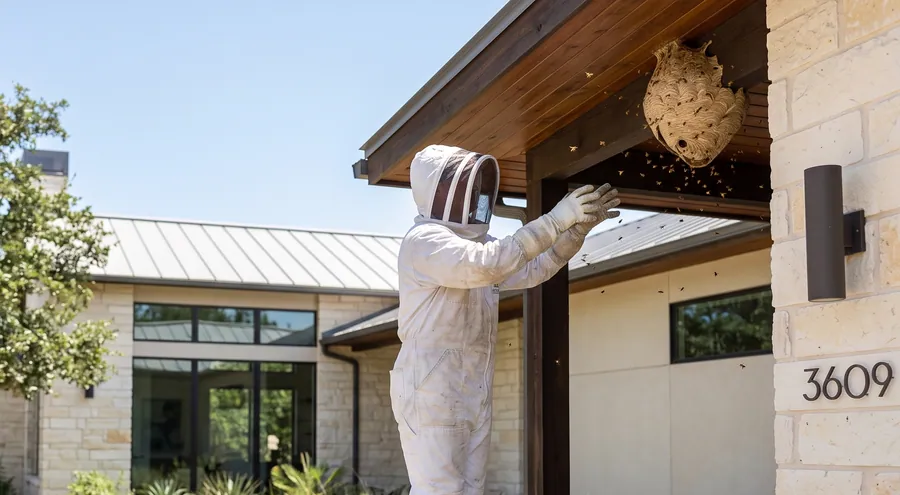
Treat and remove the nest
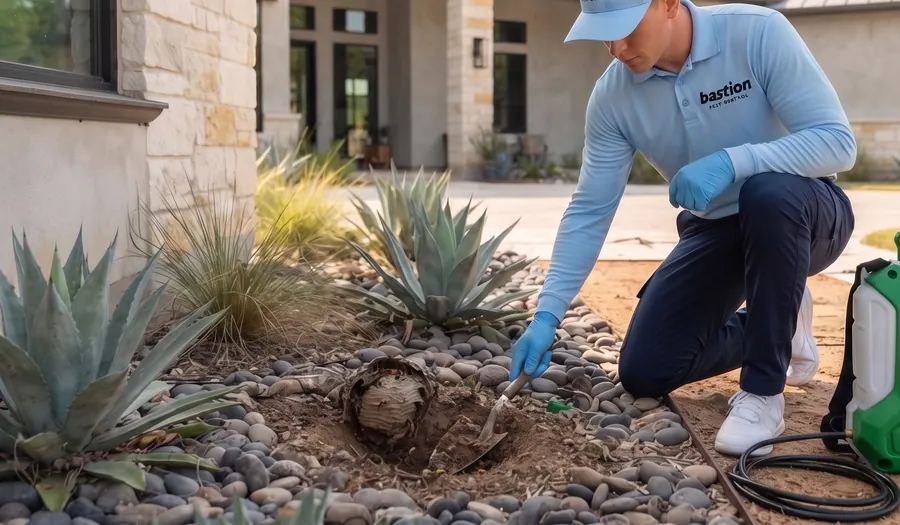
We treat the colony first so returning foragers are handled, then take the nest down physically. Void and ground nests get treated at the entry point rather than opened up.
 2
2
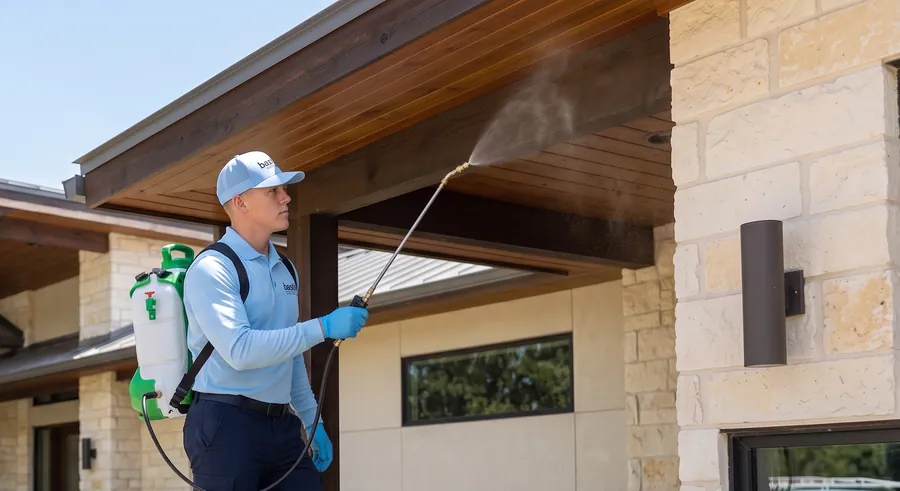
Treat the surfaces
Eaves, soffits, porch ceilings, door frames, shutters and pergolas get treated so new queens cannot establish there. That is the part that prevents a rebuild.
 3
3
Keep it clear
Recurring service means founding nests come down in spring before they become August colonies, and overhangs get re-treated on every visit at no extra charge.
Recognize any of these in your Hutto home?
Free quote, same-day service most days, and free re-treatments if they come back between visits.

Why wasps love houses in Hutto.
Hutto's newness is what makes it good wasp habitat. Recently finished homes in Star Ranch, Emory Farms, Brooklands and Carmel Creek have pristine, unweathered soffits, porch ceilings and covered entries with nothing built on them yet, and founding queens colonize those first. We routinely find three or four nests on a house completed the previous spring. Open prairie surroundings supply the insects paper wasps feed their larvae, and there is little competition for the sheltered corners a new subdivision provides.
The other defining fact about Hutto is how recently it was farmland. This was cotton and row-crop country, and the subdivisions in Star Ranch, Emory Farms, Carmel Creek and Mager Meadows were built on it, much of it within the last fifteen years. When a new section breaks ground, the field mice, rodents and insects living on that land do not leave the area; they move into the nearest structures. That is why so many of our Hutto calls come from houses only a few years old, from owners who assumed a new build would be sealed tight.
With wasps, timing is everything. A nest in April is a queen and a couple of interns, and it comes down easy. That same nest in August is a fully staffed operation with strong opinions about anyone within six feet of the front door, and yellowjackets in a wall void or a ground nest are a worse conversation still. Knocking a nest down without treating the surface just moves the address, because next spring a new queen reads that same dry corner as prime real estate and signs the lease. Which is the whole case for dealing with nests early, and for service that treats the eaves before anybody moves in.
Blackland clay
Holds water instead of draining it, then cracks open in summer heat.
Former farmland
New sections displace field mice and insects directly into nearby homes.
Very new housing
Builder gaps: soffit seams, line sets, garage corners, are the main entry points.
Brushy Creek & ponds
The creek corridor and subdivision detention ponds hold standing water for days.
When are wasps most aggressive in Hutto?
Wasp season is a slow build to a sharp point. Nests start small in spring, grow all summer, and hit maximum size in late summer, which is exactly when people get stung.
The nest is at maximum size and minimum patience. Most stings we hear about happen in these two months.
Every nest you see in August began as a single queen in March. Knocking one down in April is a five minute job.
Ground nesting yellowjackets react to vibration. A mower is the most common way people find them.
Where wasps actually build in Hutto.
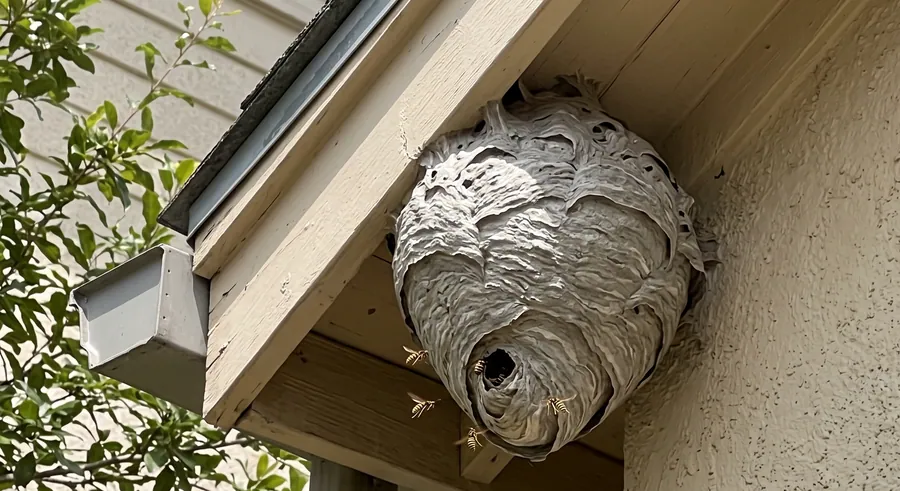
Every photo here came off a real Hutto service call. Newer construction means wide open soffits and bare sunny yards, which is exactly what paper wasps and cicada killers are looking for.
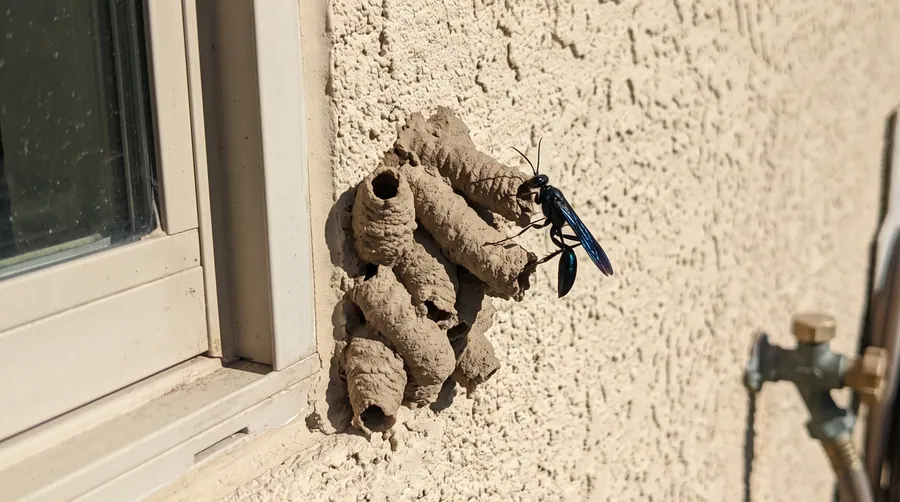
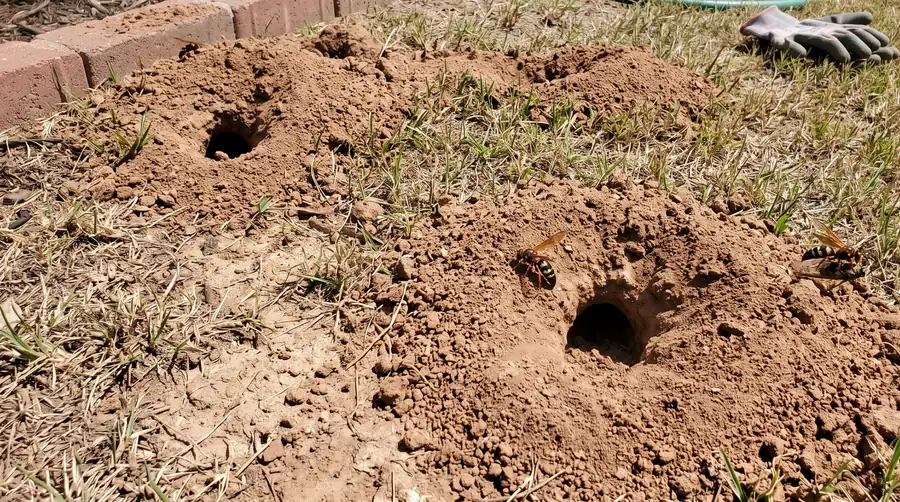
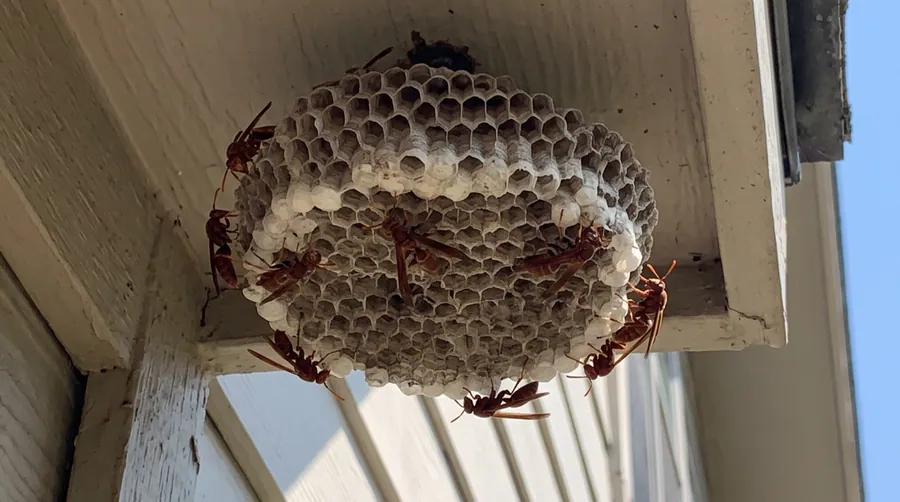
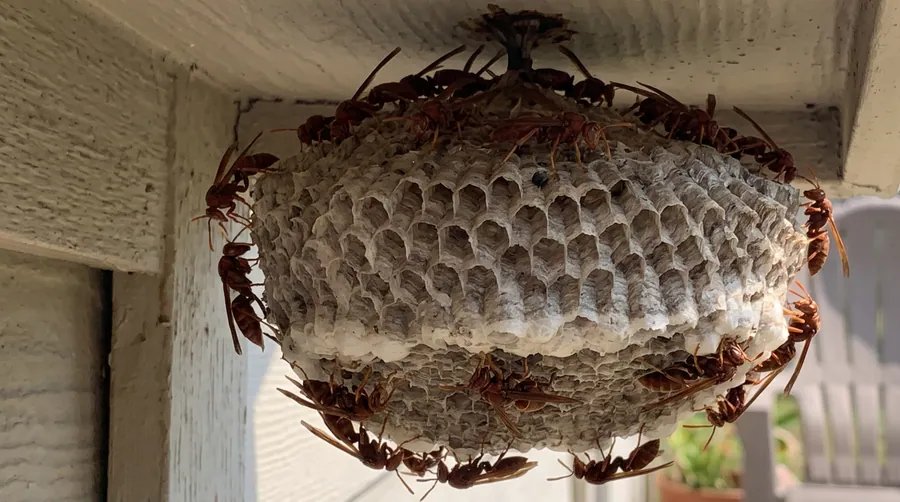
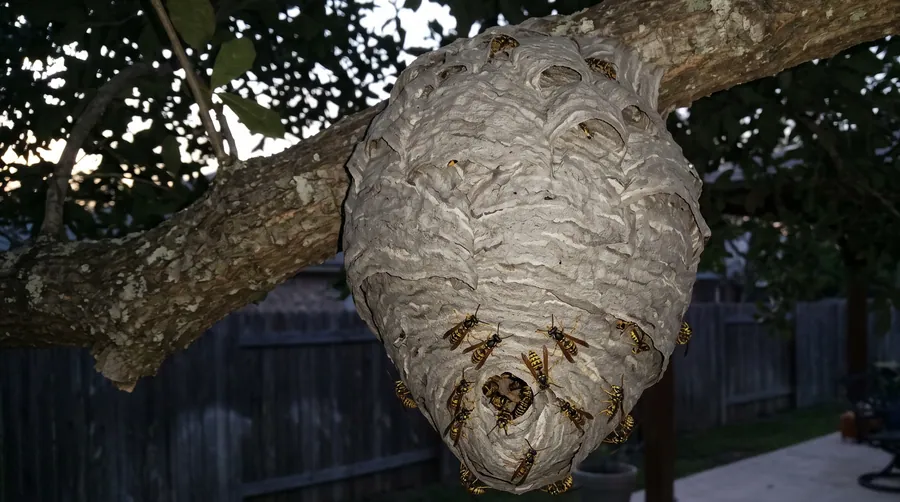
The wasps we find in Hutto.
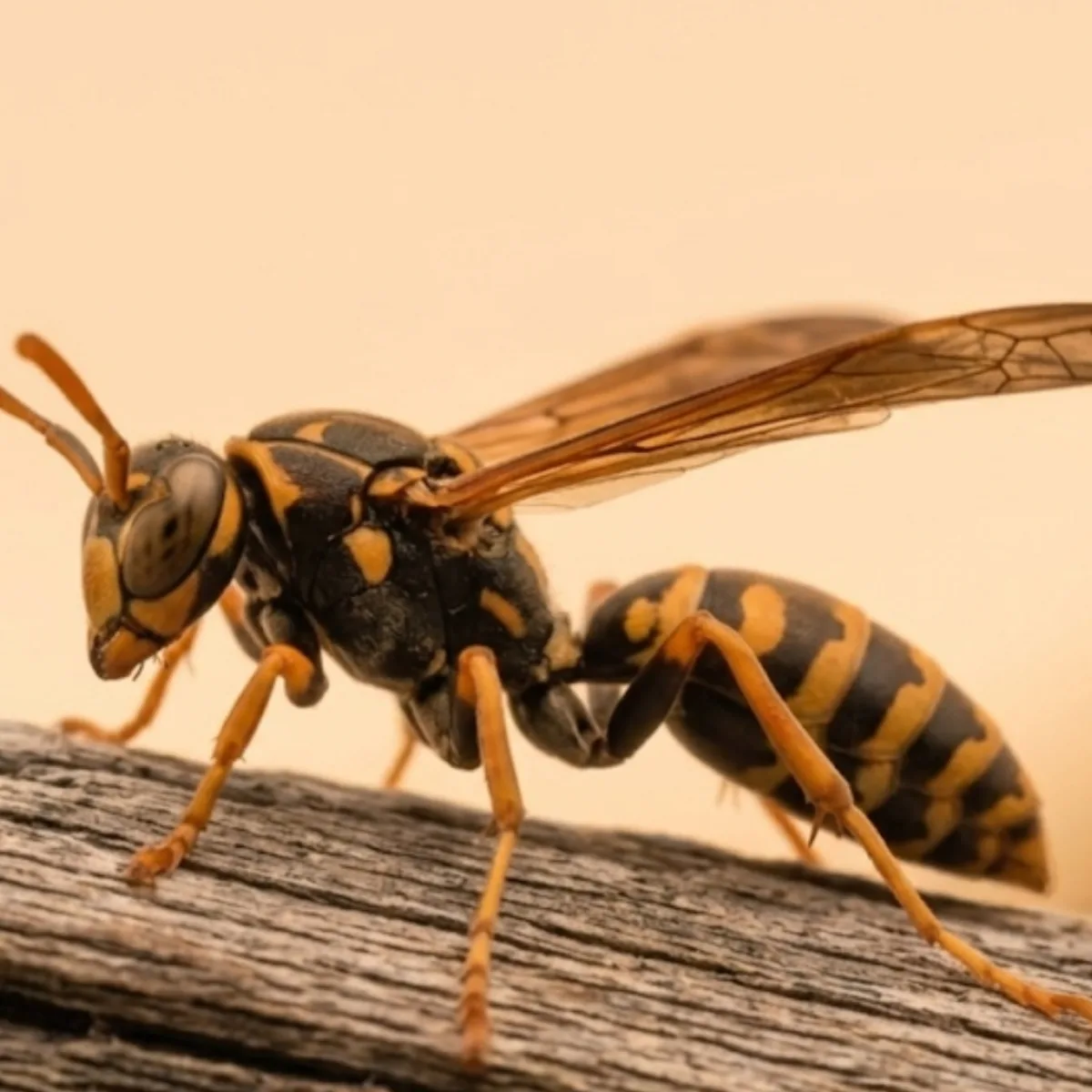
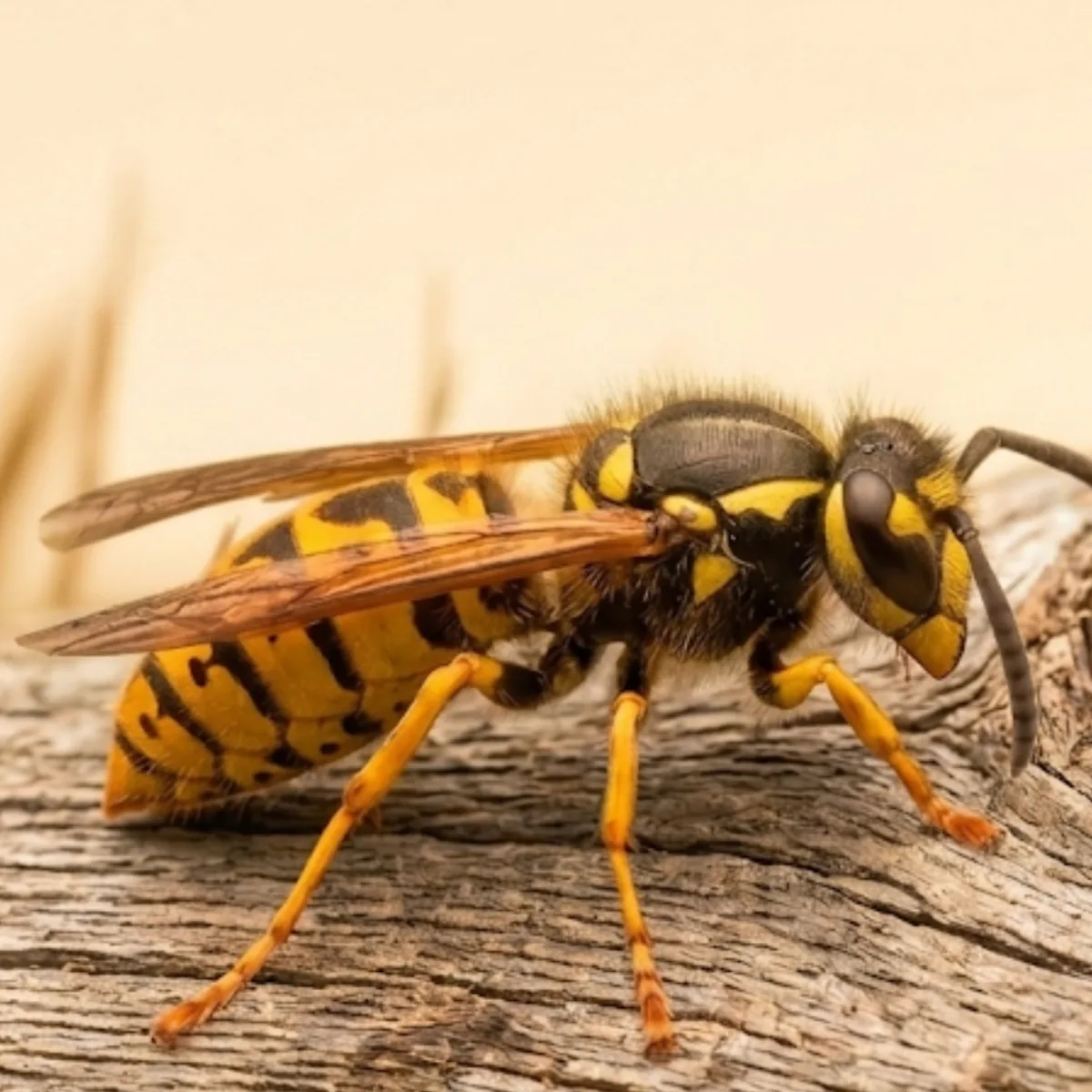
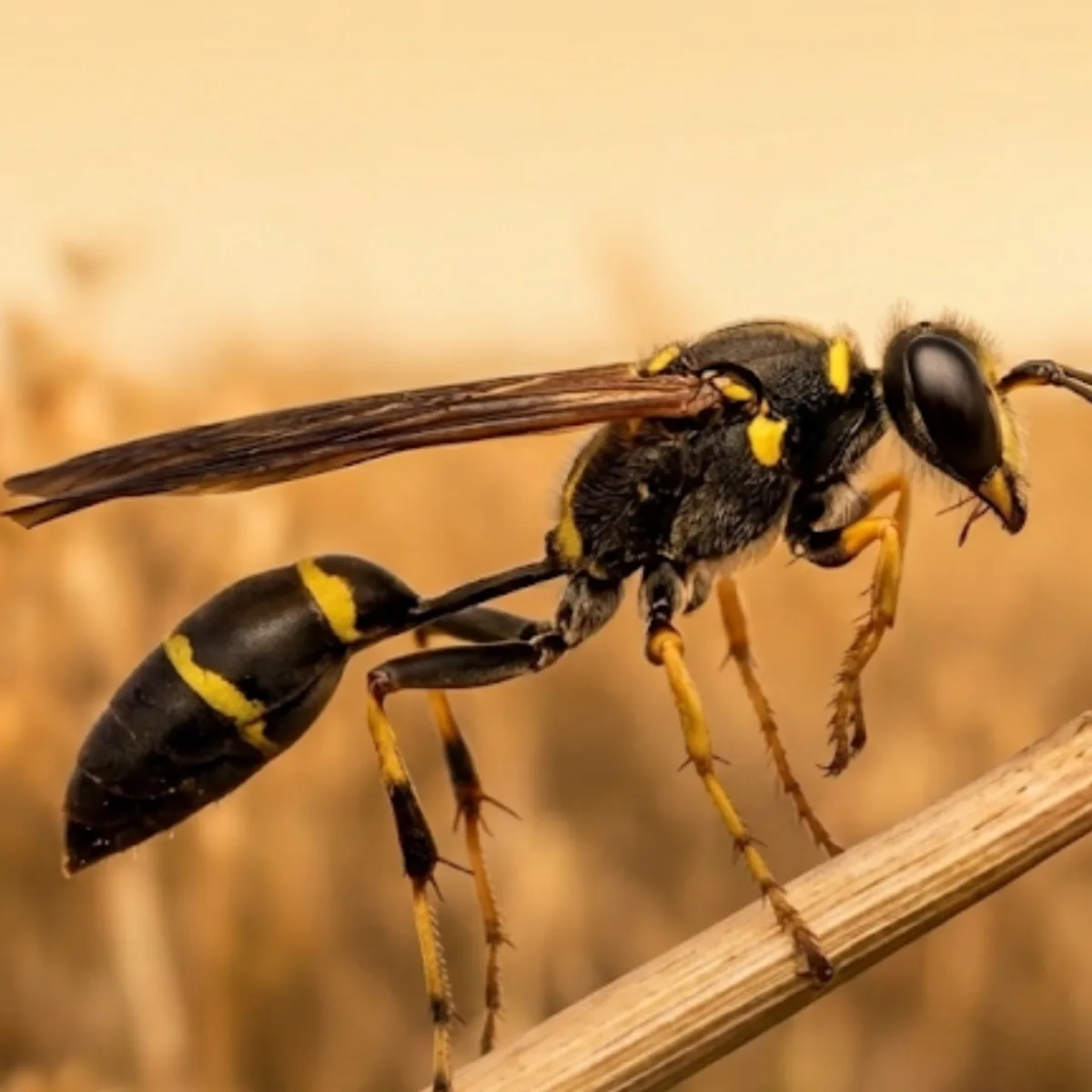
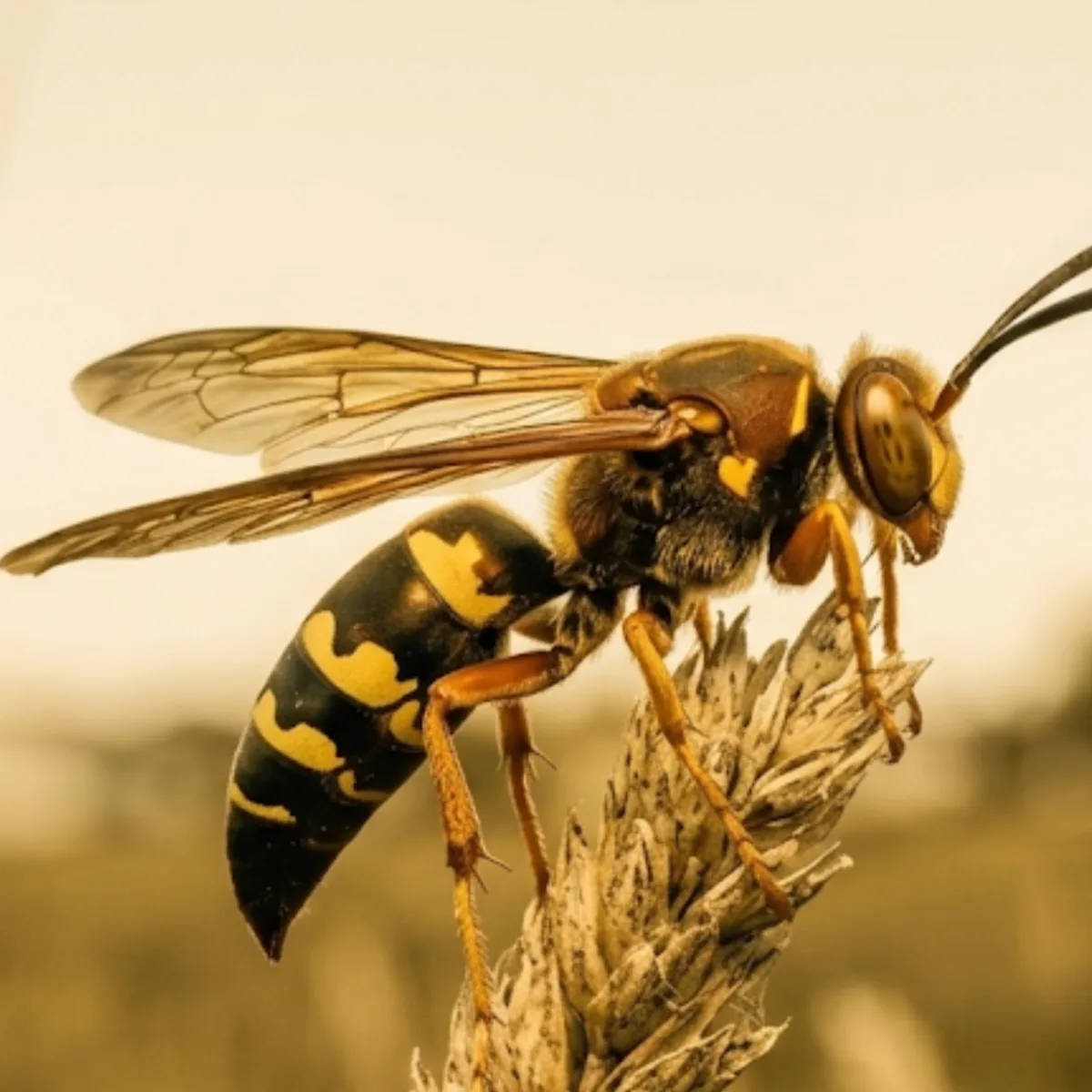
Hutto simplifies the wasp question a little. New construction means paper wasps on nearly every porch ceiling, and bare, sunny strips beside fresh sod bring cicada killers by July. Yellowjackets are less about the house here and more about the ground, since blackland clay cracks wide open in summer and hands them a ready burrow. Mud daubers show up in garages. Because the answer changes the method and the urgency, your technician confirms the species on site before anything is treated.
A note on bites and stings. Reactions vary from person to person, and any bite or sting can cause a serious reaction in someone sensitive to it. Nothing here is medical advice. If you are bitten or stung and feel unwell, or the reaction spreads or does not settle, contact a doctor or Poison Control. If breathing or swallowing is affected, treat it as an emergency and call 911.
When a wasp problem needs attention.
In a subdivision that was a cotton field not long ago, wasps do not have many choices, so they pick your porch. New houses hide very little: the ceiling is flat, the soffit is clean and a nest stands out. Ring us and describe what you see. Usually we can tell you on the phone whether it is a today job or one for the next visit.
- An umbrella nest under an eave or porch ceiling
- Wasps repeatedly entering the same soffit or wall gap
- Mud tubes on exterior walls or garage ceilings
- Wasps guarding a doorway, mailbox or grill
- A ground hole with steady wasp traffic
- Wasps inside the house on upstairs windows
- Nests on a porch ceiling finished within the last year
- Burrow mounds in a bare strip between new sod and the walk
Every corner of Hutto, same guarantee.
For a wasp exterminator in Hutto, the busiest streets are the newest ones. Star Ranch, Emory Farms and Carmel Creek have porch ceilings that were still under construction not long ago, and founding queens colonize clean overhangs before anything else. Lots along Brushy Creek add the insect supply that keeps those colonies growing into August. Older sections see fewer nests but more yellowjackets in settled gaps.
Not listed? We almost certainly cover it, see pest control in Hutto or the full service area.
The Hutto wasp FAQ.
How much does wasp nest removal cost in Hutto, TX?
Nest removal retails at $299 and is on special right now, starting at $199 for a one-time visit in Hutto. It is the only wasp job we price separately, because it is a dedicated trip in protective gear. The eave and soffit treatment that stops new queens from rebuilding is part of the general pest plan from $66 per month, with no per-pest charge. We also run specials that can bring nest removal down to $19, so call 843-480-8699 for a free quote and ask what is running.
Can you come out today for a wasp nest?
Usually yes, and we bump it up. A nest over a front door, on a playscape, or near anyone with a sting allergy gets treated as urgent. Technicians work 8am to 8pm, seven days a week. Call or text for the soonest window.
Why do wasps keep building in the same spot?
Because nothing about the spot has changed. Overhead cover, warm morning sun, no foot traffic: if a corner suited a queen last spring it suits the next one now. Around the edge of a new Hutto section there is also open ground on the other side of the fence keeping the insect prey supply close. And old comb material leaves scent behind, which reads to a founding queen as a site already vetted. This is why the nest coming down is only half the job and treating the surface is the other half.
Should I spray a nest myself?
We would rather you did not, particularly after midsummer. Store-bought sprays usually just annoy a mature colony, and an annoyed colony is a worse problem than the one you started with. Paper wasps defend the nest area. Yellowjackets follow. High nests and wall voids are where it goes wrong.
Do you kill honey bees?
No. If we find a honey bee colony we identify it as such and refer you to a beekeeper for live removal, because bees are pollinators worth saving (Texas A&M on honey bees) and a hive in a wall also leaves comb and honey that must be removed properly. Wasps, yellowjackets and mud daubers are a different matter. Those we treat.
When are wasps worst in Hutto?
The back half of summer through October. Colonies started in spring hit their largest size in late summer, the workers shift from protein to sugar, and the whole nest gets touchier as the season ends, so a comb that sat quietly by the back door in May will react in September. Houses on the outer edge of a section, with a field still across the fence, usually see it earliest. Deal with it in spring if you can. One queen and a starter comb is a very short job.
Why does a brand-new house in Hutto already have wasp nests?
Because new is exactly what a founding queen wants. She is looking for a dry, sheltered, unoccupied surface in April, and a porch ceiling finished the previous fall has no competing nests, no spider webs and no old treatment on it. Star Ranch and Emory Farms hand her hundreds of those. Add open prairie around the subdivision full of the insects she feeds her larvae, and three or four nests on a one-year-old house is normal, not a defect.
Can yellowjackets move into the cracks blackland clay opens around a Hutto slab?
Blackland clay makes plenty of openings for them. When it dries out in summer it splits into deep cracks, often right along the slab edge or under a landscape bed, and a yellowjacket queen reads an opening like that as a finished basement. Watch for steady traffic into one spot in the ground with no comb showing. Keep the mower away from it and call. Ground nests are the ones we suit up for, and the ones you should not test.
Hutto: everything else we handle





Same wasp plan, next town over
We treat wasps in every city we serve. Same crew, same guarantee, different open ground behind you. Pick your city below, read the full wasp control overview, or check the complete service area.
Answered 24 hours · Hutto, TX
Nests down. Eaves treated. Done.
Free quote, same-day service across Hutto, and free re-treatments if a new nest appears between visits.