Austin, TX and 25 more cities
Termite control
Bait stations that work the colony in the soil, and official WDI inspections for home sales. Quoted after we see the house.
Quick answers
Termite control in Central Texas: the quick facts
Subterranean termites live in the soil and reach the house through mud tubes, and in Texas their swarms are most common from February to May. We treat with in-ground bait stations and write official wood destroying insect (WDI) reports for home sales. Both are quoted on inspection.
- Swarm season
- February to May
- Most often March and April, by day, per Texas A&M.
- How they get in
- Mud tubes
- Pencil-width soil tunnels from the ground up the slab edge.
- How we treat
- Bait stations
- Set in the soil 5 to 10 feet apart and checked on a schedule.
- Price
- Quoted on inspection
- You get the number before any work begins.
Written by the Bastion Pest Control service team · Licensed & insured in Texas · Last updated
Termites in Central Texas.
The termites that damage Central Texas homes are subterranean. The colony lives in the soil, and the workers reach the wood in your house through hollow mud tubes they build over concrete (Texas A&M AgriLife). Most homeowners never see a worker. They see a swarm, a tube on the slab, or a baseboard that gives under a thumb.
Swarmers leave to start new colonies, and they cannot damage wood. A swarm that comes out inside the house is the sign to act on, because the colony feeding on that wall is still in the ground.

Seasonal pattern
When do termites swarm in Central Texas?
Swarms are the part you see, and Texas A&M says they are most common from February to May, usually in March and April. The colony underground feeds all year, so the chart shows when the warning signs turn up, not when the damage stops.
- Peak swarms
- March and April
- Native subterranean swarmers fly by day. The rest of the year, a swarm is rare.
- Formosan swarms
- Late May, early June
- At night, toward porch lights and windows.
- Feeding
- All year
- A quiet month for swarms is not a quiet month for the colony.
Warning signs
The swarm is the alarm, not the damage.
Swarmers or a pile of wings inside, by a window or door
Mud tubes on the slab edge, piers or plumbing openings
Wood that sounds hollow or gives under a screwdriver
Dried mud packed in cracks or along baseboards
Put a few swarmers in a bag or the freezer and note where they came out. Then call us at 843-480-8699. A clear photo is often enough to tell termites from flying ants before anyone drives out.
How we treat termites.
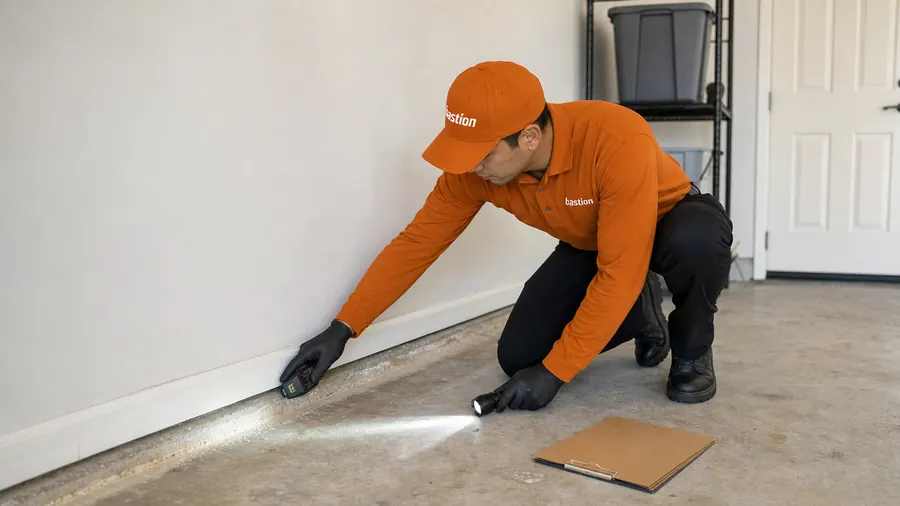
Inspect
A light, a probe and a moisture meter along the slab, the garage and every plumbing opening.
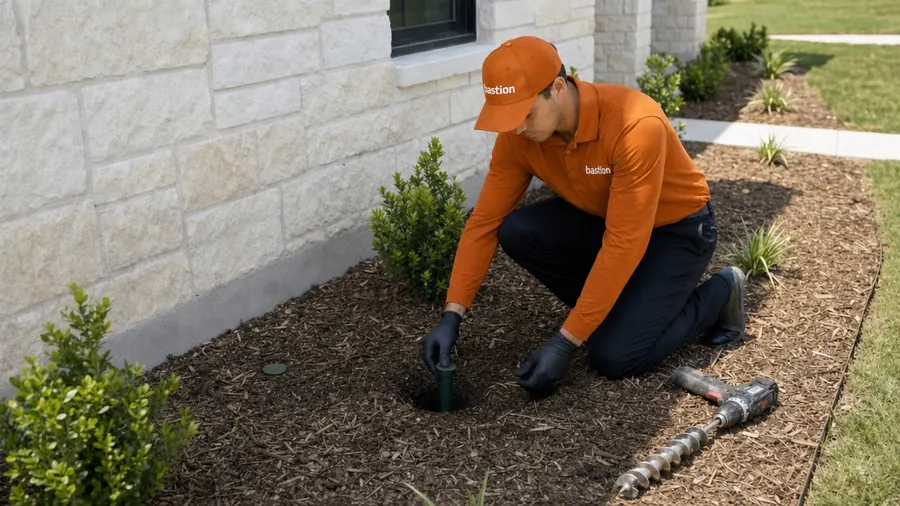
Bait
Stations go in the soil around the house, 5 to 10 feet apart, where workers forage.
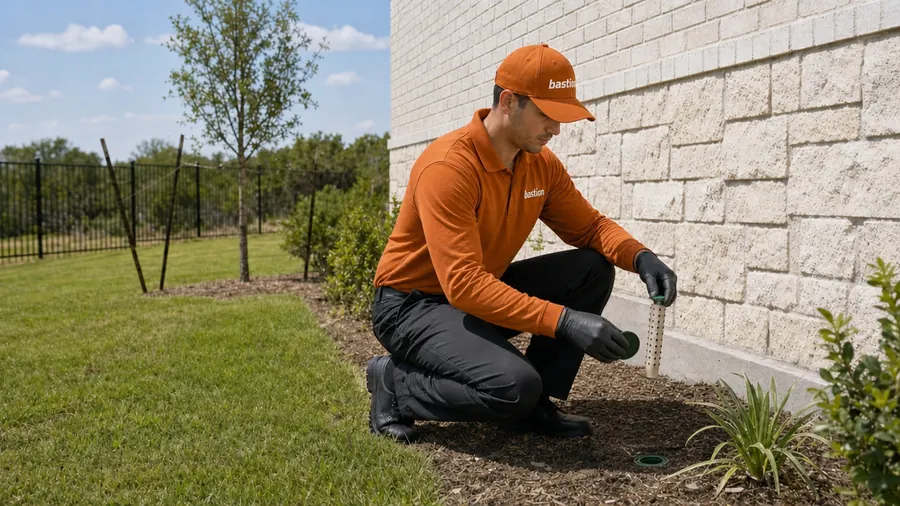
Monitor
We check every station on a schedule and add bait when it is being eaten.
How to tell it is actually termites.
Termites are found from what they leave far more often than from a sighting. These are the three signs to look for, and what each one means.
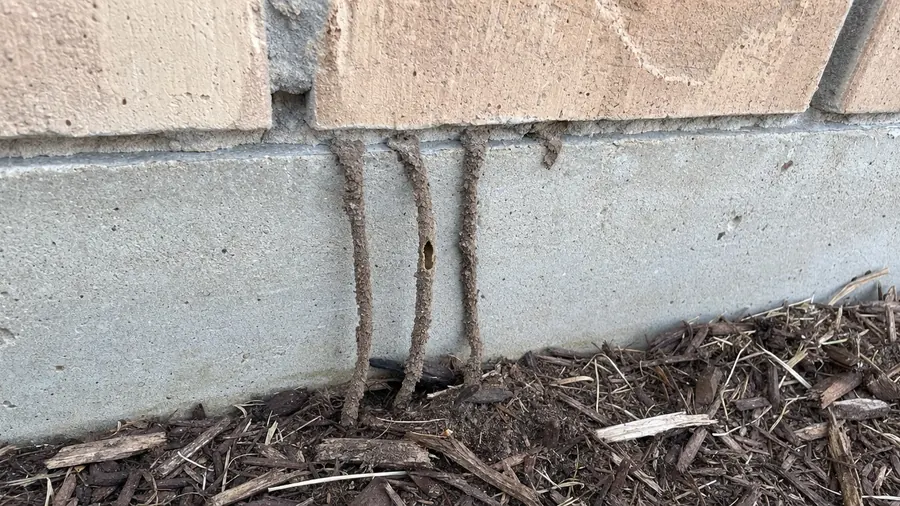
Hollow tunnels of soil from the ground up to the wood. Workers use them to travel between the colony in the soil and the wood in your house without coming out into the open.
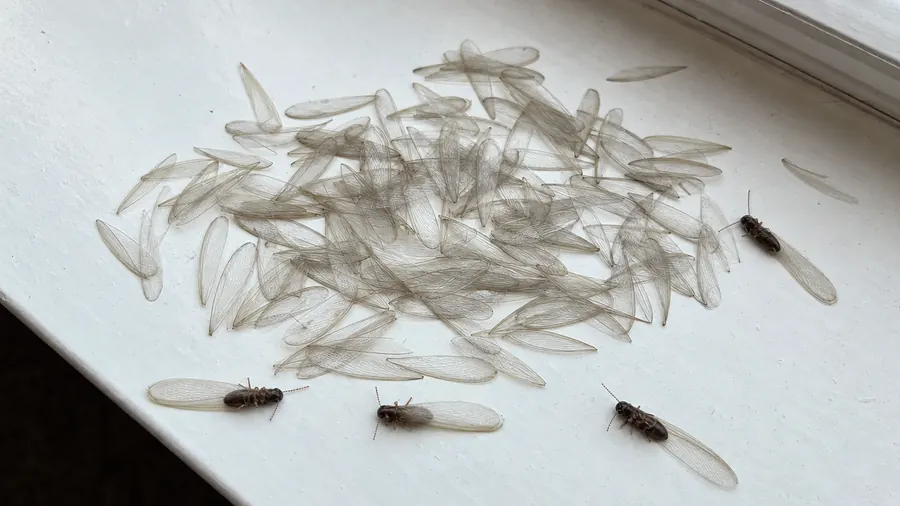
Swarmers drop their wings soon after they land. A pile of equal-size wings by a window means the swarm came out inside the house.
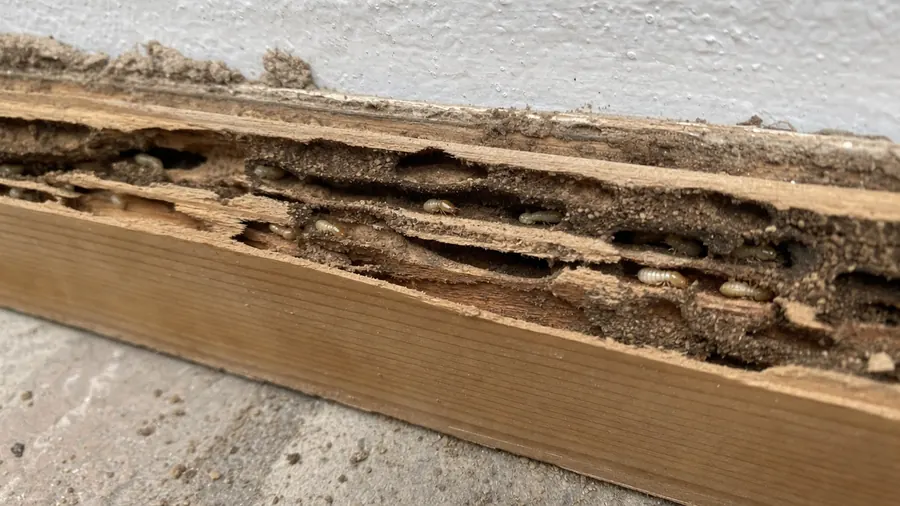
Termite damage runs along the grain and is packed with dried mud and soil. Carpenter ant tunnels are clean and smooth by comparison.
Know your pest
The termites you might find in Central Texas.
Almost every termite job around Austin is the native subterranean termite, and a colony has three kinds you might see: workers, soldiers and swarmers. The Formosan termite is the one to watch. It is mostly a Gulf Coast pest in Texas, and the soldier's head shape is the quickest way to tell it apart.
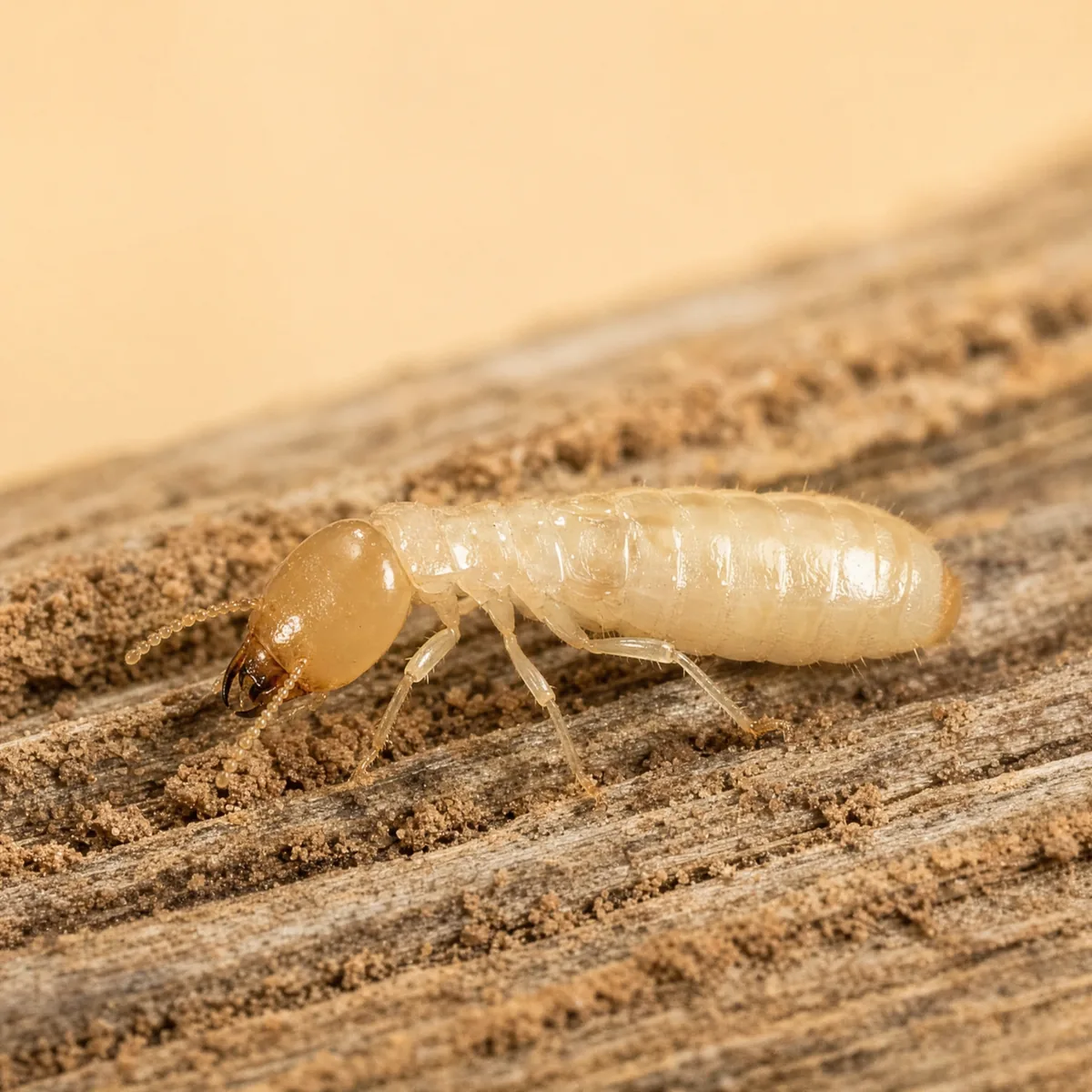
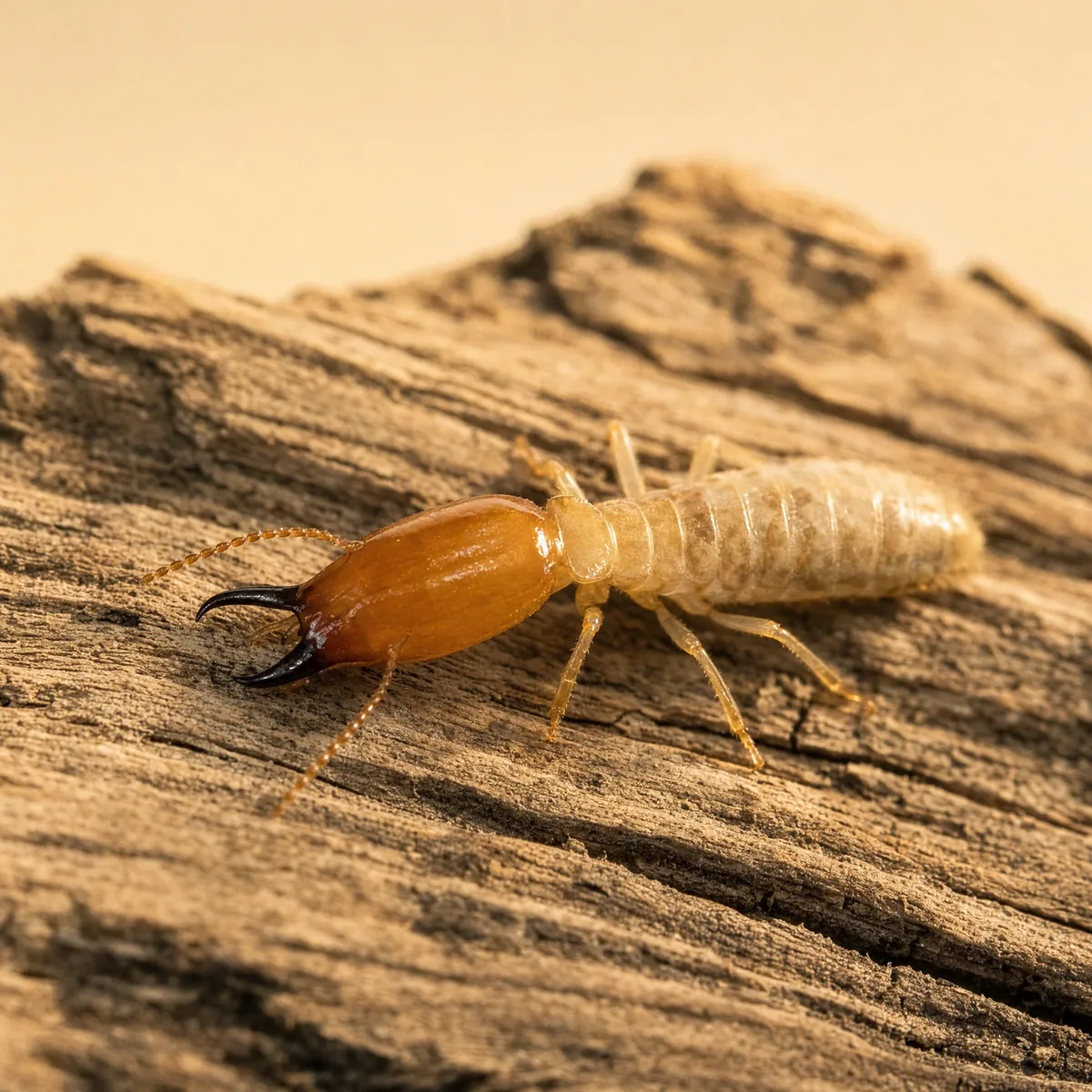
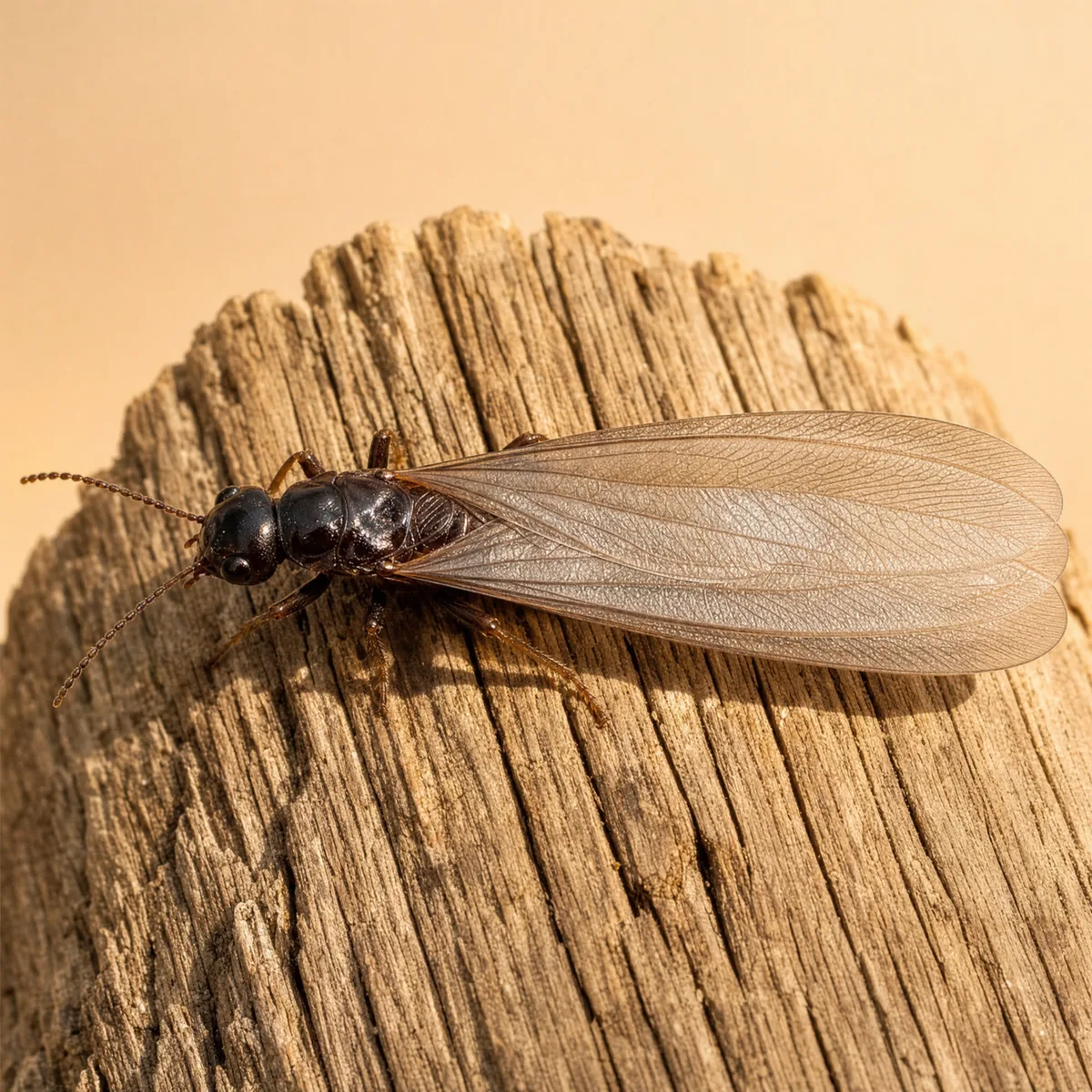
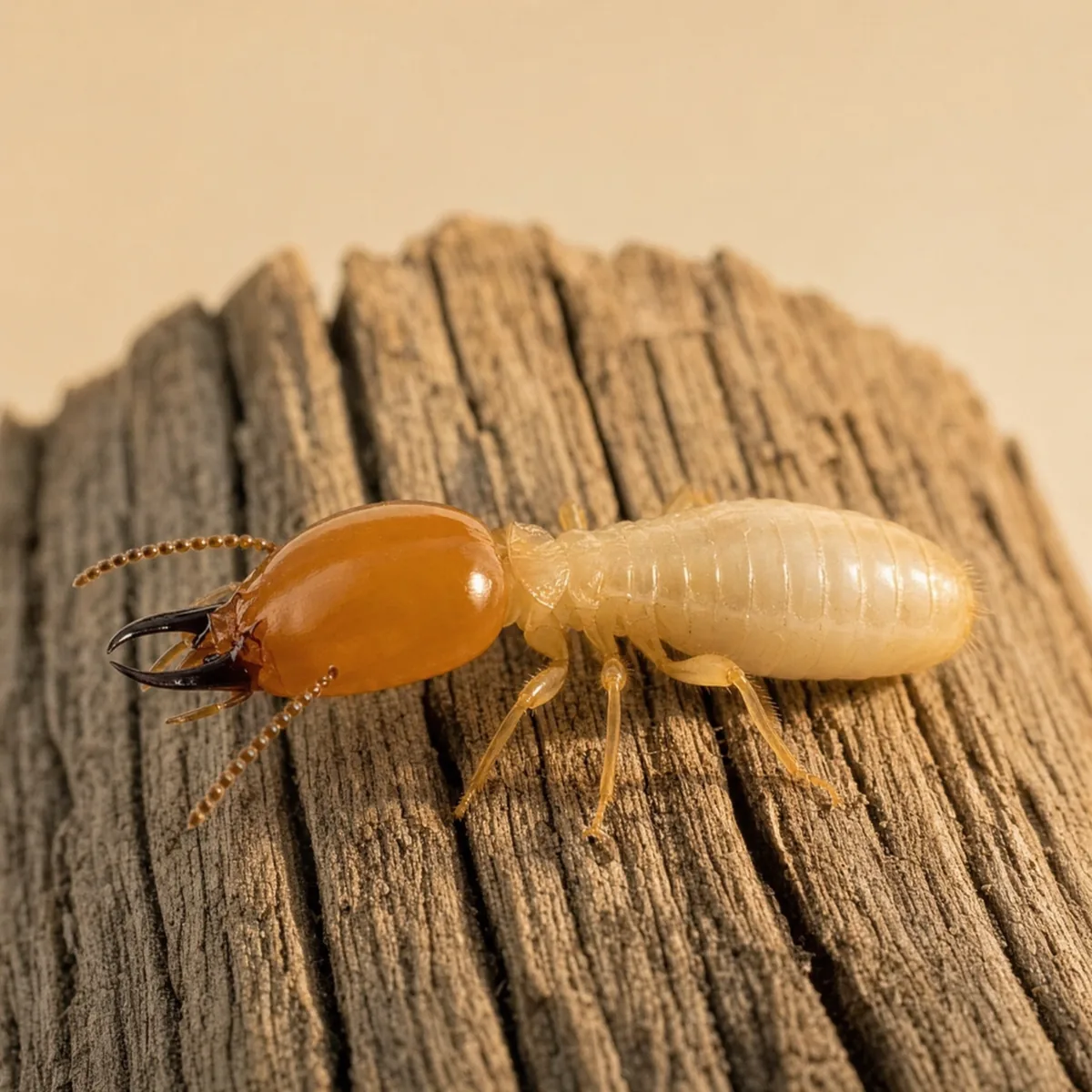
Not sure what you have got? Text a photo to 843-480-8699 and we will tell you.
Pest-Free Guarantee
They come back? So do we, free.
Free re-treatments between scheduled visits on any recurring plan.
What it costs
Termite work is quoted on inspection.
No two foundations are the same. Slab or pier and beam, how many feet of wall, where the activity is and whether you need a treatment or a report for a sale all move the price, so we look first and give you the number before any work begins.
| Termite bait stationsTreatment | WDI inspectionHome sale | |
|---|---|---|
| What it is for | Treating an active colony and guarding the house after | A wood destroying insect report for a sale or a loan |
| What we do | Set stations in the soil around the house and check them on a schedule | Inspect the visible areas for termites, other wood destroying insects and conditions that invite them |
| What you get | Ongoing monitoring, with bait added where termites are feeding | The report on the form the Texas Department of Agriculture prescribes |
| On the general plan? | No. Termites are a separate service | No. It is a one-time report |
| Price | Quoted on inspection | Quoted when you book |
The inspection to quote a treatment is free and there is no obligation. You get the number before any work begins, and if we find something on site that changes it, we tell you and you decide.
Termite Control, answered straight.
How do termite bait stations work?
Each station is a tube set in the soil around the house. Worker termites find the bait, eat it and carry it back to feed the rest of the colony. The active ingredient is slow on purpose, so it has time to spread through the colony before it kills, and Texas A&M AgriLife says complete control can take several weeks. Nobody can predict exactly when termites will start feeding on a new station, so we check them on a schedule. The stations stay in after the colony is gone, because a new colony can move into the yard later.
What is a WDI inspection, and when do I need one?
A wood destroying insect (WDI) inspection is a visual check for termites, other wood destroying insects and the conditions that invite them. For a home sale in Texas it is written on the official report form the Texas Department of Agriculture prescribes. A VA loan requires one anywhere in Texas, and other lenders and buyers can ask for one too. Under the standard Texas resale contract, neither side has to pay for lender-required termite treatment unless they agree to it in writing.
Does a termite swarm mean my house has termites?
If the swarm came out inside the house, almost certainly. Swarmers leave from the colony that is already feeding in that wall, and the swarmers themselves cannot damage wood and live about a day. If you saw them outside in a woodpile or a fence, the colony may not be in the house at all, but walk the foundation and look for mud tubes anyway. Not sure they are termites? Our guide to termite vs ant swarmers settles it in three checks.
When do termites swarm in Central Texas?
Texas A&M says termite swarms can happen in any month but are most common from February to May, usually in March and April, and native subterranean termites swarm by day. Formosan subterranean termites swarm at night in late May and early June and fly toward lights. The swarm is only the visible part. The colony in the soil feeds all year.
How do I make my house less attractive to termites?
Take away moisture and wood-to-soil contact. Keep the soil sloping away from the foundation, fix leaks and drainage problems, and keep the soil at least 6 to 8 inches below the top of the foundation or the siding, which is the line Texas A&M AgriLife draws. Keep firewood, lumber and wood mulch from piling against the walls. None of this kills a colony that is already there, but it removes the easy way in.
How much does termite treatment cost?
We quote termite work on inspection, the same way we quote bed bugs. The size of the foundation, slab or pier and beam, and where the activity is all change the number, so we look first and give you the price before any work begins. A WDI report for a home sale is priced when you book it. Termite treatment is a separate service and is not part of the $66 a month general pest plan.
More questions? Read the full FAQ or get a free quote.
Other pests we treat
The general plan covers the everyday pests in one price, and the add-ons cover the rest. Termites stay a separate job.
Every plan includes the full TriBarrier™ treatment. See all services →
Answered 24 hours · Austin, TX
Ready to be done with it?
Quotes are free, there is no inspection fee, and the phone is answered around the clock. Same-day service is usually open across the metro.