Austin, TX and 25 more cities
Cricket control
The August swarm at the porch light, the chirping behind the dryer and the drift of dead ones by the door. Covered on the general plan.
Quick answers
Cricket control in Central Texas: the quick facts
Black field crickets peak in Central Texas in August and September, and bright outdoor lights are what pull them to the house. They do not bite or sting, but they chew fabric, chirp all night and pile up dead. Crickets are covered on the general pest plan from $66 a month.
- Peak season
- August and September
- Swarms usually last four to six weeks.
- Main cause
- Outdoor lights
- Bright lights left on all night pull them in.
- Risk
- A nuisance
- They do not bite or sting, but they chew fabric.
- Included in
- The $66/mo plan
- Crickets are on the general pest plan.
Written by the Bastion Pest Control service team · Licensed & insured in Texas · Last updated
Crickets in Central Texas.
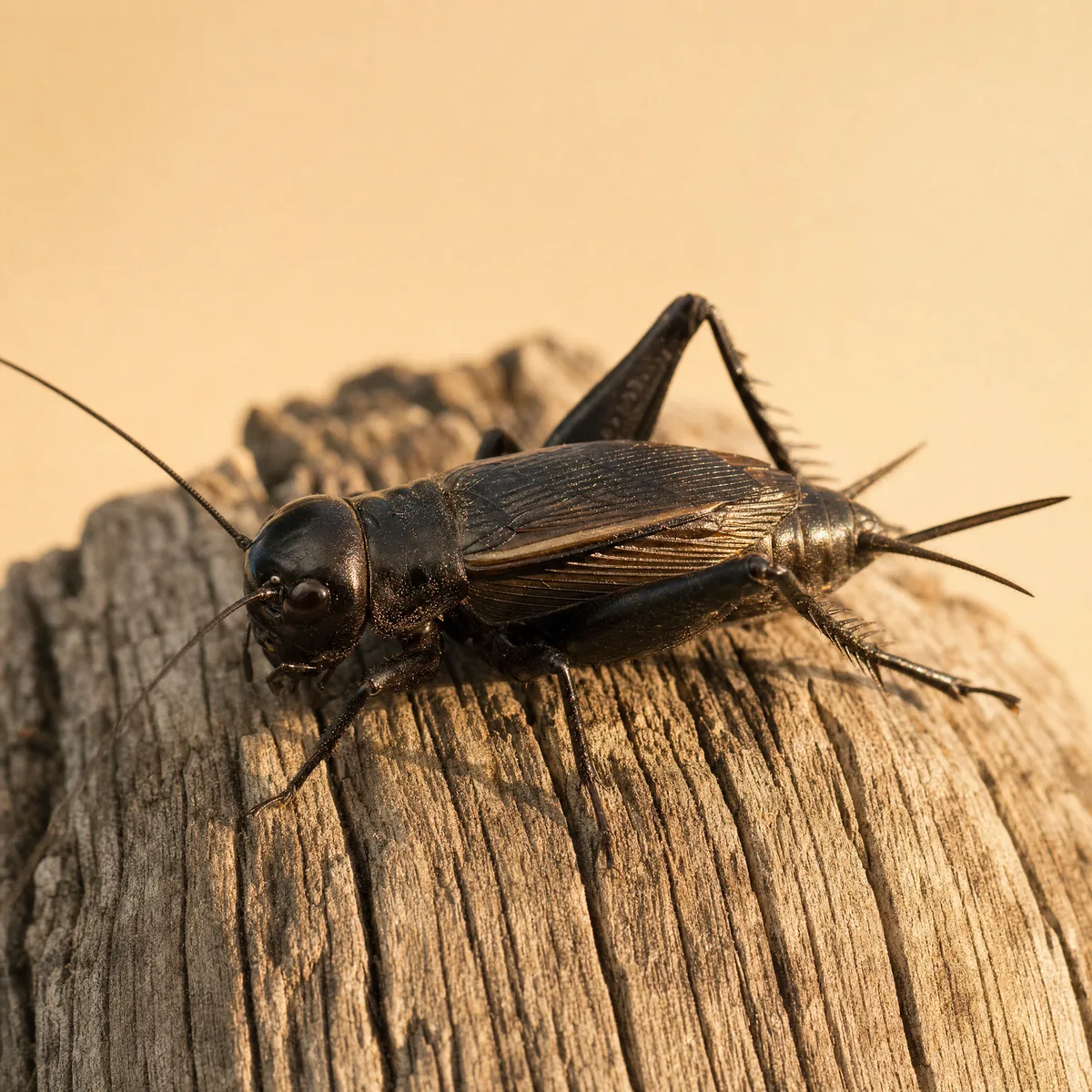
Most cricket swarms in Texas are black field crickets, part of the Gryllus assimilis complex. Each female lays 150 to 400 eggs in the soil in fall. The eggs sit there through the winter, hatch in spring, and the young are full grown about three months later (Texas A&M AgriLife). By late summer the whole crop is adult at once, and they are out looking for mates.
Light is what brings them to your door. Texas A&M calls outdoor lighting the most important single cause of severe cricket problems around buildings. Once they pile up against the house, the gaps under doors let them in, where they chew on fabric, chirp all night and die in drifts.

Seasonal pattern
When are crickets worst in Austin?
Crickets spend the winter as eggs in the soil, hatch in spring and grow up over the summer. The adults all show up at once in late summer, and August and September are the peak.
- Peak swarms
- August and September
- A swarm usually lasts four to six weeks.
- Main cause
- Outdoor lights
- Texas A&M calls lighting the most important single cause of severe cricket problems.
- Winter
- Eggs in the soil
- Last fall's eggs hatch in spring and the cycle starts again.
Warning signs
Bright lights, loud nights.
Crickets clustered on walls around porch and garage lights
Chirping from closets, walls or the garage at night
Drifts of dead crickets in corners and along door thresholds
Chewed spots or stains on clothing, drapes or rugs
Before you call anyone, turn off the outdoor lights you do not need, or swap them for yellow bug lights, which Texas A&M says attract fewer crickets. Then call us at 843-480-8699 for the rest.
How we get rid of crickets.
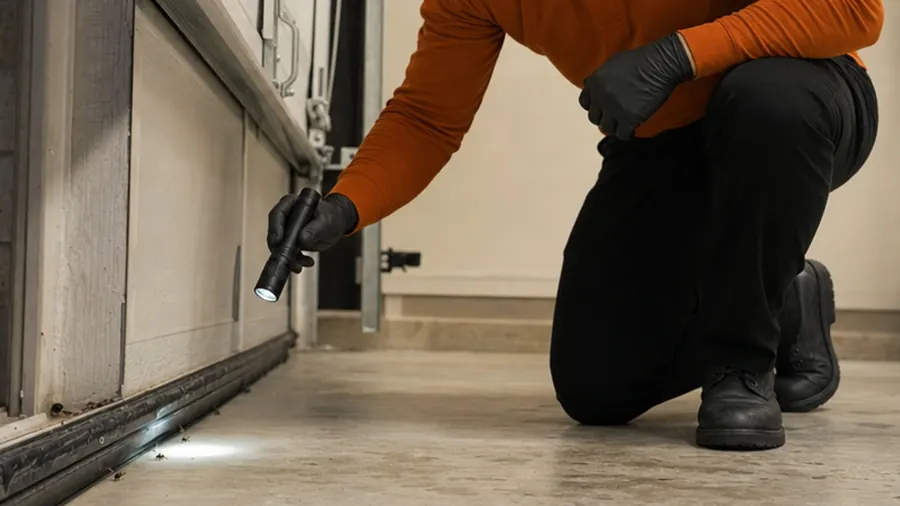
Inspect
We find where they get in: garage door seals, door gaps and weep holes, and the lights pulling them to the house.

Treat
Bait and a treatment band along the foundation, where crickets gather at night.
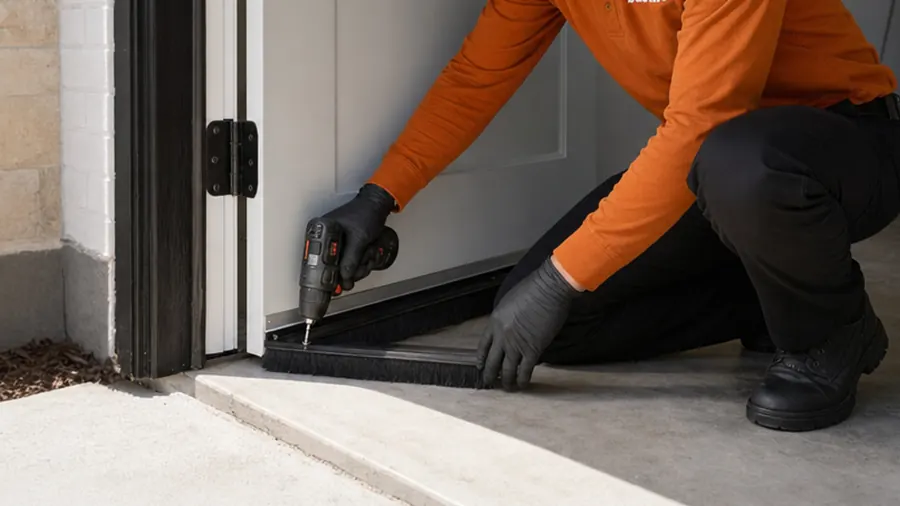
Seal
Door sweeps and gap sealing, so the next swarm stays outside.
How to tell what you have got.
Field crickets and camel crickets need different fixes. Where you see them, and when, tells you which one you have.
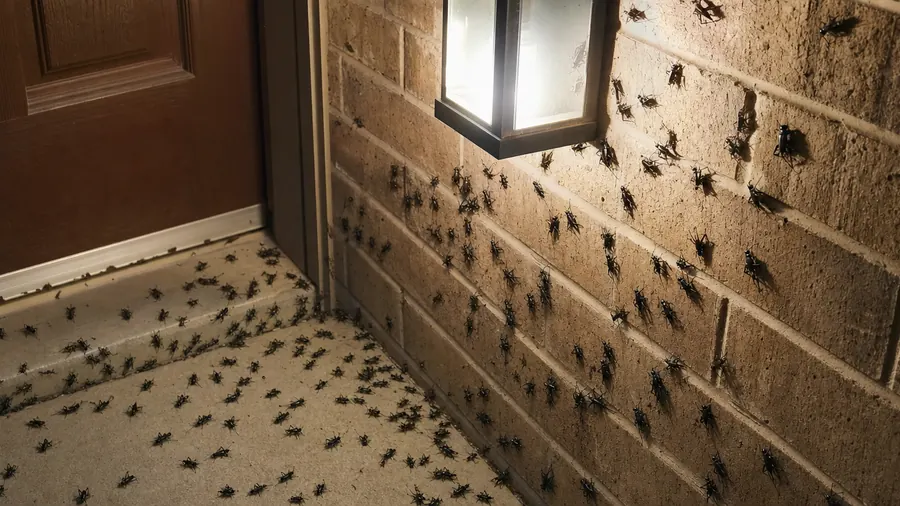
Black field crickets packed around a light in September. Texas A&M says buildings lit up at night draw the biggest numbers during the fall mating season.
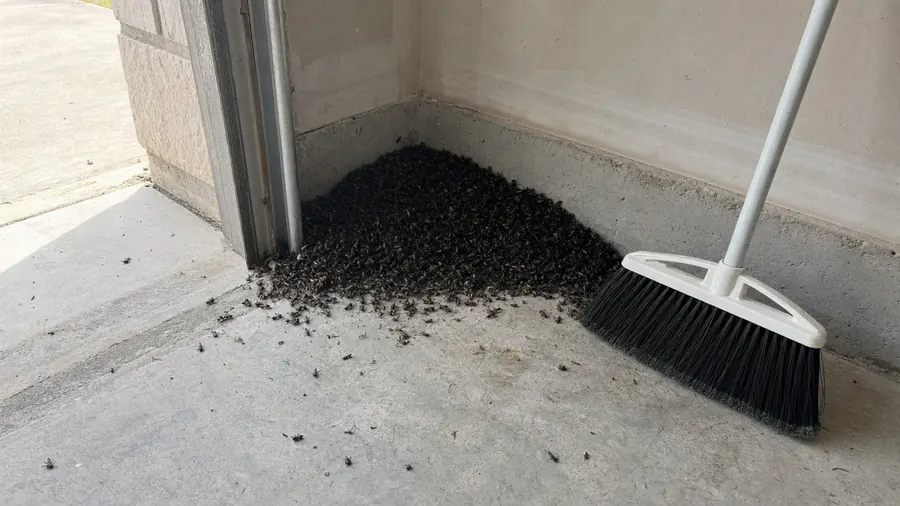
Dead crickets pile up fast and start to smell. Sweep them up and close the gap under the door, or the next night brings more.
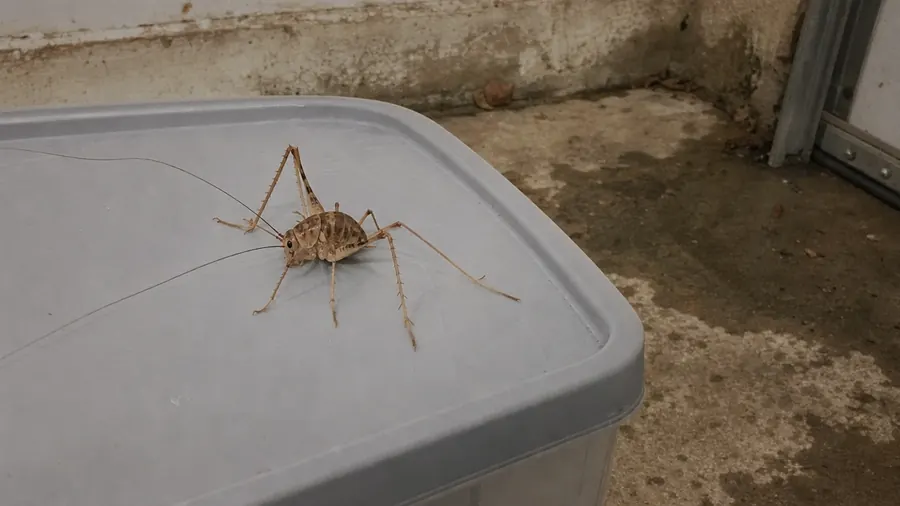
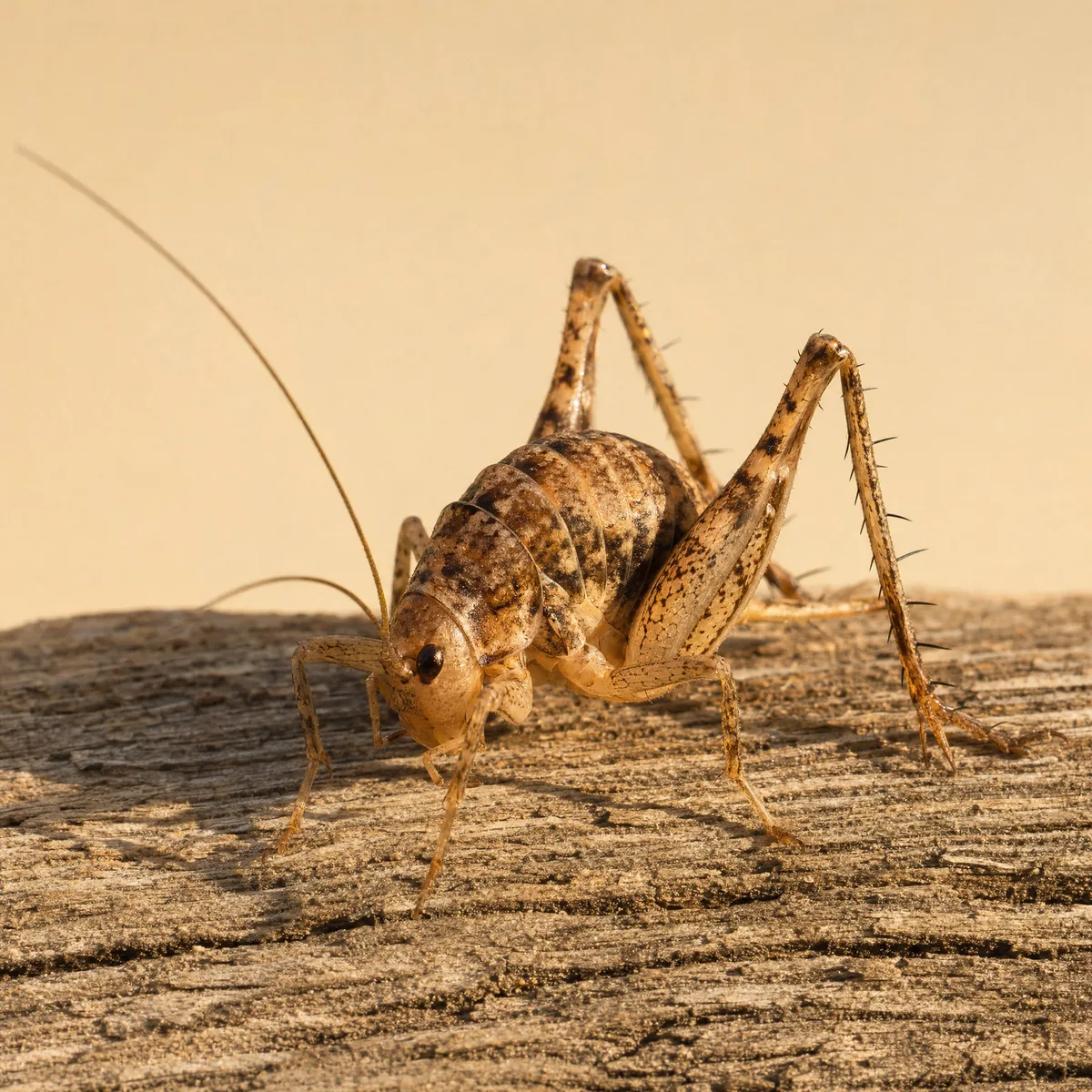
Tan, humpbacked and wingless, so it never chirps. Camel crickets want damp and dark, not light, so the fix is drying out the garage or crawl space.
Know your pest
The crickets you might find in Central Texas.
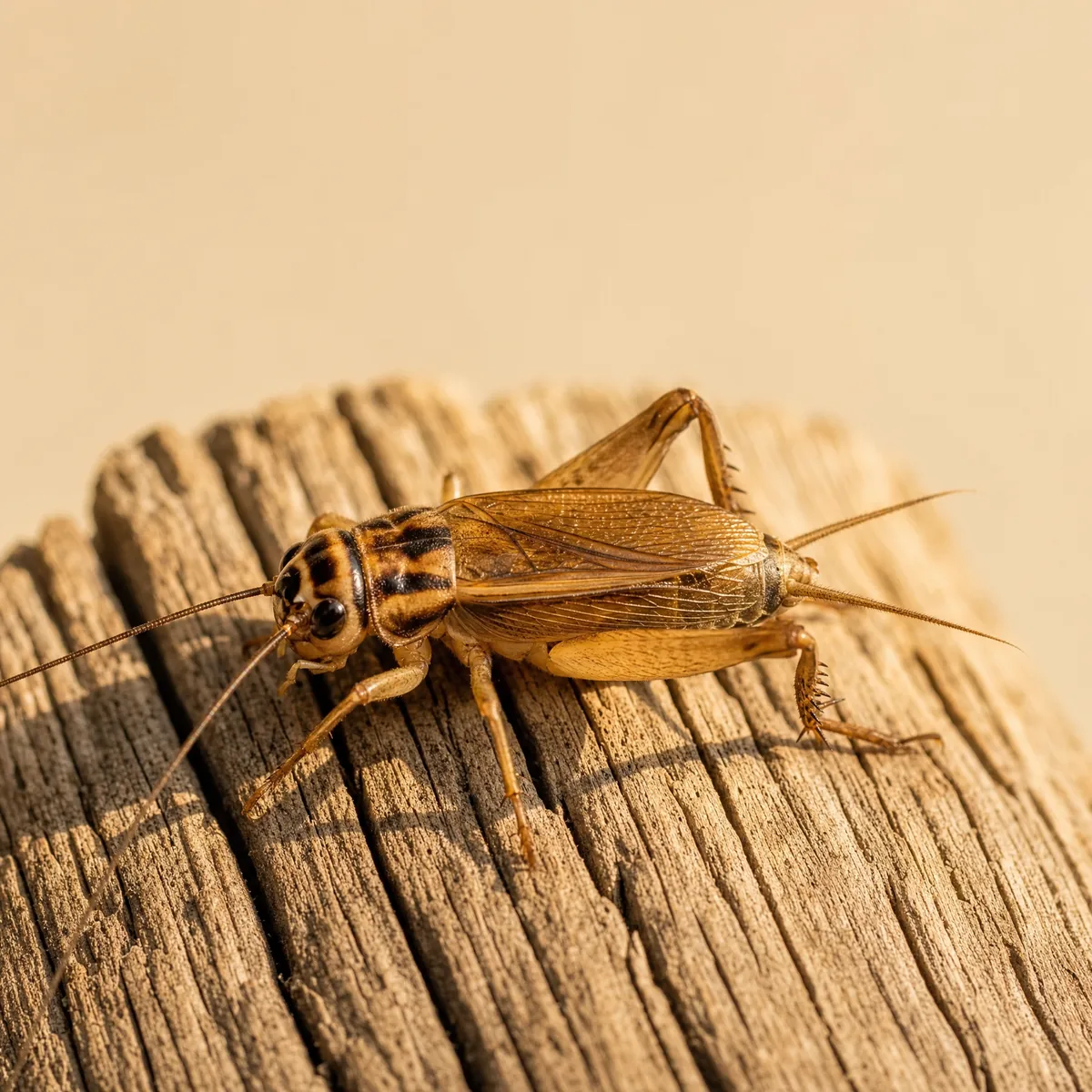
Three turn up around Austin homes. Two chirp and come to lights. The third is silent and hides in damp, dark places.
Not sure what you have got? Text a photo to 843-480-8699 and we will tell you.
Pest-Free Guarantee
They come back? So do we, free.
Free re-treatments between scheduled visits on any recurring plan.
What it costs
Cricket control is included in the general pest plan.
Crickets ride on the recurring general pest plan at no extra charge. The foundation band and the entry points get treated every visit, and if the swarm shows up between visits, the re-treatment is free.
| General pest planRecurring | One-time treatmentSingle visit | |
|---|---|---|
| What it is for | Keeping crickets and the other pests down year-round | Clearing one swarm |
| Right for you if | They come back every August | You want one cleanup before an event or a sale |
| What you get | Full TriBarrier™ every visit, foundation, yard and property line | One full TriBarrier™ treatment |
| If they come back | We re-treat free, with no limit and no trip fee | A return visit is a new charge |
| Other pests covered | Ants, spiders, cockroaches, scorpions, wasps and rodents | Crickets only |
| Price | From $66 a month* | Quoted per job* |
Light pulls them in and gaps let them inside. The recurring plan treats the foundation every visit and covers the swarm when it comes, so you are not paying again every fall.
* Starting price. Your exact number depends on home size, lot size and current pest pressure.
Cricket Control, answered straight.
Why are there so many crickets in Austin right now?
If it is late summer or early fall, that is the normal cycle. Texas A&M says field cricket numbers peak in August and September, and AgriLife Today says the swarms usually last four to six weeks, often set off by the first cool fronts. The eggs laid last fall hatched in spring, and the whole generation is now adult and looking for mates.
Do crickets bite or carry disease?
No. Texas A&M says they do not sting or bite. The damage is to things: crickets chew clothing, drapes and wall coverings and can stain them, and dead crickets pile up quickly and smell.
How do I stop crickets coming to my house at night?
Start with the lights. Turn off outdoor lights you do not need, and swap the rest for low-pressure sodium or yellow bug lights, which Texas A&M says attract fewer crickets than regular bulbs. Then close the gaps: nylon-bristle or rubber door sweeps on exterior and garage doors, and good seals around windows. A treated foundation band handles the ones that still come.
Why can't I find the cricket chirping in my house?
Only male crickets chirp, to claim territory and call females, and they hide in the dark during the day. Look behind and under the fridge, the dryer and the water heater, in closets and along baseboards. Follow the sound at night with the lights off.
What is the difference between a cricket and a camel cricket?
Field and house crickets have wings, chirp, come to lights and swarm in late summer. Camel crickets are tan, humpbacked and wingless, so they never chirp, and they look for damp, dark places like garages and crawl spaces instead of light. Lights matter for the first kind. Moisture matters for the second.
Does the $66 monthly pest plan cover crickets?
Yes. Crickets are on the recurring general pest plan from $66 a month at no extra charge, along with ants, spiders, cockroaches, scorpions, wasps and rodents. If a swarm shows up between visits, the re-treatment is free.
More questions? Read the full FAQ or get a free quote.
Other pests we treat
One recurring plan covers the everyday pests, add-ons cover the rest, and termites are their own job.
Every plan includes the full TriBarrier™ treatment. See all services →
Answered 24 hours · Austin, TX
Ready to be done with it?
Quotes are free, there is no inspection fee, and the phone is answered around the clock. Same-day service is usually open across the metro.