Austin, TX and 25 more cities
Springtail control
Those tiny gray specks that jump at the back door, float in the pool and live in the plant pots. Treated where the damp is.
Quick answers
Springtail control in Central Texas: the quick facts
Springtails are tiny wingless insects, about 1/25 inch long, that jump with a folded tail and live in damp soil, mulch and leaf litter. They come inside when outdoor numbers boom, usually in wet weather, and a wave indoors rarely lasts more than a couple of weeks. They do not bite. Springtails are covered on the general pest plan from $66 a month.
- Size
- About 1/25 inch
- Barely visible, like a moving speck of pepper.
- The tell
- They jump
- A folded tail springs them into the air when disturbed.
- Risk
- None to people
- They do not bite, sting or infest people or pets.
- Included in
- The $66/mo plan
- Springtails are on the general pest plan.
Written by the Bastion Pest Control service team · Licensed & insured in Texas · Last updated
Springtails in Central Texas.
Springtails are among the most primitive insects there are. Typical ones are about 1/25 inch long, gray and wingless, and under magnification you can see a tail folded under the body that springs out and flips them into the air (Texas A&M AgriLife). Outdoors they are harmless recyclers, living in damp soil, mulch and leaf litter and feeding on decaying plants, fungi and bacteria.
They only become a problem in numbers. When outdoor populations boom in wet weather, thousands end up on porches, door thresholds, window sills and the surface of the pool. Indoors they point to moisture: overwatered plants, a damp bathroom or a slow leak.

Seasonal pattern
When are springtails worst in Austin?
Springtails follow moisture. Numbers outdoors rise with spring rain and peak around Austin's two wettest months, May and October, which is when they show up at doors and windows. Each indoor wave is usually short.
- Wettest months
- May and October
- Austin averages 5.04 and 3.91 inches, the two highest months at Camp Mabry.
- Each wave
- A couple of weeks
- Texas A&M says indoor infestations are usually short-lived.
- Year round
- In potted plants
- Wet potting soil can keep a small population going indoors.
Warning signs
Specks that jump.
Tiny gray specks on door thresholds and window sills after rain
A film of black dust floating on the pool or a birdbath
Specks hopping on wet potting soil or in plant saucers
Clusters in a damp bathroom, laundry room or under a sink
If the specks jump, they are springtails, not fleas, and they will not bite. Let potted plants dry out, fix drips and point sprinklers away from the house, then call us at 843-480-8699 if they keep coming.
How we get rid of springtails.
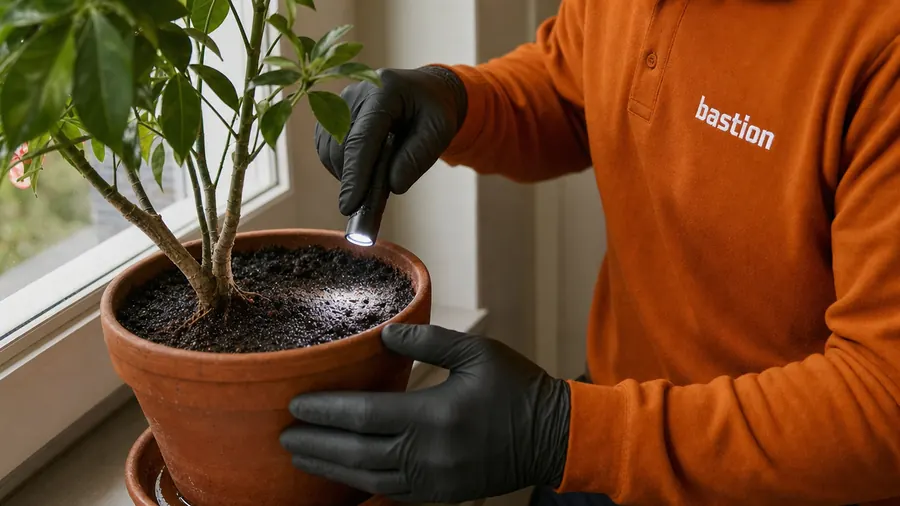
Inspect
We find the damp spots feeding them: potted plants, wet mulch, leaks and sprinklers hitting the wall.
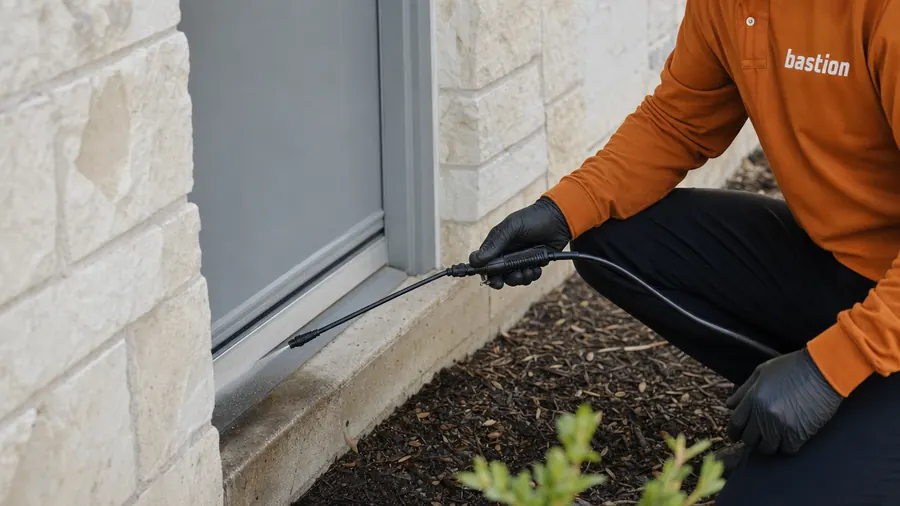
Treat
A band along the foundation and the door thresholds, where they gather and crawl in.
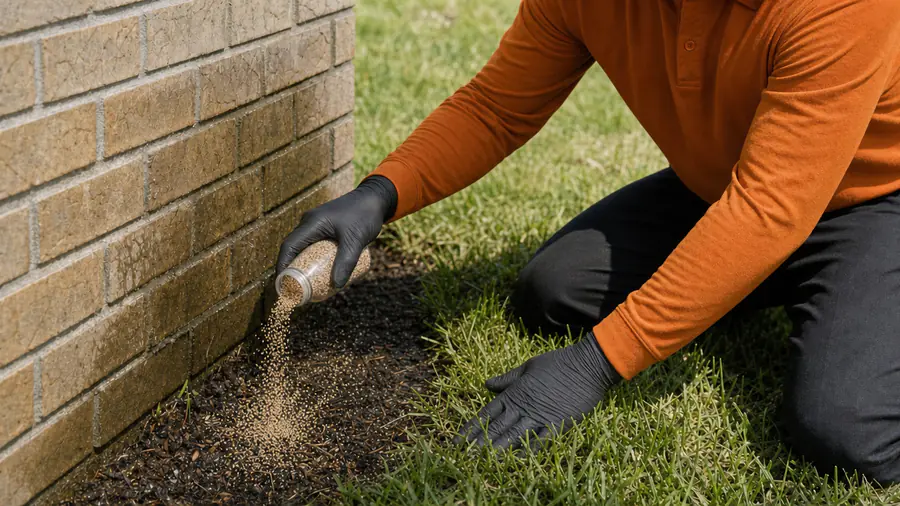
Mulch beds
Granules worked into the damp mulch along the foundation, where they breed right against the house.
How to tell it is actually springtails.
Springtails are too small to identify without a lens, so where they show up and the fact that they jump tell you most of what you need.
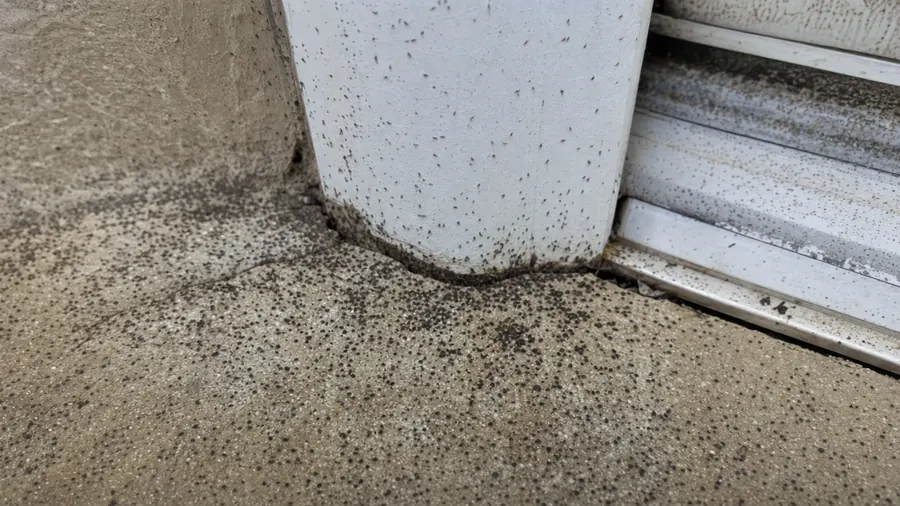
After a few days of rain, they collect like spilled pepper at the threshold. Touch the specks and they jump.
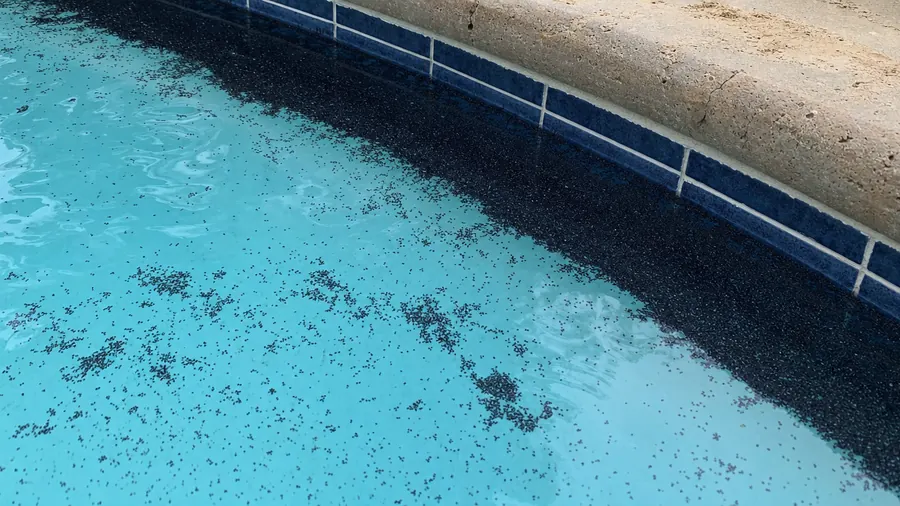
A film of black dust on the water that will not skim away is usually springtails, floating on the surface tension.
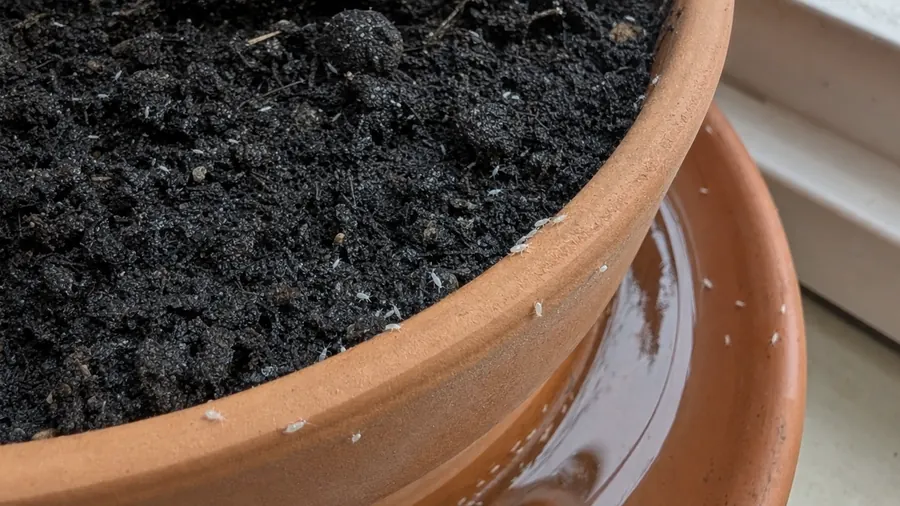
Wet potting soil can keep springtails going indoors all year. Let the soil dry between waterings and empty the saucer.
Know your pest
The springtails you might find in Central Texas.
Texas has many springtails and most look alike to the naked eye. These two are the ones Texas A&M names, and they show the two shapes you are most likely to see.
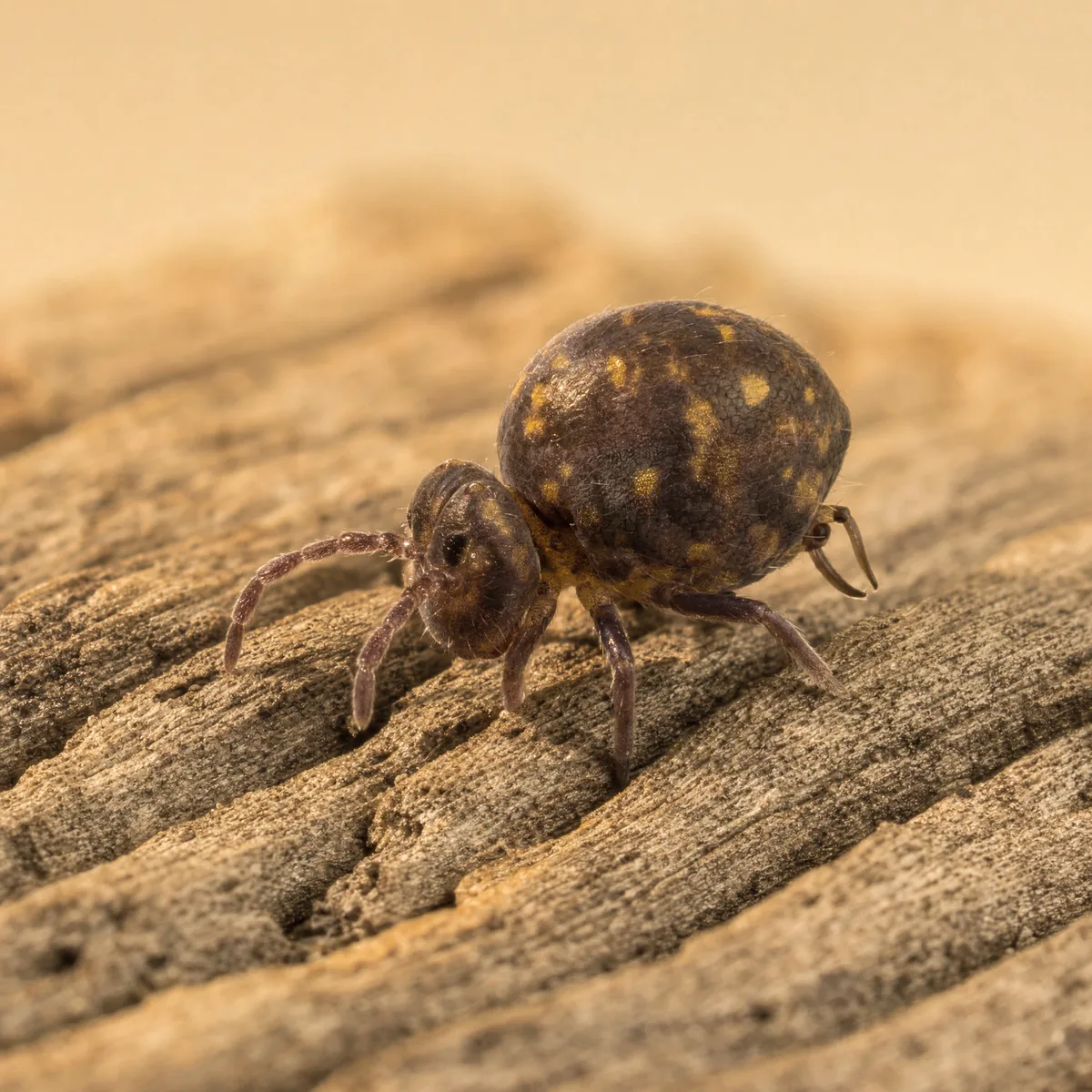
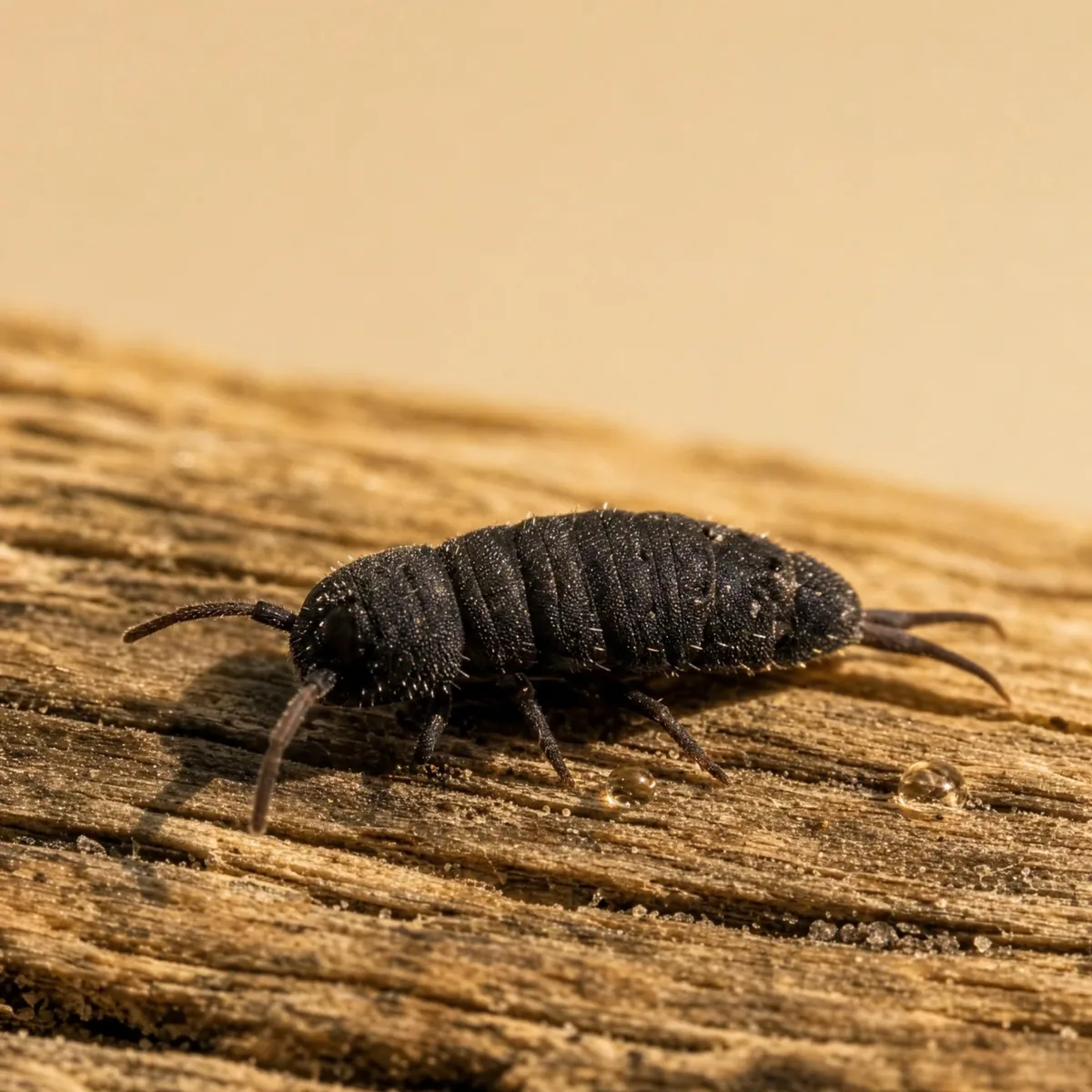
Not sure what you have got? Text a photo to 843-480-8699 and we will tell you.
Pest-Free Guarantee
They come back? So do we, free.
Free re-treatments between scheduled visits on any recurring plan.
What it costs
Springtail control is included in the general pest plan.
Springtails ride on the recurring general pest plan at no extra charge. The foundation and the thresholds get treated, and if a wave shows up between visits, the re-treatment is free.
| General pest planRecurring | One-time treatmentSingle visit | |
|---|---|---|
| What it is for | Keeping springtails and the other pests down year-round | Clearing one wave after a rain |
| Right for you if | They come back after every wet spell | You want one cleanup before an event |
| What you get | Full TriBarrier™ every visit, foundation, yard and property line | One full TriBarrier™ treatment |
| If they come back | We re-treat free, with no limit and no trip fee | A return visit is a new charge |
| Other pests covered | Ants, spiders, cockroaches, scorpions, wasps and rodents | Springtails only |
| Price | From $66 a month* | Quoted per job* |
Springtails come with the moisture. A treated foundation helps, but drier beds, drier pots and sprinklers aimed away from the house are what keep the next wave small.
* Starting price. Your exact number depends on home size, lot size and current pest pressure.
Springtail Control, answered straight.
Are springtails harmful?
No. Texas A&M says that unlike fleas, springtails do not bite and will not infest or annoy people or pets. They are a nuisance in numbers and can nibble seedlings, but they do not damage the house.
Are these springtails or fleas?
Both are tiny and both jump, but springtails are gray to black, about 1/25 inch long, and turn up in damp places like door thresholds, pools and potted plants, even in homes with no pets. Fleas are reddish-brown, flattened side to side, and bite, usually around the ankles. If nobody is getting bitten, it is almost certainly springtails.
Why are there springtails in my house?
Moisture. Springtails need damp places, so indoors they point to overwatered houseplants, a bathroom without good ventilation or a leaking pipe. Texas A&M entomologist Wizzie Brown notes that potted plants brought in from outside are a common way they get in.
How long does a springtail invasion last?
Usually not long. Texas A&M says indoor infestations are typically over in less than a couple of weeks, once the weather dries out. They come back with the next long wet spell, which in Austin usually means May or October.
How do I keep springtails away?
Take away the damp. Let potted plants dry between waterings and empty the saucers, point sprinklers away from the walls, pull wet mulch back from the foundation, and fix leaks and drips. Run the bathroom fan. A treated foundation band then handles the ones that still come to the door.
Does the $66 monthly pest plan cover springtails?
Yes. Springtails are on the recurring general pest plan from $66 a month at no extra charge, along with ants, spiders, cockroaches, scorpions, wasps and rodents. If a wave shows up between visits, the re-treatment is free.
More questions? Read the full FAQ or get a free quote.
Other pests we treat
One recurring plan covers the everyday pests, add-ons cover the rest, and termites are their own job.
Every plan includes the full TriBarrier™ treatment. See all services →
Answered 24 hours · Austin, TX
Ready to be done with it?
Quotes are free, there is no inspection fee, and the phone is answered around the clock. Same-day service is usually open across the metro.