Termite control in Round Rock, TX.
Two kinds of ground meet in Round Rock: Edwards limestone west of I-35 and blackland clay to the east. Subterranean termites will work either one. Our answer is in-ground bait stations that the colony ends up feeding on itself, plus official WDI reports when you sell. Stations are quoted on inspection, and the WDI report is quoted when you book.
Written by the Bastion Pest Control service team · Licensed & insured in Texas · Last updated
Termite control in Round Rock, the short version
I-35 splits Round Rock into limestone to the west and blackland clay to the east. Termites work the soil on both sides, so what matters is where the damp ground meets your slab.
- Swarm season
- February to May
- Native swarmers usually fly in March and April, in daylight, says Texas A&M.
- Native vs Formosan
- Almost always native
- Texas A&M places Formosans mainly on the upper Gulf Coast. They fly after dark.
- How they get in
- Mud tubes
- Pencil-width soil tunnels up the slab edge, on either side of I-35.
- What we use
- Bait stations
- Buried in the beds by the slab, then checked on a set schedule.
- Home sale
- WDI report
- Written on the form the Texas Department of Agriculture prescribes.
- Price
- Quoted on inspection
- The number comes before any work starts.
In Round Rock, termite work is quoted on inspection.
A Forest Creek ranch on a slab from the late 80s and a Teravista two-story on new concrete are not the same job, so we see the house before we name a price. Foundation type, the length of wall and where termites are working set the number, and you have it in hand before we start. Termite work sits outside the monthly general pest plan, and a WDI report for a sale is quoted when you book.
See full pricing details →In-ground bait stations around the house, priced per property after we see it. A WDI report for a home sale is quoted when you book.
| Bait stationsTreatment | WDI reportHome sale | |
|---|---|---|
| What it is for | Finding and working the colony in the soil around the house | An official wood destroying insect report for a buyer or lender |
| Right for you if | You have seen mud tubes, swarmers or damage, or want stations in the ground | You are buying or selling a home in Round Rock |
| What you get | An inspection, stations set in the soil around the house, and scheduled checks | A full inspection and the official report |
| Liquid barrier | Not offered. We use bait stations only | Not part of a report |
| Part of the monthly plan? | No, termite work is its own job | No, booked on its own |
| Price | Quoted on inspection | Quoted when you book |
Termite work is not part of the $66 or $166 monthly plan. You get the number before we start.
How we treat termites in Round Rock.
No sprayer in this one. Subterranean termites feed inside wood and soil you cannot see, so the work comes in three steps: find them, put bait where they forage, and keep checking until the feeding stops.
 1
1
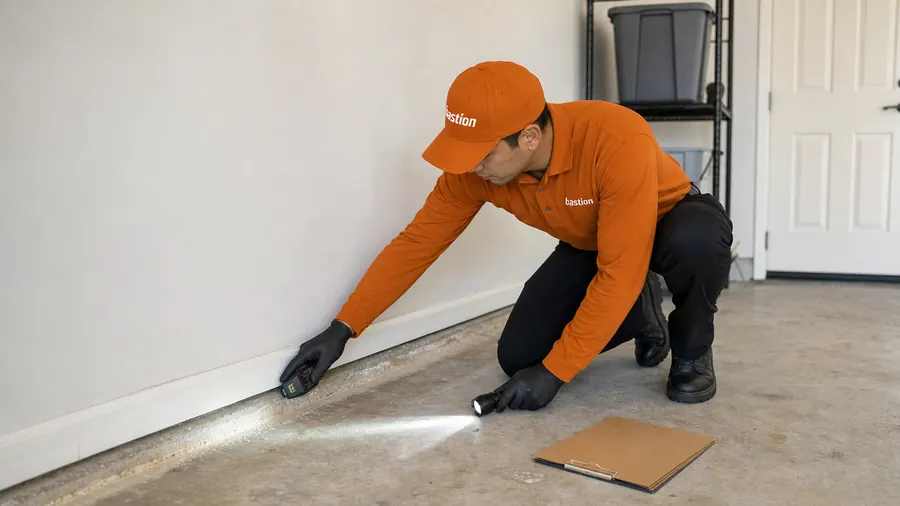
Inspect
Before a single station goes in, we find the activity. Flashlight, probe and moisture meter along the garage slab joint, the slab edge and each plumbing opening. On the older Forest Creek and Stone Oak slabs near Brushy Creek, the settled cracks get extra attention.
 2
2
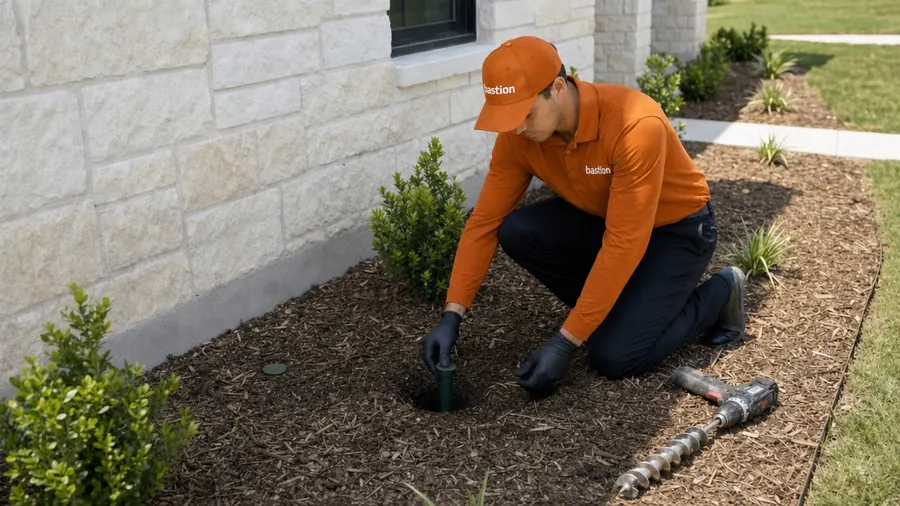
Install stations
Stations are set into the soil around the house, mostly in the mulch beds along the foundation, where the workers already forage. Workers feed on the bait and take it back to the colony. The active ingredient works slowly by design, so everyone gets a share. Free labor, courtesy of the termites.
 3
3
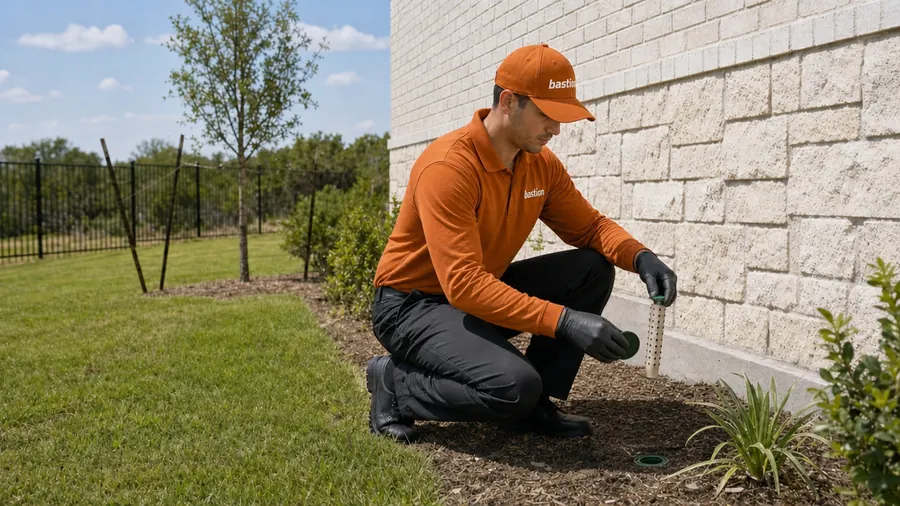
Monitor
Every station gets checked on a schedule, and we add bait wherever termites are feeding. Complete control can take several weeks, per Texas A&M. We leave the stations in after the colony is gone, since a new one can move into the yard later, on either side of I-35.
Mud tubes on the slab or wings by a window in Round Rock?
Free inspection quote, same-day service most days, and a firm number in hand before we start.

What brings termites to Round Rock houses.
Termite control in Round Rock changes with the ground. West of I-35, the soil is thin over limestone, so the damp pockets termites need sit right at the slab edge, the garage joint and the sprinkler valve boxes. East through Teravista, Paloma Lake and Chandler Creek, blackland clay holds rainwater, and wet soil against a foundation is exactly what a subterranean colony is looking for. Heavily irrigated lawns on both sides keep the strip along the house damp. From that soil the workers run pencil-width mud tubes up over the concrete, and most owners never see more of the colony than that.
Round Rock sits right on the geological seam, and I-35 roughly marks it: Edwards limestone on the west side through Behrens Ranch, Mayfield Ranch, Vista Oaks and Cat Hollow, heavier blackland clay to the east through Teravista, Paloma Lake and Chandler Creek. Brushy Creek crosses town west to east and carries damp ground through the middle of it, past the older streets of Forest Creek and Stone Oak, where mature canopy shades slabs poured in the late 80s. Damp soil with wood in reach is the whole termite recipe.
Here's the thing about the wings on the windowsill. The insects that left them are swarmers. They cannot damage wood, and they only live about a day. Swatting them is housekeeping, not termite control, and the colony will never know. The ones eating your trim are workers, and workers stay sealed inside the soil, the wood and their mud tubes, out of reach of anything you could spray. So we go the other way. A bait station puts food where workers already forage. They eat it, haul it home and share it with the rest of the colony, and because the active ingredient acts slowly, it travels through the colony before it kills. Texas A&M counts that in weeks, so we keep checking stations on a schedule rather than calling it done after the first visit. Clay east of I-35 or limestone west of it, the stations go wherever the workers are already digging.
Limestone west, clay east
I-35 roughly marks the line. Thin soil on one side, wet clay on the other.
Brushy Creek through town
The creek runs west to east and keeps damp ground through the middle of Round Rock.
Three decades of building
Late-80s slabs have settled cracks. New builds have fresh joints. Both get checked.
Irrigated turf
Heavily watered lawns keep the soil against the foundation damp all summer.
When termites swarm in Round Rock.
Spring is when termites show themselves. Texas A&M puts swarms mostly between February and May, with March and April the usual months. Underneath, the colony never takes a month off, so a slow swarm season says nothing about your baseboards.
Native subterranean termites swarm in daylight, often after a spring rain. Equal-size wings on a Round Rock sill in these weeks mean it is time to call.
After dark, drawn to porch lights and windows. Texas A&M records them mostly on the upper Gulf Coast, so one this far inland would be unusual. Send us a photo anyway.
Clay side or limestone side, the colony keeps eating through every month. Swarms are just the part that shows.
What we actually find on termite jobs in Round Rock.
Every photo below came off a real Round Rock service call. Mud tubes, discarded wings and hollowed wood are the three things that tell you it is termites and not ants.
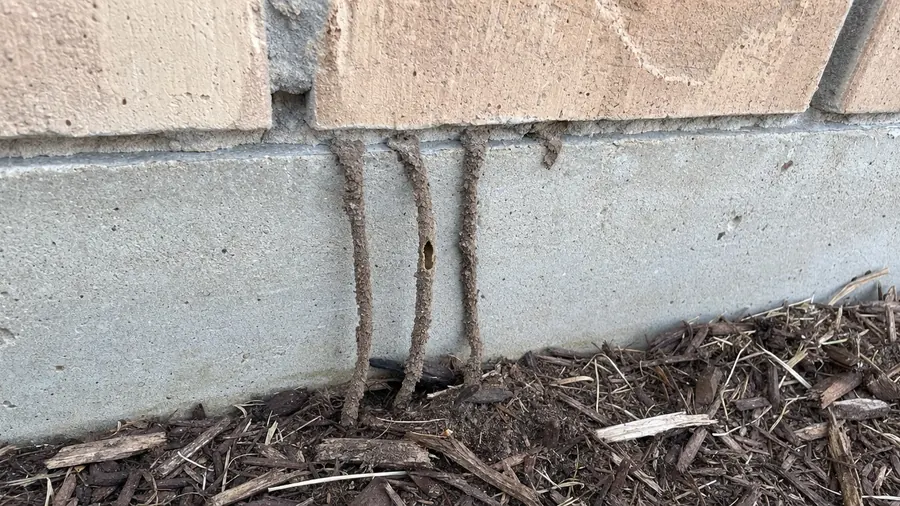
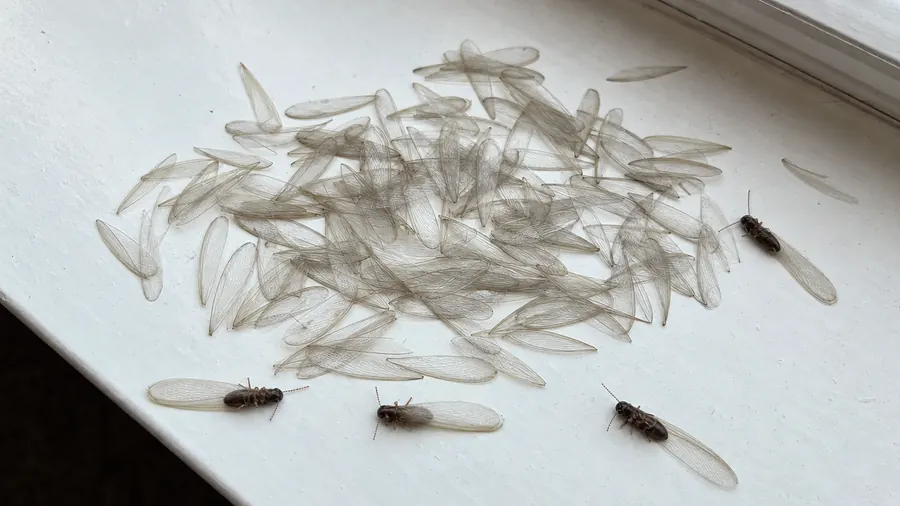
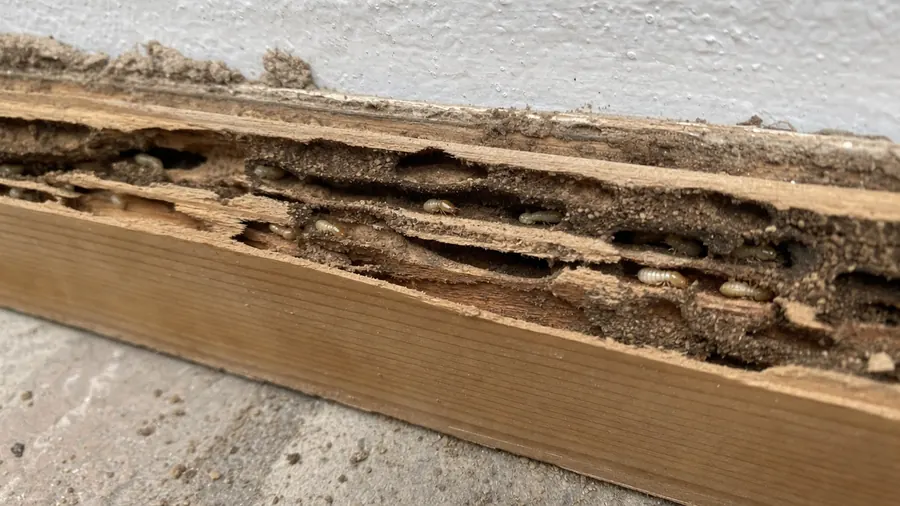
Photographs from actual Round Rock jobs. Every one of these is common locally. 843-480-8699 and we will identify it for you.
The termites we find in Round Rock.
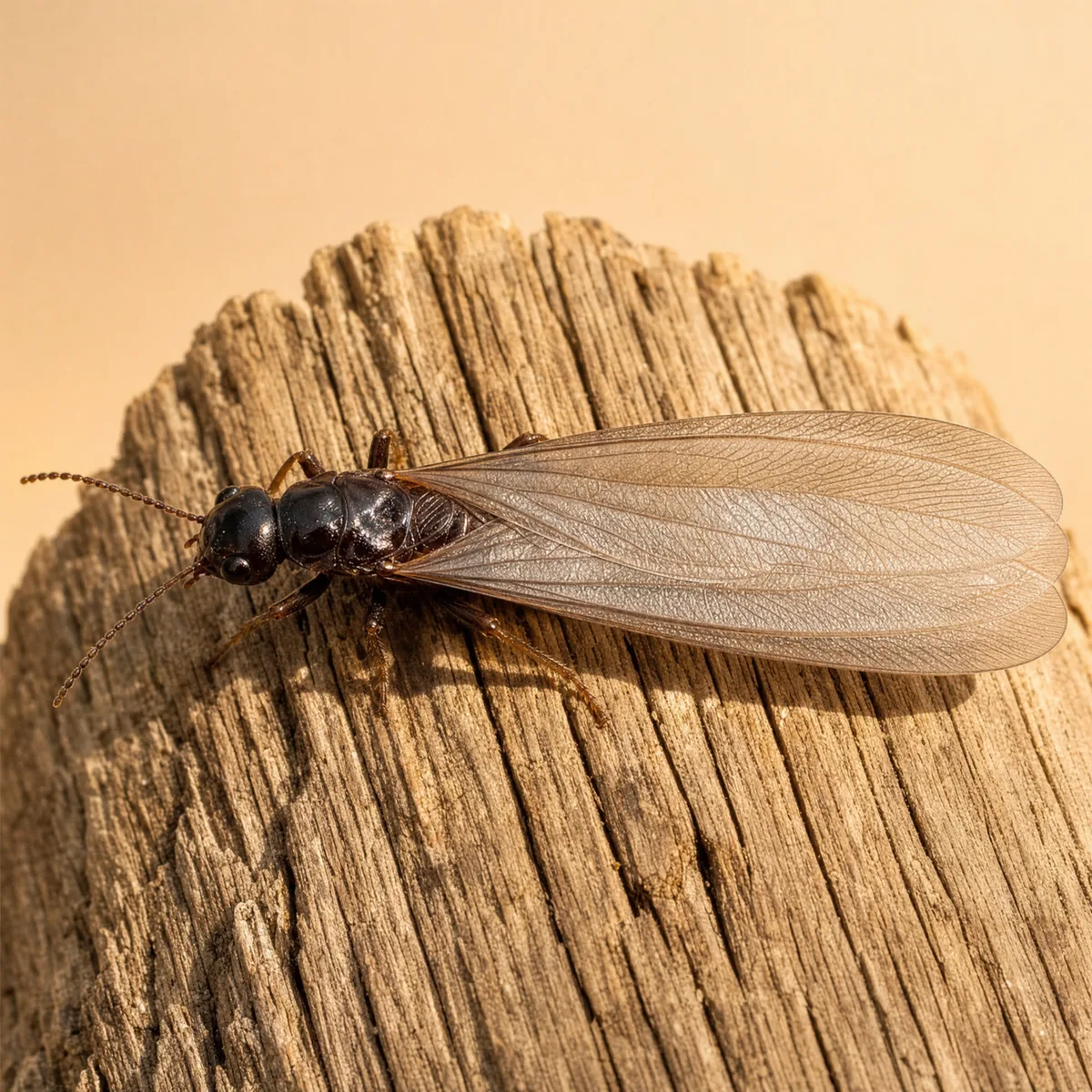
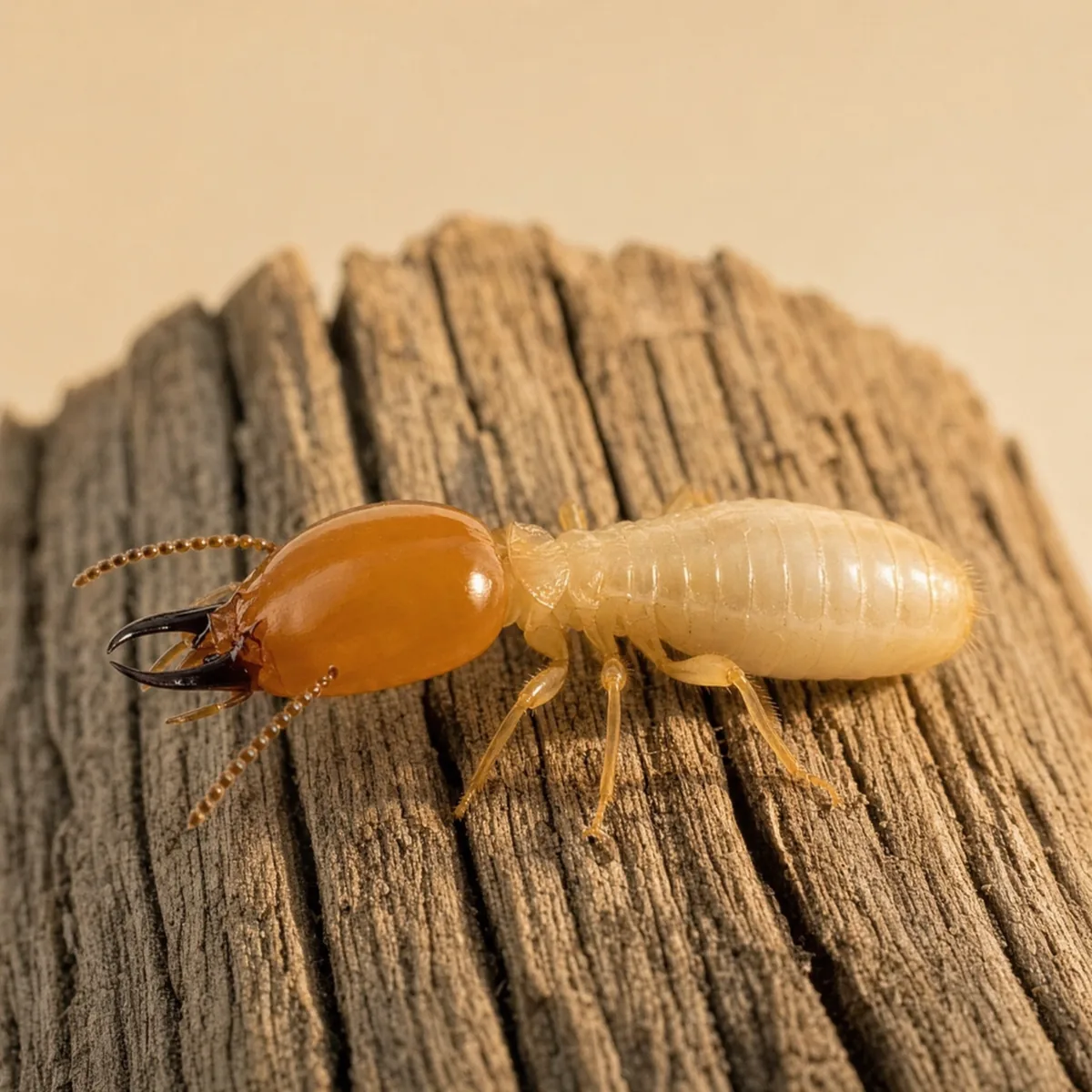
Every termite in a Round Rock yard lives in the soil and comes up to the wood. These are the four you are most likely to meet, and the swarmer is the one most people actually see. Workers do the damage, soldiers guard the tunnels, and swarmers start new colonies.
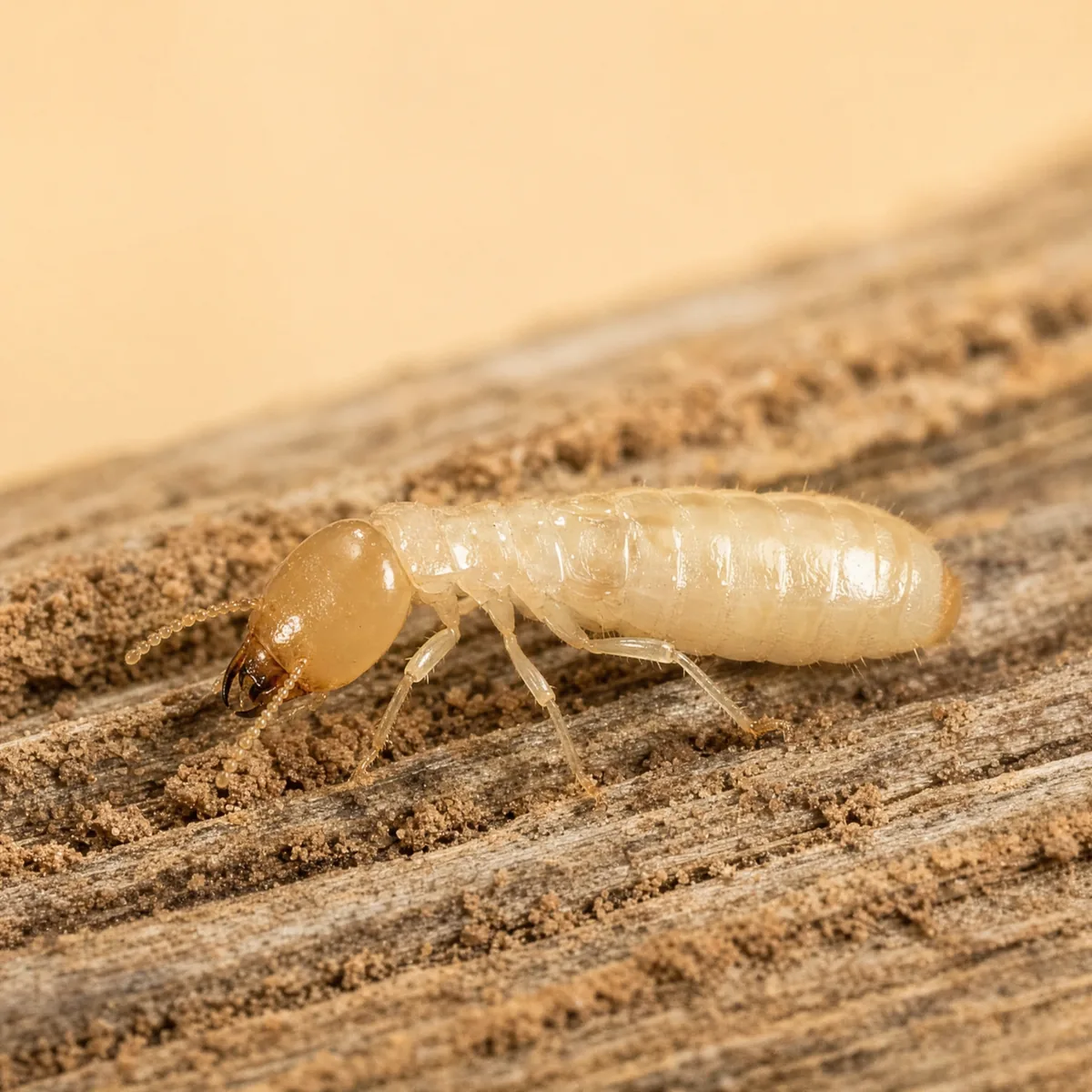
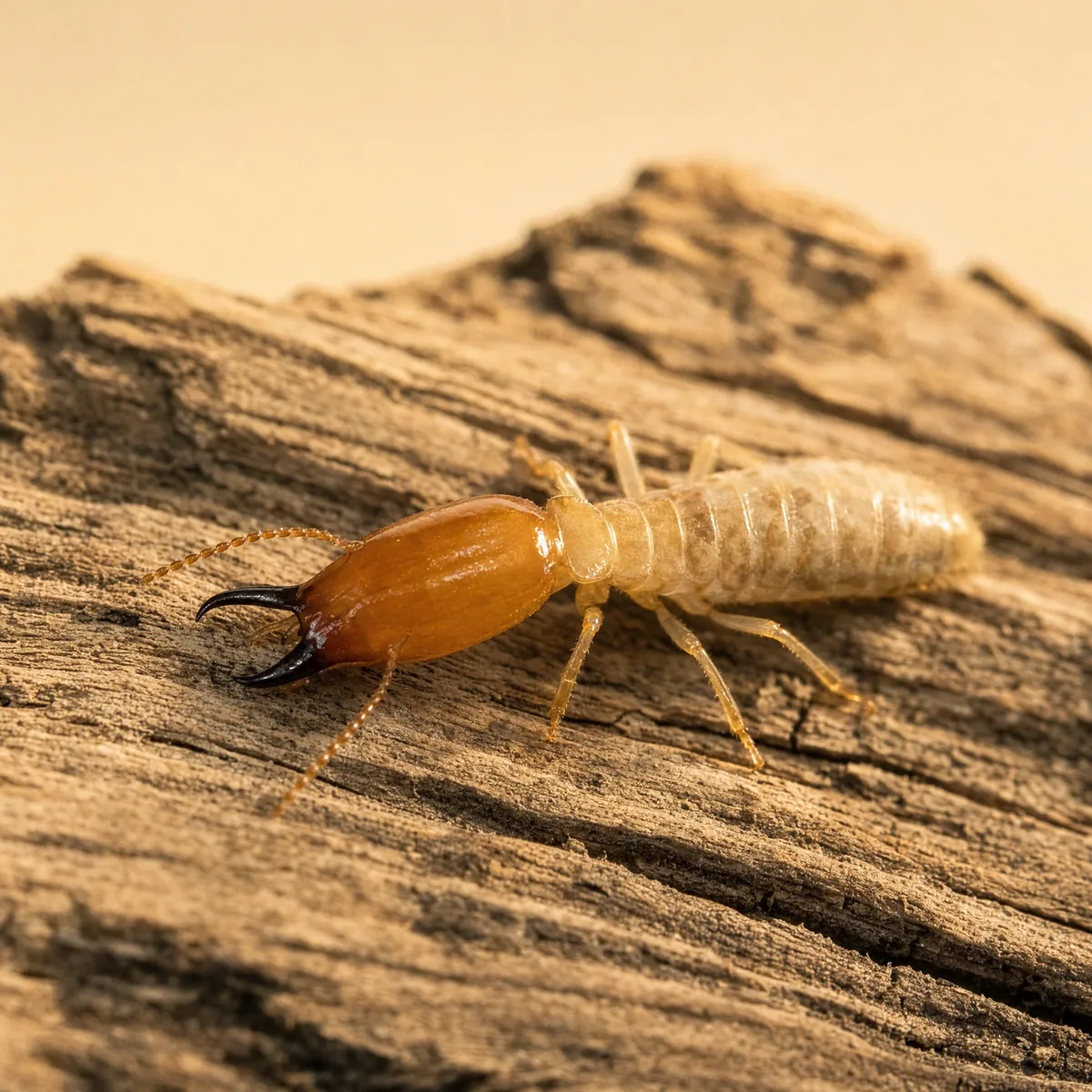
Signs termites are already in the house.
Most termite jobs start with something left behind, not a live termite. West of I-35 the thin soil over limestone puts the evidence right at the slab, and east of it the wet clay keeps the tubes coming, so tell us your side of the highway when you call. Bag a few swarmers or freeze them, remember where they came out, and send a sharp photo. That often answers termite or flying ant before a truck rolls.
- Thin brown mud tubes running up the slab from the soil
- Little piles of same-size wings on a sill in spring
- Winged termites emerging inside on a March or April day
- Baseboards or trim that sound hollow, blister or give under a screwdriver
- Dried soil packed into cracks or along the baseboard
- Tubes around plumbing openings or the garage slab joint
- Mud tubes rising from a thin bed over limestone on a west-side lot
- Mud tubes on the slab where clay stays wet in Teravista or Paloma Lake
Where we do termite work in Round Rock.
West of I-35 in Behrens Ranch, Mayfield Ranch and Cat Hollow, the soil over the limestone is thin, so the damp ground termites need sits right at the slab. East in Teravista, Paloma Lake and Chandler Creek, the clay holds water against the foundation. Forest Creek and Stone Oak add older slabs under mature canopy along Brushy Creek. Tell us your street and we will tell you which of those three we expect to find.
Not listed? We almost certainly cover it, see pest control in Round Rock or the full service area.
Round Rock termite questions.
What does termite treatment cost in Round Rock?
There is no set price, because a Stone Oak slab from the late 80s and a new Teravista build are different jobs. We inspect first, then quote on slab or pier and beam, the length of the foundation and where termites are active. That inspection is free and carries no obligation. Termite work is not included in the monthly general pest plan, and a WDI report for a sale is quoted when you book.
How do I tell a termite swarmer from a flying ant?
Look at the waist, the antennae and the wings. Termites are thick through the middle, with straight, beadlike antennae and four wings all the same size. Flying ants have a pinched waist, elbowed antennae and a front pair of wings longer than the back. Put one on a white paper towel and zoom in with your phone, or use our termite vs ant swarmer guide. Ants? Then you want ant control in Round Rock.
I found swarmers inside my Round Rock house. Do I have termites?
Almost certainly, if they came out indoors. Swarmers leave from a colony already feeding in that wall, though the swarmers themselves cannot damage wood and only live about a day. Swarmers in the fence or the woodpile are a different story, since that colony may never have reached the house. Walk the slab edge for mud tubes either way.
What months do termites swarm in Round Rock?
Round Rock runs on the same calendar as the rest of the state. Per Texas A&M, swarms are most common February to May, usually March and April, and native subterranean termites fly by day. Formosan termites fly at night in late May and early June, toward lights. Either way, the colony in the soil keeps feeding every month.
Can you do a liquid termite treatment instead of bait?
No. In-ground bait stations are the only termite treatment we offer, alongside WDI reports for home sales. The colony does the distributing: workers eat the bait in the soil and feed it to the rest. We check stations on a schedule and top up bait where termites are feeding, and they stay in the ground afterward in case a new colony moves into the yard.
Should I get a termite inspection before selling in Round Rock?
Often, yes. A WDI (wood destroying insect) inspection is a look at the visible areas for termites, other wood destroying insects and the conditions that invite them, and in Texas it goes on the form the Texas Department of Agriculture prescribes. VA loans require one anywhere in the state, and other lenders and buyers may ask for one too. The report is quoted when you book, and we are licensed in Texas.
Does it matter which side of I-35 my Round Rock house is on?
It changes where we look, not what we use. West of I-35 in Vista Oaks or Cat Hollow, the soil over the limestone is thin, so the damp strip termites need is right against the slab, under the beds and around the valve boxes. East in Teravista or Paloma Lake, blackland clay holds rainwater against the foundation. Either side, it is bait stations in the soil where workers forage, quoted on inspection.
Can termites come up through an older Round Rock slab?
They use whatever gap the slab gives them. A slab poured in the late 80s in Forest Creek or Stone Oak has had decades to settle, and hairline cracks and plumbing penetrations are routes from the soil to the wood. Look for mud tubes at plumbing openings and dried mud packed in cracks or along baseboards. We inspect those first, set stations in the soil outside, and point out any gap worth fixing.





Termite control in nearby cities
Termite work is on the menu in every city on our routes, not just Round Rock. The bait stations and WDI reports are the same everywhere, the dirt is not. Choose a city below, see the full termite control overview, or browse the whole service area.
Answered 24 hours · Round Rock, TX
Termites found early. Then we keep watching.
Free inspection quote, same-day service most days across Round Rock, and the number before any termite work begins.