Termite control in Cedar Park, TX.
Cedar Park termites live in the thin soil over the limestone, not in the wood, and they reach your house through mud tubes up the slab. We treat them with in-ground bait stations the workers carry home to the colony, and we write official WDI reports for home sales. Bait stations are quoted on inspection, and a WDI report is quoted when you book.
Written by the Bastion Pest Control service team · Licensed & insured in Texas · Last updated
Termite control in Cedar Park, the short version
Thin soil over limestone, damp ground along the foundation, sprinklers running hard. That is the Cedar Park termite setup in one line, and the six tiles below are the fine print.
- Swarm season
- February to May
- Most often March and April, by day, per Texas A&M. The colony feeds all year.
- Native vs Formosan
- Almost always native
- Formosans are mostly a Gulf Coast termite in Texas, and they swarm at night.
- How they get in
- Mud tubes
- Pencil-width soil tunnels from the ground up the slab edge.
- What we use
- Bait stations
- Set in the soil around the house and checked on a schedule.
- Home sale
- WDI report
- On the official Texas Department of Agriculture form.
- Price
- Quoted on inspection
- You get the number before any work begins.
Termite work is quoted on inspection.
Whether the house sits over the karst in Buttercup Creek or under the cedar in Twin Creeks, we look before we price. Slab or pier and beam, how many feet of foundation, and where the activity is all move the number, so you get it before any work begins. Termites are a separate service, not part of the monthly general pest plan, and a WDI report for a home sale is quoted when you book.
See full pricing details →In-ground bait stations around the house, priced per property after we see it. A WDI report for a home sale is quoted when you book.
| Bait stationsTreatment | WDI reportHome sale | |
|---|---|---|
| What it is for | Finding and working the colony in the soil around the house | An official wood destroying insect report for a buyer or lender |
| Right for you if | You have seen mud tubes, swarmers or damage, or want stations in the ground | You are buying or selling a home in Cedar Park |
| What you get | An inspection, stations set in the soil around the house, and scheduled checks | A full inspection and the official report |
| Liquid barrier | Not offered. We use bait stations only | Not part of a report |
| Part of the monthly plan? | No, termite work is its own job | No, booked on its own |
| Price | Quoted on inspection | Quoted when you book |
Termite work is not part of the $66 or $166 monthly plan. You get the number before we start.
How we treat termites in Cedar Park.
Three steps, and none of them is a spray. Termites live in the soil and feed out of sight, so the job is finding where they are working, putting bait where the workers forage, and checking it until the colony stops feeding.
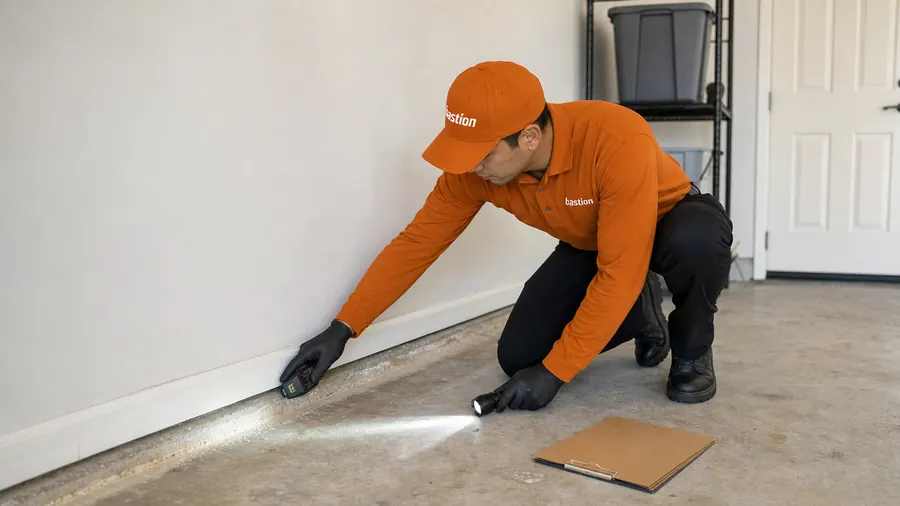 1
1
Inspect
Nobody installs anything until we know where they are. A flashlight, a probe and a moisture meter along the garage slab joint, the slab edge and every plumbing opening. On thin limestone soil, anywhere water collects against the house gets a second look.
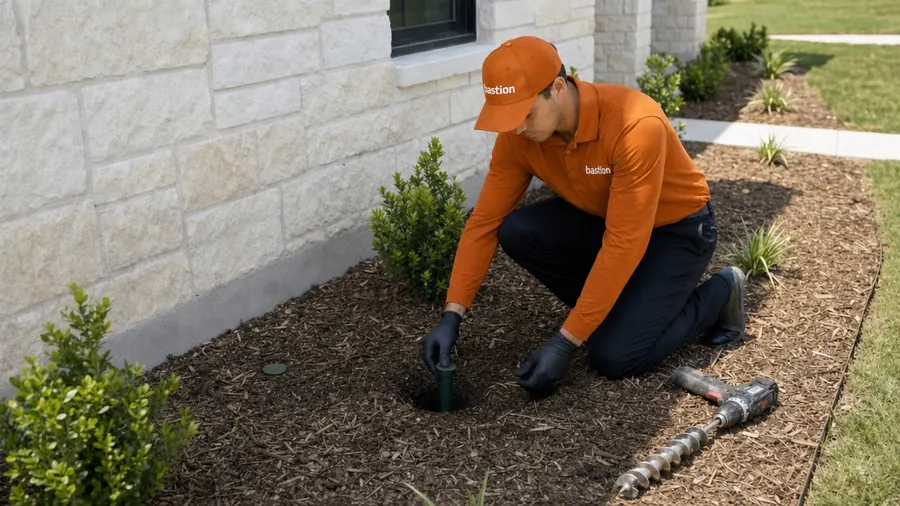 2
2
Install stations
In-ground bait stations go into the soil around the house, in the beds along the foundation where workers forage. Workers find the bait, eat it and carry it home to feed the colony. It is slow on purpose, so it spreads before it works. Your termites are now doing the delivery for us.
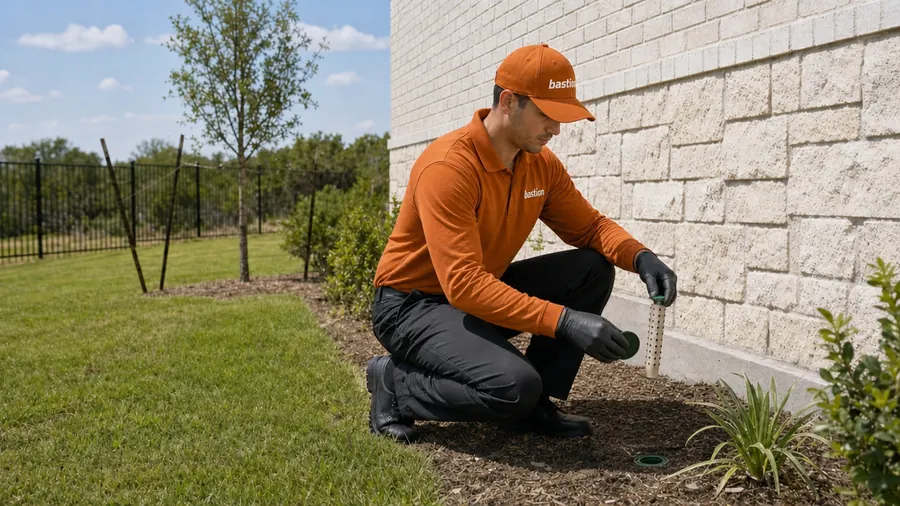 3
3
Monitor
We check every station on a schedule and add bait where it is being eaten. Nobody can predict exactly when termites will find a new station, and Texas A&M says complete control can take several weeks. The stations stay in after the colony is gone, because a new colony can move into the yard later.
Seeing mud tubes or wings in your Cedar Park home?
Free inspection quote, same-day service most days, and you get the number before any work begins.

Why termites find their way into Cedar Park homes.
Cedar Park's ground is not what most people picture when they think of termites. Subterranean termites live in the soil and stay out of the open air, and here there is only a thin layer of soil over fractured limestone. The damp pockets that do exist sit right where the house meets the ground: the slab edge, the garage joint, the sprinkler valve boxes and the plumbing openings. Heavy irrigation on rocky ground keeps that strip wet. Workers build pencil-width mud tubes from that damp soil up over the concrete, and the tube is the only part of the colony you will ever see unless the wood gets opened up.
Above that limestone, Cedar Park is Hill Country transition. Ashe juniper (cedar) and live oak cover, the Brushy Creek and Cypress Creek corridors, and greenbelt and preserve land run right up against Buttercup Creek, Twin Creeks and Cypress Canyon. Because topsoil over the rock is shallow, landscaping here leans on limestone walls, boulder beds and flagstone. Heap soil or wood mulch against the brick on top of that and you have built the easy way in. Texas A&M wants the soil kept 6 to 8 inches below the top of the foundation or the siding, and firewood and lumber kept off the walls.
Here is why spraying the wings on the windowsill does nothing. Swarmers cannot damage wood and live about a day. They are the colony's announcement, not the colony. Kill every one of them and the colony will not notice. The workers doing the eating are still in the soil and inside the wall, and they almost never come out into the open, so there is nothing to spray. Bait stations work the other way around. Workers find the bait in the soil, eat it and carry it home to feed the rest of the colony, and the active ingredient is slow on purpose so it spreads before it works. That takes several weeks, which is why we check the stations on a schedule instead of declaring victory on day one.
Thin soil over limestone
Shallow ground puts the damp soil termites need right at the slab edge.
Heavy irrigation
Sprinklers on rocky ground keep the foundation strip wet, which suits a colony.
Cedar and oak shade
Ashe juniper and live oak keep the ground along the house damp for longer.
Beds against the brick
Soil or mulch heaped up the wall hides the slab edge where mud tubes show.
When termites swarm in Cedar Park.
The swarm is the part you see, and Texas A&M says it is most common from February to May, usually March and April. The colony under the house feeds all year, so a quiet month for swarms is not a quiet month for your baseboards.
Native subterranean swarmers fly by day, usually after spring rain. Wings on the sill this time of year are the cue to call.
At night, toward porch lights and windows. Mostly a Gulf Coast termite in Texas, so a long shot here, but worth a photo.
The colony keeps feeding in the soil and the wood all year. The swarm is only the visible part, which is why the stations get checked on a schedule.
What we actually find on termite jobs in Cedar Park.
Every photo below came off a real Cedar Park service call. Mud tubes, discarded wings and hollowed wood are the three things that tell you it is termites and not ants.
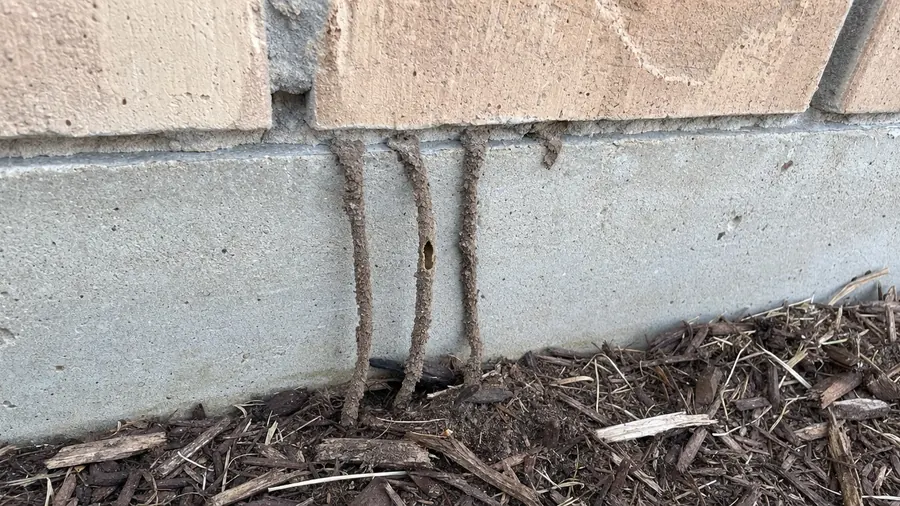
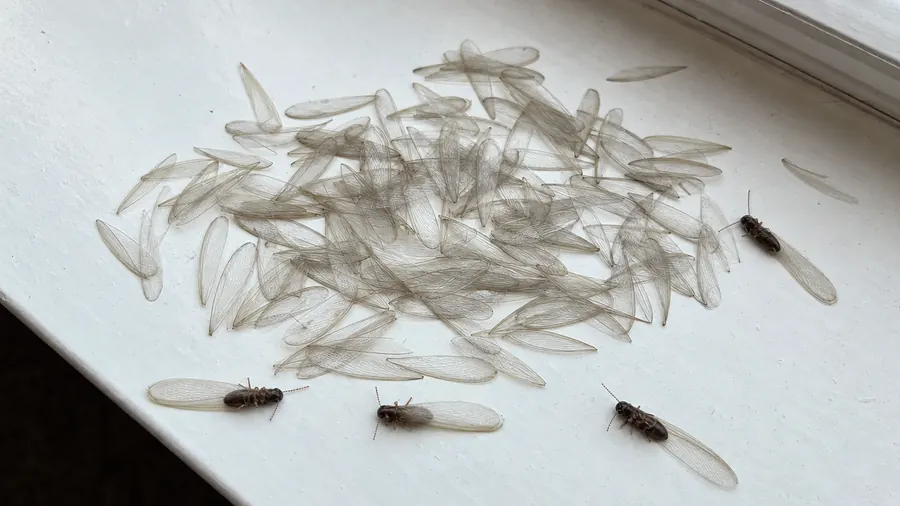
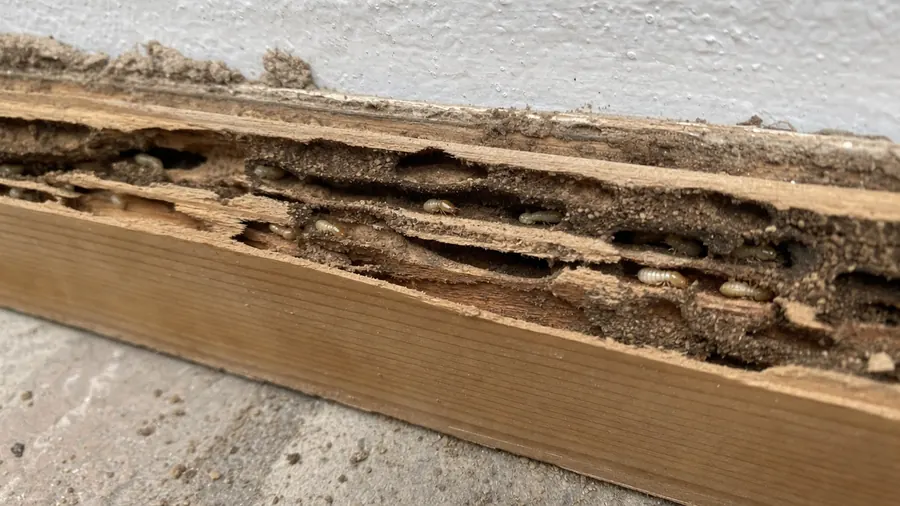
Photographs from our own Cedar Park jobs. Every one of these is common locally. 843-480-8699 and we will identify it for you.
The termites we find in Cedar Park.
Every termite in a Cedar Park yard lives in the soil and comes up to the wood. These are the four you are most likely to meet, and the swarmer is the one most people actually see. Workers do the damage, soldiers guard the tunnels, and swarmers start new colonies.
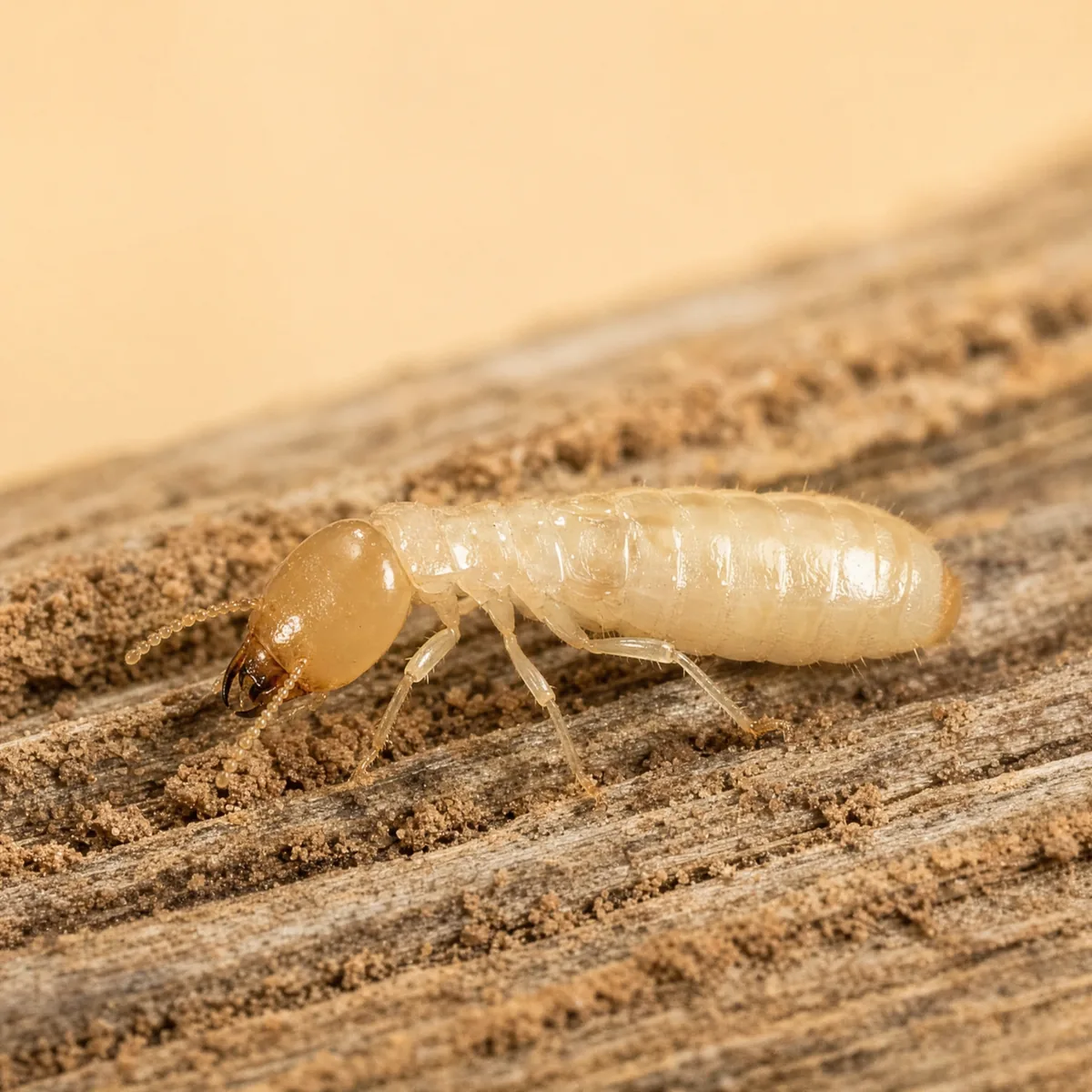
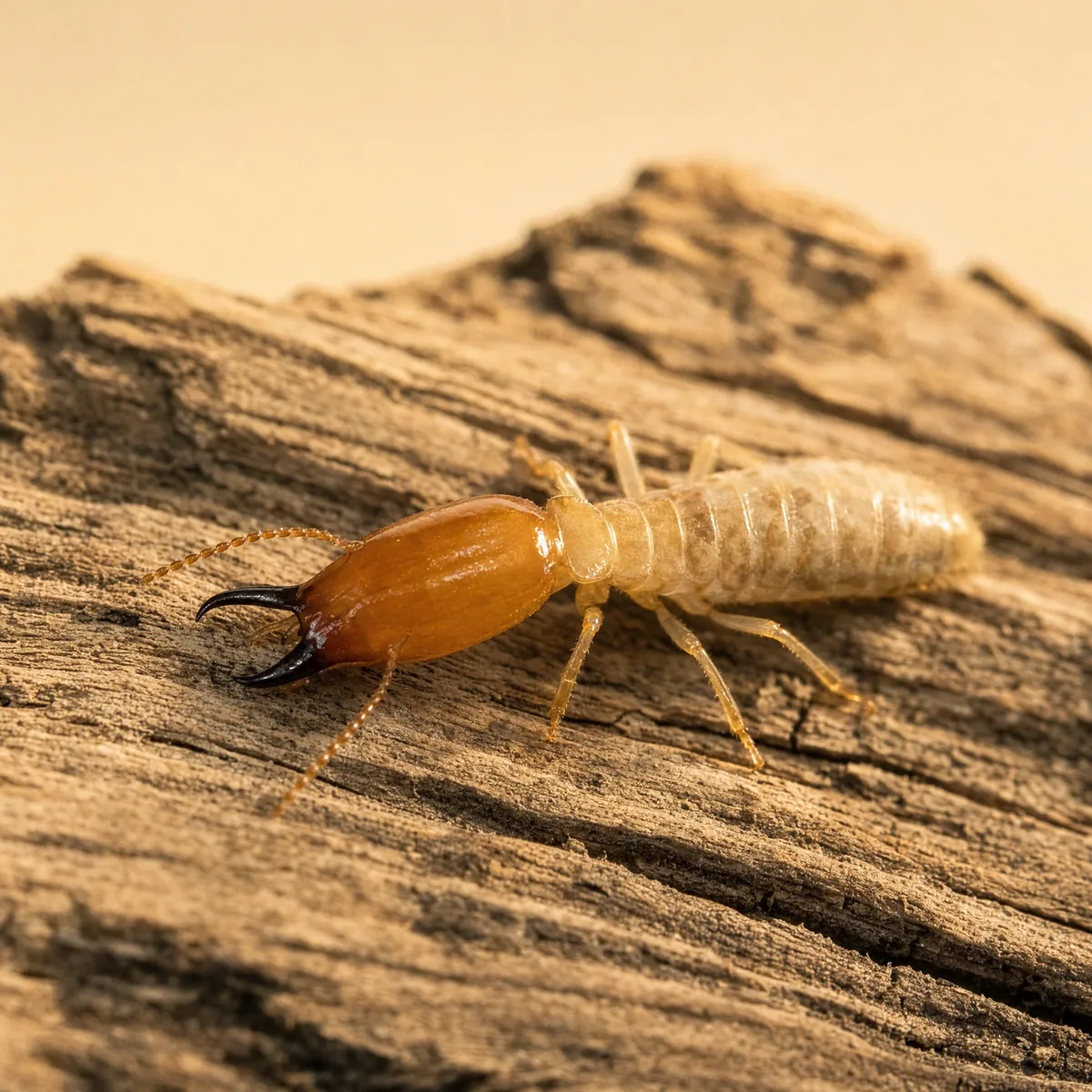
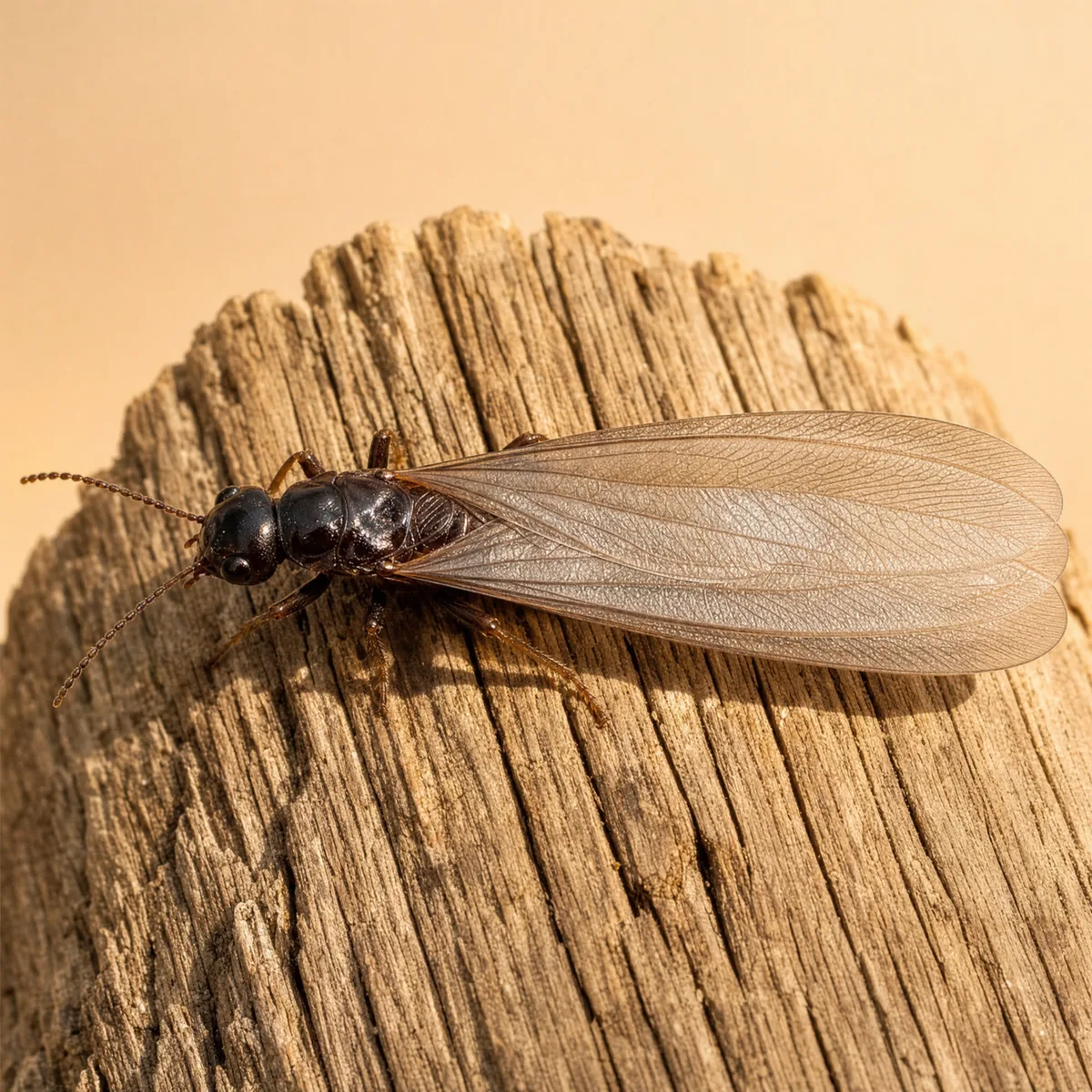
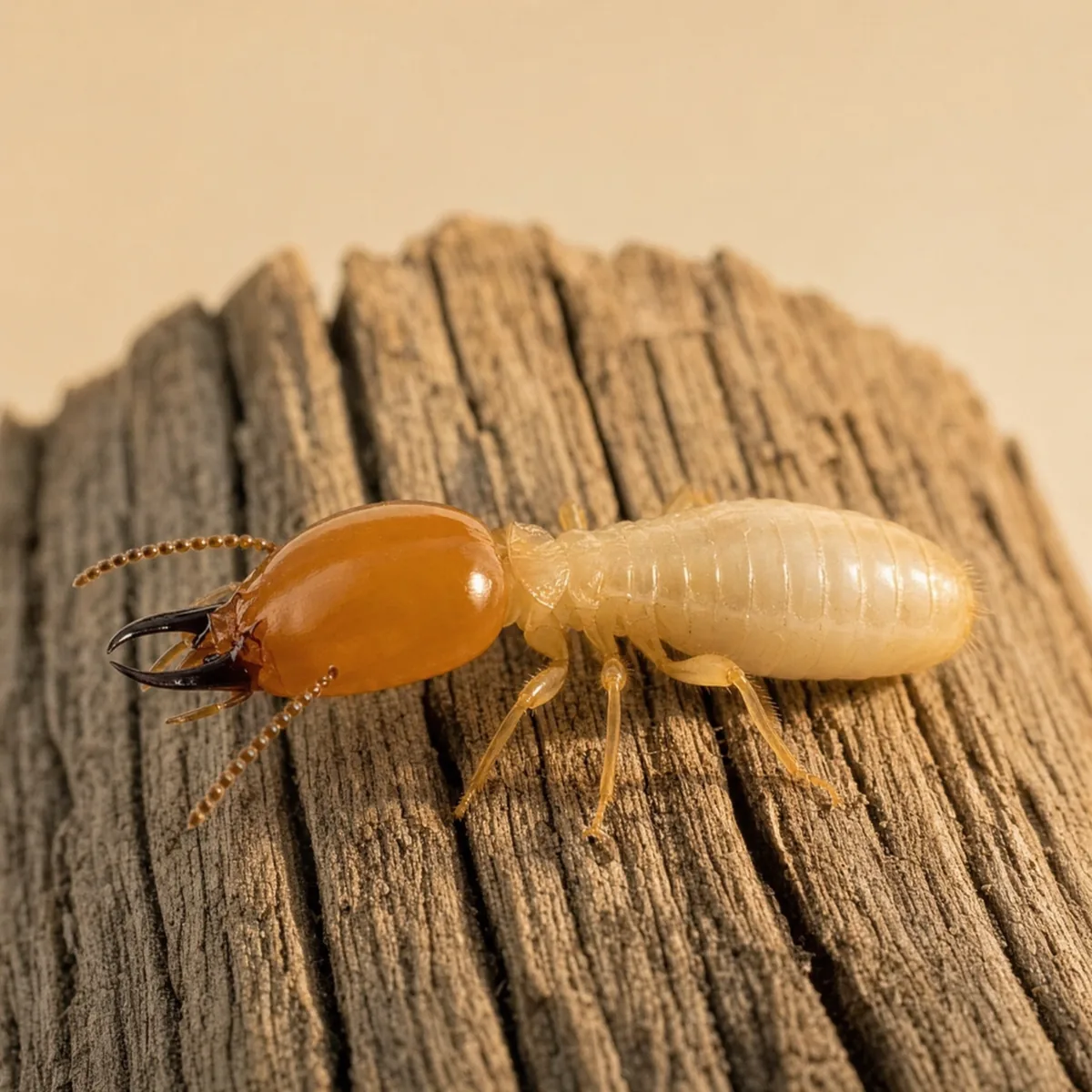
How to tell termites are working on the house.
Termites are found from what they leave far more often than from a sighting. On a Cedar Park slab, the edge where the brick meets the soil is the first place to look. Put a few swarmers in a bag or the freezer, note where they came out, and call. A clear photo is often enough to tell termites from flying ants before anyone drives out.
- Pencil-width mud tubes on the slab edge, from the soil up
- A pile of equal-size wings on a windowsill in spring
- Swarmers coming out indoors by day in March or April
- Trim that sounds hollow, blisters or gives under a screwdriver
- Dried mud packed in cracks or along baseboards
- Mud tubes at plumbing openings or the garage slab joint
- Mud tubes climbing out of a bed against the brick
- Shed wings caught in spider webs by windows and doors
Cedar Park neighborhoods on our termite routes.
Termites in Cedar Park follow the moisture. Buttercup Creek and Cypress Canyon sit over karst with thin soil, so the damp ground is right at the slab, and that is where the mud tubes show. Twin Creeks and the Ranch at Brushy Creek back onto greenbelt and cedar shade, where the ground along the house stays damp longer. If you are searching for termite control in Cedar Park, this is the crew already running your street.
Not listed? We almost certainly cover it, see pest control in Cedar Park or the full service area.
Termites in Cedar Park, answered straight.
How much does termite control cost in Cedar Park, TX?
Termite work is quoted on inspection. Slab or pier and beam, how many feet of foundation and where the activity is all change the number, so we look first and give you the price before any work begins. The inspection to quote a treatment is free, with no obligation. Termites are a separate service and are not part of the monthly general pest plan. A WDI report for a home sale is quoted when you book.
Does a termite swarm inside mean my house has termites?
If the swarm came out inside the house, almost certainly. Swarmers leave from the colony that is already feeding in that wall, and the swarmers themselves cannot damage wood and live about a day. If you saw them outside in a woodpile or a fence, the colony may not be in the house at all, but walk the foundation and look for mud tubes anyway.
Is it a termite swarmer or a flying ant?
Three checks settle it. A termite has straight, beadlike antennae, a thick waist and four wings of equal size. A flying ant has elbowed antennae, a pinched waist and front wings longer than the back pair. Size will not help, the ranges overlap. Photograph one on a white paper towel and zoom in, or read our guide to termite vs ant swarmers. If it turns out to be ants, see ant control in Cedar Park.
When do termites swarm in Cedar Park?
Cedar Park follows the Texas pattern. Texas A&M says swarms are most common from February to May, usually March and April, and native subterranean termites swarm by day. Formosan termites swarm at night in late May and early June and fly toward lights. The swarm is only the visible part. The colony in the soil feeds all year.
Do you do liquid termite treatment?
No. Our termite service is in-ground bait stations, plus WDI reports for home sales. Workers find the bait in the soil, eat it and carry it home to feed the colony, and the stations stay in after the colony is gone, because a new colony can move into the yard later. We check them on a schedule and add bait wherever termites are feeding.
Do I need a WDI report to sell my house in Cedar Park?
Often, yes. A wood destroying insect (WDI) inspection is a visual check for termites, other wood destroying insects and the conditions that invite them, written on the form the Texas Department of Agriculture prescribes. A VA loan requires one anywhere in Texas, and other lenders and buyers can ask for one too. We are licensed in Texas, and the report is quoted when you book.
Does Cedar Park's limestone keep termites away?
No. Rocky ground means less soil, not no termites. Subterranean termites live in whatever soil there is, and on a Cedar Park lot the damp soil tends to be right against the house: the slab edge, the beds along the brick and around the plumbing openings. Workers build mud tubes over the concrete from there. Thin soil just puts the colony and your foundation closer together.
Can sprinklers and mulch beds bring termites to my Cedar Park slab?
They make it easier. Termites need moisture and an easy way to reach wood, and irrigation running hard on rocky ground keeps the strip along the foundation wet. Keep the soil sloping away from the house, fix leaks and drainage problems, and keep soil and wood mulch at least 6 to 8 inches below the top of the foundation or the siding. None of that kills a colony already there, but it removes the easy way in.
Other pests we treat in Cedar Park





Termite control in nearby cities
We do termite work in every city we serve. Same bait stations, same WDI reports, different ground under your feet. Pick your city below, read the full termite control overview, or check the complete service area.
Answered 24 hours · Cedar Park, TX
Termites found early. Then we keep watching.
Free inspection quote, same-day service most days across Cedar Park, and the number before any termite work begins.