Mosquito control in West Lake Hills, TX.
Watered beds, deep oak and cedar shade and creek-side yards near Barton Creek and Lake Austin give mosquitoes all they need on the hills west of downtown Austin. We treat the shady leaves where adults rest, track down the water raising the next batch, and come back free between visits if they show up early.
Written by the Bastion Pest Control service team · Licensed & insured in Texas · Last updated
Mosquitoes in West Lake Hills: the short version
Hillside lots here pair watered native beds with heavy live oak and cedar shade, and Barton Creek and Lake Austin are close by. For a mosquito, that is plenty. Here is the quick read before you pick up the phone.
- Peak season
- March through November
- Shady, watered yards along Barton Creek tend to hold the season a little longer.
- Included in
- $166/mo plan*
- One visit handles mosquitoes along with rodents, wasps and the other usual pests. No extra mosquito charge.
- Lasts
- 2 - 4 weeks
- Heavy storms cut it short. Any re-treatment is free.
- Two jobs
- Adults + water
- Skip the water hunt and you have done half the job.
- Breeding site
- A bottle cap
- Aedes needs no more water than that to breed.
Mosquito control comes with the full plan.
In West Lake Hills, mosquitoes are part of the General Pest + Rodent + Mosquito plan, not an extra charge. It starts at $166 a month for a single-family home and also covers ants, spiders, roaches, scorpions, wasps and rodents. When a warm, wet week sends a new wave up from the creek between visits, we come back at no cost. One plan price, however many bites.
See full pricing details →Starting rate for a single-family home in West Lake Hills. Mosquito control and free re-treatments between visits are included.
| General Pest + RodentNo mosquitoes | General + Rodent + MosquitoMost complete | |
|---|---|---|
| What it covers | Ants, spiders, cockroaches, scorpions, wasps and rodents | Everything in the general plan, plus a yard you can sit in after dark |
| Mosquitoes, fleas and ticks | Not included | Included, exterior treatment |
| Where we treat | Foundation band, granular yard moat and property line | The same three layers, plus shaded harborage and standing-water sites |
| Heaviest season | Year-round | March through November, when mosquitoes are active |
| If they come back | Free re-treatments between visits | Free re-treatments between visits |
| Price | From $66 a month* | From $166 a month* |
* Starting price. Your exact number depends on home size, lot size and current pest pressure.
Mosquito treatment for West Lake Hills yards.
Every visit does two things together: hit the adults where they hide in the shade, and clear out the water that would hatch the next round.
 1
1
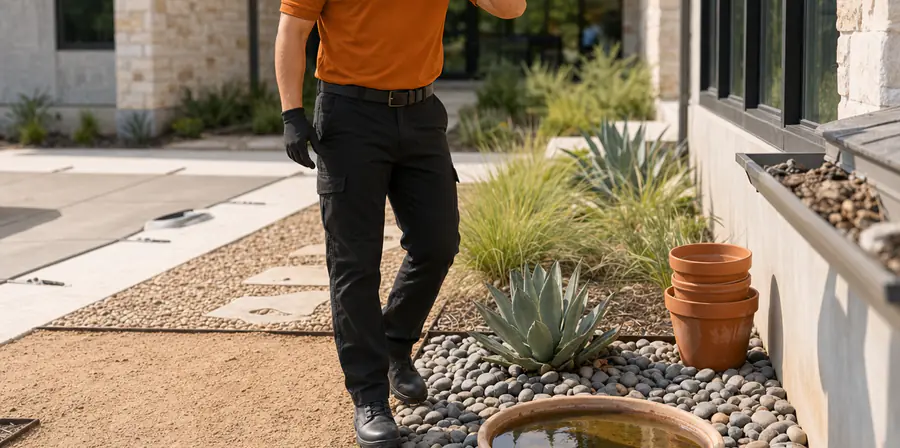
Find and remove the water
We walk the property and find every breeding site: saucers, gutters, tarps, ruts, low spots. Whatever can be emptied, we empty.
 2
2
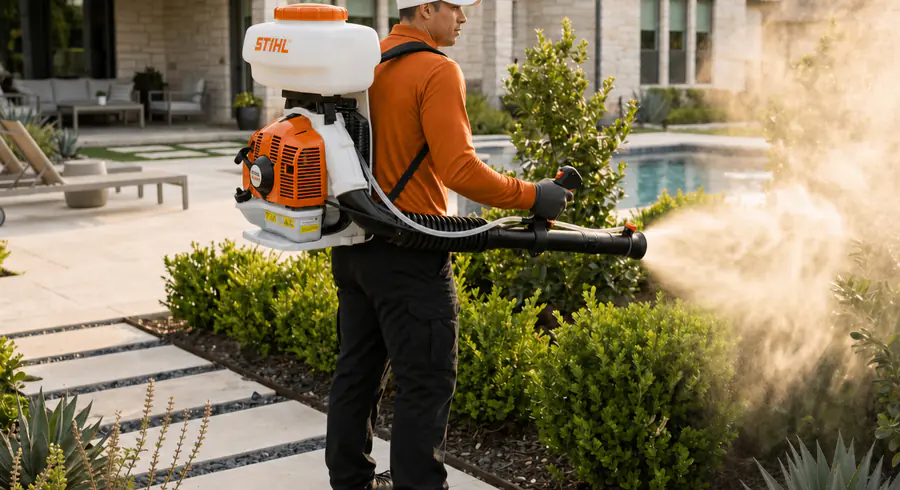
Treat the resting sites
A targeted application to the undersides of foliage, dense shrubs, fence lines, under decks and the shaded harborage where adults hide out during daylight.
 3
3
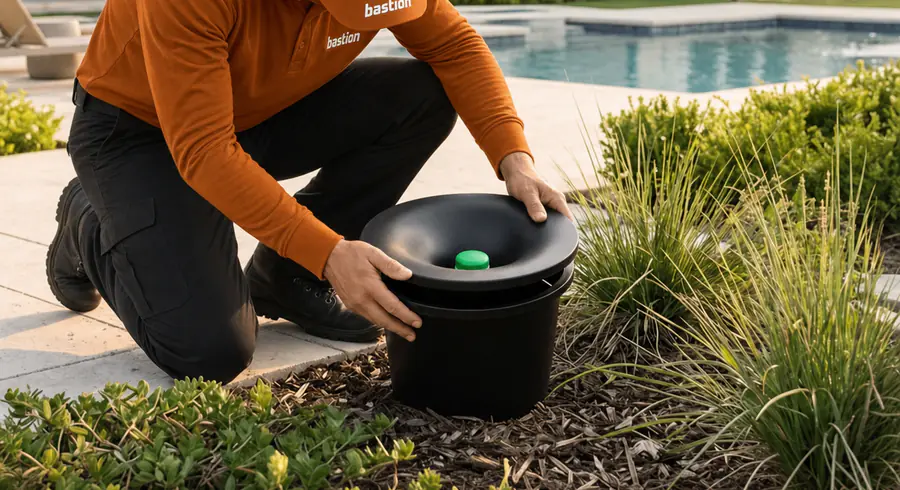
Hold the barrier
We come back on a schedule right through mosquito season, because a treated yard sitting next to untreated green space needs the barrier kept up rather than set once.
Seeing any of this in your West Lake Hills yard?
Free quote, same-day service most days, and free re-treatments if they come back between visits.

What makes West Lake Hills good mosquito country.
Lake Austin and Barton Creek frame the city. Homes step down wooded hillsides between the two, so a lot of yards sit within easy flight of the shade and water along the creek and the lake. Up on the lots themselves, native beds and lawns get watered through the summer, and every sprinkler cycle tops up the saucers, low spots and clogged drains a female needs to lay her eggs.
Shade is the other half of the story. Old live oaks and cedar cover most of the city, and their limbs often reach right over the roof. Adult mosquitoes sit out the hot afternoon in that cool cover, low in the beds and along shaded rock walls. The leaves those limbs drop pack the gutters, rain sits there, and the eggs hatch. Limestone ledges and retaining walls can catch small pockets of rainwater too.
A hose-end sprayer aimed at the open lawn misses the point. Adults rest out of the sun all day, under leaves, deep in shrubs, beneath decks and against shaded stone, and that is where the treatment has to land. The other half is the water. Roughly a bottle cap of it can raise a batch, which is why the EPA leads its pest management guidance with source reduction. Dump the saucer, clear the gutter, and the next generation never gets started. Do one job without the other and the bites come right back.
Watered beds
Irrigated native plantings stay damp all summer and refill small containers every cycle.
Oak and cedar shade
Limbs over the roof drop leaves into gutters, and adults rest in the cool cover below.
Creek-side yards
Barton Creek and Lake Austin sit within easy flight range of many hillside lots.
Rock and stone
Retaining walls and natural ledges can hold small pools of rain after a storm.
When do mosquitoes peak in West Lake Hills?
Here the season is long rather than sharp. Mosquitoes pick up in April, hit full speed by June and hang on until November, and public health trapping in the Austin metro covers nearly the same months.
Hottest water, shortest breeding cycle, most mosquitoes. This is also when West Nile detections usually climb.
Public health crews in the Austin metro trap and test across these months. If they are watching, so should you be.
A bottle cap of water is enough. Treatment works far better once the breeding sites on your property are gone.
The places mosquitoes breed, up close.
Each photo came off a real service call on our Central Texas routes. Look at what is not in them: no creek, no pond, no ditch. Nearly every breeding site we turn up is a container someone forgot to tip out.
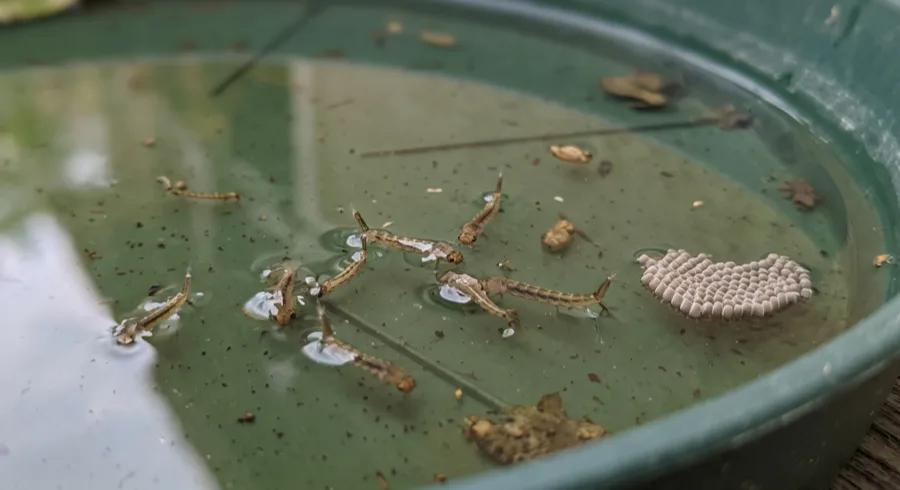
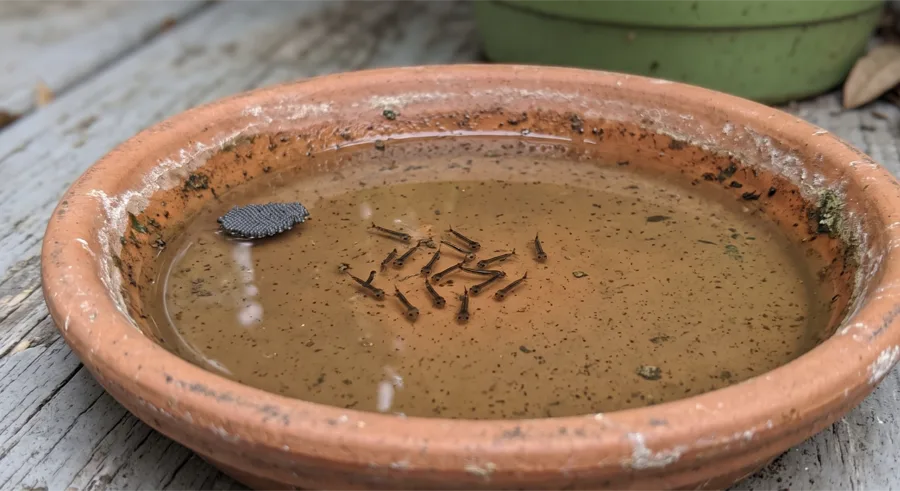
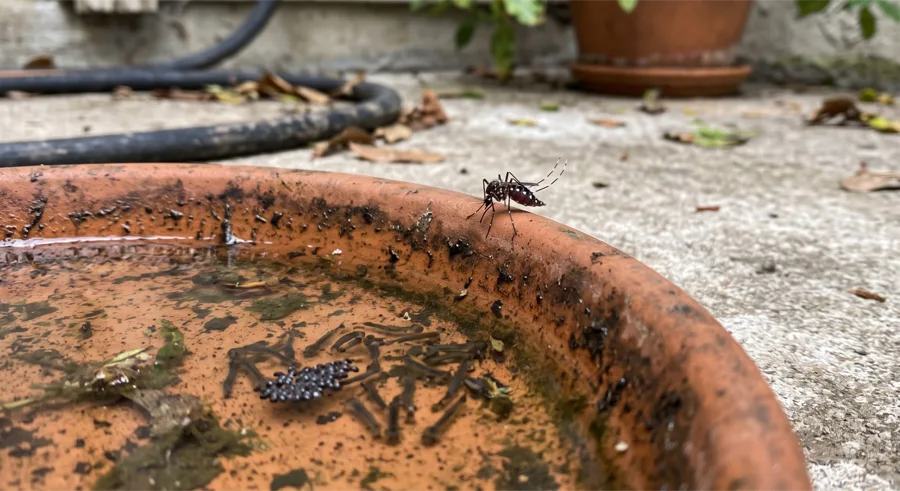
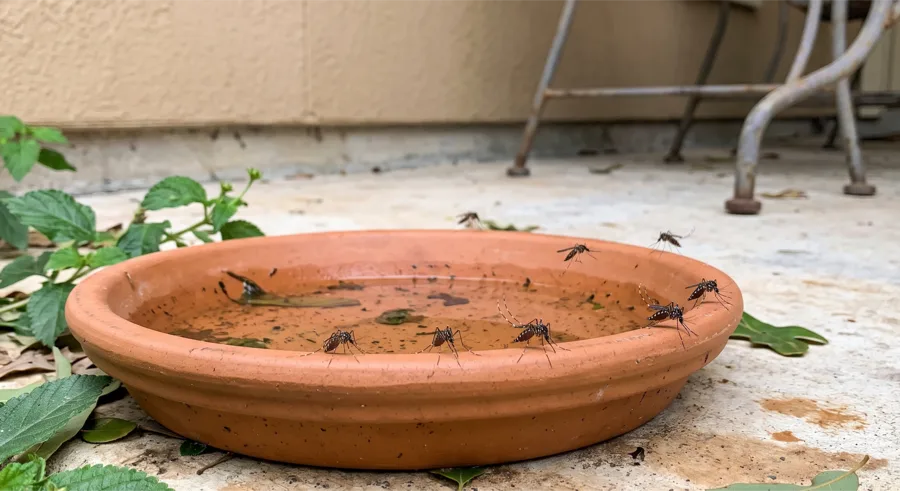
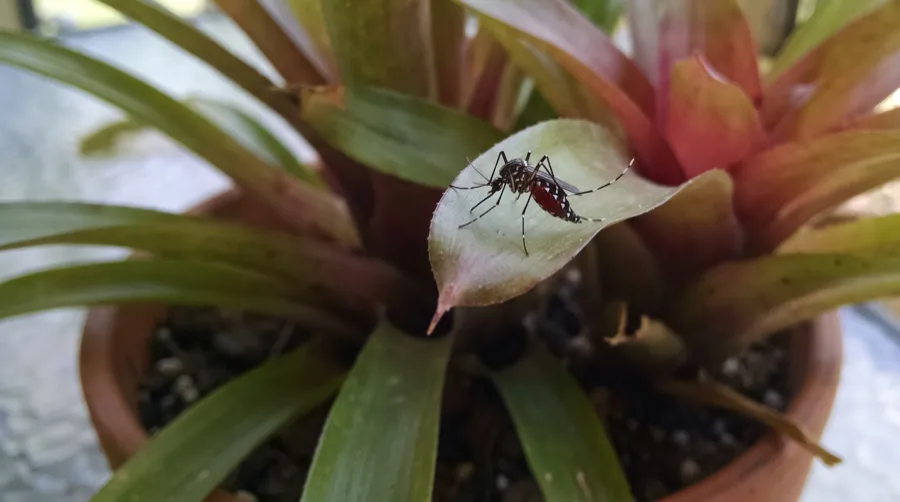
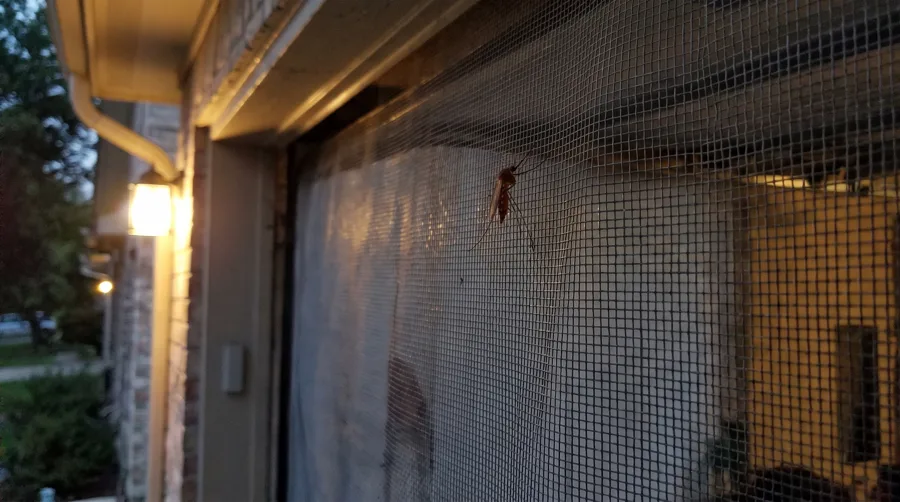
Photos by our own service team on Central Texas jobs. Tip out every container on the property once a week and you have outdone any spray can. Questions? Call 843-480-8699.
Which mosquitoes bite in West Lake Hills.
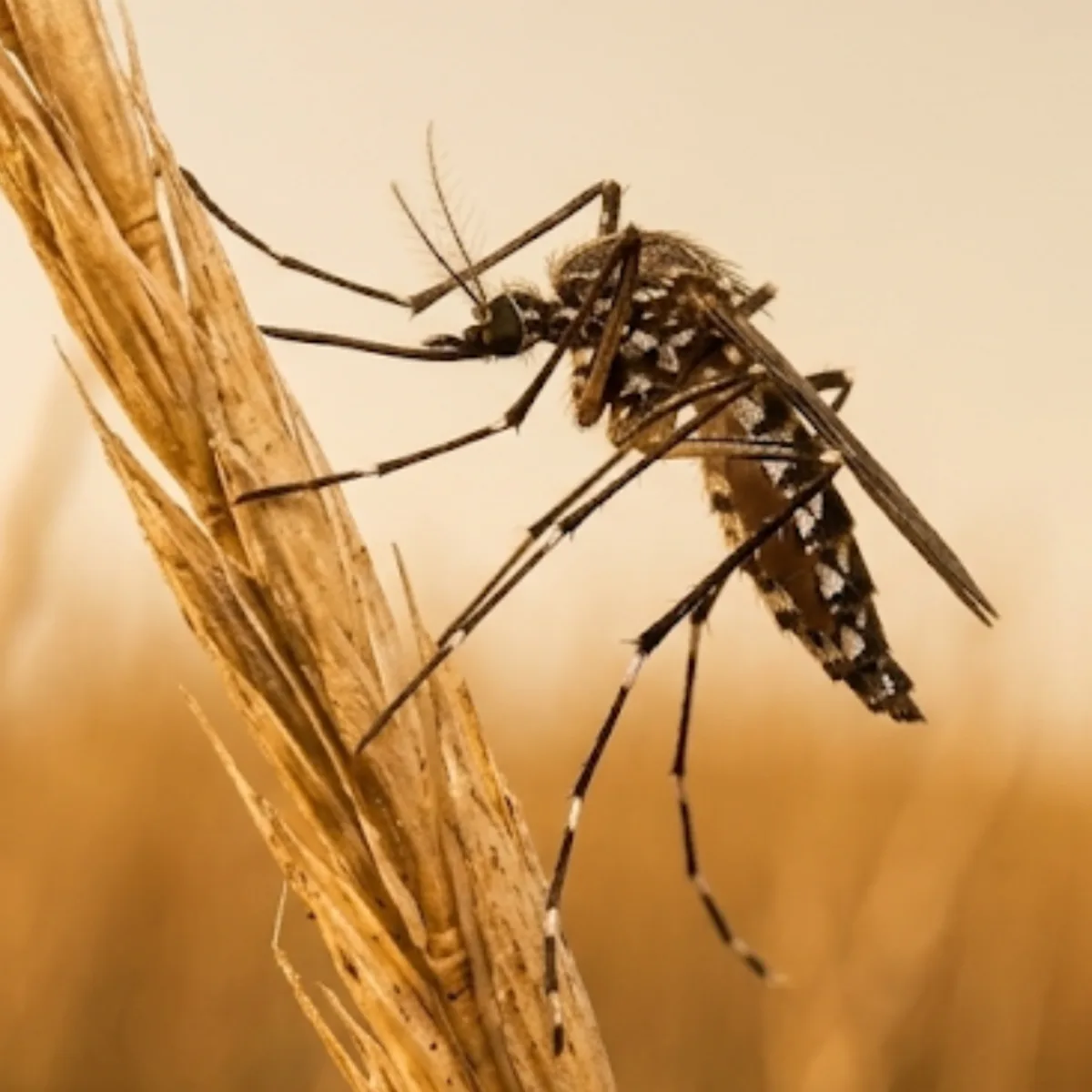
Four kinds of mosquito do most of the biting in West Lake Hills, and each keeps its own hours and likes its own kind of water. The daytime container breeders thrive in watered beds and saucers under old oaks. The dusk biter that carries West Nile goes for stagnant, leafy water like clogged drains and neglected pools. Limestone drains quickly after rain, so on most hillside lots the trouble is containers, not puddles. We confirm which one you have on site before picking a treatment.
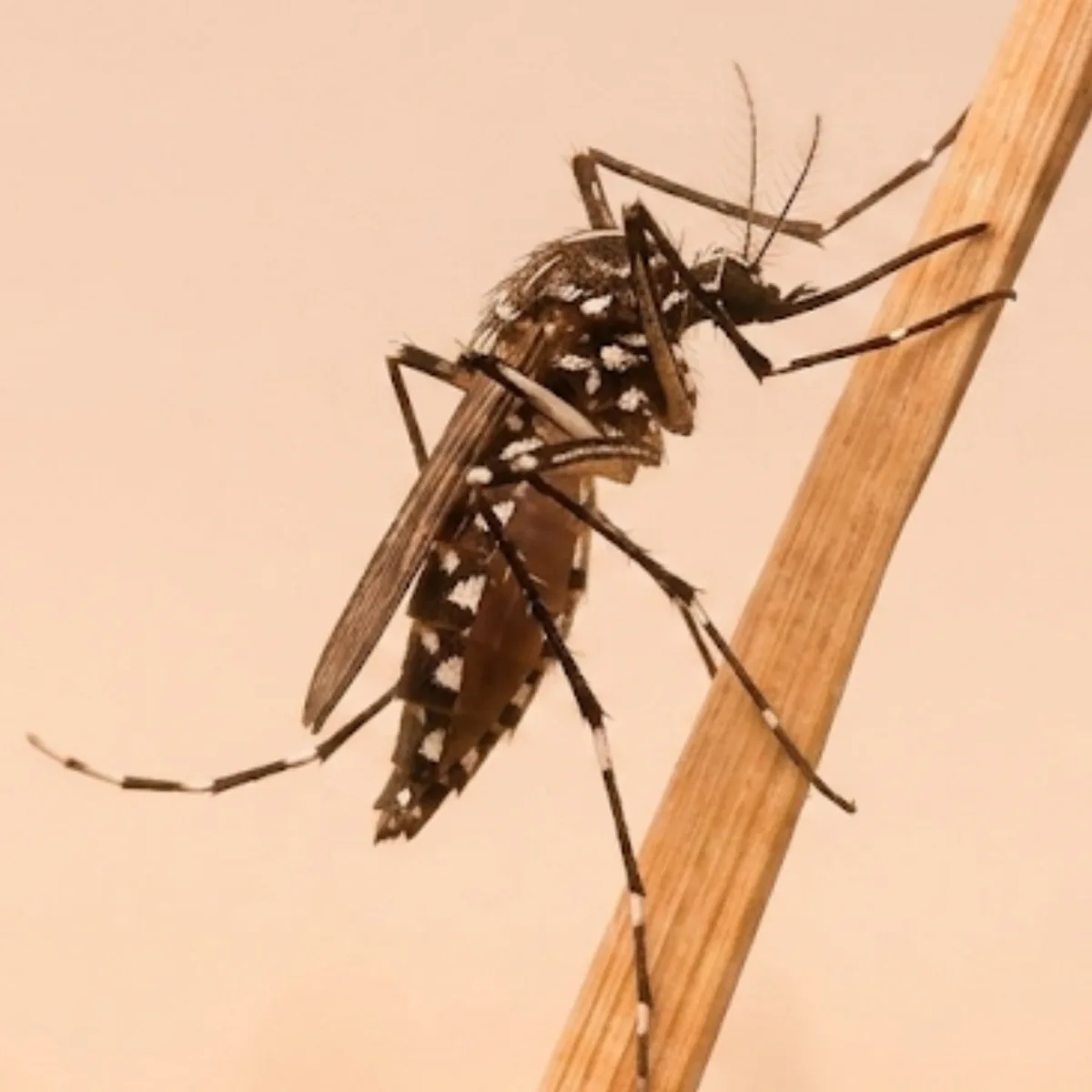
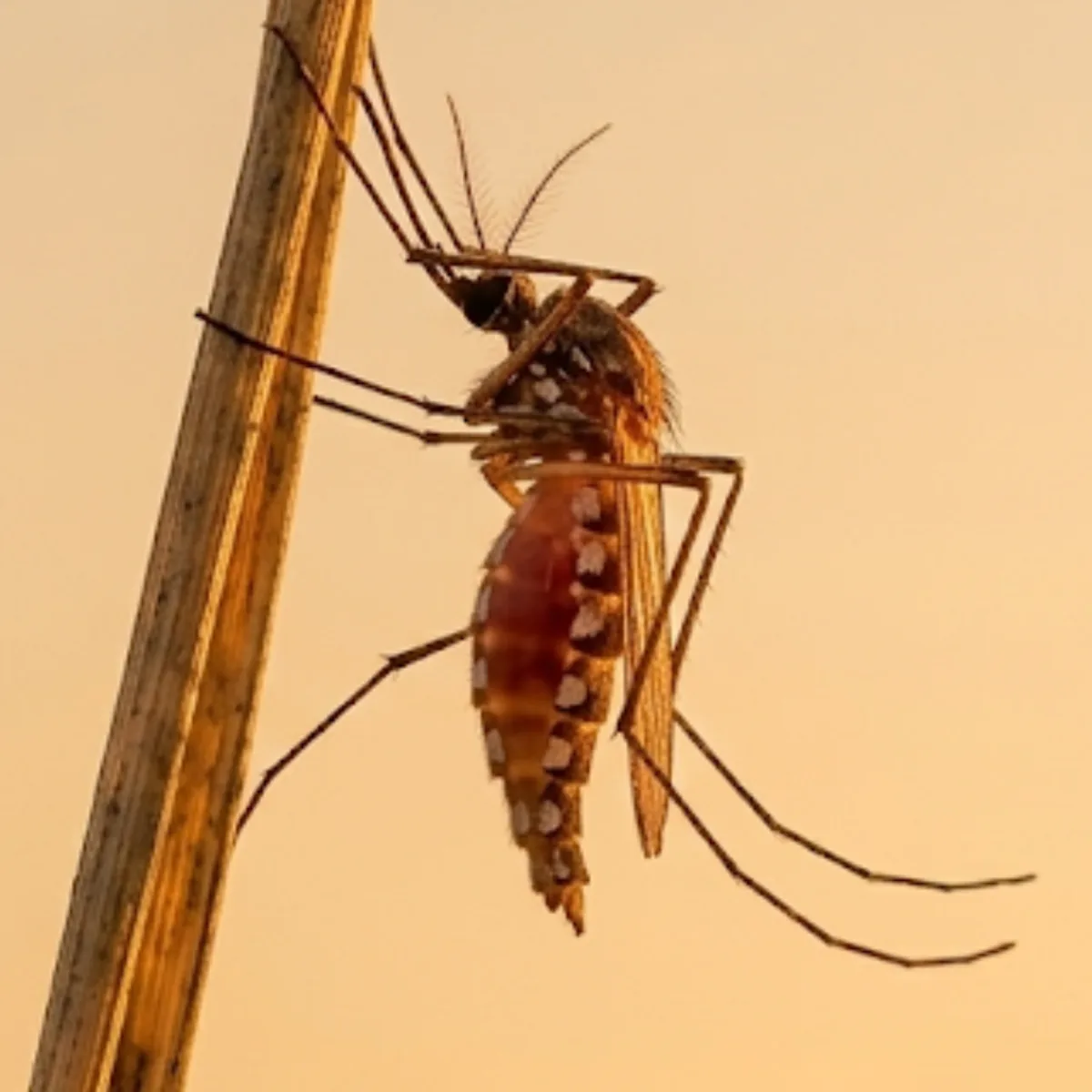
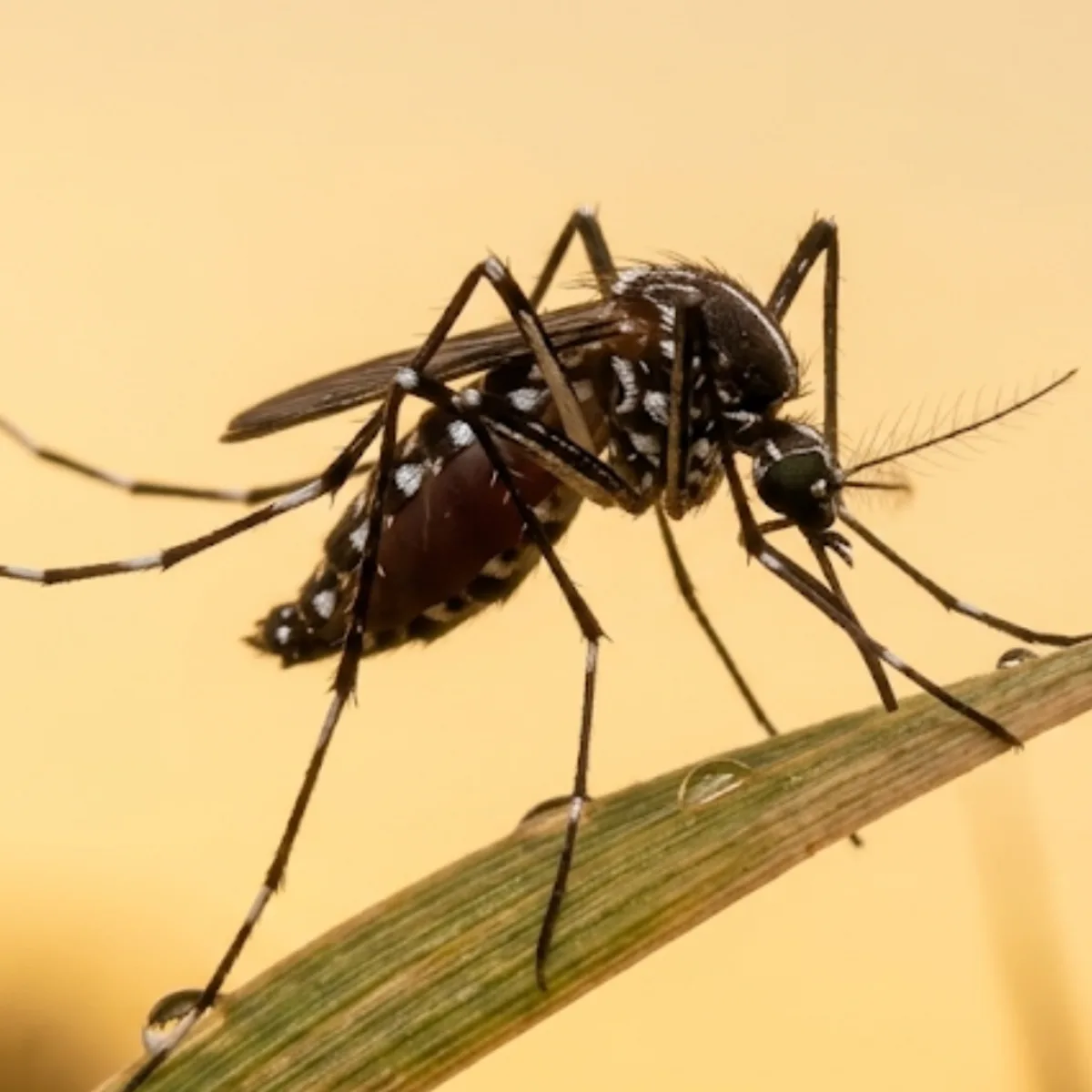
A note on bites and stings. Reactions vary from person to person, and any bite or sting can cause a serious reaction in someone sensitive to it. Nothing here is medical advice. If you are bitten or stung and feel unwell, or the reaction spreads or does not settle, contact a doctor or Poison Control. If breathing or swallowing is affected, treat it as an emergency and call 911.
You do not need a diagnosis. You need a plan.
Everyone on a shady West Lake Hills lot already knows the mosquitoes are there. What helps is knowing where they come from, and the answer is usually a watered bed, a gutter packed with oak leaves or the cool shade along a rock wall. Tell us what you are seeing when you call, and we can usually say over the phone whether it can wait for the next route or needs a visit today.
- Bites in the middle of the day while you garden
- Water left sitting in plant saucers, toys or tarps
- Gutters or downspout extensions that hold water
- Low spots in the lawn that stay soggy after watering
- Swarms lifting out of the shrubs when you brush past
- Dusk biting on the deck or patio
- Oak and cedar leaves clogging gutters under limbs that hang over the roof
- Creek-side shade near Barton Creek or Lake Austin where you get bitten every evening
Mosquito routes in and around West Lake Hills.
Water and shade decide who calls. Barton Creek pairs golf-course homes with greenbelt, and the watered lawns there feed summer mosquitoes. Lost Creek's wooded lots along the creek stay in deep shade. Westlake Highlands has mature oaks over the roofs, so the gutters fill with leaves, and Rob Roy sits on the bluffs near Lake Austin. Rollingwood and Davenport Ranch get the same crew and the same two jobs: shady foliage first, then every bit of standing water.
Neighborhood missing? Odds are we still cover it. See pest control in West Lake Hills or the full service area.
Straight answers on West Lake Hills mosquitoes.
What does mosquito control cost in West Lake Hills, TX?
It is part of the General Pest + Rodent + Mosquito plan, which starts at $166 a month for a single-family home in West Lake Hills. One visit covers the mosquito barrier along with general pest and rodent work. Bigger lots cost more, and a free on-site quote sets your exact price.
How many weeks does one mosquito treatment hold?
Usually two to four, depending on heat and rain. A hard Central Texas storm rinses product off the leaves and fills every container in the yard at once, which is the worst of both. That is why the service runs on a schedule rather than as one big push.
Is the treatment okay around kids, pets and pollinators?
Applied correctly, our treatments are pet and kid friendly. We target the undersides of leaves and shaded resting spots, not open flowers, and we stay away from blooming plants where pollinators feed. Keep children and pets off treated areas until they dry, about 30 minutes, and your technician will say if any spot needs more time. Keep bees or a vegetable garden? Tell us and we will mark those as no-treat zones.
Do you deal with standing water, or only spray?
We do both, since spraying alone only gets you halfway. First we look for breeding sites and empty what can be emptied, then we treat the shady harborage where adults spend the day.
My yard backs onto a creek or greenbelt. Can you still help?
Yes, we can make the yard usable again, and that is the honest promise. Nobody can deliver zero mosquitoes next to a creek or greenbelt, because new ones keep flying in. What a steady barrier does is bring it down from miserable to perfectly livable.
When should a West Lake Hills home start mosquito service?
Late winter, in February or March, before the first generation is grown. Holding numbers down early is far easier than trying to pull them back in July once the yard is full of fliers.
Will a lot near Barton Creek or Lake Austin get more mosquitoes?
More of them drift in, yes. Creek-side and lakeside yards have shade and water within easy flight range, so adults keep arriving through the warm months even when your own lot is dry. We cannot treat the creek, but we can make your yard a poor place to rest: a barrier on the shaded beds, rock walls and deck undersides, plus a sweep for any standing water so you are not raising a second wave at home.
Can you treat under heavy oak and cedar shade on a hillside lot?
Shade is exactly where the work is. Adults rest low, on leaf undersides within a few feet of the ground, in watered beds, under decks and along stone walls, so that is where the barrier goes. Nobody needs to spray an old live oak to the crown, and we would not. Where the canopy really matters is the gutters: limbs over the roof keep dropping leaves, and a packed gutter holds the water where eggs hatch. Keeping those clear does more than reaching the top branches.





Mosquito control around West Lake Hills
Every city we serve gets mosquito service from the same crew under the same guarantee, even though the standing water looks different in each one. Pick your city below, read the full mosquito control overview, or check the whole service area.
Answered 24 hours · West Lake Hills, TX
Take your backyard back.
Get a free quote, same-day visits on most days and free re-treatments whenever mosquitoes surge between scheduled visits.