Pest control in Central Texas
How often should pest control be done in Central Texas, and what does each visit cover?
Just got a quote that says "every two months" and wondering if that's too much or not enough? How often should pest control be done in Austin? On our plans, every two months, which is six visits a year. Here's what one visit covers, how long a treatment lasts, and what's out in each part of the year.
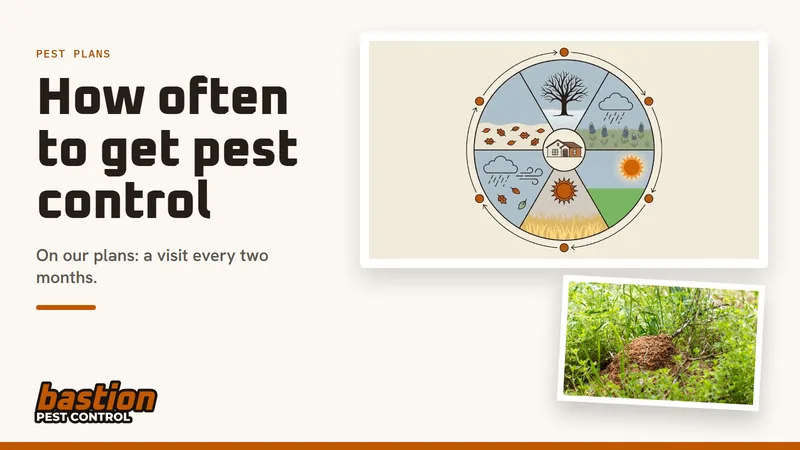
Summary
The short answer
How often should you get pest control? On our plans, every two months: six visits a year, billed monthly. Bugs here don't take winter off: our Travis County count found photos of ants, roaches, spiders, scorpions, wasps and mosquitoes in every two-month stretch. Each visit treats three layers outside your house: the foundation, the yard and the fence line. A visit every three months is four a year, so two stretches get none. Bugs between visits? We come back free on any active recurring plan.
Below: a drawing of one visit, and your year as six visits.
Prefer to listen? 45 seconds.
The short version, read aloud. Read by a synthetic voice, not one of our technicians.
So how often should pest control be done around Austin?
On our plans, every two months. That's six visits a year, billed monthly.
Is that the right number for your house? NC State's extension guide says it's a matter of preference and what you see as a problem. It says good pest control starts with a careful look, then treats if needed.
Our plans treat on a schedule, all year. Austin Public Health says mosquitoes are around here year-round, busiest May through November. (They're on our larger plan.)
Want your house on that schedule? Get a free quote right here, or call us at 843-480-8699.
How does every two months compare with every three months or every month?
Every two months puts one visit in each two-month stretch. Every three months means fewer visits, and every month means more. (You'll see it called bi-monthly pest control, but the American Heritage Dictionary says "bimonthly" can mean every two months or twice a month. So we just say every two months.)
Pest control every three months is four visits a year, so two of the six stretches get none. We tried it, and a lot of our customers called between week 8 and week 12 asking us to come back. We've found Texas is just too hot for that, though cooler places can get away with it.
| Schedule | Visits a year | Time between visits | Two-month stretches with no visit |
|---|---|---|---|
| Every two months (our plans) | 6 | About 2 months | 0 |
| Every three months | 4 | About 3 months | 2 |
| Every month | 12 | About 1 month | 0 |
For prices, and when a one-time visit is cheaper, see what pest control costs in Austin.
Roaches already living in your house? That's its own clean-out first. Mice or rats? Bait stations come with the plan, and a few usually handle most rodent problems. Only a major rodent infestation is its own job. Bed bugs, moles and termites are always their own jobs.
What does one visit actually cover?
Every visit treats all three layers outside your house, and the inside when you ask, at no extra cost. You don't need to be home for the outside, which is most of it. The inside just needs someone to let us in.
First, a band at the foundation, 3 feet up the wall and 3 feet out, around window frames, doors, the garage and the roofline. Second, yard granules that wake back up each time you water. Third, a spray along the property line, where bugs get onto your lot.
That's 40+ pests on every visit, plus rodent control and bait stations on the base plan. Here's everything your visit includes. Plans start at $97 a month for a single-family home.
How long does pest control last after a visit?
There's no single number. How long a treatment hangs around depends on things like sun, heat and water, says the National Pesticide Information Center.
In one University of California study, concrete treated for ants sat out in summer weather and repeated fake rain. All but one formula had quit killing ants by day 20. That's bare concrete in a test, not your lawn.
Worried about storms? Here's what we say about rain. If a hard storm ever beats one, re-treatments are free on any active recurring plan.
What's out in each two-month stretch of the year?
Something's out in every stretch. What changes is which bugs you'll run into.
- Jan-Feb. Paper wasp queens that wintered in hiding spots often come indoors, especially on warm spells, says Texas A&M's wasp guide. They're not aggressive. Indoors, see our guide to fungus gnats around the houseplants.
- Mar-Apr. Those queens start nests in spring, often under your eaves. Fire ant mating flights are most common in spring and fall, usually soon after rain, says Texas A&M's fire ant team.
- May-Jun. Mosquitoes get busy in May and stay busy through November.
- Jul-Aug. In hot, dry weather, fire ants may seem to vanish because they go deeper, then pop back up fast after rain, Texas A&M said in 2023. Also see when scorpions show up in Austin.
- Sep-Oct. Fall fire ant flights. New paper wasp queens come mostly in late summer and fall. Then there's what the first cold front sends indoors.
- Nov-Dec. Mosquitoes stay in their busy season through November.
And how often should pest control be done in winter? On our plans, same schedule. We counted ten years of Travis County photos on iNaturalist, where people post nature photos and others agree on the ID. All six groups showed up in every stretch.
Around Austin, pest photos turn up in every two-month stretch
Our count of research-grade iNaturalist records, 2016 to 2025: each two-month stretch's share of photos of six household pest groups (orange) next to its share of all records in Travis County (gray).
- Six household pest groups
- All research-grade records
In Jan-Feb, pest photos dip a bit more than all photos do. And they're photos people chose to post, not a bug count. More detail: the month-by-month pest calendar.
Does a hard freeze reset things? KXAN asked Texas A&M bug expert Wizzie Brown in 2021.
Bugs showed up a month after the visit. Now what?
Call us. On any active recurring plan, we come back free between visits, with no limit and no trip fee.
After a visit, you'll usually see a big drop within a few days. Roaches and ants can take up to two weeks, since the treatment has to travel back to the nest.
Last summer a homeowner met me in the driveway holding a can of hardware store ant spray like a fire extinguisher, and the garage reeked of it. I told him to retire the can and call, since the trip back is free on his recurring plan.
Skip these between visits
- Grabbing a can of bug spray. NC State says to let a treatment work before you spray more. Some, like baits, are slow on purpose.
- Putting up with a new wasp nest. On a plan, a new one that turns up between your visits comes down free.
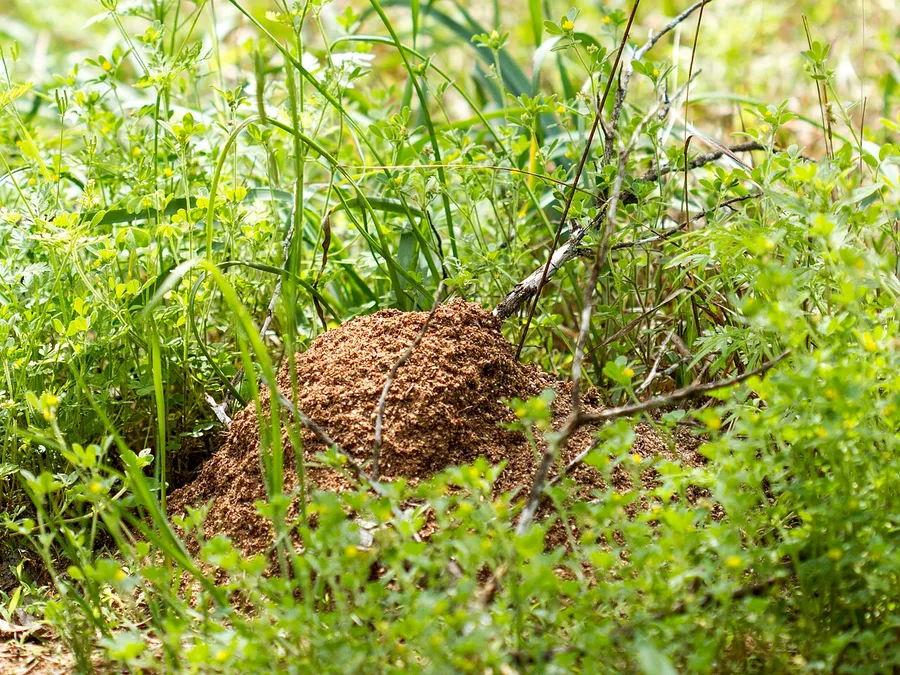
A fire ant mound in Austin
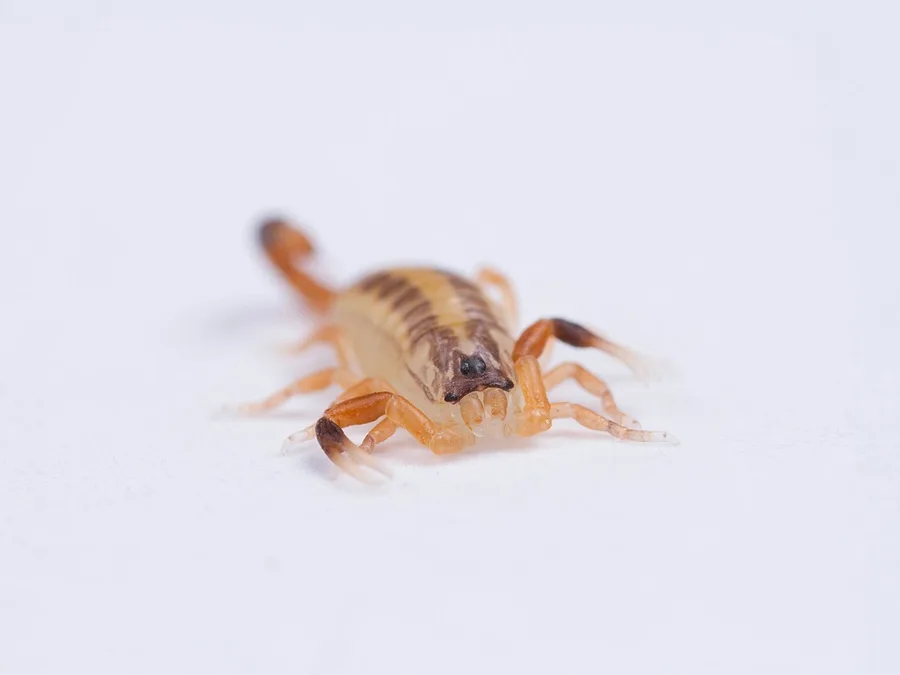
A striped bark scorpion from Travis County
Still seeing bugs two weeks after a visit, or fire ant mounds back after a rain? Call us at 843-480-8699, and we'll come back free on any active recurring plan.
Common questions
How often should you get your house sprayed for bugs?
On our plans, every two months, so six times a year. If you add mosquitoes, that treatment comes every 30 days. Most of that work happens outside: around the foundation, across the yard and along the fence line. We'll treat inside when you ask, at no extra cost.
Do I need pest control in the winter?
On our schedule, yes. Your Nov-Dec and Jan-Feb visits still happen. Our iNaturalist count found photos of all six pest groups in both winter stretches. And Texas A&M says paper wasp queens often come inside in winter, especially on warm spells. Here's why Austin has no real off month for bugs.
How long does pest control take to work?
You'll usually see a big drop within a few days. Roaches and ants can take up to two weeks, because the treatment has to travel back to the nest. Still seeing them after that? Call us. Re-treatments are free on any active recurring plan.
Does bi-monthly pest control mean every two months or twice a month?
It can mean either. The American Heritage Dictionary lists both: every two months, or twice a month. That's why we just say every two months. Our plans come out every two months and are billed monthly.
Get a visit every two months, all year
Call or text 843-480-8699 and tell us what you're seeing. We'll set up your visits, and if bugs show up in between, we'll come back free on any active recurring plan.
Phone answered 24/7. Same-day service most days.Rather not call? Get your price right here.
Sources
- Texas A&M AgriLife Extension Service, Moore and Merchant, Paper Wasps, Yellowjackets and Solitary Wasps, E-239 (PDF, 7-03)
- Texas A&M AgriLife, Texas Imported Fire Ant Research and Management Project, Biology
- Texas A&M Stories, Indoor Pests On The Rise As Texas Heat, Drought Continue (September 13, 2023)
- City of Austin, Austin Public Health, Environmental Vector Control
- iNaturalist, Research-grade observations of ants, cockroaches, spiders, scorpions, wasps and mosquitoes, Travis County, Texas, 2016 to 2025 (our count, pulled 2026-10-18)
- NC State Extension, Tips on Selecting Pest Control Services (reviewed January 2023)
- National Pesticide Information Center (Oregon State University and U.S. EPA), Pesticide Half-life (fact sheet, reviewed May 2015)
- Pest Management Science, Jiang, Soeprono, Rust and Gan, Ant control efficacy of pyrethroids and fipronil on outdoor concrete surfaces (2014)
- The American Heritage Dictionary of the English Language, Fifth Edition, bimonthly
Answered 24 hours · Austin, TX
Want a visit every two months?
Our recurring plans cover 40+ pests on every visit, with a visit every two months. Call 843-480-8699 and we'll get your first visit on the calendar.