Pricing
How much is pest control in Austin, Texas?
Call five companies for a price and you will get five versions of "it depends." Here are actual numbers, and an honest explanation of what moves them.
The short answer
- One-time general treatment
- $100 to $700
- Quarterly plan, per visit
- $100 to $300
- Monthly plan
- $40 to $85
- Wasp or bee nest removal
- $199 to $299
- Termite treatment
- $1,200 to $3,500
- Scorpion service
- $150 to $350
Most Austin homeowners on a recurring plan land between $400 and $1,200 a year for general pest control. Termites, bed bugs and rodent infestations are priced separately. Nest removal is a one-time job rather than part of a plan, and the figure above is our own published rate: $299 standard, $199 on the current special. What moves your number most: square footage, how much of the lot gets treated, and which side of the Balcones Fault you live on. Our own plans and prices are listed in full further down.
Prefer to listen? One minute 40.
The numbers and the three questions to ask, read aloud. Read by a synthetic voice, not one of our technicians.
There is a reasonable version of "it depends." Pest control is not a boxed product. A 4,000 square foot house backing onto greenbelt in Lakeway genuinely is not the same job as a downtown condo, and a number without context invites the wrong comparison.
There is also a less reasonable version, which is that vague pricing makes it easier to quote high when someone sounds worried on the phone.
The difference matters more than it sounds. Pick wrong and you are either locked into a two-year agreement you did not read closely, or you are paying for quarterly service you never needed. Both mistakes are common and both are avoidable in about ten minutes of reading.
So we went and looked at what is actually published about Austin pricing.
The numbers online do not agree with each other
Search for Austin pest control pricing and you will get confident-sounding averages from several large sites. Put them side by side and they fall apart.
"Average" one-time pest control in Austin
Four sources. Same city, same service, same year.
Several of these "Austin" pages are national averages with a city name dropped in. The most Austin-specific competitor page we found says so directly in its own fine print, where its numbers are described as estimated ranges based on national averages.
That is not fraud. It is just how programmatic city pages get built. But it means a homeowner comparing three "Austin pest control cost" pages is often comparing the same national dataset to itself.
What we did instead. The ranges on this page come from published market data across Austin-area providers, cross-checked against national benchmarks and flagged where the source is national rather than local. The four sources charted above were re-read on 2026-09-02 and each still published the figure shown. Our own pricing is listed separately below as our actual published rates, not a market estimate.
Skip the guessing and get your actual number
Give us your square footage, your lot, and what you are seeing. We will quote it on the phone in about five minutes. No walkthrough, no appointment, nobody at your door.
Call 843-480-8699 A real quote, not a national average. If you do not need a plan, we will say so.What pest control actually costs in Austin
Market ranges for the Austin metro, by service. Termite, bed bug and rodent work sit outside a general pest plan almost everywhere. If someone folds termite coverage into a $45 quarterly plan, they are not treating for termites.
| Service | Initial visit | Recurring | Notes |
|---|---|---|---|
| General pest, quarterly | $150 to $300 | $100 to $300 per visit | Most common plan in Central Texas |
| General pest, monthly | $70 to $170 | $40 to $85 per month | Heavier pressure, greenbelt lots |
| One-time treatment | $100 to $700 | n/a | Shorter guarantee window |
| Wasp or bee nest removal | $150 to $500 | n/a | Priced per nest, by height and access |
| Mosquito, seasonal | $150 to $375 | $50 to $85 per month | Roughly April to October |
| Scorpion service | $150 to $350 | quoted per home | Mostly exclusion work, not spray |
| Fire ant, full yard | $150 to $400 | seasonal retreat | Broadcast bait, priced by lot size |
| Rodent exclusion | $200 to $600 | n/a | Priced by number of entry points |
| Termite, liquid barrier | $1,200 to $3,500 | $100 to $500 per year | Renewal keeps the warranty active |
| Termite, bait system | $1,200 to $2,500 | monitoring included | Ongoing station checks |
| WDI or real estate report | $100 to $300 | n/a | Required for VA loans in Texas |
| Bed bugs | quoted per job | n/a | National whole-home $1,000 to $4,000 |
What we actually charge
Almost nobody in this industry publishes real numbers, and the pages that do are usually publishing national estimates. So here are ours, in full, with no introductory rate and no step-up at renewal. The same figures live on our pricing page, and every plan is spelled out on the services page.
| Bastion service | Price | What that covers |
|---|---|---|
| General Pest + Rodent | $66 per month* | Ants, spiders, cockroaches, scorpions, wasps, bees and rodents. Full TriBarrier treatment every visit, free re-treatments between visits. |
| General Pest + Rodent + Mosquito | $166 per month* | Everything above plus the mosquito, flea and tick package across the yard and perimeter. |
| Cockroach clean-out | $449* | Two treatments thirty days apart, for an infestation already running. The monthly plan keeps them out afterwards. |
| Rodent clean-out | from $449* | An active mouse or rat infestation. Physical exclusion, the sealing itself, is quoted on top. |
| Wasp or bee nest removal | $299 per nest* | A one-time removal for a nest already built. Down it comes, and the void or the site gets treated and sealed so a new queen does not rebuild in the same spot. Currently running from $199 on special. Prevention is already in the monthly plan, so if you are on one there is no charge for this. Details on wasps and bees. |
| Honey bee colony | $0, referred out | Honey bees are pollinators, so a live colony is a beekeeper referral rather than a treatment. We identify it and hand you the contact. No charge for either. |
| Mole control | $333 per stop* | Three stop minimum, so $999 for a lot up to half an acre. A fourth stop, if needed, is free. More on how mole work is priced. |
| Bed bugs | quoted on inspection | Priced per property. The work varies far too much to post a flat rate honestly. |
| Travel fee | $0 | No trip charge anywhere in our service area, 26 cities across five counties. |
* Starting price. Your exact number depends on home size, lot size and current pest pressure.
One thing we do not do: termites. No liquid barriers, no bait systems, no WDI reports for a real estate closing. The termite rows in the market table above are there as context for what that work costs in Austin, not as a service we are quoting. If you need termite work, you want a company that specializes in it, and we will tell you that rather than take the job. Not sure the winged ones are termites at all? Our guide to telling termite swarmers from flying ants settles that first. Everything we do handle is listed on the services page.
What actually changes your price
Five things, roughly in order of how much they matter.
Square footage and how much of the lot gets treated
Most of a general treatment happens outside: a band around the foundation, eaves, weep holes, entry points. A bigger footprint is more product and more time. This is the single biggest factor, and it is why a quote given without asking your square footage is not really a quote.
What is next to your house
A lot backing onto greenbelt, creek or undeveloped land gets constant re-pressure from outside. The same house mid-subdivision needs less. If you are on the edge of a preserve in Northwest Hills, you are paying for that view in more ways than one.
Which side of the Balcones Fault you are on
This one is specific to Central Texas, and most pricing pages do not mention it at all.
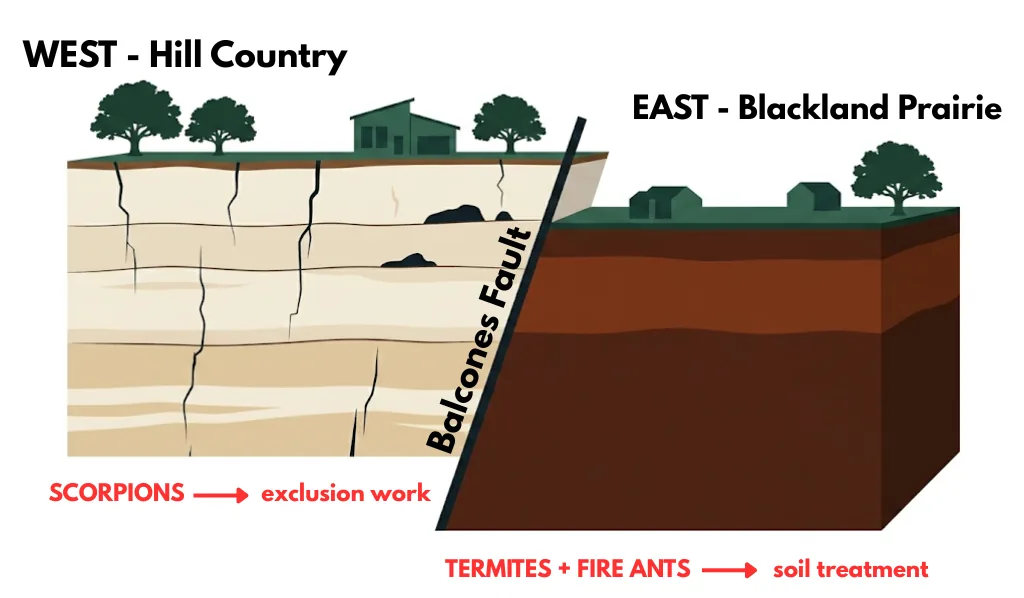
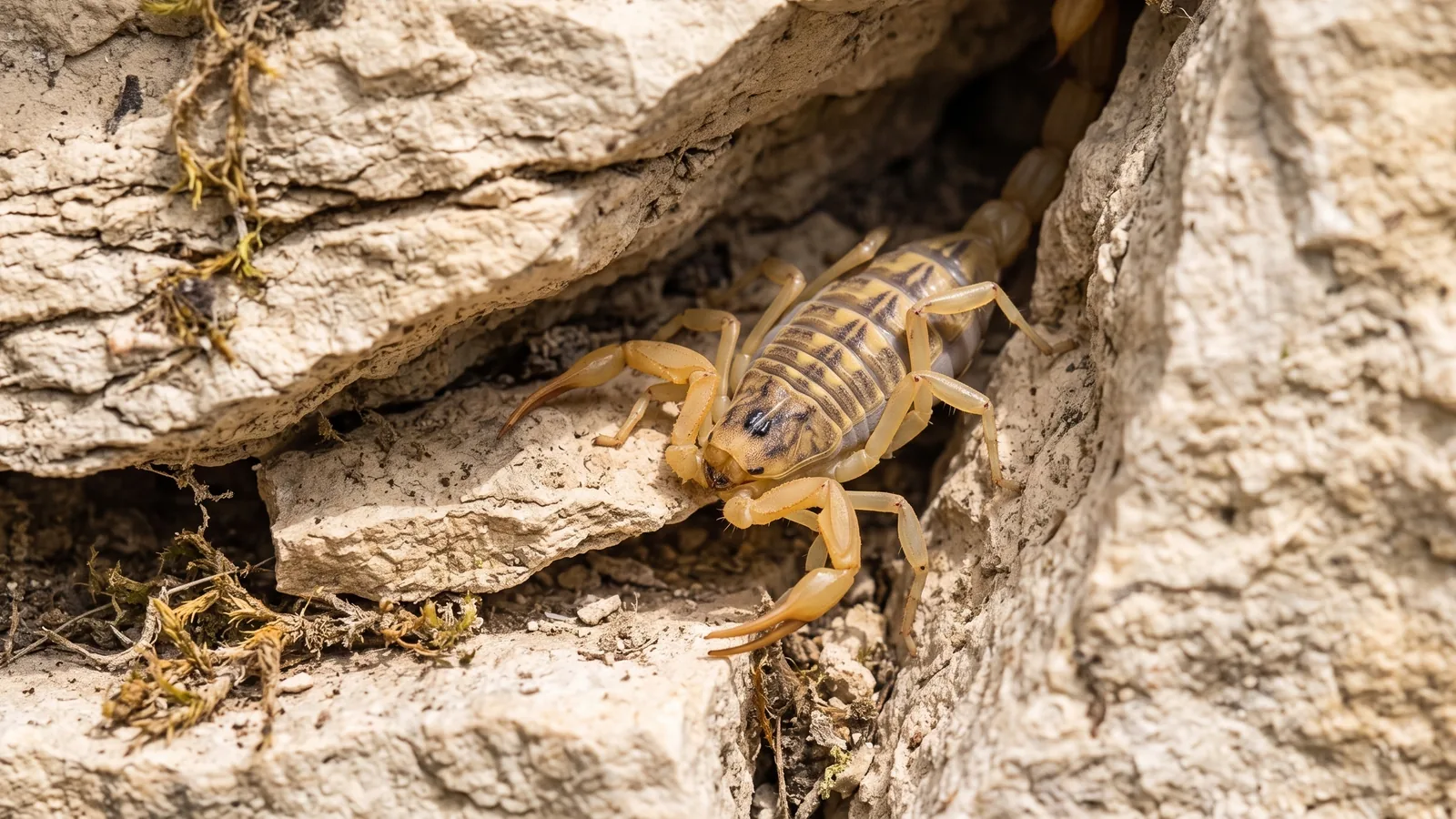
West of the fault, homes sit on thin soil over cracked limestone. Those fractures are ideal habitat for the striped bark scorpion, and they connect to the outside of your foundation in ways a spray program alone will not fix. Scorpion work out there is mostly sealing: weep holes, sill plates, utility penetrations, garage door corners. It takes longer and it costs more, which is why our Cedar Park and Leander scorpion jobs rarely quote the same as one east of the highway.
East of the fault you are on deep clay. Different problem set: subterranean termites and fire ants, both soil-driven, both treated in ways that have nothing to do with sealing a limestone crack.
Same company, same service name on the invoice, genuinely different job. If a quote for a Dripping Springs home matches a quote for a Round Rock home to the dollar, someone is not looking closely.
Not sure which side you are on?
Tell us your ZIP and we will tell you what actually drives pricing where you live. Limestone and scorpion exclusion out west, soil treatment and fire ants east of I-35. It is a two-minute conversation and it costs nothing.
Call 843-480-8699, send us your address, or check whether you are inside our service area first.
Housing stock age
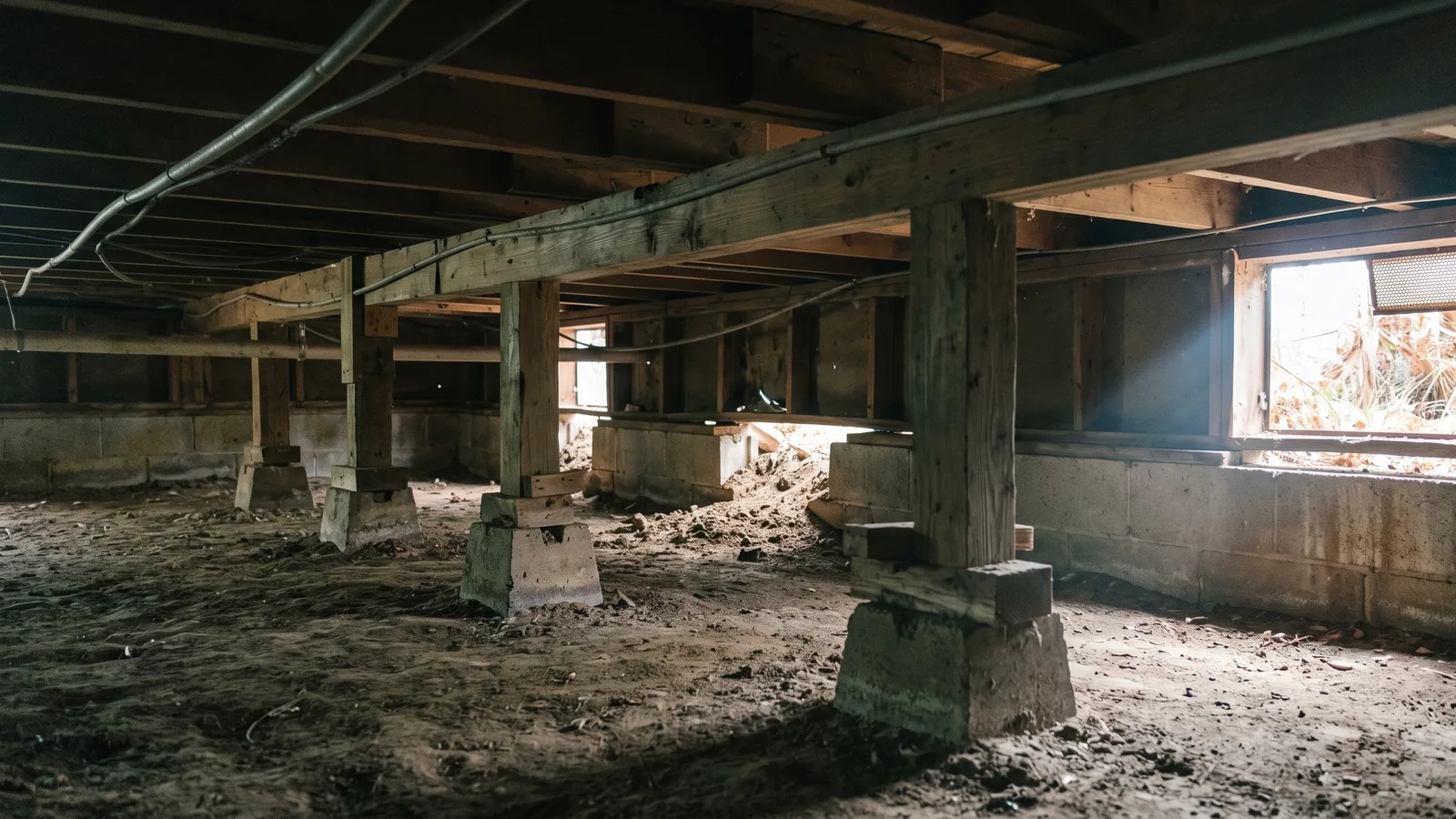
Older homes in Tarrytown, Travis Heights, Hyde Park and Bouldin Creek tend toward pier-and-beam foundations, original wood windows and decades of settling. More gaps means more entry points means more labor, and it is a large part of why central Austin work quotes higher than the suburbs. Newer slab construction in Cedar Park or Leander is easier to treat, though new development pushes displaced wildlife and scorpions toward whatever is standing.
Which pests
General pest control covers the common stuff: ants, roaches, spiders, silverfish, crickets. Termites, bed bugs and serious rodent work are separate services with different products, different equipment and different training requirements. If you are not certain bed bugs are what you have, our guide to what bed bugs look like goes through every life stage and the insects most often mistaken for them, which is worth five minutes before you pay anyone for a bed bug job. The services page breaks down which of those are included in a plan and which are quoted on their own.
Is quarterly worth it, or should you just call when something happens?
Depends on your situation, and the honest answer is not always "sign up."
| Approach | Year one | Year two onward | Makes sense when |
|---|---|---|---|
| Quarterly plan | $450 to $1,200 | $400 to $1,200 | Recurring problems, greenbelt lot, older or larger home, scorpions or roaches |
| Two one-time visits | $200 to $1,400 | varies | Seasonal flare-ups you can predict |
| One one-time visit | $100 to $700 | $0 if nothing returns | One specific problem, newer home, no history |
The math is simpler than the sales pitch. If you are genuinely calling once a year, one-time service is cheaper and you should do that. Recurring service wins when you would otherwise call three or more times, or when the problem is the kind that comes back on its own.
Austin makes that second case more often than most cities. We do not get a winter hard enough to reset pest populations the way colder climates do, which is why Central Texas runs closer to year-round activity. Thumbtack's 2025 service-request data put Austin at number one on its buggiest-cities list, ahead of two-time leader Atlanta (fourth annual report, published August 2025, counting pest-control requests from August 2024 to July 2025).
What should be included in a standard plan
If you are comparing quotes, check for these. Their absence is usually what explains a lower number. Ours are all written out on the services page, and the FAQ covers the terms in more detail.
- Interior and exterior treatment. Some "plans" are exterior only, which is fine if that is what you wanted and a problem if it is not.
- Eave and web removal. The spider work most people actually care about.
- Entry point inspection, not just spraying a perimeter and leaving.
- Free re-service between visits. The most important line item on the page. If pests come back inside the window, do they return at no charge?
- The pest list, in writing. Which species are covered and which are not.
- Contract length, renewal rate and cancellation terms.
Why do two quotes for the same house differ by $200?
Everyone asks this and almost nobody answers it.
A low quote usually means one of: exterior-only service, a narrow pest list, no free re-service, a long agreement with an early-termination fee, an introductory rate that steps up sharply at renewal, or a route so dense that each stop gets fifteen minutes.
A high quote usually means one of: genuinely more scope, like exclusion work or attic and crawl space inspection, specialty products for a specific problem, a company carrying real overhead in licensed technicians and actual insurance, or, sometimes, that you sounded worried on the phone.
The pattern worth knowing about is a discounted first treatment that locks a 12 or 24 month agreement, with the real rate arriving at renewal. That structure is legal and common, and it is also the single most frequent subject of pest control complaints filed with the Better Business Bureau, usually alongside early-termination fees in the $199 to $300 range that the customer did not realize they had agreed to.
Ask three questions and most of the ambiguity disappears. What is the pest list? Is re-service free? What is the rate at renewal?
Ask us those three first
Before you give us your name or your address, we will answer all three:
- The full pest list, in writing, before you sign anything
- Re-treatments between visits at no charge, inside the window
- The renewal rate, stated up front, the same number you pay in year two
And check the license
Anyone applying pesticides for hire in Texas has to be licensed through the Texas Department of Agriculture's Structural Pest Control Service. Ask for the number. A company that hesitates has told you something useful.
What you can do yourself to need fewer visits
Genuinely, less pressure on the house means less service. Some of the highest-value work here costs nothing.
Before you treat anything yourself
- Read and follow the product label. The label is a legal document. As the EPA puts it, it is a violation of federal law to use a product in a manner inconsistent with its labeling.
- Keep children and pets off treated areas for the full period the label specifies.
- Wear the protective equipment the label requires.
- Store products locked and out of reach. Never mix products unless the label directs it.
- If you are pregnant, immunocompromised, or have respiratory conditions, talk to your doctor before applying anything.
If you are unsure about the pest, the product, or your own safety, stop and hire a licensed professional. Misidentifying a pest usually costs more than the treatment would have.
Bastion Pest Control assumes no liability for injury, illness or property damage resulting from information on this page. You act at your own risk.
Start with the free work, it outperforms spraying
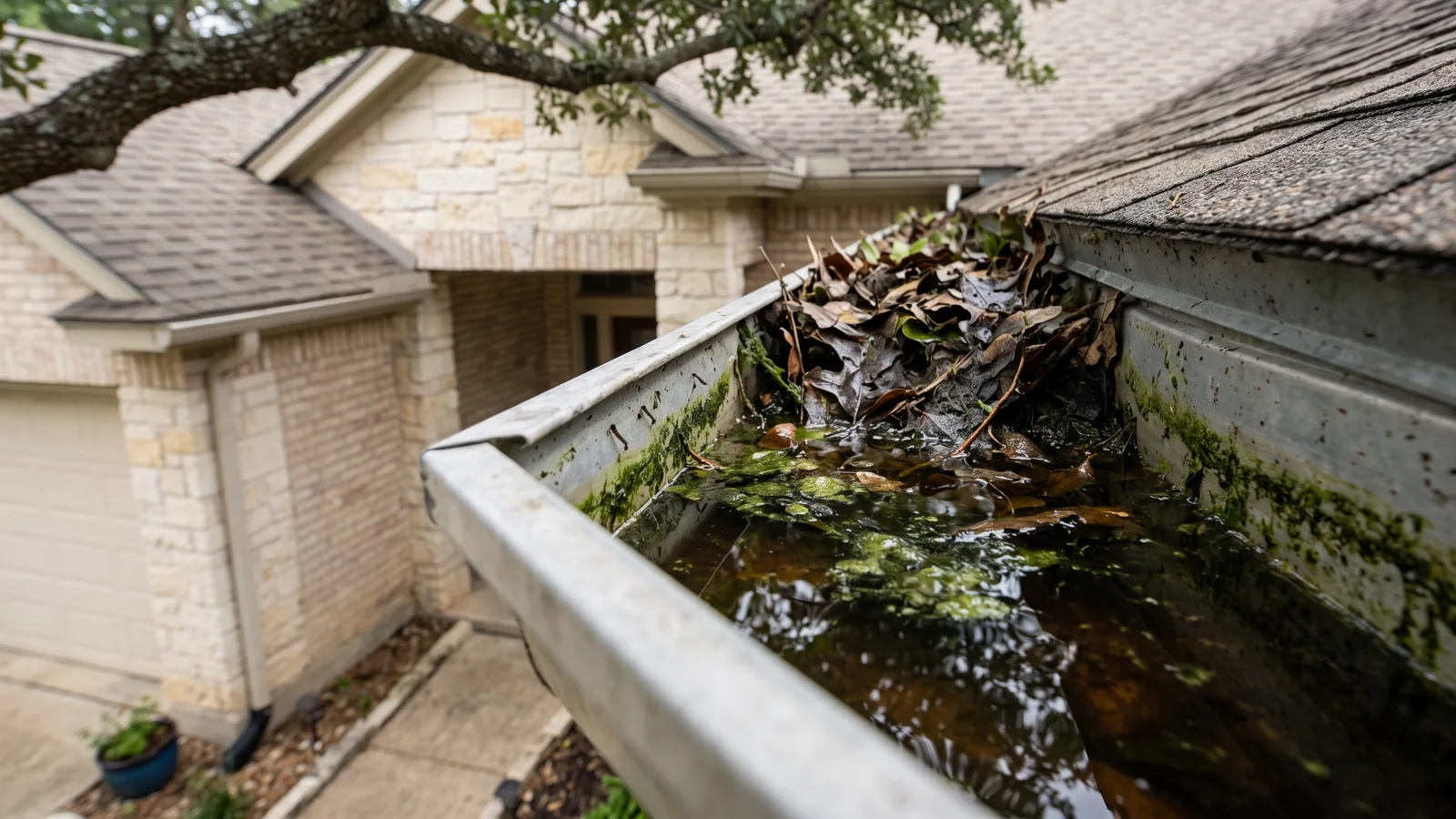
- Clear your gutters. Standing water in a clogged gutter is a mosquito nursery, and the trapped moisture draws almost everything else. Austin Public Health reported 41 mosquito pools testing positive for West Nile virus in Travis County in 2025, with five human cases. The year before saw 101 positive pools and 33 cases.
- Pull mulch back from the foundation. Six inches of bare soil removes a highway.
- Trim branches off the roofline. Roof rats and ants use them as bridges. Scorpions too, on Hill Country lots.
- Fix the drip. Most kitchen ant trails in Austin are a moisture problem first and an ant problem second.
- Seal what you can reach: pipe penetrations, dryer vents, weep holes, garage door corners.
What we would personally grab
Our own opinion based on what we have seen work. Not an official recommendation, and not a substitute for reading the label. Performance varies with conditions.
| Item | Why | Rough cost |
|---|---|---|
| Exterior-grade silicone caulk | Sealing entry points. Do this before any spray. | $6 to $10 |
| Copper mesh | Pack gaps before caulking. Rodents cannot chew through it. | $10 to $15 |
| Pyrethroid-based perimeter concentrate | Exterior barrier. Follow label mixing exactly. | $25 to $40 |
| Pump sprayer, 1 to 2 gallon | Do not reuse one that held herbicide. | $20 to $35 |
What we would skip: foggers and bombs. For German roaches especially, they scatter the population deeper into wall voids and usually make the problem harder and more expensive to solve.
"We are also training and empowering those frontline professionals and homeowners to take smart, preventative steps before pests become an issue in the first place."
Robert Puckett, Ph.D., AgriLife Extension entomologist, Texas A&M AgriLifeWhen you do not need a pest control company
One ant trail on the kitchen counter once a year is not an infestation. Find the entry point, caulk it, wipe the trail with soapy water, and you are done. That is a twenty-minute job and it does not need a recurring plan.
Same for a few spiders in the garage in October, one wasp nest under an eave you can safely reach, or crickets after a heavy rain. These are normal in Central Texas. A single reachable nest is not worth $299 to have removed, and we will say so on the phone. Height is the line: once it is at a second-story soffit or a roof edge you would need a ladder for, pay someone.
Signing a recurring agreement to solve a once-a-year problem is money you do not need to spend. And if you want a second opinion that costs nothing at all, Travis County has an AgriLife Extension IPM program staffed by an entomologist who will help you identify what you are looking at, for free.
When it is worth making the call
- Roaches you see during the day. Daytime activity usually means the population is large enough that they are competing for harborage. Cockroach allergen is also a documented risk factor for severe asthma in sensitized children.
- Anything you cannot identify. Wrong ID means wrong treatment means wasted money. Our service pages have photos of what each one actually looks like.
- Termites, or anything that might be: mud tubes, swarmers, hollow-sounding trim. The National Pest Management Association puts US termite damage at roughly $6.8 billion a year, and standard homeowners policies almost universally exclude it. This is one to take to a termite specialist rather than to us.
- Scorpions indoors more than once. Almost always an exclusion problem rather than a spray problem.
- Rodent evidence in the attic. Droppings can aerosolize during cleanup, which makes it a health question, not just a pest one.
- Bed bugs. DIY reliably fails here and usually spreads them to other rooms.
Recognize any of those in your house?
Those are the ones that get more expensive the longer they sit. Rodents move indoors across Central Texas as soon as nights start cooling off, which in Austin is a matter of weeks from now.
We will tell you on the phone whether it is urgent or whether it can wait.
Call 843-480-8699 Same-week appointments across the Austin metro.Some of this is not a pest problem
A fair amount of what we get called for is really a water or structure problem that a different trade fixes better and cheaper than we can. If that is your situation, these are Austin-area outfits with strong track records. We have no arrangement with any of them, we just get asked often enough that it is worth listing.
- Austin Gutterman, gutters and leaf protection. Standing water in a clogged run is the most common mosquito source we find.
- Thrive Landscape and Design, drainage and regrading. Moving water away from a foundation is core termite prevention.
The other one worth handling is tree work. Branches touching the roofline are a bridge for roof rats and scorpions, and cutting them back does more for you than another spray would. Any ISA certified arborist can do it. We are not recommending a specific one here.
Questions worth asking any of them: are you licensed and insured, can I see recent work in my neighborhood, and what is the warranty on the repair?
Common questions
How much is a one-time pest control visit in Austin?
Typically $100 to $700 depending on home size, lot size and pest. One-time service usually carries a shorter guarantee than recurring service, so ask what the re-service window is before you book. That is where the real difference sits.
How much does quarterly pest control cost in Austin?
Roughly $100 to $300 per visit, plus a larger initial treatment of $150 to $300. That works out to about $450 to $1,200 in year one and $400 to $1,200 after. Our own plans are monthly rather than quarterly, at $66 a month for a single-family home.
How much does it cost to remove a wasp or bee nest in Austin?
Ours is $299 for a one-time removal, and we are currently running it from $199 on special. Market rates around Austin run roughly $150 to $500 per nest, driven mostly by height and access: a paper wasp nest under a reachable eave is a different job than a yellowjacket colony in a second-story soffit. If you are already on a recurring plan, nest work is covered, because wasp and bee prevention is part of every visit. A live honey bee colony is the exception. Those are pollinators, so we identify it and refer you to a beekeeper for relocation at no charge.
Do I have to sign a contract?
Depends on the company. Ask three things: how long is the term, what is the early-termination fee, and does the rate change at renewal. Discounted first treatments are often attached to 12 or 24 month agreements, and that is the most common source of complaints in this industry.
Does homeowners insurance cover termite damage?
Almost never. Termite damage is generally treated as preventable maintenance rather than a sudden loss, which is why it is excluded from standard policies, and why termite warranties and bonds exist as a separate product. Check your own policy language, but expect the exclusion.
How much does a termite inspection cost for a home sale in Texas?
A WDI report for a real estate transaction typically runs $100 to $300. For a VA loan, the VA requires one anywhere in Texas. For any other loan, ask your lender whether it wants one. If the lender also requires treatment for wood destroying insects, the standard Texas resale contract says neither buyer nor seller has to pay for it unless they agree in writing. The inspection is separate from any treatment that follows. Bastion does not perform WDI reports, so this is one to book with a termite specialist.
Why do I have scorpions if my house is clean?
Cleanliness has almost nothing to do with it. Striped bark scorpions live in the fractured limestone that most Hill Country homes are built on, and they come in through gaps that have nothing to do with housekeeping: weep holes, sill plates, garage door corners, utility penetrations. It is an exclusion problem.
Do I need pest control year-round in Central Texas?
More often than in colder places, yes. Austin does not get a winter hard enough to knock populations back, so activity continues at some level through most of the year. That is the honest case for recurring service. Not that something is always crawling, but that the pressure never fully resets.
Is green or organic pest control more expensive?
Usually 10 to 20 percent more, and it often means more frequent visits since the products break down faster. Whether that trade is worth it depends on what you are treating and who is in the house.
How do I check that a company is licensed in Texas?
Ask for the license number, then verify it with the Texas Department of Agriculture's Structural Pest Control Service. It takes a minute and it is the cheapest due diligence available.
What is the difference between pest control and an exterminator?
Mostly marketing. "Exterminator" implies killing whatever is present. Current practice is integrated pest management, which leans on exclusion, moisture control and targeted treatment. Same trade, better methods.

Sources
- US EPA, Introduction to Pesticide Labels
- Texas A&M AgriLife, statewide urban pest control
- AgriLife Extension, Travis County IPM
- Austin Public Health, West Nile virus in Travis County
- CDC, cockroach allergen exposure
- NPMA, annual US termite damage
- UT Bureau of Economic Geology, Central Texas
- Texas Department of Agriculture, Structural Pest Control Service
- VA Home Loans, states that require a wood-destroying insect inspection
- Texas Real Estate Commission, resale contract TREC 20-19, paragraph 7E
Answered 24 hours · Austin, TX
Get a number for your actual house.
Square footage, lot, and what you are seeing. About five minutes on the phone and you will have a real figure to compare against every other quote you have collected, including the pest list, the re-treatment terms and the renewal rate, before you commit to anything.