Ant control in Pflugerville, TX.
Blackland clay under Pflugerville holds rain like a grudge, and every downpour lifts fire ant colonies to the surface of a yard that looked spotless yesterday. Our recurring plan covers ants from $66 a month, with free re-treatments whenever a trail comes back between visits. Sugar ants and carpenter ants ride on the same ticket.
Written by the Bastion Pest Control service team · Licensed & insured in Texas · Last updated
The short answers, Pflugerville edition
Clay that never drains, creeks on three sides, and new slabs going in every month. That is why Pflugerville ants feel relentless, and here is the short answer to each part.
- Peak season
- March through November
- Waterlogged clay floats colonies up after storms, so Pflugerville's worst weeks follow the wet ones.
- Most common
- Fire & sugar ants
- Turf belongs to fire ants, kitchens to odorous house ants trailing in from damp creek-side soil.
- Included in
- $66/mo plan*
- No ant upcharge, ever.
- Why spray fails
- Queen survives
- Bait is what reaches the colony.
- Local driver
- Blackland clay
- Rain pushes fire ant colonies to the surface.
- Guarantee
- Free re-treatments
- Trails return between visits? So do we.
Ant control is included in our general pest plan.
Falcon Pointe, Sorento or a farmhouse lot out by Wilbarger Creek, the ant coverage is the same and the line item is the same: there is not one. The recurring general pest plan covers ants on every visit alongside spiders, roaches, scorpions, wasps and rodents. If a trail shows up again between scheduled visits, the return trip is free. Your home and lot size set the starting rate.
See full pricing details →Starting rate for a single-family home in Pflugerville. Includes ants, plus free re-treatments between scheduled visits.
| General pest planRecurring | One-time treatmentSingle visit | |
|---|---|---|
| What it is for | Keeping ants out of the house year-round | Knocking down one active trail or mound |
| Right for you if | You want it handled and kept handled | You are between tenants, or you want to try us once |
| What you get | Full TriBarrier on every visit, on a recurring schedule | One full TriBarrier treatment |
| If they come back | We re-treat free, with no limit and no trip fee | A return visit is a new charge |
| Other pests covered | Spiders, cockroaches, scorpions, wasps and rodents | Ants only |
| Price | From $66 a month* | Quoted per job* |
* Starting price. Your exact number depends on home size, lot size and current pest pressure.
How we get rid of ants in Pflugerville.
Three steps, every visit, the full TriBarrier treatment. Ants get identification and bait first, because clearing the foragers while the queen keeps laying is exactly why the problem never really ends.
 1
1
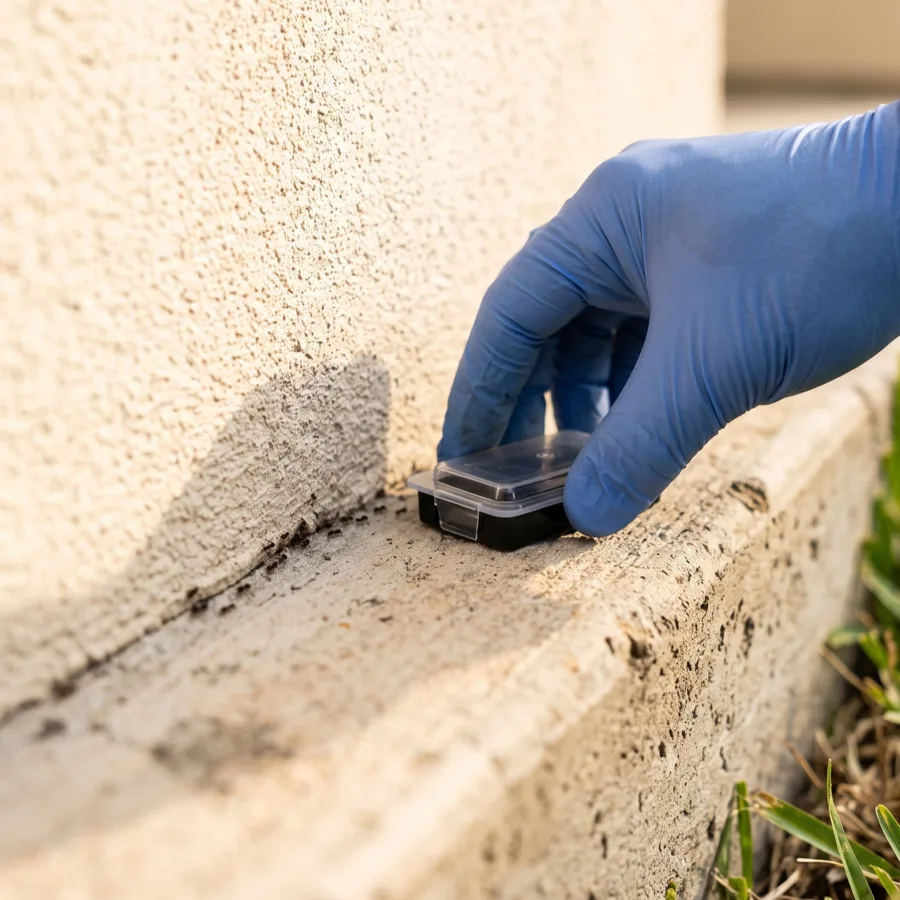
Identify and bait
We identify the species before anyone picks up a sprayer, then put down bait the workers actually want and let them carry it home. The queen gets fed by her own staff, which is a rough way to go.
 2
2
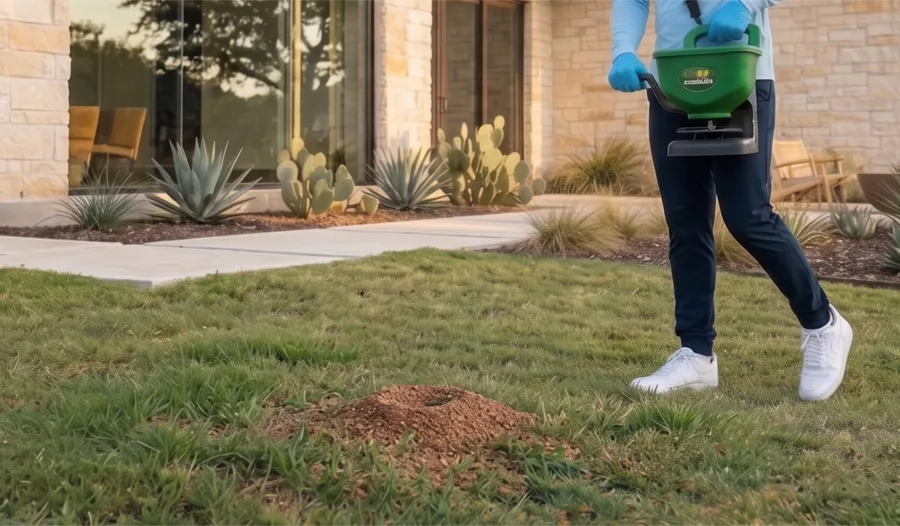
Treat the yard and mounds
A granular broadcast across the lawn plus direct mound treatment, reactivated every time you water. This is what keeps fire ants from re-establishing between visits.
 3
3
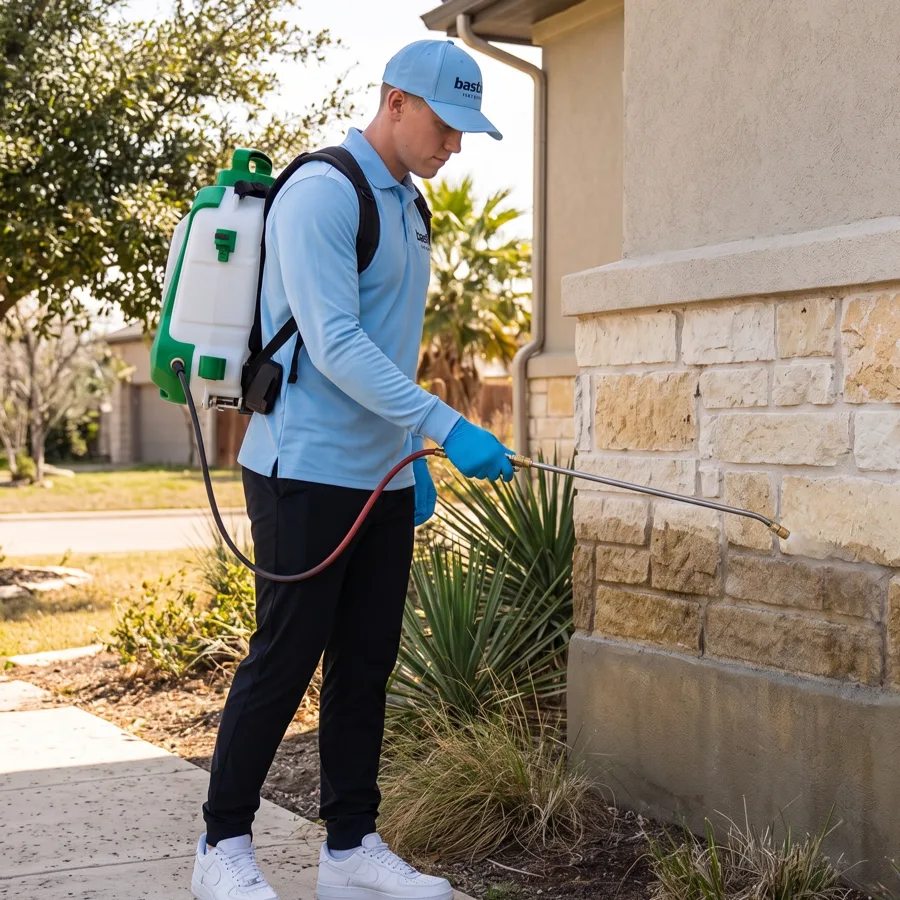
Seal the perimeter
A treated band three feet up and three feet out around the foundation, plus weep holes, slab joints, irrigation boxes and utility gaps. On new construction those expansion joints are wide open, so they get extra attention.
Recognize any of these in your Pflugerville home?
Free quote, same-day service most days, and free re-treatments if they come back between visits.
Why ants are relentless in Pflugerville.
Pflugerville sits on blackland prairie: deep dark clay that holds water like a sponge that never learned to let go. After a proper Central Texas downpour, that waterlogged clay pushes fire ant colonies straight up to the surface. Which is why you can mow a spotless yard on Saturday and find a dozen fresh mounds on Sunday, looking smug. It is not that the ants arrived overnight. They were already there, three feet down, waiting for the water table to move them.
The other half of the problem is how fast Pflugerville is going up. Every new section in Falcon Pointe, Sorento or the Commons at Rowe Lane means acres of disturbed soil, fresh irrigation, and new slab foundations with weep holes and expansion joints that ants read as an open door. Newly graded lots are prime fire ant real estate because there is no established colony to compete with, the first queens to land own the block.
Then there is the water. Lake Pflugerville, Gilleland Creek, Wilbarger Creek and the drainage easements that thread between neighborhoods all keep soil moisture high year-round. Odorous house ants: the tiny brown "sugar ants" homeowners find trailing across a kitchen counter, nest in that damp soil, under landscape stone, and inside irrigation boxes, then follow plumbing lines and slab cracks indoors looking for moisture during dry spells and food during wet ones.
That combination is why over-the-counter bait rarely holds in Pflugerville. Spraying a trail kills the fifty foragers you can see and leaves the queen and the brood untouched, so the colony simply reroutes and reappears a few feet over. Effective ant control here means identifying which species you actually have, baiting so workers carry the treatment back to the queen, and building a treated perimeter the next colony cannot cross.
Blackland clay soil
Holds rainwater instead of draining it, pushing fire ant colonies to the surface after every storm.
New construction
Freshly graded lots and new slabs give founding queens uncontested ground and easy entry points.
Creek & lake corridors
Gilleland and Wilbarger Creeks keep soil moisture high, which sustains large satellite colonies.
Irrigation systems
Sprinkler boxes, valve covers and drip lines are among the most common indoor entry routes we find.
When fire ants peak in Pflugerville.
Fire ants here have two seasons, not one. Spring rain floods the clay, collapses their tunnels, and the mounds surface overnight. The summer heat buries them again. Then September and October bring them straight back up.
Spring rain floods the clay and collapses the tunnels, so the colony rebuilds on the surface. Mounds everywhere.
Looks like they gave up. They did not. Heat and drought push them down where the mounds are far harder to spot.
Foraging restarts and so do the mounds. Texas A&M puts the prime bait window at late August to mid-October.
What we actually find on ant jobs in Pflugerville.
Our own photos from Pflugerville service calls. If you want to know what you are up against before you call anyone, this is the place to start.
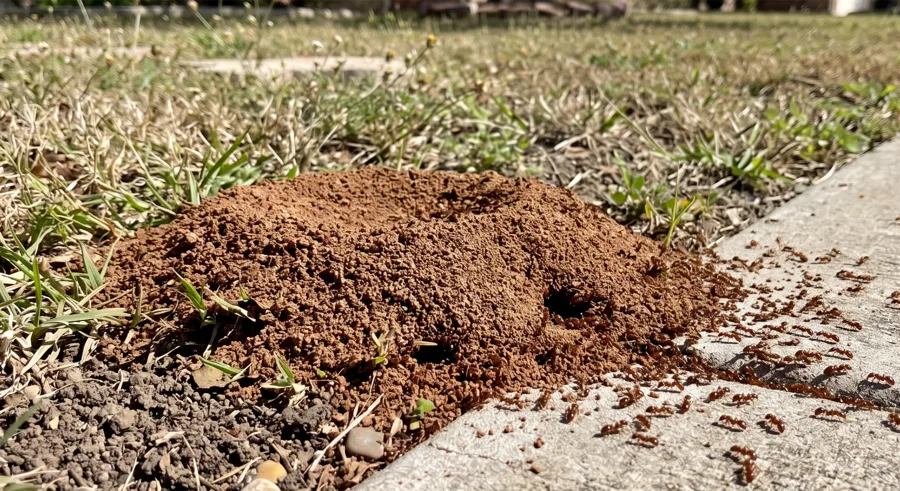
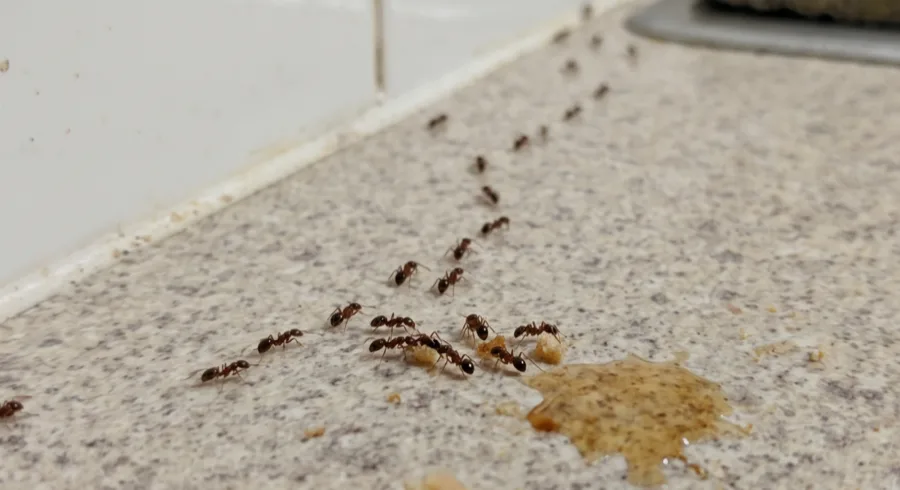
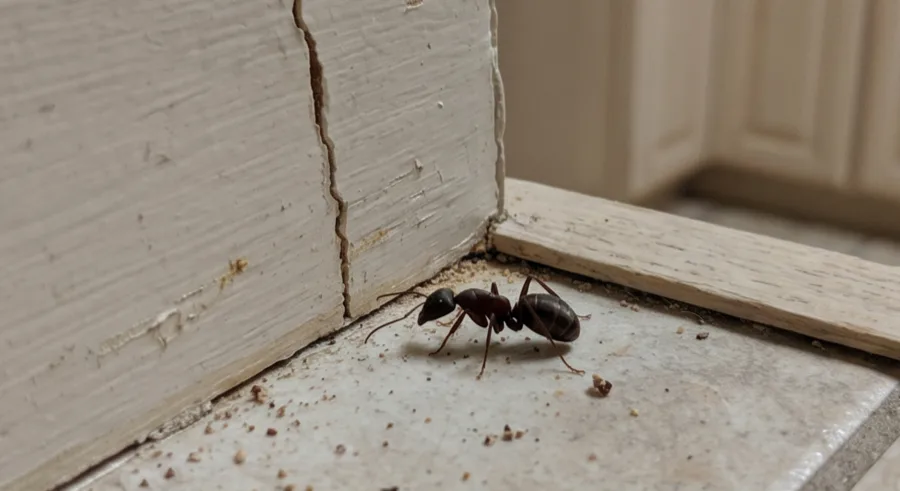
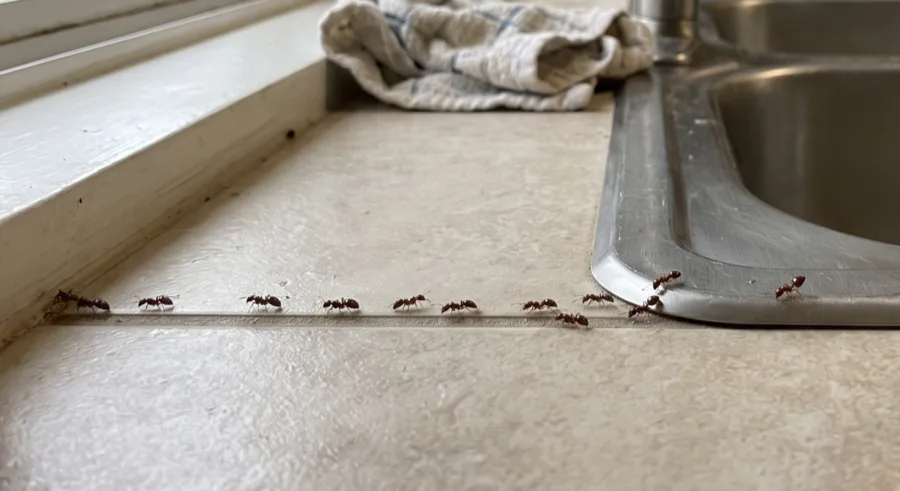
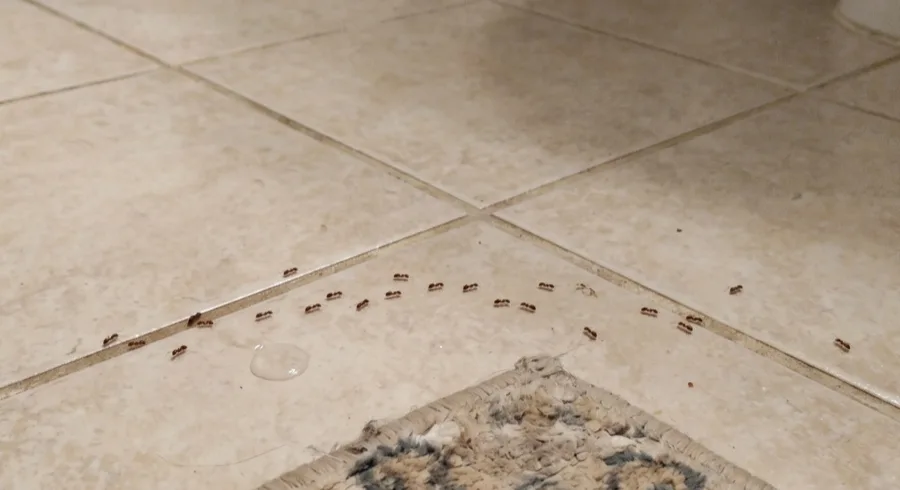
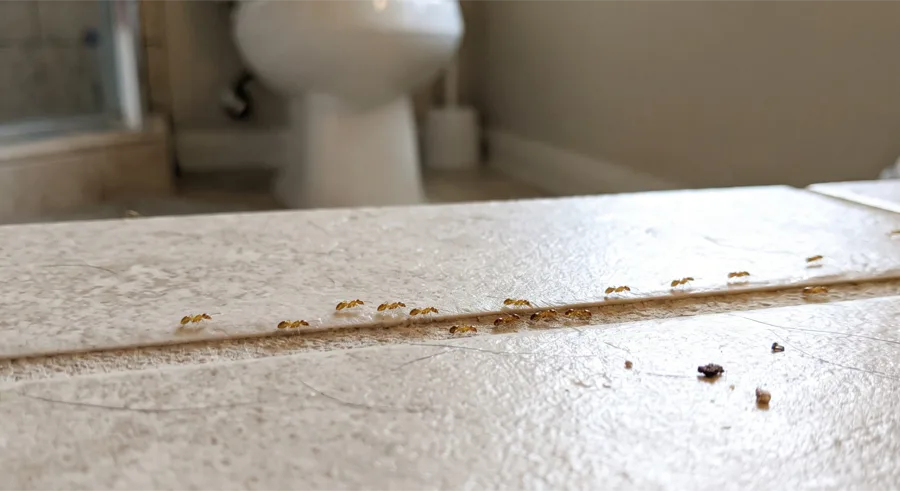
Photographs from our own Pflugerville visits. All six are common across the area. 843-480-8699 and we will identify it for you.
The ants we actually find in Pflugerville homes.
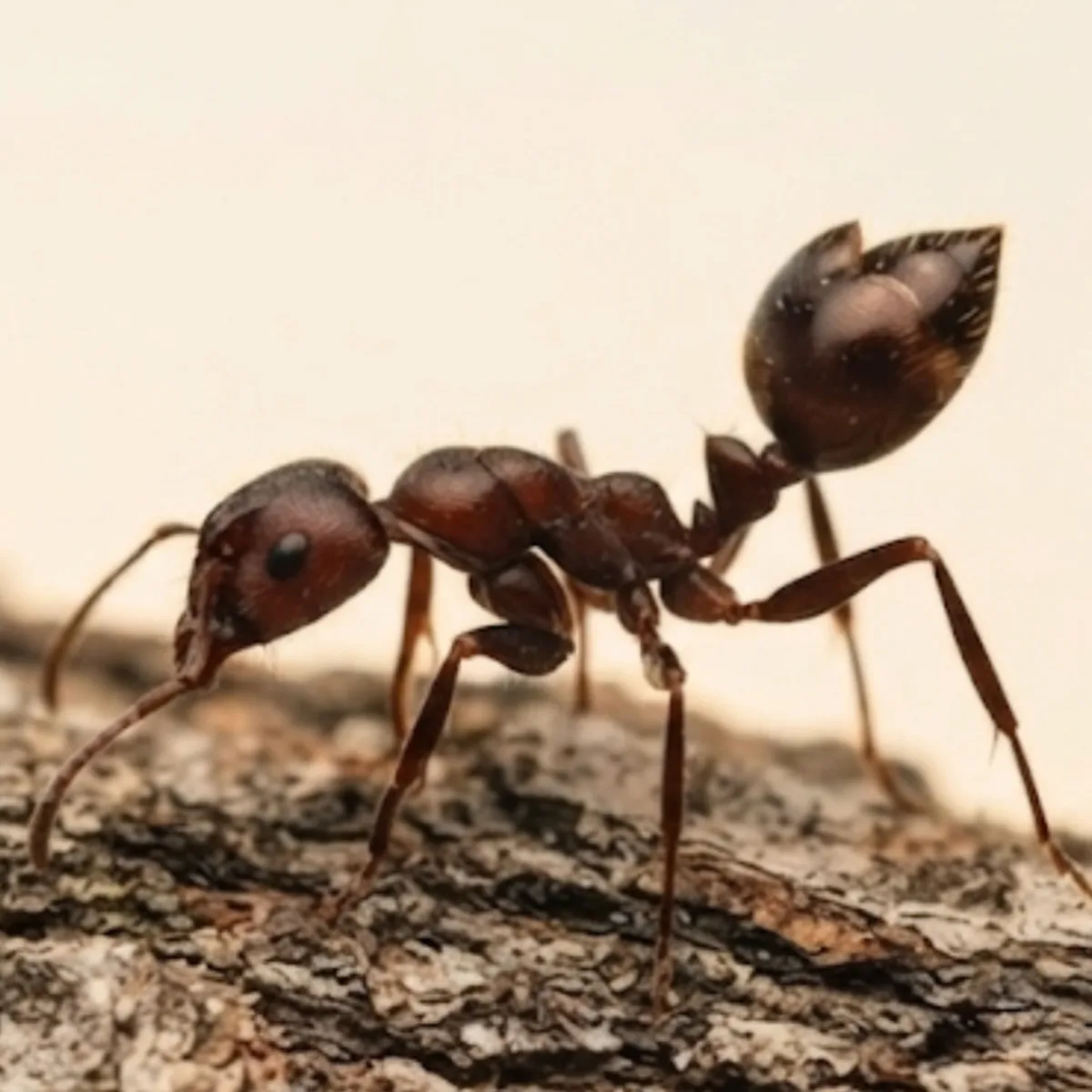
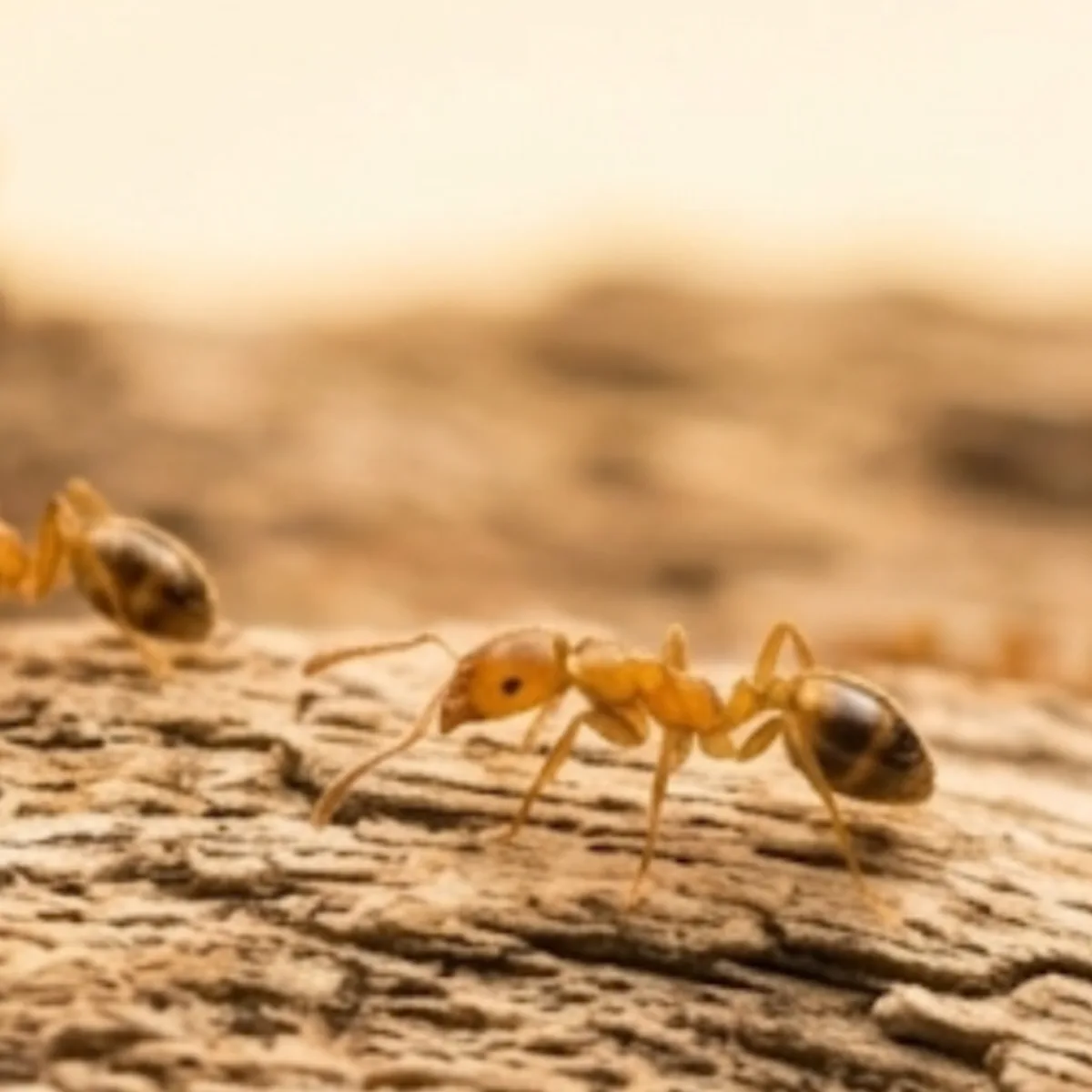
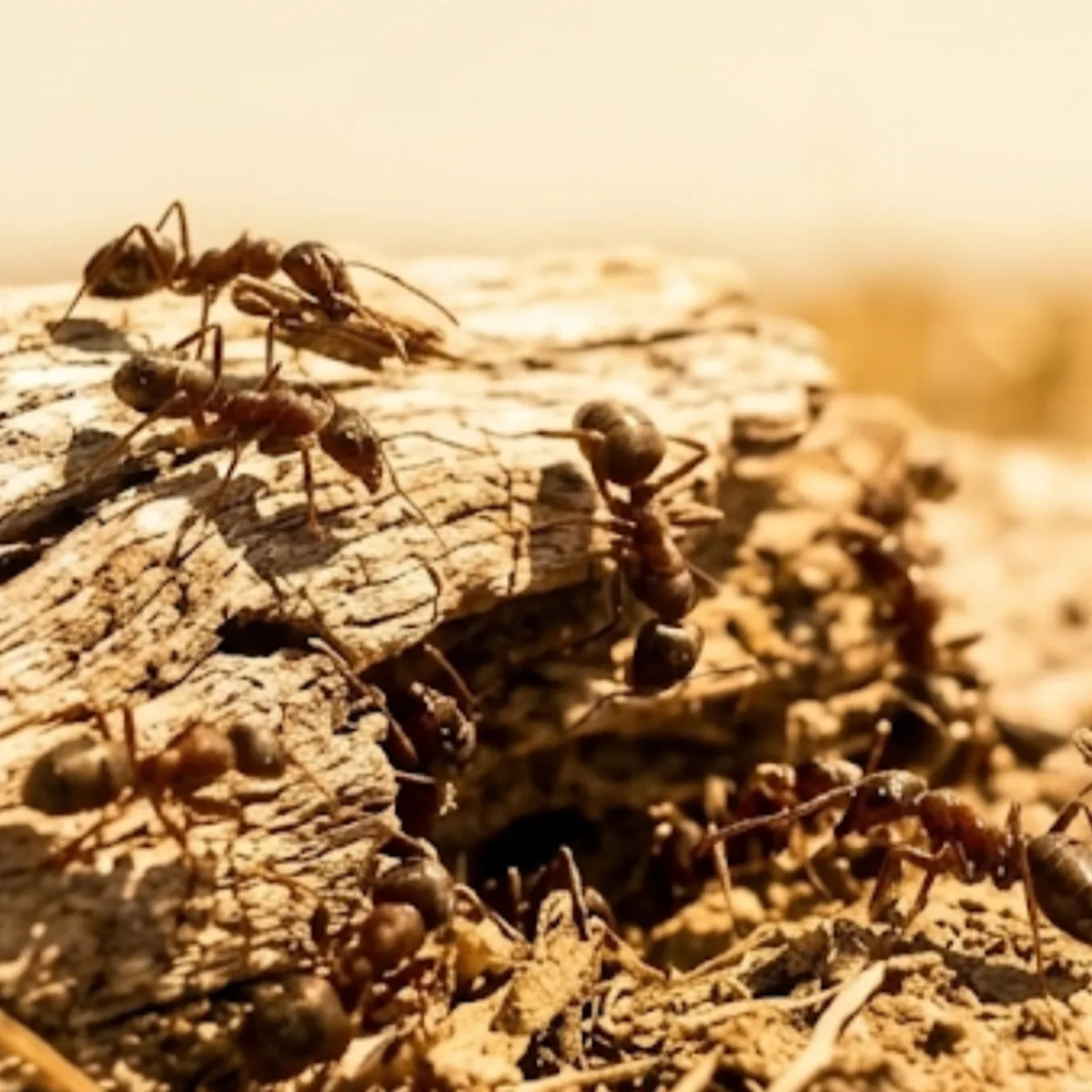
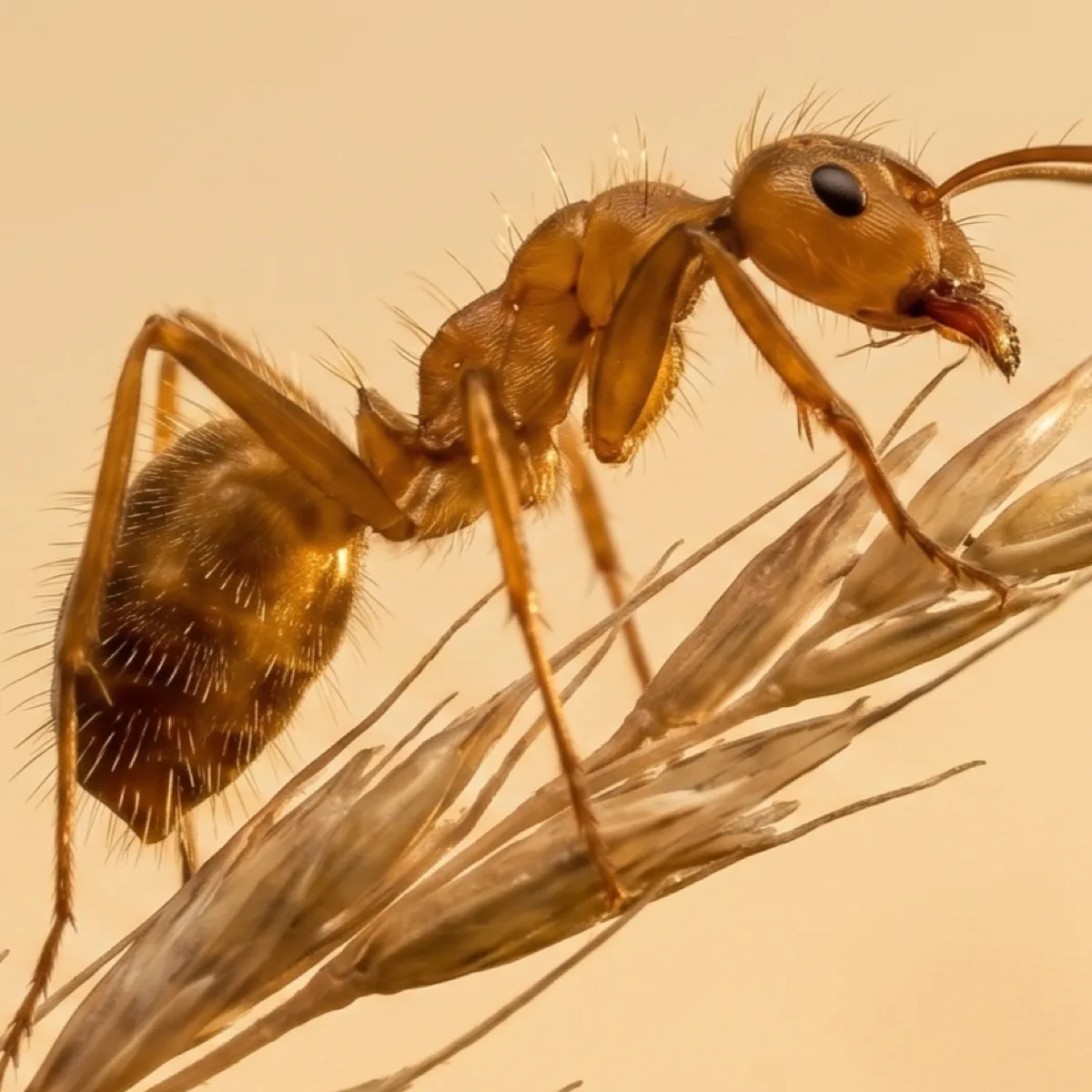
Ant bait is not a general-purpose product, whatever the label implies, so the species decides the plan. Pflugerville's blackland clay and its creek corridors make fire ants and odorous house ants the usual suspects, while the fresh slabs in Sorento and the Commons at Rowe Lane give rover and acrobat ants ready-made voids to move into. Your technician confirms the species on site before treating, not after. Here is the lineup we see most on Pflugerville routes.


A note on bites and stings. Reactions vary from person to person, and any bite or sting can cause a serious reaction in someone sensitive to it. Nothing here is medical advice. If you are bitten or stung and feel unwell, or the reaction spreads or does not settle, contact a doctor or Poison Control. If breathing or swallowing is affected, treat it as an emergency and call 911.
How to tell it is an ant problem, not a one-off.
A solo ant on the counter is a scout with a notebook. When he likes what he sees, the colony follows, and in Pflugerville the clay makes sure they were never far away. These are the signs the notebook came back full. Call and describe it, and most days we can tell you over the phone whether it needs same-day attention or the next route.
- Fresh mounds appearing in the yard within a day of rain
- A steady two-way trail along baseboards, counters or slab edges
- Ants concentrated around dishwashers, sinks and pet bowls
- Sawdust-like shavings beneath window trim or fascia
- Winged swarmers inside during spring and early summer
- Ants inside the electrical panel, doorbell or AC disconnect
- Fresh mounds in a new-slab yard the morning after rain
- Ants moving indoors during a dry spell when the clay cracks
From one end of Pflugerville to the other.
Fire ant calls in Pflugerville concentrate in the newest sections, where Falcon Pointe, Sorento and the Commons at Rowe Lane sit on freshly graded clay with no established colony to push back. Sugar ant calls come from the pond and creek edges, where Villages of Hidden Lake and Blackhawk keep soil damp against the slab. Looking for ant removal in Pflugerville? Both jobs are on the same route and the same plan.
Not listed? We almost certainly cover it, see pest control in Pflugerville or the full service area.
Pflugerville ant control, the questions we get most.
How much does ant control cost in Pflugerville, TX?
Ant control is included in our recurring general pest plan, which starts at $66 per month for a single-family home in Pflugerville. That covers ants along with spiders, roaches, scorpions, wasps and rodents. Your exact price depends on the size of your home and lot, which we confirm with a free on-site quote.
How long does it take to get rid of fire ants?
You will usually see mound activity drop within a few days of the first treatment, and most Pflugerville yards are substantially clear within two to three weeks. Fire ants are a soil problem more than a house problem, so the granular yard treatment needs one or two watering cycles to fully activate and reach the colonies below the surface.
Why do the ants keep coming back after I spray them?
Because spray kills foragers, not the colony. Roughly 90 percent of an ant colony never leaves the nest, including the queen who is laying replacements faster than you can spray (Weizmann Institute study, eLife). Worse, some species split into multiple colonies when they detect a repellent product. We bait so workers carry treatment back to the queen, which is the only way to actually end the colony. The EPA's integrated pest management principles explain the principle well.
Is ant treatment kid and pet friendly?
Our treatments are pet and kid friendly and applied where ants travel rather than where your family does, and baits are placed in cracks, voids and stations out of reach. We ask that you keep kids and pets off treated turf until it dries, which is typically about 30 minutes, and we will walk you through anything we applied before we leave.
Do you treat inside the house or just outside?
Both, and the outside matters more. Outside is where they live. Inside is just where they shop. Our standard visit covers foundation, yard and property line, and if they are already indoors we treat entry points and place bait on the same visit, no extra charge.
Do I need ant treatment year-round in Pflugerville?
Yes, and Central Texas is a good example of why. Fire ants stay active through mild winters, and odorous house ants move indoors specifically when the weather turns, toward moisture in dry months and toward warmth in cold ones. Recurring service maintains the treated barrier so new colonies cannot establish next to your foundation in the first place.
Why do mounds show up in my Pflugerville yard right after it rains?
The colonies were there the whole time, a few feet down where the clay stays workable. Blackland clay holds water instead of draining it, so a soaking rain raises the water table and the ants move the brood up ahead of it, building fresh mounds on the surface in a night. Nothing arrived, everything relocated. Broadcast bait over the entire yard reaches those deep colonies, which is why we do not chase mounds one at a time.
Are new-construction homes in Pflugerville more likely to get ants?
For the first few years, yes. Freshly graded lots in Sorento or the Commons at Rowe Lane have no established colony holding the ground, so whichever queen lands first takes the whole yard. New slabs also have expansion joints, weep holes and unsealed line-set penetrations that ants read as doors. We put a treated perimeter around the foundation from the first visit so the founding colonies set up somewhere other than your slab edge.





Ant control beyond Pflugerville
We treat ants in every city we serve. Same crew, same guarantee, different ground rules. Pick your city below, read the full ant control overview, or check the complete service area.
Answered 24 hours · Pflugerville, TX
Ants gone. And a plan so they stay gone.
Free quote, same-day service across Pflugerville, and free re-treatments if they come back between visits.